
📊 Full opportunity report: How Digital Strength Tests Enhance Remote Work Wellness Initiatives on IdeaNavigator AI — validation score, market gap, and execution plan.

Get hardware and tech essentials delivered free with Prime
- Fast, free delivery on millions of items
- Prime Video, Amazon Music and more included
- Member-only deals all year
TL;DR
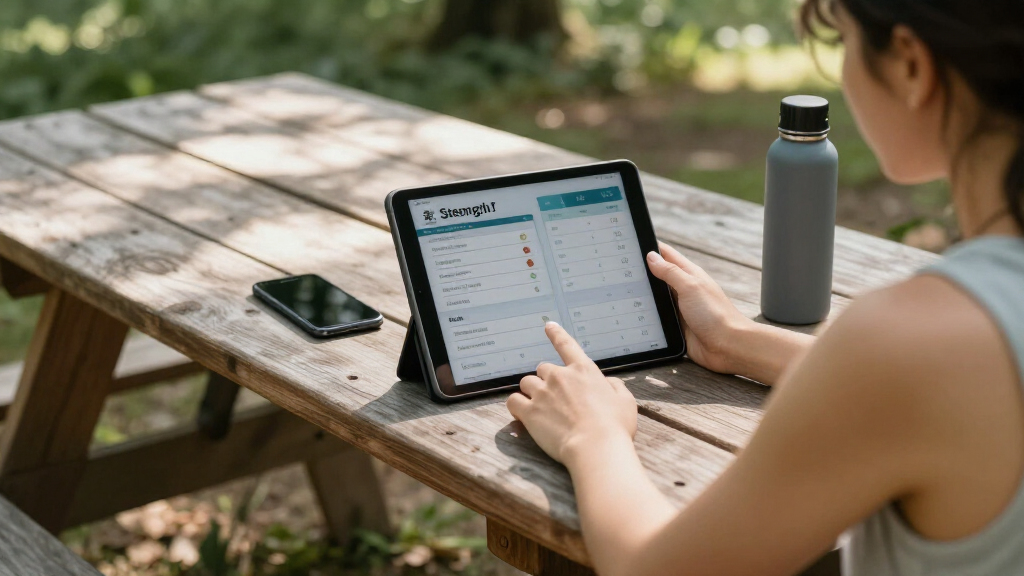
Companies are piloting digital strength tests via smartphones to identify early signs of musculoskeletal issues among remote workers. These assessments aim to prevent costly health problems and support wellness initiatives. Validation and adoption are still in progress.
Remote work strength tests utilizing smartphone cameras are being developed and piloted as a preventive approach to musculoskeletal health for distributed employees. These assessments aim to help HR and benefits leaders identify early mobility and posture decline, reducing future medical costs and work disruptions. The initiative is gaining traction as companies seek scalable, privacy-safe solutions to support employee wellness in a remote environment.
According to recent insights from IdeaNavigator AI, the concept involves a web and mobile self-assessment that guides employees through a series of 10-minute strength, mobility, and posture tests using their phone cameras. These tests include actions like sit-to-stand repetitions, shoulder and hip range-of-motion checks, and static posture photos. The system employs pose estimation technology to score movement quality and generate a personalized musculoskeletal (MSK) risk score.
Employers can access a privacy-safe dashboard that aggregates team-level data, tracking MSK risk trends and engagement levels. When employees are flagged as at-risk, the platform offers a referral pathway to clinical MSK or physical therapy providers. The initial pilot aims to validate the scoring accuracy, assess employee engagement, and determine the impact on early detection of MSK decline.
Market participants see this as a scalable solution for the growing remote and hybrid workforce, especially as MSK issues have become a leading driver of employer healthcare costs. The offering is structured as a B2B SaaS with per-employee-per-month subscriptions, potentially supplemented by outcome-based pricing and referral revenue sharing from clinical partners.
Why Digital MSK Testing Matters for Employers
This development could transform how companies approach employee wellness by shifting from reactive treatment to proactive prevention. Early detection of MSK decline can reduce medical claims, decrease workday losses, and improve overall productivity. As remote work persists, scalable, technology-driven assessments fill a critical gap in health monitoring, offering a cost-effective way to address a top employer medical cost driver.
Moreover, the technology leverages mature smartphone camera and pose estimation capabilities, making it accessible without specialized sensors or clinical visits. This aligns with broader trends toward digital health solutions that empower employees to participate actively in their well-being while providing employers with actionable insights.
posture correction ergonomic chair
As an affiliate, we earn on qualifying purchases.
As an affiliate, we earn on qualifying purchases.
Remote Work and Musculoskeletal Health Challenges
The shift to remote and hybrid work arrangements has significantly altered daily activity patterns for knowledge workers. The reduction in incidental movement, commuting, and ergonomic office setups has led to an increase in sedentary behavior, which is associated with rising rates of neck, back, and posture-related musculoskeletal (MSK) problems.
Currently, most employer wellness programs are reactive, addressing MSK issues only after employees experience pain or injury. These approaches often involve costly clinical interventions and extended recovery times. The need for early screening tools has become urgent, especially as MSK conditions contribute substantially to employer healthcare costs.
Recent technological advances in smartphone-based pose estimation and motion capture have made it feasible to develop self-assessment tools that can be deployed at scale, providing a proactive method for MSK health management in remote settings. Pilot programs are now underway to test these solutions’ validity and engagement levels.
musculoskeletal health assessment device
As an affiliate, we earn on qualifying purchases.
As an affiliate, we earn on qualifying purchases.
Validation and Adoption Challenges for Digital MSK Tests
While pilot programs are beginning, it is not yet confirmed how accurately the camera-based scores will correlate with clinical assessments or self-report questionnaires. The long-term engagement of employees and the impact on health outcomes remain to be established. Additionally, regulatory and privacy considerations could influence broader deployment.
As an affiliate, we earn on qualifying purchases.
Next Steps for Pilot Testing and Broader Rollout
Over the next 3 to 6 months, companies involved in pilot programs will evaluate the system’s effectiveness, focusing on completion rates, score validity, and employee participation. Success could pave the way for wider adoption, with potential integration into existing wellness platforms and benefits packages. Further validation studies and regulatory reviews are also anticipated as the technology matures.
As an affiliate, we earn on qualifying purchases.
Key Questions
How do these digital strength tests work?
Employees use their smartphones to perform guided strength, mobility, and posture exercises, with their camera capturing movements. Pose estimation algorithms analyze the footage to generate a risk score and suggest corrective routines.
Are these assessments private and secure?
Yes, the platforms are designed to be privacy-safe, with data anonymization and secure storage. Employee consent and data privacy are prioritized in pilot implementations.
Can these tests replace clinical MSK assessments?
No, they are intended as early screening tools to identify at-risk employees and facilitate timely clinical intervention, not as replacements for professional diagnosis.
What are the benefits for employers?
Employers can proactively monitor employee health, reduce future medical claims, and improve overall productivity by addressing MSK issues early, with scalable digital solutions.
When will these assessments be widely available?
Wider deployment depends on pilot validation results, regulatory approval, and integration into existing benefits platforms, expected within the next 12 to 18 months.
Source: IdeaNavigator AI
Halloween Picks
halloween
As an affiliate, we earn on qualifying purchases.