Most small teams overlook the importance of proper microphone placement and understanding room acoustics, which can severely impact audio quality. When microphones are not positioned correctly or you ignore room echoes, voices sound muffled or distant, causing frustration and misunderstandings. Simple adjustments can make a big difference, but many overlook these details. If you want to improve your conference sound and prevent these common issues, there’s more to discover that can make your meetings clearer and more productive.

Get hardware and tech essentials delivered free — and shop member deals
- Fast, free delivery on millions of items
- Access to Prime Big Deal Days deals on October 6–7
- Prime Video, Amazon Music and more included
Key Takeaways
- Small teams often neglect proper microphone placement, leading to poor sound capture and echo issues.
- They overlook regular audio calibration, causing inconsistent sound levels and muffled voices.
- Ignoring room acoustics results in unwanted echoes and sound distortion during meetings.
- Many fail to address background noise sources like vents and windows that degrade audio clarity.
- Lack of awareness about these minor elements causes persistent audio problems and reduced meeting effectiveness.
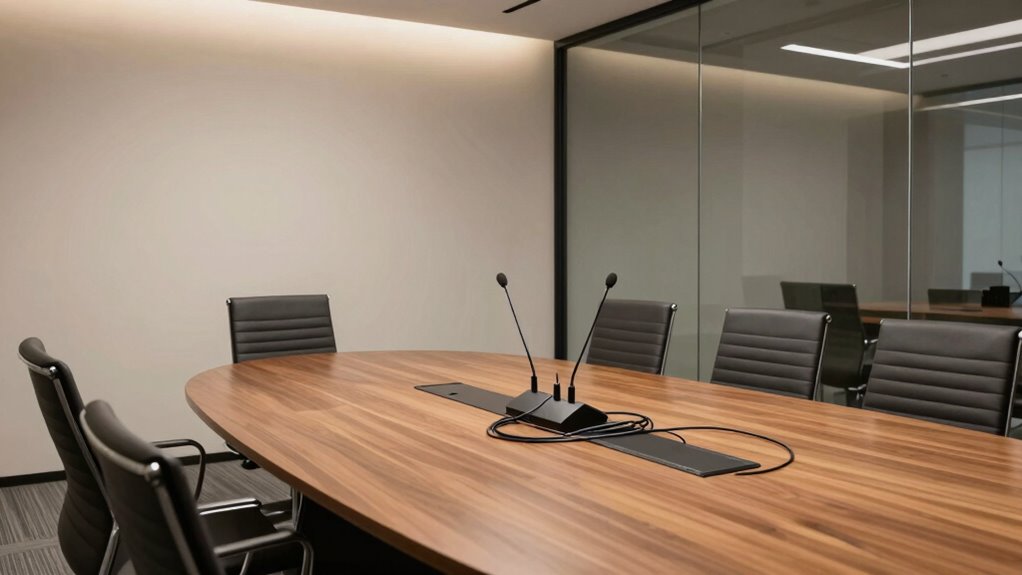
Conference rooms often face audio problems that disrupt meetings and reduce productivity. Many small teams overlook the importance of proper audio calibration and microphone placement, even though these elements are vital for clear communication. When audio isn’t calibrated correctly, voices can sound muffled or distant, forcing participants to ask for repetitions and causing frustration. The problem often starts with overlooked technical details that seem minor but have a significant impact on the overall meeting experience.
A little-known fact is that biodiversity and room acoustics are interconnected, influencing how sound behaves within a space. The first step to fixing these issues is understanding audio calibration. It involves adjusting the sound system so that audio levels are balanced and consistent throughout the room. Without proper calibration, some areas might be too loud while others are barely audible. Small teams often skip this step, assuming their system is fine out of the box, but every room’s acoustics are different. Proper audio calibration ensures that everyone’s voice is heard clearly, regardless of their position in the room. It’s a quick process that can be done with simple tools or professional assistance, but neglecting it leads to persistent audio problems. Additionally, understanding the room’s acoustic properties can help optimize microphone placement and sound treatment strategies. Recognizing the significance of room acoustics can help prevent echo and improve overall sound quality. Properly considering these factors can also prevent sound distortion, which is a common issue in poorly treated spaces. Adjusting for sound absorption can further enhance clarity and reduce unwanted echoes.
Another critical factor is microphone placement. When microphones are improperly positioned, they can pick up unwanted noise, produce echoes, or fail to capture the speaker’s voice effectively. For example, placing a microphone too close to a window or air vent introduces background noise, while positioning it too far away from the speaker results in weak audio signals. You should aim to place microphones where they can clearly pick up voices without capturing unnecessary ambient noise. This typically means positioning them at an appropriate distance and height, directed towards the speaker’s mouth. Small teams often overlook this detail, assuming that a microphone will work fine wherever it’s placed. But strategic placement makes a huge difference in audio clarity.
If you ignore these aspects, meetings become frustrating, with participants straining to hear or understand each other. Over time, this can lead to decreased engagement and productivity. Investing a little time in proper audio calibration and mindful microphone placement can transform your conference experience. It guarantees your team communicates effectively, minimizes misunderstandings, and keeps meetings running smoothly. Small teams might think these are minor technicalities, but in reality, they’re the foundation of clear, effective communication. Addressing the conference room audio problem at its root is simple and saves you from ongoing frustrations, making every meeting more efficient and productive.
As an affiliate, we earn on qualifying purchases.
Frequently Asked Questions
How Can I Identify if My Conference Room Audio Is Inadequate?
You can identify if your conference room audio is inadequate by listening for echo or muffled sound during calls. Conduct an audio calibration test to check clarity, ensuring microphones and speakers are balanced. Also, notice if sound masking elements are missing, making conversations easily overheard or awkwardly loud. If participants struggle to hear or be heard, it’s a clear sign your audio setup needs improvement.
What Are the Common Causes of Poor Conference Room Audio?
Did you know that 70% of meetings suffer from poor audio? The common causes include background noise from nearby equipment or open windows, which can drown out voices. Additionally, improper microphone placement—like placing it too far away or in a corner—can greatly reduce clarity. To fix this, make sure microphones are close to speakers and minimize background noise, creating a clearer, more effective communication environment.
How Does Room Size Affect Audio Quality in Meetings?
Room size directly impacts audio quality because larger spaces often cause echoes and sound reflections, making speech hard to understand. You can improve this by adding acoustic treatment, like soft furnishings or acoustic panels, to absorb sound. Soundproofing techniques also help prevent outside noise from interfering. In smaller rooms, focus on proper speaker placement, but in larger rooms, prioritize acoustic treatment to guarantee clear, crisp audio during meetings.
Are There Affordable Solutions to Improve Conference Room Audio?
Yes, you can improve conference room audio affordably. Wireless microphones are a great solution, offering clear sound without complicated wiring. Adding acoustic panels helps absorb echo and reduce background noise, enhancing audio clarity. Both options are cost-effective and easy to install, making them ideal for small teams looking to upgrade their meeting experience without breaking the bank. These improvements guarantee everyone hears and participates effectively.
How Often Should Conference Room Audio Equipment Be Maintained or Upgraded?
You should perform regular audio calibration and check microphone placement at least every six months or after any major room changes. Consistent maintenance guarantees ideal sound quality, preventing issues like echo or muffled audio. Keep an eye on equipment performance, and upgrade outdated components when necessary. Proper calibration and correct microphone placement help maintain clear sound, making meetings more productive and reducing frustration caused by poor audio.
As an affiliate, we earn on qualifying purchases.
Conclusion
Don’t ignore the conference room audio problem. Don’t let poor sound quality hinder collaboration. Don’t assume equipment will fix itself. Instead, invest in quality audio solutions, test your setup regularly, and train your team to optimize every call. Address the issue now to avoid misunderstandings, boost productivity, and guarantee your meetings are effective. Because when your audio works seamlessly, your team communicates clearly, collaborates confidently, and succeeds together.
sound absorption panels for office
As an affiliate, we earn on qualifying purchases.
As an affiliate, we earn on qualifying purchases.
As an affiliate, we earn on qualifying purchases.
Halloween Picks
halloween
As an affiliate, we earn on qualifying purchases.