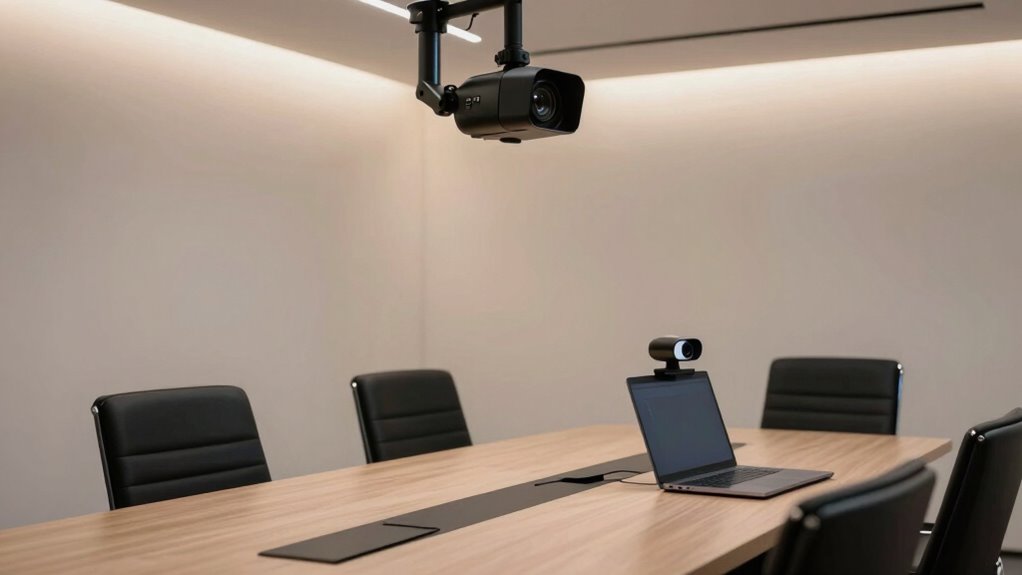

Conference bars, PTZ cameras, and webcams address different needs in meetings. Conference bars improve audio clarity by capturing sound from all around, ideal for small to medium rooms. PTZ cameras offer flexible video angles and high zoom capabilities, perfect for larger or dynamic spaces. Webcams are simple, quick, and suited for personal or casual calls. To create seamless communication, choosing the right device depends on your space and goals—explore further to find out how each can enhance your meetings.

Get hardware and tech essentials delivered free with Prime
- Fast, free delivery on millions of items
- Prime Video, Amazon Music and more included
- Member-only deals all year
Key Takeaways
- Conference bars are designed for comprehensive audio capture and basic video in small to medium rooms, simplifying setup and ensuring clear communication.
- PTZ cameras provide flexible, high-quality video with pan, tilt, and zoom features, ideal for larger or dynamic meeting environments.
- Webcams are compact, easy to use, and suited for personal or casual video calls with stable lighting conditions.
- Each device type addresses specific challenges like room size, audio clarity, and video quality, optimizing meeting effectiveness.
- Proper selection based on environment and purpose ensures seamless communication, professional presentation, and privacy.
Products Worth Considering

Logitech MX Master 4 for Mac, Ergonomic Bluetooth Mouse with Haptic Feedback, Ultra-Fast Scrolling, USB-C Charging, for MacOS, iPadOS, Windo

Bose SoundLink Flex Bluetooth Speaker (2nd Gen), Portable Waterproof Speaker, Black

Sonos Era 100 SL Compact Microphone-Free Speaker, Black
As an affiliate, we earn on qualifying purchases.
What Are the Key Communication Needs for Different Meeting Sizes?
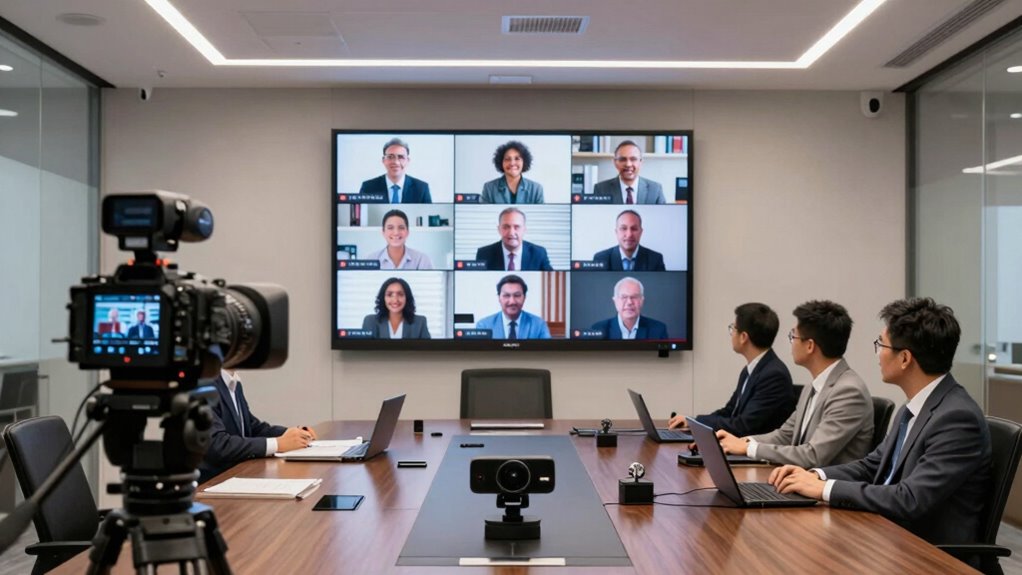
Understanding the communication needs for different meeting sizes is essential to choosing the right technology. For small meetings, you focus on fostering audience engagement through clear audio and visuals, so webcams and simple audio solutions often suffice. As the group grows, technical compatibility becomes crucial to guarantee everyone can participate seamlessly, whether through conference bars or integrated audio systems. Large meetings demand scalable solutions that maintain clarity and allow for dynamic interaction, such as PTZ cameras for versatile video coverage. Recognizing these needs helps you select equipment that enhances engagement and ensures smooth communication. When selecting technology, considering technology compatibility is also vital, especially when integrating multiple devices or managing different meeting formats. Additionally, understanding the specific content formats suitable for each meeting size can improve overall communication effectiveness, ensuring the right tools support your engagement goals. Whether it’s a small team or a large conference, matching technology to your meeting size optimizes interaction and keeps everyone connected effectively.
How Do Conference Bars Improve Audio Quality in Meetings?

Ever wondered how conference bars enhance audio clarity during meetings? They improve sound quality by strategically placing microphones close to participants, reducing background noise and echoes. This ideal microphone placement ensures voices are captured clearly, even in noisy environments. Conference bars often feature multiple microphones arranged to pick up sound evenly from all directions, minimizing dead spots. They also filter out background noise, making voices stand out. The design consolidates audio equipment into a single unit, simplifying setup and guaranteeing consistent microphone placement. This results in clearer communication, fewer misunderstandings, and a more productive meeting. Additionally, audio quality is further improved through advanced noise cancellation technology integrated into many models. The microphone arrangement in conference bars is designed to adapt to different room sizes and layouts, enhancing overall audio performance. Understanding room acoustics can help optimize the placement and effectiveness of these devices. Proper microphone placement is crucial for achieving the best sound clarity in various meeting environments, especially when considering sound reflection and other acoustic factors.
What Are the Benefits of PTZ Cameras for Flexible Video Conferencing?
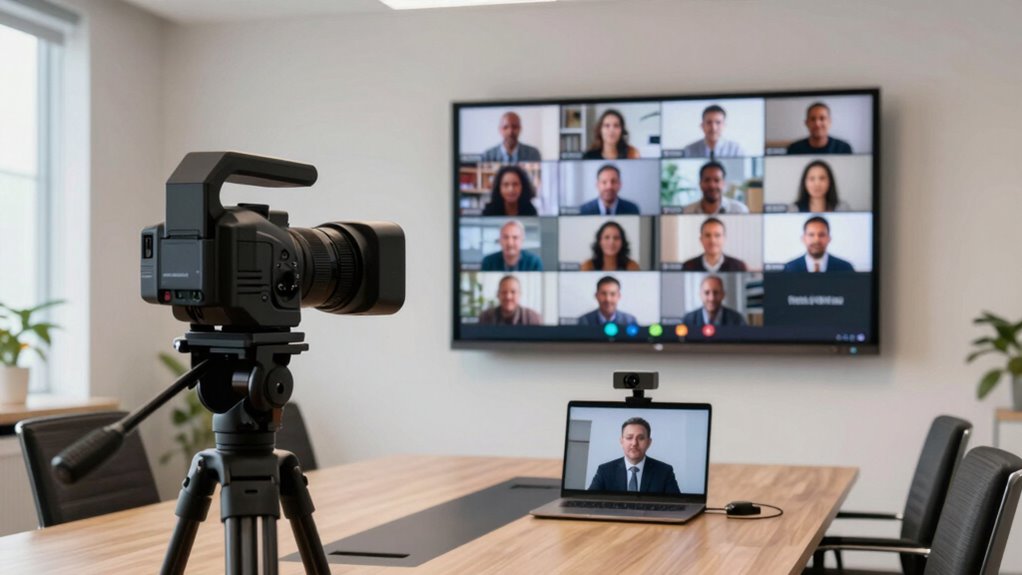
PTZ cameras give you greater viewing flexibility, allowing you to easily focus on different speakers or areas of the room. With seamless camera control, you can adjust angles quickly without interrupting the flow of your meeting. This makes your video conferencing more dynamic and engaging for everyone involved.
Enhanced Viewing Flexibility
Flexible video conferencing relies heavily on camera systems that can adapt to dynamic meeting environments, and PTZ cameras excel in this regard. Their ability to pan, tilt, and zoom allows you to easily focus on different speakers or areas, enhancing viewing versatility. This means you can switch perspectives seamlessly, making meetings feel more natural and engaging. PTZ cameras also support virtual backgrounds effectively, helping you maintain a professional appearance regardless of your environment. Additionally, their built-in lighting optimization features improve image clarity even in challenging lighting conditions. The ability to adjust camera settings for optimal image quality is especially important for maintaining color accuracy during virtual meetings. This adaptability ensures everyone stays visually connected, whether you’re in a small team huddle or a large conference. Overall, PTZ cameras give you the flexibility to create a polished, immersive video experience that adjusts to your meeting’s needs.
Seamless Camera Control
The ability to control your camera effortlessly enhances the overall flow of a video conference. PTZ cameras offer seamless control, allowing you to adjust camera placement quickly to focus on speakers or important visuals. This flexibility guarantees you can adapt the shot in real time, maintaining engagement and professionalism. With remote control, you don’t need to manually reposition the camera, saving time and effort. Additionally, PTZ cameras help optimize lighting by adjusting angles or zooming in for better clarity, improving image quality without physical adjustments. This level of control simplifies managing multiple participants and presentations, fostering a smooth, dynamic conversation. Ultimately, seamless camera control enhances your ability to deliver a polished, professional experience, regardless of your conferencing environment.
When Are Webcams the Best Choice for Video Calls?
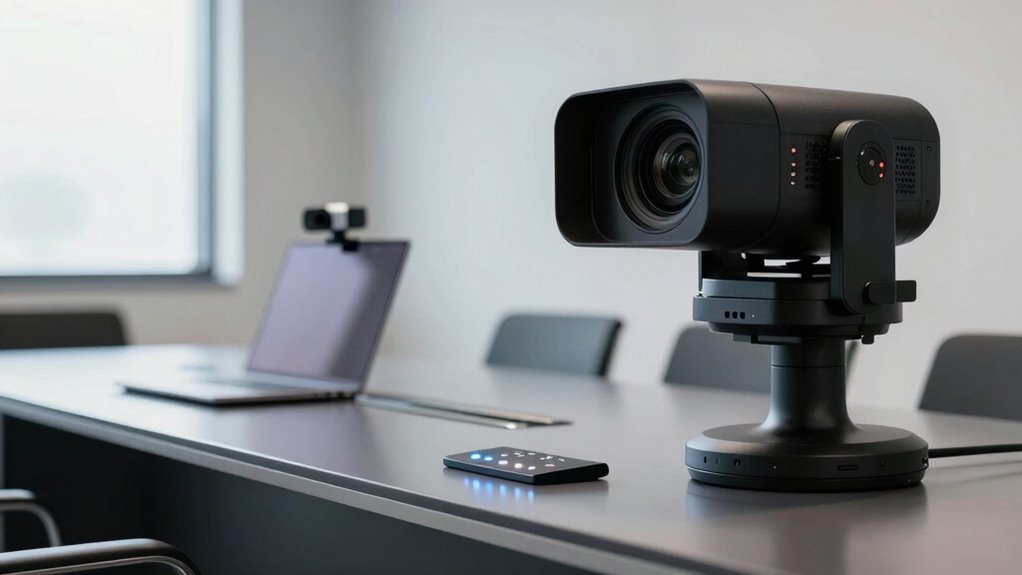
When is a webcam the best choice for video calls? Webcams work well when your lighting conditions are stable and sufficient, providing clear images without extra setup. They’re ideal for casual or frequent calls where ease of use is a priority. If privacy concerns are important, webcams can be quickly covered or turned off when not in use. They’re perfect for home offices or small meeting spaces where high-end equipment isn’t necessary. Webcams are also convenient for quick, spontaneous conversations, especially if you want a simple solution that doesn’t require additional hardware or complex setup. However, if you need advanced controls or better image quality in challenging lighting, other options might be better. Overall, webcams suit everyday calls with straightforward requirements.
Which Devices Offer the Best Audio and Video Quality for Your Setting?

Are you wondering which devices deliver the best audio and video quality for your specific setting? For crystal-clear audio, look for conference bars or microphones designed for high audio clarity, especially in noisy environments. These devices guarantee voices are captured accurately, reducing background noise. When it comes to video, consider cameras with high video resolution, such as PTZ cameras or high-end webcams, which provide sharp, detailed images. The right combination depends on your room size and lighting conditions. Proper device selection is essential to ensure optimal performance tailored to your environment. If you need wide coverage and flexibility, PTZ cameras excel. For smaller, more intimate spaces, quality webcams may suffice. Balancing audio clarity and video resolution is key to a professional, engaging experience, regardless of your setup. Additionally, understanding watt-hours and capacity can help you choose compatible power sources for your devices.
How to Choose Conference Equipment Based on Meeting Environment and Size
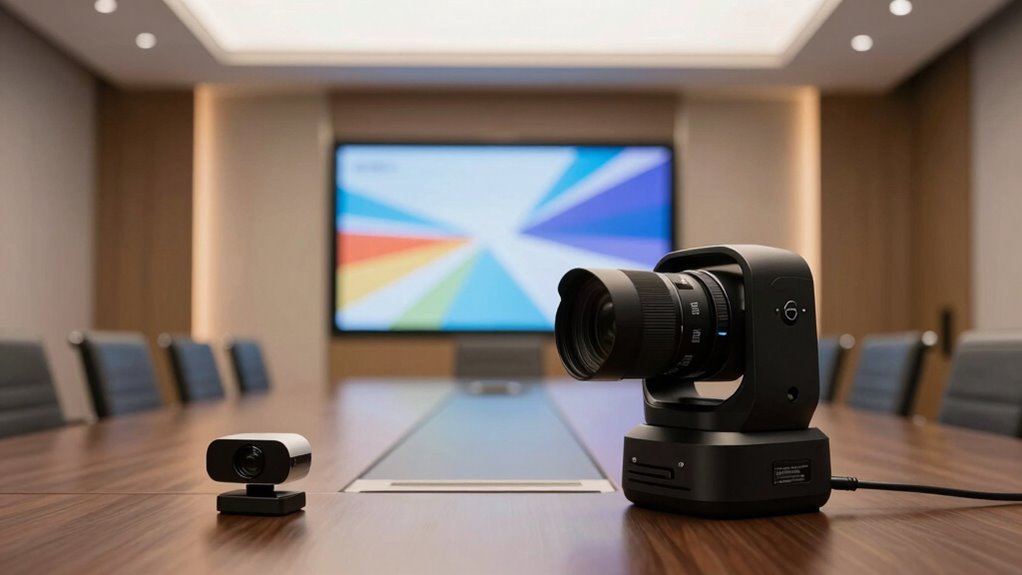
Choosing the right conference equipment depends heavily on your meeting environment and room size. For large, open spaces, consider PTZ cameras with wide coverage to ensure everyone’s visible, and microphones that pick up sound clearly across the room. If background noise is a concern, look for noise-canceling microphones and soundproofing options to improve audio clarity. Smaller rooms may benefit from webcams and conference bars that focus on a single speaker, reducing background distractions. Privacy concerns also influence your choices; in sensitive meetings, use equipment with secure audio and video streams to prevent unauthorized access. Assess your room’s acoustics, lighting, and layout to select equipment that enhances communication without overwhelming the space or compromising confidentiality. Additionally, understanding urban pursuits and cultural activities in your region can help tailor the environment to better suit the ambiance and engagement level of your meetings. Incorporating technological advancements can further optimize your setup for seamless connectivity and interaction. Being aware of environmental impact of equipment can also guide you toward sustainable choices that align with eco-friendly practices. Moreover, evaluating the climate and ambient conditions of your location can help select equipment that performs reliably in your specific environment.
Common Scenarios for Using Conference Bars, PTZ Cameras, and Webcams
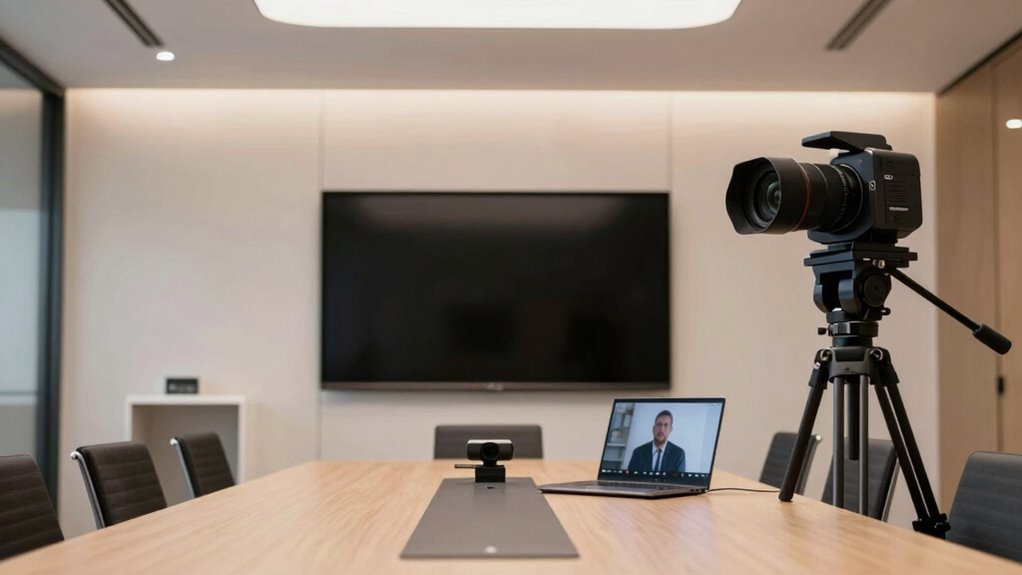
You’ll find each type of equipment best suited for specific scenarios, whether you’re setting up a meeting room, sharing remote presentations, or hosting hybrid events. Conference bars excel in capturing wide-room audio and video, making them ideal for small to medium meetings. For larger spaces or dynamic presentations, PTZ cameras offer flexible angles, while webcams work well for personal or one-on-one interactions.
Meeting Room Setup Needs
Meeting room setups vary widely depending on their purpose and size, making it vital to select the right videoconferencing equipment. Your choice depends on factors like room layout, participant number, and desired interaction level. For larger spaces, PTZ cameras provide flexible coverage, while webcams suit smaller meetings. To enhance audio, wireless microphones guarantee clear sound without clutter. Lighting optimization is critical for video quality, especially in rooms with inconsistent lighting. Consider these points:
- Use wireless microphones for unobstructed audio
- Choose PTZ cameras for dynamic room coverage
- Webcams work well in small, close-knit settings
- Lighting adjustments improve video clarity
- Match equipment to room size and purpose
Selecting the right setup ensures seamless communication, professional presentation, and a productive meeting environment.
Remote Presentation Clarity
When it comes to remote presentations, the right camera setup can make a significant difference in clarity and engagement. A quality webcam or PTZ camera guarantees sharp images, so your audience clearly sees your expressions and gestures. If you use virtual backgrounds, a good camera helps maintain clarity, preventing pixelation or blurriness that distracts viewers. Noise cancellation features are equally important, filtering out background noise so your voice remains clear and easy to understand. Conference bars can also improve audio quality and provide a cleaner visual presence. By choosing the right combination of camera type and audio enhancements, you create a more professional and focused presentation, keeping your audience engaged and ensuring your message comes across clearly, no matter where you’re presenting from.
Hybrid Event Flexibility
- Large conferences with mixed in-person and remote audiences
- Breakout sessions needing flexible camera angles
- Interactive Q&A with remote participants
- Networking events emphasizing virtual engagement
- Panel discussions requiring multiple viewpoints
Selecting the right setup guarantees seamless interaction, keeps remote attendees engaged, and creates a more inclusive hybrid environment.
How to Set Up and Integrate Conference Devices Seamlessly

To guarantee your conference devices work together smoothly, start by planning your setup carefully. Ascertain device compatibility by checking that your conference bars, PTZ cameras, and webcams can connect seamlessly with your existing hardware and software. Confirm that all devices support the necessary protocols and integrations, minimizing technical issues during meetings. Once compatibility is confirmed, focus on user training. Educate your team on proper device operation, connection procedures, and basic troubleshooting. Clear instructions help prevent user errors and ensure everyone can participate effectively. Additionally, organize a test run before your actual event, allowing you to address any integration challenges early. By paying attention to device compatibility and providing thorough user training, you set the stage for smooth, efficient conference experiences.
Troubleshooting Tips for Conference Audio and Video Devices

Some quick tips:
- Verify all connections are secure
- Run calibration tests for audio clarity
- Check for software or firmware updates
- Confirm device compatibility with your system
- Use the troubleshooting tools provided by manufacturers
Addressing these areas often resolves most issues efficiently, keeping your conference running smoothly.
What Are the Future Trends in Meeting Technology?
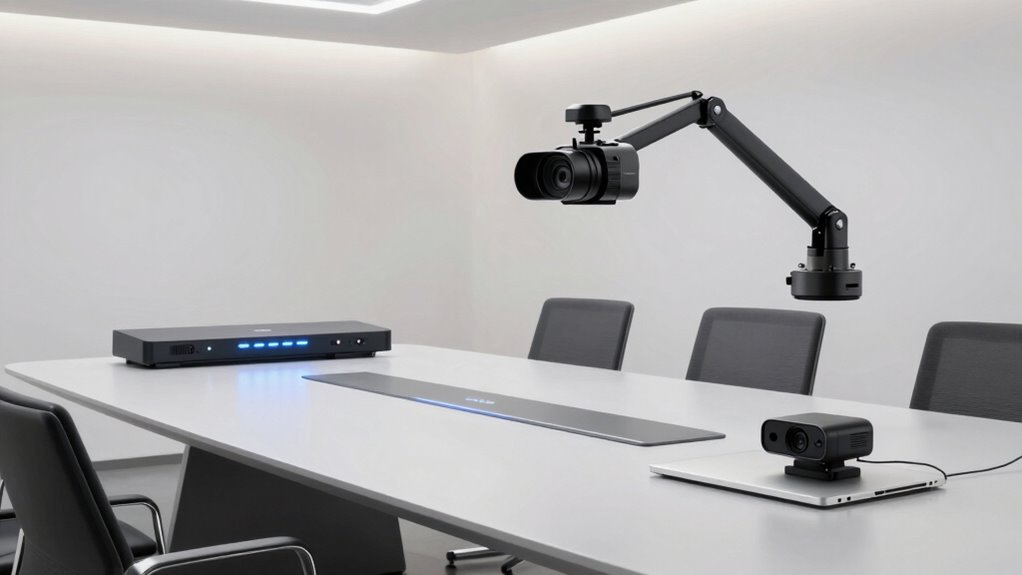
Advancements in meeting technology are rapidly transforming how you communicate and collaborate. AI integration will play a bigger role, offering smarter features like real-time transcription, language translation, and meeting summaries, making remote interactions more seamless. Expect more intelligent camera systems, such as PTZ cams with automatic framing and focus, to improve visual clarity. However, privacy concerns will remain a key focus, prompting developers to prioritize secure data handling and user control over recordings. Future trends also include enhanced collaboration tools that integrate with digital workspaces, fostering more interactive and engaging meetings. As technology evolves, your ability to connect effortlessly while safeguarding sensitive information will be essential. Staying informed about these trends helps you leverage innovations effectively and responsibly.
Frequently Asked Questions
How Do Conference Bars Differ From Traditional Microphones in Meetings?
Conference bars differ from traditional microphones by providing better audio clarity through strategic microphone placement. They are designed to cover entire rooms, capturing sound evenly from multiple speakers, unlike traditional mics that are often positioned close to a single person. This setup guarantees everyone’s voice is heard clearly, reducing background noise and echo. You’ll notice improved sound quality, making meetings more productive and engaging when using conference bars.
Can PTZ Cameras Be Used Effectively in Small Conference Rooms?
You can definitely use PTZ cameras effectively in small conference rooms, especially if you consider small room acoustics and camera placement. While PTZ cameras excel at capturing wide angles and smooth movements, proper placement guarantees everyone’s visible and audio remains clear. When set up thoughtfully, these cameras enhance virtual meetings, making participants feel more connected. Just remember to position them where they won’t obstruct the view or interfere with room acoustics.
Are Webcams Suitable for High-Security or Confidential Meetings?
Webcams aren’t ideal for high-security or confidential meetings because they often lack advanced encryption protocols needed to protect confidential data. If security is a priority, you need equipment with robust encryption to prevent eavesdropping or data breaches. Using webcams without these security features puts your sensitive information at risk. For secure meetings, opt for professional conferencing solutions that prioritize encryption and data protection.
What Are the Power and Connectivity Requirements for These Devices?
Think of these devices like essential organs—they need the right power and connectivity to function properly. You’ll typically require a reliable power source, often via AC adapters or PoE (Power over Ethernet), depending on the device. Connectivity options include USB, HDMI, or Ethernet cables, ensuring seamless data transfer. Ensuring your setup matches these requirements guarantees smooth operation, just like a well-tuned engine keeps a vehicle running efficiently.
How Do Environmental Factors Affect Device Performance During Meetings?
Environmental factors like ambient noise and lighting conditions considerably affect device performance during meetings. Excessive background noise can disrupt audio clarity, making it hard for participants to hear or be heard. Poor lighting can hinder video quality, causing images to appear grainy or unclear. You should guarantee a quiet environment and proper lighting to optimize device effectiveness, enhancing overall meeting communication and engagement.
Conclusion
Choosing the right conference device is like selecting the perfect tool for your craft—you need the right fit for your needs. Whether it’s a conference bar, PTZ camera, or webcam, each solves a unique problem in your meeting room. By understanding their strengths and scenarios, you’ll set the stage for seamless, clear communication—making every meeting as smooth as a well-orchestrated symphony. Your ideal setup is just a decision away.