Invisible AI systems work silently behind the scenes to keep supply chains stable by providing end-to-end visibility, predicting disruptions, and automating compliance processes. They integrate data from various sources to enable quick responses to potential issues, optimize inventory levels, and adapt to changing conditions. Autonomous logistics and real-time risk monitoring help prevent delays and reduce costs. To discover how these quiet systems transform supply chain resilience, explore further insights ahead.

Get hardware and tech essentials delivered free with Prime
- Fast, free delivery on millions of items
- Prime Video, Amazon Music and more included
- Member-only deals all year
Key Takeaways
- AI integrates data across supply chain nodes for real-time visibility and early risk detection.
- Centralized AI platforms predict disruptions and optimize sourcing strategies dynamically.
- Automation streamlines customs, compliance, and international logistics, reducing delays.
- AI-driven demand forecasting and inventory management prevent stockouts and excess inventory.
- Autonomous vehicles and drones enhance delivery efficiency, safety, and operational resilience.
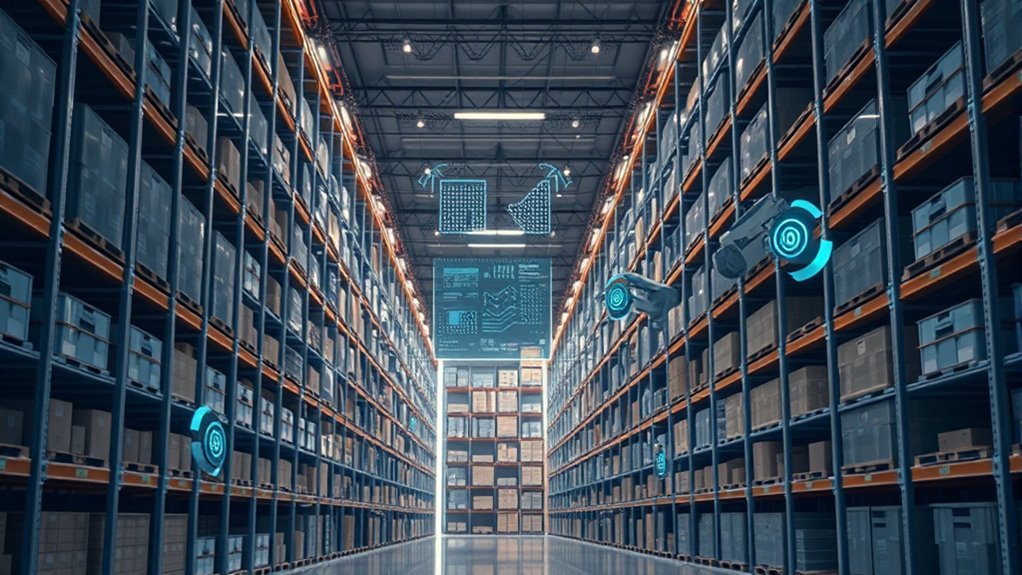
Invisible AI supply chains are transforming how goods move across the globe, but their complexity also introduces new risks. These systems operate behind the scenes, seamlessly coordinating countless processes to guarantee products reach you on time. By integrating data from fulfillment centers, suppliers, and distribution hubs, AI enhances end-to-end visibility, giving supply chain managers a thorough view of operations. This integration helps identify potential disruptions before they escalate, allowing for quick, informed decisions that keep the flow steady. Machine learning models monitor real-time data, detecting risks and changes instantly, so leaders can respond proactively rather than reactively. This rapid detection minimizes delays and prevents minor issues from snowballing into major disruptions.
Invisible AI supply chains enhance visibility and proactive management, reducing disruptions and ensuring timely delivery worldwide.
Centralized AI-powered platforms act as the single source of truth, dynamically restructuring supply chains based on current conditions. They run data-driven simulations to forecast supply disruptions, demand spikes, and optimize sourcing strategies in advance. These predictive insights enable companies to adjust inventory levels, reroute shipments, or secure alternative suppliers, guaranteeing stability amid uncertainty. Transparency improvements also reduce blind spots that traditionally hinder global responsiveness. As a result, companies gain a clearer picture of their supply chains, making them more resilient against unexpected shocks.
Beyond visibility, AI automates customs and regulatory compliance, speeding up cross-border shipments. It handles documentation, tariff classifications, and compliance checks automatically, reducing human error and minimizing border delays. Continuous AI monitoring adapts to evolving international trade regulations, ensuring compliance remains up-to-date without manual intervention. This automation accelerates deliveries and makes international logistics safer and more dependable, saving time and costs.
Inventory management also benefits immensely from AI. Demand forecasting models analyze seasonal trends, supplier reliability, and online and offline sales data to optimize stock levels dynamically. Retail giants like Walmart and Zara use AI to automate restocking, ensuring shelves stay stocked without excess inventory. This reduces stockouts and overstock situations, minimizing markdowns and improving service levels. By aligning inventory with real-time consumer behavior, AI helps companies use working capital more efficiently and respond swiftly to market shifts.
Autonomous delivery and logistics operations are another facet of these invisible AI systems. Self-driving trucks optimize routes for fuel efficiency and safety, while drones handle last-mile deliveries, navigating hazards autonomously. These innovations address labor shortages and improve delivery speed, safety, and flexibility. Companies like UPS and Amazon Prime Air are already seeing measurable operational gains from these autonomous systems.
However, these sophisticated AI-driven supply chains aren’t without risks. Their opacity—stemming from unverified data sources and third-party models—creates vulnerabilities. Malicious exploits, like embedding hidden Unicode characters, can introduce undetectable threats. Additionally, vulnerabilities in AI integration frameworks can amplify traditional supply chain risks, making transparency and security vital challenges. Despite these concerns, the invisible AI systems underpinning modern supply chains continue to stabilize and optimize global commerce, quietly working behind the scenes to keep goods flowing smoothly. High refresh rates in AI systems enhance their responsiveness, ensuring that supply chains can adapt to changing conditions swiftly.
AI supply chain visibility software
As an affiliate, we earn on qualifying purchases.
As an affiliate, we earn on qualifying purchases.
Frequently Asked Questions
How Do Invisible AI Systems Adapt to Sudden Supply Chain Disruptions?
When a sudden disruption occurs, these AI systems adapt quickly by analyzing real-time data, updating visualizations, and triggering automatic alerts. They assess the impact through “what-if” scenarios, suggest alternative routes or suppliers, and coordinate responses across your network. IoT sensors and continuous monitoring give instant insights into delays or failures, enabling you to respond faster, minimize downtime, and keep your supply chain resilient without manual intervention.
What Are the Privacy Concerns Related to AI Monitoring Supply Chain Data?
You should know that 80% of supply chain data includes personal or sensitive information, raising serious privacy concerns. When AI monitors this data, there’s a risk of exposing confidential details without consent. Unauthorized access, data leaks, and inadequate anonymization can compromise individual privacy and violate laws like GDPR. To protect yourself, guarantee strict data controls, transparency, and compliance, especially as supply chains become increasingly connected and AI-driven.
How Do Companies Ensure AI Transparency in Supply Chain Management?
You guarantee AI transparency in supply chain management by adopting explainable AI techniques that provide clear insights into decision-making processes. You document algorithms and workflows for easy audits and validation. You involve stakeholders in defining ethical standards and communicate AI’s purposes openly. Additionally, you implement governance frameworks to monitor AI outputs, regularly test models for bias, and maintain version traceability, all to build trust and accountability in your supply chain operations.
What Skills Are Needed for Workers to Manage Ai-Driven Supply Chains?
You need a mix of technical, analytical, soft, and leadership skills to manage AI-driven supply chains effectively. Proficiency in AI, data analytics, and programming helps you optimize operations. Strong communication, collaboration, and problem-solving skills enable you to work across teams. Plus, strategic thinking and adaptability allow you to make informed decisions and navigate disruptions. Continuous learning keeps you updated on emerging technologies, ensuring you can lead digital transformation confidently.
How Cost-Effective Are Implementing Invisible AI Systems in Logistics?
Implementing invisible AI systems in logistics can be highly cost-effective, especially over time. While initial investments range from $50,000 to over $2.5 million, these systems often deliver operational cost reductions of up to 50%, boost efficiency, and improve safety. Cloud-based solutions and modular setups help smaller companies manage costs. Although upfront expenses can be high, the long-term savings and ROI—often exceeding three times the investment—make AI a smart financial choice.
automated customs compliance tools
As an affiliate, we earn on qualifying purchases.
As an affiliate, we earn on qualifying purchases.
Conclusion
You might not see these AI systems working behind the scenes, but they’re the silent heroes keeping supply chains smooth. Like a well-oiled machine, they adapt and respond without fuss, ensuring everything runs seamlessly. Remember, “A chain is only as strong as its weakest link,” and these invisible AIs strengthen every part. So, next time your package arrives on time, thank the quiet, powerful tech working tirelessly behind the curtain.
inventory demand forecasting software
As an affiliate, we earn on qualifying purchases.
As an affiliate, we earn on qualifying purchases.
As an affiliate, we earn on qualifying purchases.
Halloween Picks
halloween
As an affiliate, we earn on qualifying purchases.