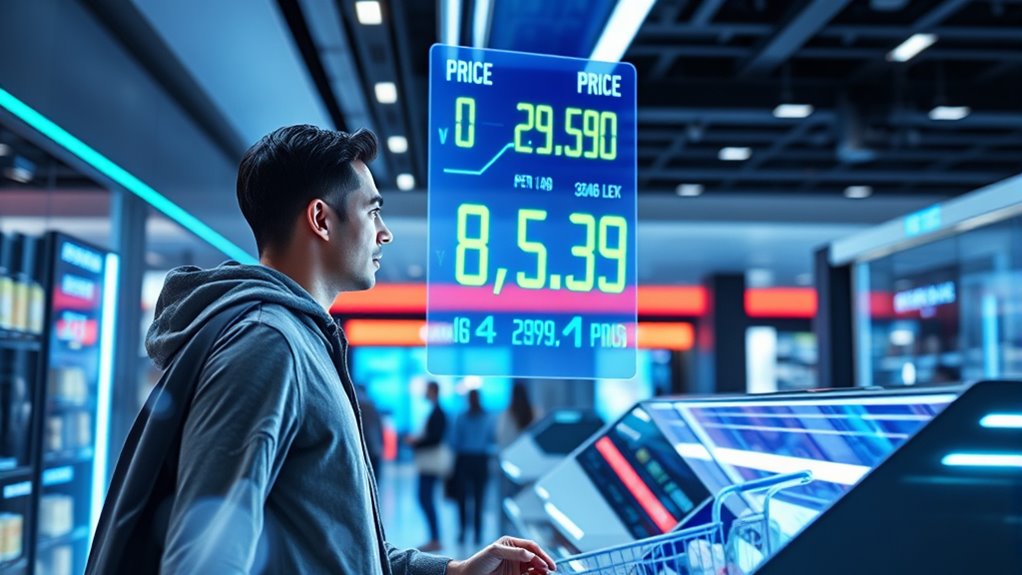

AI-powered dynamic pricing is shaping the future of shopping by allowing prices to adjust in real time based on market trends, customer habits, and inventory levels. This technology helps you get better deals while retailers boost profits through smarter, more personalized strategies. As this approach grows beyond online stores into physical locations, it’s clear that flexible pricing is here to stay. Keep exploring how AI is transforming your shopping experience.

Get hardware and tech essentials delivered free with Prime
- Fast, free delivery on millions of items
- Prime Video, Amazon Music and more included
- Member-only deals all year
Key Takeaways
- AI-driven dynamic pricing adapts in real-time, making prices less negotiable and more data-dependent.
- Personalization and transparency can foster trust, allowing some negotiation flexibility in certain contexts.
- Retailers balance automation with customer satisfaction, potentially enabling targeted discounts or negotiations.
- The rapid, data-backed nature of AI pricing reduces traditional bargaining opportunities for consumers.
- Future trends suggest increased transparency and personalization may create new, digital negotiation avenues.

In today’s competitive retail landscape, AI-driven dynamic pricing is transforming how businesses set and adjust prices in real time. You might think pricing is static or based on simple rules, but AI makes it possible to respond instantly to market shifts, customer behaviors, and competitor moves. By analyzing vast amounts of data from multiple channels, AI pinpoints how sensitive customers are to price changes, helping retailers fine-tune their strategies on the fly. This means prices can fluctuate throughout the day, matching demand and inventory levels more precisely than ever before. Reinforcement learning further enhances this process by continuously testing and refining pricing approaches, ensuring that strategies stay aligned with current market conditions. AI’s ability to process huge datasets quickly allows for more accurate and timely pricing decisions, giving retailers a competitive edge. Additionally, Gold IRAs can be an appealing investment for those looking to hedge against inflation.
You benefit from this evolution because AI helps retailers understand competitive pricing and demand fluctuations with unprecedented accuracy. For example, when a competitor drops prices or a new trend emerges, AI detects these signals automatically and adjusts prices accordingly, keeping you competitive without manual intervention. This responsiveness leads to tangible results: retailers adopting AI-driven price modeling see revenue increases of 10-15%, often accompanied by improved profit margins. Prices are optimized based on real-time data, aligning with customer willingness to pay and market conditions. As a result, sell-through rates rise because overstocking and stockouts are managed dynamically, reducing waste and lost sales. Predictive analytics also prevent pricing errors, helping retailers avoid undervaluing products or overpricing, which can alienate customers or erode margins.
The technologies powering AI dynamic pricing are impressive. Real-time data streams monitor competitors and market demand, while cloud computing handles massive data processing needed for instant updates. AI algorithms—like reinforcement learning and supervised models—drive decision-making, reducing the need for manual adjustments and minimizing errors common with spreadsheets. Integrating AI with ERP and supply chain systems offers a holistic view, ensuring pricing strategies consider inventory levels, costs, and logistics.
However, implementing AI-powered pricing isn’t without challenges. Maintaining transparency is essential, as customers may react negatively if they perceive unfair pricing practices. Channel consistency is also critical; inconsistent prices across platforms can damage trust. Handling enormous data volumes, sometimes reaching petabytes per hour, can strain existing systems, especially if legacy infrastructure limits quick responses. Balancing profitability with fairness is another concern—overly aggressive price changes may feel manipulative and harm customer loyalty.
Despite these hurdles, over half of retailers plan to expand their use of AI-driven dynamic pricing in 2025. This technology isn’t just for e-commerce anymore; physical stores, restaurants, and other sectors are adopting it to gain agility in responding to supply chain disruptions and market shifts. As AI makes pricing smarter and more personalized, the old static or seasonal models are fading. Instead, fluid, real-time pricing is becoming the new standard. This shift influences customer experience as well—personalized discounts and transparent communication can boost satisfaction and loyalty. When implemented thoughtfully, AI-powered dynamic pricing isn’t just about maximizing profit; it’s shaping the future of shopping into a more responsive, fair, and engaging experience.
As an affiliate, we earn on qualifying purchases.
Frequently Asked Questions
How Does AI Determine Optimal Price Points in Real-Time?
AI determines the best price points in real-time by analyzing vast amounts of data, including sales history, competitor prices, and customer behavior. It uses machine learning models to forecast demand, price elasticity, and inventory levels. The system continuously monitors market conditions and adjusts prices instantly, considering factors like seasonality and local trends. This ongoing process helps you maximize revenue, stay competitive, and personalize offers to meet customer willingness to pay.
Can Consumers Negotiate Prices With AI Systems Directly?
You can’t yet negotiate prices directly with AI systems. While AI is advancing in personalized pricing and supplier negotiations, consumer-facing AI negotiation tools are still in experimental stages. Companies mainly use AI to set dynamic prices without consumer input, relying on algorithms rather than direct bargaining. Until regulations and technology evolve, your best move is to watch for future innovations that may enable more direct, transparent negotiations with AI.
What Are the Ethical Concerns Surrounding Ai-Driven Pricing?
You should be aware that AI-driven pricing raises ethical concerns, like unfairly targeting vulnerable consumers during crises or emergencies. It can also lack transparency, making it hard for you to understand why prices fluctuate. Algorithms might unintentionally discriminate based on personal data, leading to unfair treatment. These practices can harm societal trust and privacy, emphasizing the need for ethical standards that promote fairness, transparency, and social responsibility in AI pricing systems.
How Transparent Are AI Pricing Algorithms to Consumers?
Ever wonder if you really understand how prices are set online? In most cases, AI pricing algorithms are quite opaque to consumers. You rarely see how your data influences prices or how algorithms adapt to market conditions. This lack of transparency makes it difficult to know if you’re getting a fair deal. While some laws push for more openness, most consumers remain in the dark about the true workings behind personalized pricing.
Will AI Pricing Lead to Increased Price Discrimination?
Yes, AI pricing will lead to increased price discrimination. It uses vast consumer data to personalize prices, often without your awareness, based on factors like location, income, or browsing habits. This enables companies to charge different prices for the same product, maximizing profits while potentially unfairly targeting or excluding certain groups. As a result, you might pay more or less than others for similar items, raising fairness concerns.
real-time price adjustment software
As an affiliate, we earn on qualifying purchases.
As an affiliate, we earn on qualifying purchases.
Conclusion
As you navigate the future of shopping, remember that AI-driven dynamic pricing could change how you pay. Did you know that 70% of consumers are willing to buy more if prices adjust in real-time? This shows how AI makes shopping more personalized and flexible. While it offers great benefits, stay aware of potential concerns around fairness. Ultimately, AI-powered pricing isn’t just a trend — it’s shaping a smarter, more negotiable shopping experience.
personalized pricing analytics platform
As an affiliate, we earn on qualifying purchases.
As an affiliate, we earn on qualifying purchases.
retail price optimization software
As an affiliate, we earn on qualifying purchases.
As an affiliate, we earn on qualifying purchases.
Halloween Picks
halloween
As an affiliate, we earn on qualifying purchases.