AI can indeed be creative, especially in art and music, by analyzing vast datasets of existing works and generating original pieces that blend styles and concepts. It continually learns and improves, pushing the boundaries of innovation and personal expression. With accessible tools, more people can create stunning and unique works without traditional skills. If you keep exploring, you’ll discover how AI is transforming creativity in exciting new ways.
Key Takeaways
- AI leverages machine learning to analyze vast datasets, enabling the creation of original, innovative art and music that blend various influences.
- Continuous learning allows AI to improve, experiment, and develop new styles, enhancing creativity and artistic nuance over time.
- AI democratizes art and music creation by reducing technical barriers, empowering both amateurs and professionals to produce high-quality digital works.
- AI can mimic and innovate across multiple artistic styles, expanding creative possibilities and challenging traditional notions of originality.
- AI tools act as collaborative partners, inspiring new forms of artistic expression and redefining the role of human creativity in the digital age.
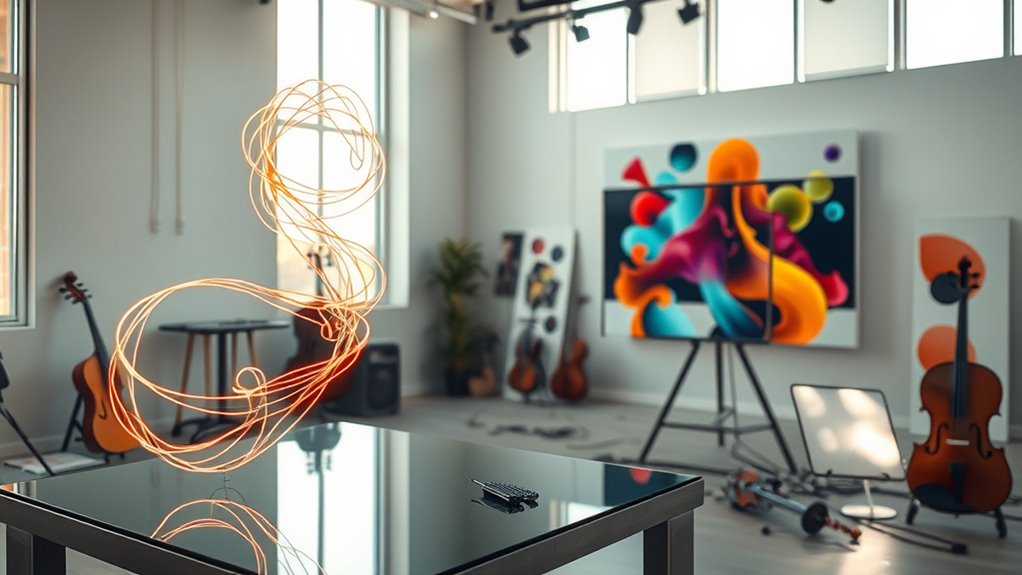
Artificial intelligence is transforming how we create art and music, opening new horizons for artists and enthusiasts alike. With machine learning at the core of many AI tools, you’re now able to generate stunning visuals and compositions that push traditional boundaries. These algorithms analyze vast amounts of data from existing artworks and musical pieces, learning patterns, styles, and techniques. As a result, AI can produce original pieces that reflect a blend of influences, blurring the line between human and machine creativity. This shift has led to a new domain of digital aesthetics, where digital art isn’t just a reproduction but an innovative expression driven by complex algorithms. You might find yourself captivated by how AI interprets abstract concepts or transforms simple prompts into intricate visuals, showcasing a fresh perspective that challenges conventional ideas of artistic originality.
Machine learning allows AI to adapt and improve over time, meaning the more you explore its capabilities, the more refined and nuanced the output becomes. This continuous learning process not only enhances the quality of AI-generated art and music but also empowers creators to experiment with styles and genres previously considered inaccessible or too labor-intensive. You can leverage AI to develop personalized art projects, remix existing works, or even generate entirely new genres, all while maintaining a high level of sophistication rooted in digital aesthetics. Whether you’re a professional artist, musician, or a hobbyist, AI tools provide a collaborative partner that can inspire new ideas and streamline your creative workflow.
Moreover, AI’s capacity to mimic and innovate within diverse artistic styles enriches the digital aesthetic landscape. From hyper-realistic paintings to experimental soundscapes, AI-driven platforms enable you to explore endless possibilities. They democratize creation, making it easier for anyone to produce high-quality art and music without traditional technical barriers. This democratization fosters a vibrant community where human intuition and machine intelligence converge, leading to works that often surprise even their creators. As you engage with AI in art and music, you’ll notice how these tools challenge notions of originality, inspiring you to think differently about creativity itself. The collaboration between human intent and machine learning results in digital aesthetics that are both innovative and deeply personal, redefining what it means to be an artist in the age of AI.
Frequently Asked Questions
Can AI Truly Understand Human Emotions in Art and Music?
AI can’t truly understand human emotions in art and music because it relies on machine learning and emotional recognition algorithms. You might think AI can grasp feelings, but it processes patterns and data without genuine empathy. While it can mimic emotional responses based on learned data, it doesn’t experience emotions. So, AI’s understanding remains superficial, limited to recognizing and replicating emotional cues, not truly feeling or comprehending human emotional depth.
How Do Artists Feel About AI Replacing Human Creativity?
Many artists feel apprehensive about AI replacing human creativity, fearing it could diminish personal expression. They believe in the power of human intuition over machine mimicry. However, some embrace AI as a tool for creative collaboration, blending human insight with machine mastery. While humans value heartfelt originality, others see AI as an innovative instrument expanding artistic horizons, fostering a fascinating fusion of human versus machine in the creative process.
What Are the Ethical Concerns of Ai-Generated Art?
You should consider that AI-generated art raises ethical concerns like intellectual property rights, as it often uses existing works without permission. Cultural appropriation is also an issue, since AI might mimic or distort cultural elements without understanding their significance. These issues question originality and respect, making it essential to establish clear guidelines to protect creators’ rights and cultural integrity in AI art.
Will AI Ever Surpass Human Creativity in Originality?
AI will likely surpass human creativity in machine originality someday, but it depends on how you define creative potential. You might see AI as limited to mimicking patterns, yet its ability to generate novel ideas grows rapidly. While human creativity involves emotion and intuition, AI’s expanding algorithms push the boundaries of what’s possible. Ultimately, it’s about harnessing AI’s innovative power to complement your own creative journey.
How Accessible Is AI Art Creation for Amateur Artists?
AI art creation has become quite accessible for amateur artists. You’ll find user-friendly tools that simplify the process, making it easy to experiment without prior experience. While there’s a learning curve, many platforms offer tutorials and support to help you get started quickly. With these resources, you can explore your creativity and produce impressive artwork, even if you’re new to AI-powered art tools.
Conclusion
As you watch AI brush strokes and compose melodies, you realize it’s like watching a new dawn break—bright, unpredictable, and full of promise. AI isn’t just copying; it’s igniting a spark that blurs the line between human and machine creativity. Think of it as a symphony where every note, whether human or algorithm, contributes to a masterpiece. In this evolving art and music landscape, AI becomes your collaborative muse, painting the future with limitless possibilities.