
TL;DR

Get hardware and tech essentials delivered free with Prime
- Fast, free delivery on millions of items
- Prime Video, Amazon Music and more included
- Member-only deals all year
Mistral, a European AI startup valued at over €11.7 billion, is under scrutiny for its model performance, reliance on non-European infrastructure, and financial opacity. Its growth and sovereignty claims are now being reevaluated amid rising competition and technical gaps.
Mistral, the European AI startup valued at over €11.7 billion, is facing increased scrutiny over its technical performance, financial transparency, and strategic positioning as a champion of European AI sovereignty. Despite rapid growth, questions are emerging about whether its business model and technological edge can sustain its claims amid fierce global competition. Read more about Mistral’s sovereignty claims.
Mistral has seen remarkable growth, with annual recurring revenue soaring from roughly $16–20 million at the start of 2025 to over $400 million by January 2026, and a client base including major European corporations and government agencies. However, its model performance remains behind US and Chinese competitors, with third-party evaluations indicating that its best models lag in speed, reasoning, and benchmark scores.Furthermore, nearly 40% of Mistral’s revenue comes from outside Europe, including the US, despite its branding as a European data and sovereignty-focused company. Its reliance on American cloud providers, American-trained researchers, and hardware from Nvidia complicates its sovereignty narrative. Learn about European AI sovereignty issues. The company’s financial disclosures remain opaque, with no public record of profitability and a debt load of approximately $830 million tied to its data centers.
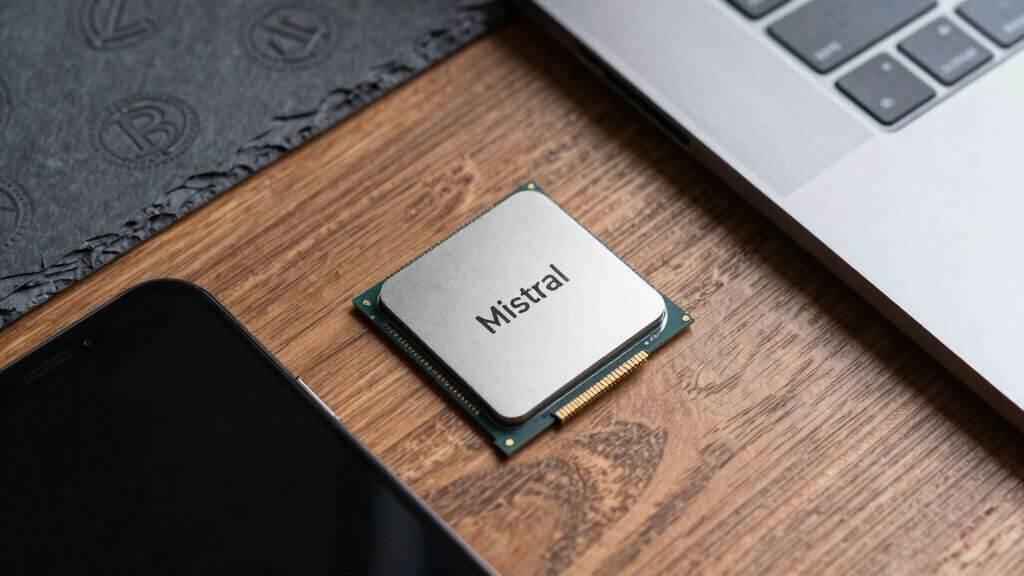
Additionally, Mistral’s efforts to develop proprietary AI chips are viewed skeptically, given the current scale and competition from Nvidia and local French initiatives like SiPearl, which are not expected to deliver chips until 2027–28. Most of its product line is considered competent but not leading, with its API pricing and models serving as a solid but easily replicable value proposition. Explore the challenges in AI market positioning. The company’s consumer-facing models, such as Vibe, are seen as also-rans compared to established players like ChatGPT or Claude, with developer preference favoring other options in Europe.
Implications for European AI Sovereignty and Market Leadership
This reevaluation highlights the challenge for European AI ambitions to balance growth, technological competitiveness, and sovereignty. Mistral’s reliance on non-European infrastructure and open models risks diluting its sovereignty claims, while its technical gaps and financial opacity raise questions about long-term sustainability. The outcome of this assessment could influence policy, investment, and the future direction of European AI initiatives, emphasizing the importance of genuine technological independence over branding and rhetoric.As an affiliate, we earn on qualifying purchases.
European AI Ambitions Amid Global Competition
European countries have invested heavily in AI to reduce dependence on US and Chinese models, emphasizing data sovereignty and open-source approaches. Mistral emerged as a high-profile player promising to combine rapid growth with European values, raising over €3 billion in funding and claiming a €11.7 billion valuation in late 2025. However, recent evaluations and market signals suggest that the company’s technological and strategic positioning may not fully align with its sovereignty claims. The broader context involves intense competition from US giants like OpenAI and Anthropic, as well as Chinese labs, all of which are advancing rapidly in model performance and infrastructure. European startups face the dual challenge of scaling effectively while maintaining a distinct sovereignty narrative, a task complicated by the globalized nature of AI development and hardware supply chains.“Roughly 40% of Mistral’s revenue comes from outside Europe, including the US. That’s a significant asymmetry for a company claiming European sovereignty.”
— Arthur Mensch, Forbes
As an affiliate, we earn on qualifying purchases.
Unclear Long-Term Impact of Technical and Financial Gaps
It is not yet clear whether Mistral can close its performance gaps or achieve profitability at scale. Its financial opacity and ongoing investments in hardware and chip development introduce significant uncertainty about its long-term viability and strategic goals.cloud infrastructure for AI startups
As an affiliate, we earn on qualifying purchases.
As an affiliate, we earn on qualifying purchases.
Next Steps for Mistral and European AI Strategy
Mistral is expected to continue its growth trajectory but faces pressure to improve model performance and transparency. Watch for potential strategic pivots, increased transparency, or new product launches aimed at strengthening its technical edge and sovereignty claims. Policymakers and investors will also scrutinize its financial health and technological independence as the company approaches its 2026 growth targets.As an affiliate, we earn on qualifying purchases.
Key Questions
Can Mistral truly claim European AI sovereignty?
While Mistral brands itself as a European company, nearly 40% of its revenue comes from outside Europe, and its infrastructure relies heavily on US-based cloud providers and American hardware. This complicates its sovereignty claims.
How does Mistral’s technology compare to US and Chinese competitors?
Third-party evaluations indicate that Mistral’s models lag behind in speed, reasoning, and benchmark scores, with its best models losing head-to-head against competitors released earlier.
What are the risks of Mistral’s financial opacity?
The lack of public profitability data and high debt levels pose governance and sustainability risks, especially as the company scales and faces competitive pressures.
Will Mistral develop its own AI chips?
It is exploring chip design, but given its current scale and the competition from Nvidia and French initiatives like SiPearl, this is unlikely to be a short-term strategic focus.
What does this mean for European AI ambitions?
This reassessment underscores the challenge of balancing rapid growth, technological independence, and genuine sovereignty, which may influence future policy and investment decisions in Europe.
Source: ThorstenMeyerAI.com
Fall Picks
fall essentials
As an affiliate, we earn on qualifying purchases.