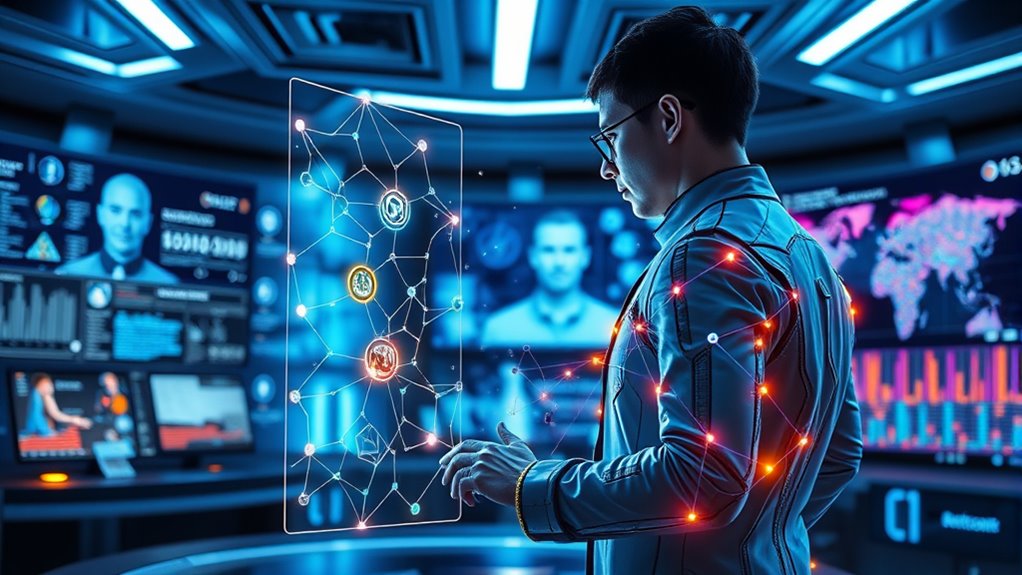

Did you know that blockchain technology could give you complete control over your digital identity, unlike traditional systems? Instead of relying on a central authority, your credentials are stored securely on a decentralized network, making them harder to tamper with or steal. This shift could change how your personal information is verified and shared online. Curious about how this new approach might impact privacy and security in everyday life?
Key Takeaways
- Blockchain enables decentralized verification, reducing reliance on centralized authorities and increasing security against breaches.
- Self-sovereign credentials give individuals control over their personal data, allowing selective disclosure and enhanced privacy.
- Cryptographically signed credentials stored on digital wallets facilitate tamper-proof, blockchain-validated identity verification.
- Peer-to-peer verification on blockchain streamlines processes, reducing delays and eliminating the need for direct issuer contact.
- Overall, blockchain fosters more secure, private, and user-centric identity management systems.
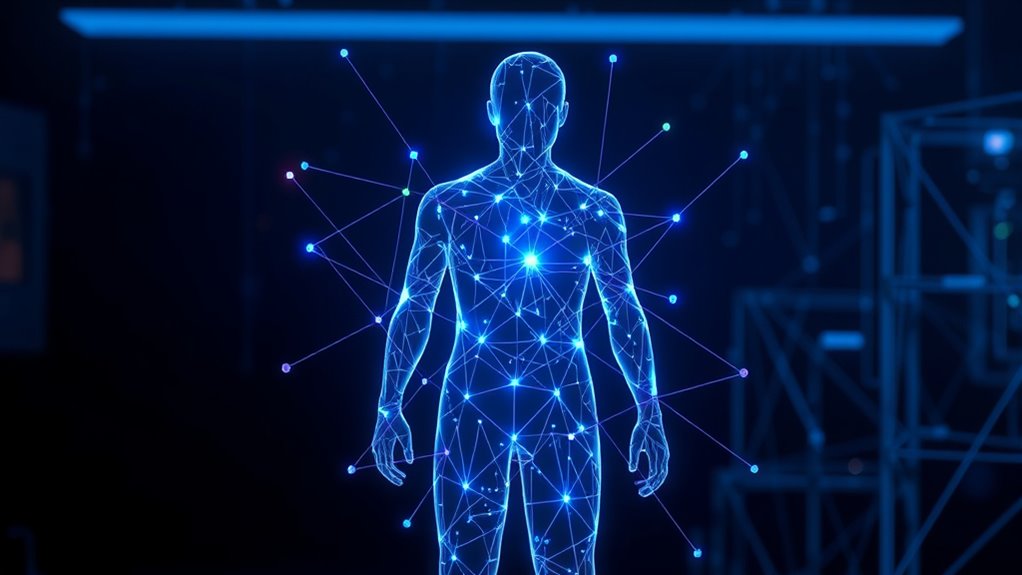
Have you ever wondered how blockchain technology could transform the way we manage and verify identity? Traditional systems rely heavily on centralized databases controlled by institutions like governments, banks, or social media platforms. These centralized repositories are vulnerable to breaches, hacks, and misuse, putting your personal data at risk. Blockchain offers a radical shift with decentralized verification, allowing you to have greater control over your digital identity. Instead of relying on a single authority to authenticate your credentials, blockchain enables a network of computers to validate your information securely and transparently. This process reduces the risk of fraud and gives you more confidence that your identity isn’t being compromised.
One of the most promising innovations in this space is the concept of self-sovereign credentials. These are digital credentials that you own and control entirely, empowering you to share only the information needed for a specific purpose. Instead of handing over your entire identity or multiple documents, you can selectively disclose verified credentials stored on a blockchain. For example, if you need to prove your age or educational background, you can present a tamper-proof credential that’s been validated on the blockchain, without revealing any unnecessary details. This not only enhances privacy but also streamlines verification processes, making them faster and more reliable.
Blockchain’s decentralized verification process works by creating a secure and immutable ledger where each credential is recorded and verified through cryptographic methods. When you receive a self-sovereign credential, it’s cryptographically signed by the issuer—such as a university or government agency—and stored securely on your device or in a digital wallet. When you need to verify your identity, you can present these credentials directly to the requesting party, who can independently check their validity against the blockchain without contacting the issuer again. This peer-to-peer verification eliminates middlemen, reducing delays and potential points of failure.
Moreover, because your self-sovereign credentials are under your control, you can choose when and with whom to share your information. This level of autonomy fosters greater trust and privacy, aligning with modern expectations for digital rights. As blockchain continues to evolve, it’s likely we’ll see broader adoption of these decentralized verification systems, making identity management more secure, private, and user-centric. With decentralized verification and self-sovereign credentials, you’re stepping into a future where you hold the keys to your digital identity, rather than relying on vulnerable centralized systems.

Self-Sovereign Identity: Decentralized digital identity and verifiable credentials
As an affiliate, we earn on qualifying purchases.
As an affiliate, we earn on qualifying purchases.
Conclusion
As you can see, blockchain is truly changing the game when it comes to identity management. It puts you in the driver’s seat, giving you control over your personal data and making verification more secure and private. With this technology, you’re no longer at the mercy of centralized systems. It’s a win-win situation—taking the bull by the horns means you’re shaping a more trustworthy and user-centric digital future.
Self-Sovereign Identity: Decentralized digital identity and verifiable credentials
As an affiliate, we earn on qualifying purchases.
As an affiliate, we earn on qualifying purchases.
cryptographically signed digital ID
As an affiliate, we earn on qualifying purchases.
As an affiliate, we earn on qualifying purchases.

Blockchain for Information Security and Privacy
As an affiliate, we earn on qualifying purchases.
As an affiliate, we earn on qualifying purchases.