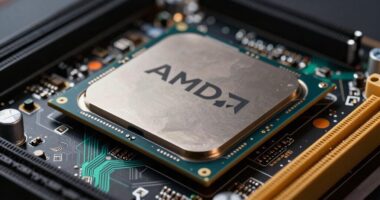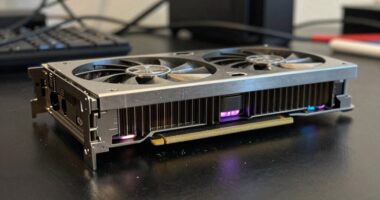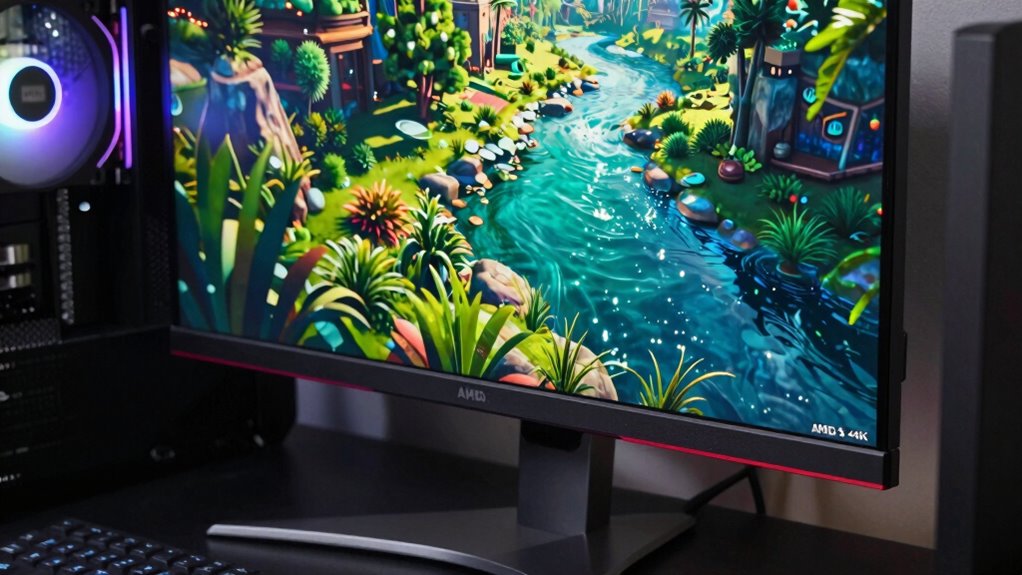

Choosing between 1440p and 4K depends on your budget, performance needs, and what you value most. If you want smoother gameplay with higher frame rates and better affordability, 1440p is a good pick, especially with AMD GPUs that excel at this resolution. If your goal is sharper visuals and you have powerful hardware, 4K offers stunning detail and immersion. To make the best choice for your setup, there’s more important info you’ll find helpful below.

Get hardware and tech essentials delivered free with Prime
- Fast, free delivery on millions of items
- Prime Video, Amazon Music and more included
- Member-only deals all year
Key Takeaways
- 1440p offers higher frame rates and smoother gameplay with less GPU strain, ideal for performance-focused gaming.
- 4K provides superior detail and color fidelity, best suited for immersive visuals and professional content creation.
- Budget and hardware capability are critical; 1440p is more cost-effective and easier to optimize on most GPUs.
- Higher resolutions demand more powerful GPUs; ensure your AMD GPU can handle 4K without sacrificing performance.
- Future-proof your setup by selecting a GPU that comfortably supports your preferred resolution and upcoming gaming demands.
As an affiliate, we earn on qualifying purchases.
Key Differences Between 1440p and 4K for Gaming and Creative Work
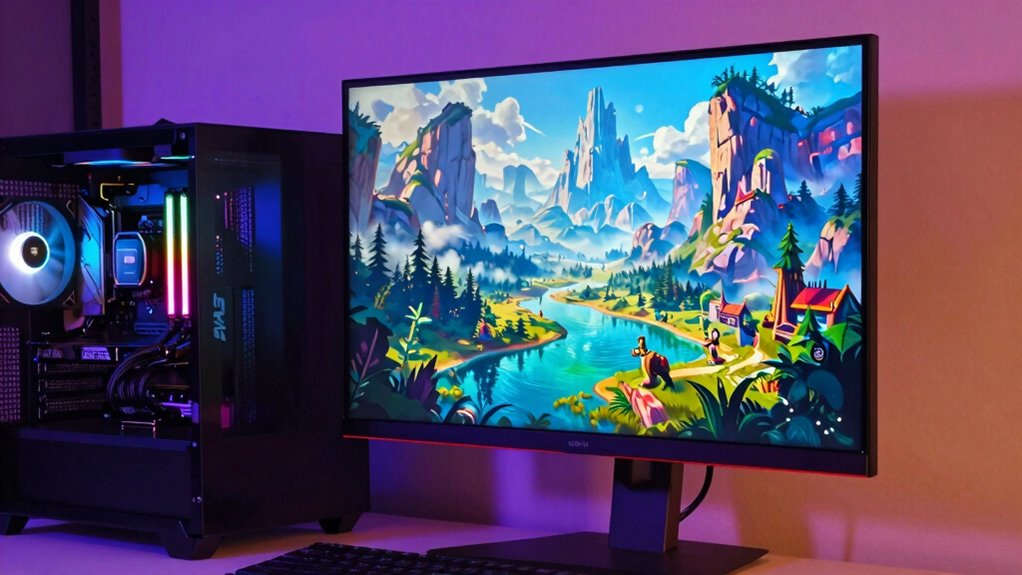
When choosing between 1440p and 4K, it’s important to understand their key differences, especially for gaming and creative work. 1440p, also known as QHD, offers a good balance between resolution and performance, giving you sharper images than 1080p without stressing your GPU as much as 4K. For creative tasks, color calibration at 1440p can be easier to manage, ensuring accurate colors for editing and design. Meanwhile, 4K provides a higher pixel count, delivering finer detail and better visual fidelity. The refresh rate also plays a role; higher refresh rates at 1440p can give you smoother gameplay, while 4K often requires more powerful hardware to achieve the same. Understanding these differences helps you choose the best resolution for your needs. Additionally, requirements traceability is crucial to ensure that your hardware choices meet your specific performance and quality standards, especially in professional creative environments. It’s also important to consider display technology and how it impacts overall image quality and compatibility with your GPU.
As an affiliate, we earn on qualifying purchases.
Performance Impact of Playing at 1440P vs. 4K With AMD GPUS
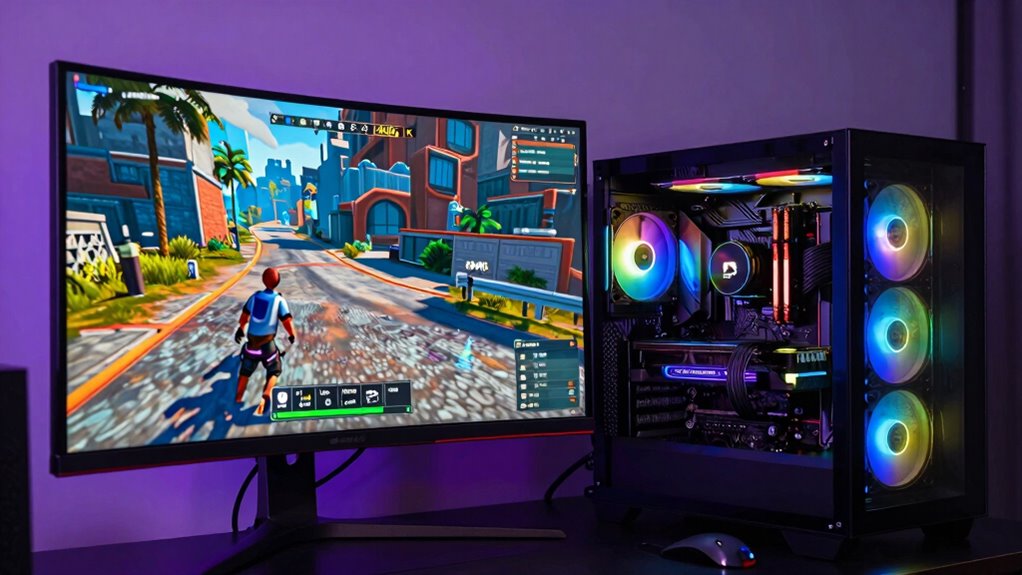
Choosing between 1440p and 4K considerably impacts your AMD GPU’s performance during gaming. At 1440p, your GPU can deliver higher frame rates, resulting in smoother gameplay and a better refresh rate experience. In contrast, 4K demands more processing power, often reducing frame rates but offering superior color accuracy and detail. Keep in mind:
1440p offers higher frame rates, while 4K provides richer detail but requires more GPU power for optimal gameplay.
- Higher resolutions increase GPU load, affecting refresh rate and overall performance
- Frame rate stability varies; 1440p typically provides more consistent performance
- The GPU’s capability influences whether 4K’s visual benefits outweigh performance costs
- Contrast ratio plays a critical role in how sharp and vivid images appear at different resolutions, impacting overall visual quality.
Balancing resolution with your GPU’s power ensures you optimize gameplay without sacrificing responsiveness or visual fidelity.
As an affiliate, we earn on qualifying purchases.
Visual Quality: What to Expect at 1440p and 4K

Moving up to 1440p or 4K considerably enhances your gaming visuals, but each resolution offers a different level of detail and clarity. At 1440p, you’ll see sharper images with better color accuracy, making environments and characters more lifelike. 4K pushes this further, delivering incredible detail and vibrant colors that bring worlds to life. Your display’s refresh rates also play a vital role in visual quality; higher refresh rates provide smoother motion, reducing blur and tearing. While 1440p still offers impressive visuals, 4K maximizes clarity and color fidelity, especially on high-end monitors. Ultimately, your choice impacts how immersive your gaming experience feels, with 4K offering the most stunning and detailed visuals, provided your GPU can keep up.
4K professional creative monitor
As an affiliate, we earn on qualifying purchases.
As an affiliate, we earn on qualifying purchases.
Best AMD GPUs for 1440p and 4K Gaming and Content Creation
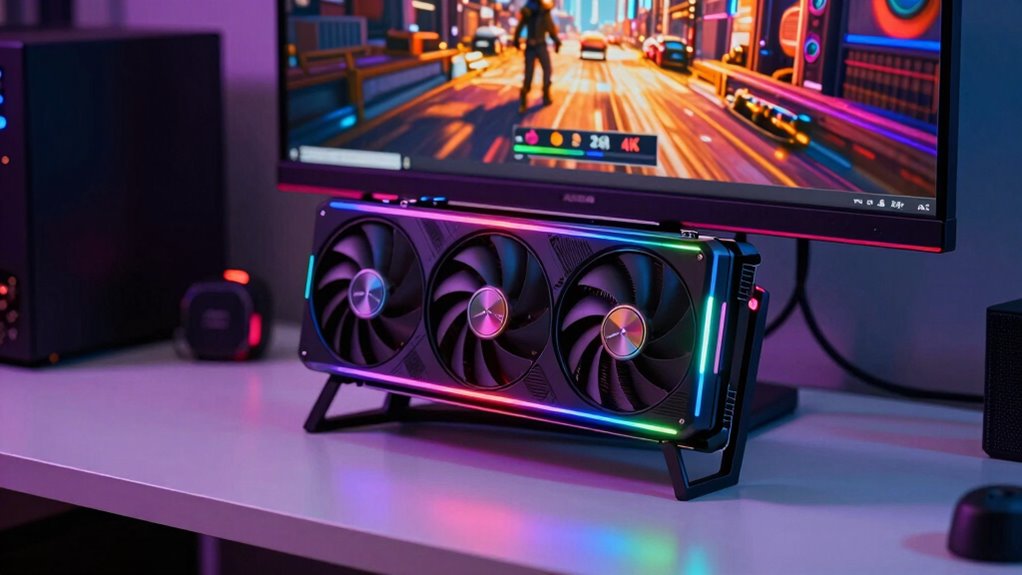
If you’re aiming for smooth, high-quality gaming or content creation at 1440p or 4K, selecting the right AMD GPU is crucial. The AMD Radeon RX 7900 XTX and RX 7900 XT stand out for demanding tasks, offering excellent performance in both gaming and content creation. For VR gaming, these GPUs deliver immersive experiences with minimal latency, while their streaming performance ensures smooth broadcasts. Consider these factors:
- *VR gaming*: high frame rates and low latency enhance immersion.
- *Content creation*: powerful GPUs accelerate rendering and editing workflows.
- *Future-proofing*: top-tier models support upcoming game and software updates.
How to Decide: Is 1440p or 4K Right for Your Budget and Needs?
Your budget and performance needs are key to choosing between 1440p and 4K. If you want smooth gameplay without breaking the bank, 1440p might be your best bet; for the highest detail and future-proofing, 4K could be worth the investment. Consider what games or tasks you prioritize to make the right choice.
Budget Considerations
Deciding between 1440p and 4K ultimately depends on your budget and how much you’re willing to invest in your gaming setup. Higher resolutions often require more powerful GPUs, which can increase costs. To make the most of your budget, consider:
- Ensuring your monitor calibration is spot-on for peak image quality
- Checking cable compatibility to support higher resolutions without issues
- Balancing GPU upgrades with other components to avoid bottlenecks
A 4K setup demands a more significant investment in both hardware and accessories, like cables capable of handling higher bandwidth. If your budget is tight, focusing on 1440p can offer excellent visuals without breaking the bank. Prioritize what fits your financial plans and gaming needs best.
Performance Requirements
Choosing between 1440p and 4K hinges on how demanding your gaming experience is and the performance your hardware can deliver. Your graphics card plays a key role—higher resolutions require more power, so verify it can handle 4K smoothly. If your GPU struggles at 4K, you might experience lag or reduced frame rates. Performance requirements also involve display calibration; to optimize image quality at 4K, you’ll need precise calibration settings. Consider your target frame rate—if your hardware can’t consistently hit high frames, 1440p may provide a better balance of quality and performance. Ultimately, assess your GPU’s capabilities and how much you’re willing to adjust display calibration for the best gaming experience at your chosen resolution.
Common Challenges When Using AMD GPUs at 1440p or 4K

When gaming at 1440p or 4K with AMD GPUs, you might notice performance can vary depending on your setup and game optimization. These higher resolutions demand more GPU power, which can lead to frame rate drops or stuttering if your hardware isn’t up to the task. Additionally, optimizing settings for smooth gameplay often requires extra effort, as some titles may not run as efficiently on AMD hardware at these resolutions.
Performance Variability Challenges
Despite the impressive capabilities of AMD GPUs, users often encounter performance variability when gaming at 1440p or 4K. This inconsistency can affect your experience, impacting smoothness, color accuracy, and refresh rate stability. You might notice fluctuating frame rates, which can make gameplay feel uneven or choppy. Factors like driver updates, game optimization, and background processes contribute to this variability. To mitigate these issues, focus on:
- Ensuring your drivers are up to date for ideal performance and stability
- Adjusting in-game settings to balance quality and smoothness
- Managing background processes that consume system resources
Addressing these challenges helps stabilize performance, allowing your GPU to deliver consistent frame rates, better color accuracy, and a suitable refresh rate at high resolutions.
GPU Power Demands
Running your AMD GPU at 1440p or 4K demands considerably more power, which can introduce several challenges. Increased power consumption means your GPU requires a robust power supply to prevent instability or crashes. It also generates more heat, making effective cooling solutions essential. Without adequate cooling, your GPU may throttle performance or risk overheating. You’ll need to assure your case has good airflow and consider aftermarket cooling options if necessary. Power demands can also lead to higher energy bills and increased wear on your components over time. Managing these challenges involves balancing your GPU’s performance needs with your system’s power capacity and cooling capabilities. Proper planning helps maintain stability and prolongs your GPU’s lifespan at higher resolutions.
Optimization Difficulties
Optimizing performance at 1440p or 4K can be challenging because AMD GPUs often require fine-tuning to get the best balance between visual quality and frame rates. You might encounter issues with driver compatibility that cause crashes or stuttering, making it necessary to keep drivers up-to-date. Software optimization can also be inconsistent, leading to uneven performance across titles. To mitigate these challenges, consider:
- Regularly updating your GPU drivers to ensure compatibility and stability
- Tweaking in-game settings and using AMD-specific optimization tools
- Staying informed about patches and community advice for specific games
- Emerging trends in gaming hardware can influence software compatibility and performance improvements over time.
These steps help you navigate the complexities of high-resolution gaming while maximizing your AMD GPU’s potential.
Future-Proofing Your Setup: Choosing the Right Resolution and GPU
Choosing the right resolution and GPU now can considerably extend the lifespan of your gaming setup. To future-proof effectively, focus on a monitor with good calibration options and a high refresh rate, which guarantees smooth gameplay now and adapts to future upgrades. If you opt for 1440p, your GPU needs to handle high frame rates without sacrificing image quality, making it more versatile for upcoming titles. Going for 4K requires a more powerful GPU but offers sharper visuals that won’t feel outdated soon. Consider your monitor’s calibration settings to optimize color accuracy and clarity. Also, prioritize a higher refresh rate, as it enhances responsiveness and can make your setup more adaptable as new games demand more from your GPU.
Frequently Asked Questions
How Does VR Performance Differ Between 1440P and 4K on AMD GPUS?
VR performance on AMD GPUs is smoother at 1440p because it’s easier to optimize for, resulting in lower latency and better VR optimization. At 4K, you’ll notice increased latency and potential drops in frame rates, which can cause discomfort. To get the best VR experience, stick with 1440p for easier latency reduction and more consistent performance, especially on mid-range AMD GPUs.
Are There Specific Game Genres Better Suited for 1440P or 4K?
You’ll find first-person shooters and fast-paced action games shine better at 1440p, where smoother gameplay and quicker response times matter more than ultra-high detail. RPGs and immersive titles benefit from 4K’s sharper visuals, especially if your monitor calibration emphasizes color accuracy for vibrant worlds. Coincidentally, choosing the right resolution depends on your genre preferences and how well your monitor displays those rich hues and fine details.
What Accessories Improve Gaming Experience at 1440P or 4K?
To improve your gaming experience at 1440p or 4K, focus on monitor calibration for accurate colors and sharp visuals. Invest in quality gaming peripherals like a responsive mouse, mechanical keyboard, and a comfortable headset to enhance immersion. These accessories guarantee smooth gameplay and reduce fatigue, making your gaming sessions more enjoyable. Proper calibration and the right peripherals work together to maximize your GPU’s potential and deliver stunning visuals.
How Does Monitor Size Influence Resolution Choice for AMD GPUS?
Your monitor size and viewing distance directly influence your resolution choice with AMD GPUs. Larger monitors, like 27 inches or more, benefit from 4K for sharper images, especially if you sit close. Smaller screens, around 24 inches, work well with 1440p, as the pixel density remains high and the image stays crisp without demanding too much from your GPU. Adjust your resolution based on how big your monitor is and how close you sit.
Can I Upgrade My AMD GPU Easily for Higher Resolutions Later?
Yes, upgrading your AMD GPU later is pretty straightforward if you verify GPU compatibility with your system. Modern AMD cards are designed for easy swaps, but you’ll want to keep driver updates in mind—they guarantee peak performance and compatibility. Notably, AMD’s latest GPUs can handle higher resolutions efficiently, so upgrading is a smart move. Just check your power supply and PCIe slot, and you’ll be set for smoother, higher-res gaming.
Conclusion
Choosing between 1440p and 4K isn’t just a technical decision—it’s about shaping your gaming and creative journey. Think of your GPU as the brush and the resolution as the canvas; the right choice enables your full potential. Don’t settle for less than what sparks your passion. With the right AMD GPU, you can craft a future where your visions come vividly alive—because your experience deserves nothing less than extraordinary.
Halloween Picks
halloween
As an affiliate, we earn on qualifying purchases.