🔍 Read the full analysis: AI Meets Interactive Design In “TURBINE — WERK 9” on ThorstenMeyerAI.com

Get hardware and tech essentials delivered free — and shop member deals
- Fast, free delivery on millions of items
- Access to Prime Big Deal Days deals on October 6–7
- Prime Video, Amazon Music and more included
TL;DR
ThorstenMeyerAI.com describes TURBINE — WERK 9 as an interactive web field guide that uses a scroll-driven SVG rotor to connect movement through the page with an industrial setting. The site says the project is available to view live and links to a case study covering the rotor, visual system and design process; it does not provide implementation details or performance data.
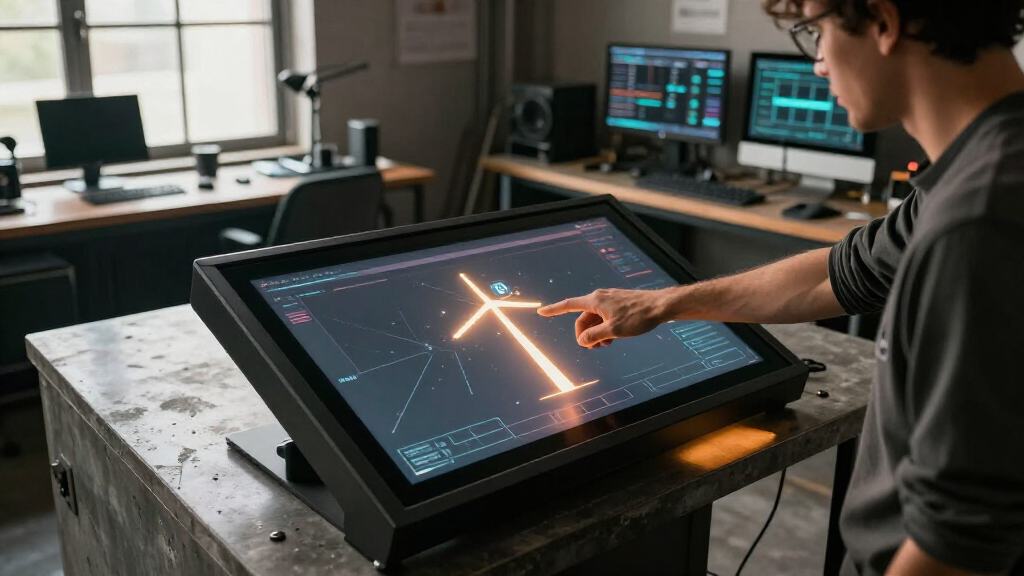
TURBINE — WERK 9 is a live interactive web experience that links a visitor’s scrolling to the movement of an SVG rotor, presenting an industrial setting as a field guide rather than a conventional brochure. ThorstenMeyerAI.com’s original analysis describes the browser interaction as a way to connect page navigation with the mechanics suggested by the place.
ThorstenMeyerAI.com describes the experience as a scroll-driven field guide: as visitors move through the page, a rotor constructed from scalable vector graphics responds to that input. The site says the motion is intended to connect navigating the web page with the machinery and spatial character of the project. It frames this as an interactive design choice, rather than simply an industrial visual theme.
ThorstenMeyerAI.com says a linked design case study discusses how the team shaped the rotor’s movement, organized the visual system and translated a physical-feeling environment into a browser experience. The site also invites visitors to explore the live room. The available description does not identify individual designers or provide technical specifications, so details about the underlying code and production process cannot be confirmed here.
ThorstenMeyerAI.com presents the project as relevant to people interested in AI tools and automation, pointing to the way a browser, vector paths and user input combine in a responsive interface. The site does not say that generative AI created the experience or powered its interaction. The confirmed design feature in its presentation is the relationship between scrolling and the SVG rotor.
Interactive design · Web field guide
AI Meets Interactive Design in TURBINE — WERK 9
A live browser experience ties a visitor’s scroll to an SVG rotor, turning movement through an industrial setting into part of the story.
01 / The design premise
When scrolling drives the rotor
A familiar browser action becomes part of the subject matter, linking page navigation with the industrial character suggested by the setting.
Scroll as input
As visitors move down the page, the experience connects that progress with the rotor’s movement.
Vector machinery
The described visual anchor is a rotor built with scalable vector graphics, set within an industrial atmosphere.
A more spatial page
The concept treats the page less like a conventional brochure and more like a place to explore.
02 / Interaction anatomy
A browser action, made visible
The public description confirms the relationship between scrolling and rotor motion. It does not explain the implementation behind that relationship.
Visitor moves through the page
Scrolling provides the visible point of interaction described for the experience.
The rotor responds
An SVG rotor is linked to that movement, connecting navigation with a mechanical visual.
The setting becomes a field guide
Motion and visual system frame the industrial environment as a place to explore.
03 / What is documented
Clear concept. Limited technical detail.
ThorstenMeyerAI.com points readers to a live room and a case study covering the rotor, visual system, and design process.
The experience is presented as live and uses a scroll-driven SVG rotor as its central interaction.
Implementation method, touch behavior, accessibility options, performance data, user testing, and publication date.
04 / AI context
Interactive design, not a stated AI system
The project is presented as relevant to people interested in AI tools and automation, but the available description makes no claim that AI powers the experience.
Responsive interface
A browser, vector paths, and visitor input come together in the stated design concept.
Underlying code
The site does not say whether movement follows scroll position directly or uses another technique.
AI generation or control
No AI model, generated asset, or automated workflow is identified as part of the experience.
05 / Key questions
At a glance
The published account describes the design intent and points to further material, while leaving technical and impact questions open.
What is TURBINE — WERK 9?
An interactive web field guide that connects movement through a page with an industrial setting through a scroll-driven SVG rotor.
How does the interaction work?
The project description links visitor scrolling to rotor movement, but does not provide a detailed technical explanation.
Is it powered by AI?
No AI-powered interaction is stated in the available description. The confirmed feature is the link between scrolling and the rotor.
Where can readers learn more?
ThorstenMeyerAI.com directs readers to the live room and a case study about motion design, the visual system, and the process.
When Scrolling Drives the Rotor
The design makes a familiar browser action—scrolling—part of the subject matter. As described by ThorstenMeyerAI.com, TURBINE — WERK 9 connects movement down a page with the rotation of a mechanical form. That approach can give visitors a clearer sense of the project’s industrial theme while keeping the interaction within a standard web page.
For designers and people who build interactive sites, the example highlights how vector graphics and user input can shape an experience without requiring visitors to learn a separate control system. It also puts the emphasis on a specific design question: how to make an interface feel spatial and responsive while preserving the clarity of a designed object. The information published by ThorstenMeyerAI.com describes the intended approach, but does not provide user testing or evidence about how audiences respond.
interactive SVG rotor web design tools
As an affiliate, we earn on qualifying purchases.
As an affiliate, we earn on qualifying purchases.
A Field Guide Built for Browsers
ThorstenMeyerAI.com frames the project as an interactive field guide, a format that gives exploration a more directed purpose than a conventional promotional page. Its industrial atmosphere provides the setting, while the rotor serves as a visual element that responds to the visitor’s progress. The site’s stated concept asks whether a web page can behave less like a brochure and more like a machine a visitor can move around.
The presentation points readers to two ways of engaging with the work: a live room and a fuller case study. ThorstenMeyerAI.com describes the case study as covering the motion design and visual system. No publication or launch date is given, and the site provides no information about a broader product release, commercial use or connection to a particular physical installation.
scroll-driven web animation software
As an affiliate, we earn on qualifying purchases.
As an affiliate, we earn on qualifying purchases.
Technical Details Still Unreported
The public description on ThorstenMeyerAI.com does not specify how the SVG rotor is implemented, whether its movement is controlled directly by scroll position or through another technique, or how it behaves on touch devices. The site also gives no information about accessibility options, reduced-motion settings, browser compatibility, loading performance or testing with users.
The project’s connection to AI is also limited in the available details. ThorstenMeyerAI.com presents it as relevant to people interested in AI tools and automation, but identifies no AI model, automated workflow or generated asset as part of the experience. The site does not name the team or provide measurable results, so claims about its wider impact would be premature.
industrial style SVG graphics for websites
As an affiliate, we earn on qualifying purchases.
As an affiliate, we earn on qualifying purchases.
Explore the Live Room and Case Study
ThorstenMeyerAI.com directs readers to the live room to experience the scroll-linked interaction and to a linked case study for an account of the rotor’s movement and visual system. Those materials may clarify implementation choices that are not detailed in the presentation. No further release, event or update schedule is specified.
Source: ThorstenMeyerAI.com
browser-based interactive design tutorials
As an affiliate, we earn on qualifying purchases.
As an affiliate, we earn on qualifying purchases.
Key Questions
What is TURBINE — WERK 9?
ThorstenMeyerAI.com describes it as an interactive web field guide that uses a scroll-driven SVG rotor to connect movement through a page with an industrial setting.
How does the interaction work?
According to the project description on ThorstenMeyerAI.com, a visitor’s scrolling input is linked to the movement of a rotor made from SVG vector paths. The site does not provide a detailed technical explanation.
Is the experience powered by AI?
ThorstenMeyerAI.com presents the project as appealing to people interested in AI tools and automation, but the available description does not say that AI generates or runs the interaction.
Where can readers find more information?
ThorstenMeyerAI.com points readers to the live room and a linked case study described as covering the rotor’s motion, visual system and design process.
Source: ThorstenMeyerAI.com
Fall Picks
fall essentials
As an affiliate, we earn on qualifying purchases.