
TL;DR

Get hardware and tech essentials delivered free with Prime
- Fast, free delivery on millions of items
- Prime Video, Amazon Music and more included
- Member-only deals all year
Recent developments show that phone cameras, combined with guided lighting and shade scoring algorithms, can objectively measure teeth whitening progress at home. This new approach aims to reduce guesswork and optimize whitening routines.
Phone-camera-based shade scoring for home teeth whitening is being tested as a new tool to objectively measure progress. This innovation aims to help consumers track their whitening results more accurately, reducing reliance on subjective visual assessment. The development is driven by the need for a reliable measurement method in the growing home whitening market, which currently involves a lot of product cycling based on guesswork.
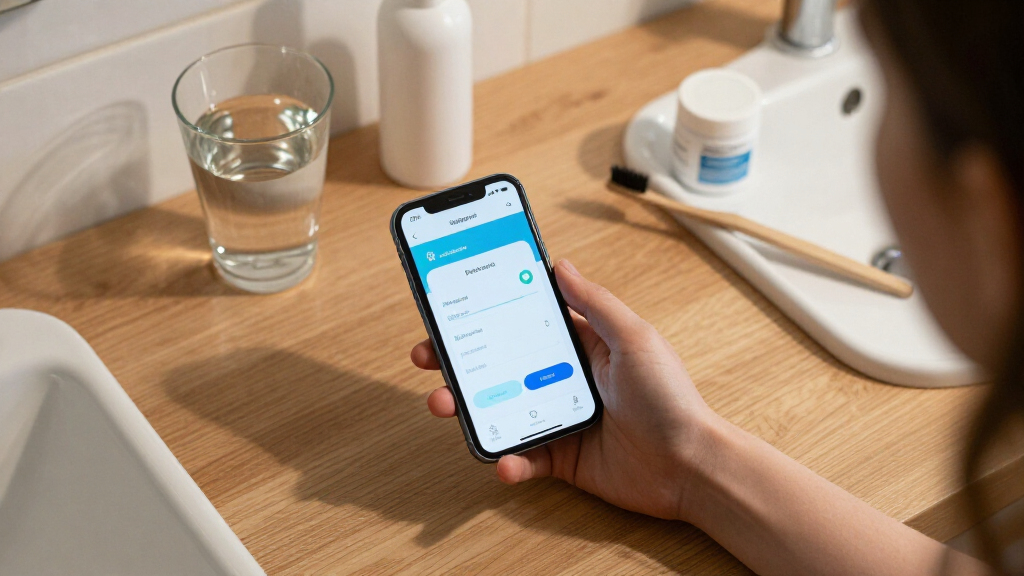
Research and development efforts are focused on creating a guided-lighting photo flow that uses a smartphone camera to capture images of teeth under standardized lighting conditions. These images are then analyzed against a calibrated dental shade scale, similar to what dentists use in-office. The goal is to generate a shade score that can be tracked over time, providing users with clear data on their whitening progress.
Initial testing involves benchmarking the app’s shade scores against dentist-assessed VITA shade readings for a sample of fifty users. Early results suggest a strong correlation, indicating that the technology could reliably approximate professional measurements. The app would then plot weekly shade scores, identify which products effectively whiten teeth, and recommend products based on user-specific data and historical results.
Revenue models include subscriptions for ongoing use and affiliate marketing of proven whitening products, creating a new measurement layer in the consumer oral care space. The approach aims to reduce the trial-and-error cycle that leads many users to spend hundreds of dollars on ineffective products.
Implications of Phone-Based Shade Measurement for Home Whitening
This development could significantly impact how consumers approach at-home teeth whitening by providing an objective, easy-to-use measurement tool. It can help users determine which products actually improve their shade, reducing unnecessary spending and frustration. For the industry, this innovation introduces a new data-driven layer that could enhance product efficacy and personalization, potentially boosting consumer confidence in home whitening solutions.
Furthermore, as the technology matures, it could lead to more standardized and measurable outcomes in the home whitening market, similar to how digital health tools have transformed personal wellness tracking. The ability to track progress visually and quantitatively may also motivate users to maintain consistent routines, ultimately improving results.
As an affiliate, we earn on qualifying purchases.
Background and Development of Home Teeth Whitening Tech
The home teeth whitening market has expanded rapidly over the past decade, with consumers cycling through strips, trays, and LED kits. However, a common challenge has been the lack of objective measurement tools, leading to guesswork and often ineffective results. Most users rely on visual cues in bathroom mirrors, which can be subjective and influenced by lighting, mood, and expectations.
Recent advances in smartphone camera technology and guided lighting have opened new avenues for more accurate shade assessment. Some startups and researchers are now exploring how to leverage these tools to create reliable, user-friendly systems that approximate professional shade matching. The concept aligns with broader trends in personalized health and beauty tech, emphasizing measurable outcomes and data-driven decision-making.
Initial prototypes and testing phases are underway, with early reports indicating promising correlations between app-generated scores and dentist assessments. This suggests a potential shift in how consumers can objectively monitor and optimize their whitening routines at home.
“The technology has the potential to provide users with a reliable, objective measure of their whitening progress, similar to what dentists do in-office.”
— an anonymous researcher
smartphone teeth whitening progress tracker
As an affiliate, we earn on qualifying purchases.
As an affiliate, we earn on qualifying purchases.
What Aspects of Phone Shade Scoring Are Still Uncertain
While early testing shows promising results, it is not yet confirmed how accurately the app’s shade scores will match professional dental assessments across diverse populations and lighting conditions. Further validation with larger sample sizes and real-world testing is needed before widespread adoption. Additionally, questions remain about the app’s ability to account for different tooth types, staining patterns, and user technique variability.
It is also unclear how quickly the technology will reach commercial availability and whether it will be integrated into existing whitening products or offered as a standalone app. Regulatory considerations and user privacy concerns related to image analysis are other factors that could influence deployment.
home teeth whitening kit with shade scoring
As an affiliate, we earn on qualifying purchases.
As an affiliate, we earn on qualifying purchases.
Next Steps in Developing Phone-Based Teeth Shade Measurement
Developers plan to expand testing with larger and more diverse user groups to validate the correlation between app scores and professional assessments. They aim to refine the guided-lighting capture process to ensure consistency across different environments and devices. Following successful validation, the next phase involves commercial trials and potential integration with existing whitening products or subscription services.
Industry experts expect further research to explore how personalized recommendations based on shade data can enhance user outcomes. Regulatory review and user privacy protections will also be prioritized as the technology moves toward broader release.
As an affiliate, we earn on qualifying purchases.
Key Questions
How accurate is phone-based teeth shade scoring compared to dentist assessments?
Initial studies suggest a strong correlation, but further validation is needed before it can reliably replace professional assessments. Early results are promising, but accuracy across diverse users and conditions remains under investigation.
Can I use my phone to track my whitening progress now?
Currently, the technology is still in testing phases and not yet available for general consumer use. Future apps may provide this functionality once validated and commercially launched.
Will this technology work with any smartphone?
It is expected that the system will require specific guided-lighting conditions and calibration, which may necessitate certain device features or accessories. Compatibility details are still being developed.
How will this technology change the home whitening process?
It could make the process more objective and data-driven, helping users choose effective products and track results accurately, reducing frustration and unnecessary spending.
Are there privacy concerns with using phone cameras for shade analysis?
Yes, as with any image-based technology, privacy protections and data security will be important considerations in the development and deployment of these tools.
Source: IdeaNavigator AI
Halloween Picks
halloween
As an affiliate, we earn on qualifying purchases.