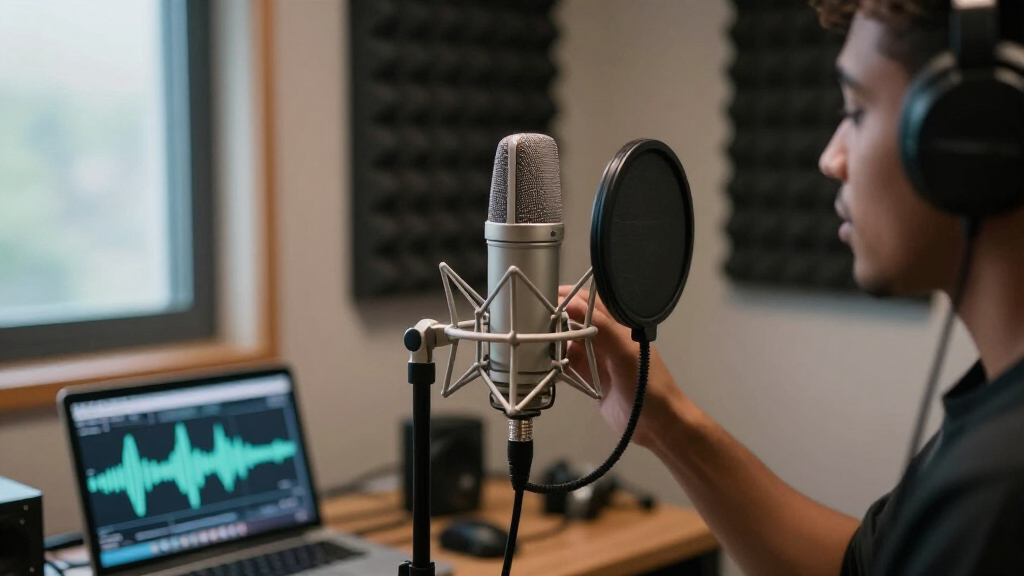

📊 Full opportunity report: The Future Of Sound: AI-Enabled Studio Condenser Microphones In 2026 on ThorstenMeyerAI.com — validation score, market gap, and execution plan.

Get hardware and tech essentials delivered free — and shop member deals
- Fast, free delivery on millions of items
- Access to Prime Big Deal Days deals on October 6–7
- Prime Video, Amazon Music and more included
TL;DR
AI-enabled studio condenser microphones are being introduced in 2026, offering advanced features like automatic sound optimization and adaptive noise reduction. These innovations aim to improve recording quality and workflow efficiency for users at all levels.
In 2026, the audio equipment industry is witnessing the release of AI-enabled studio condenser microphones, which incorporate artificial intelligence to enhance sound quality and user experience. These microphones are designed to automatically optimize audio settings, reduce background noise, and adapt to different recording environments, marking a significant shift from traditional models. For more details, see the original analysis.
Leading audio companies, including RØDE, Audio-Technica, and Shure, have announced or launched models with integrated AI features. Learn more about the latest innovations in AI microphones in 2026. These microphones utilize machine learning algorithms to analyze incoming sound in real time, adjusting parameters such as gain, polar pattern, and equalization for optimal recording quality. For instance, RØDE’s new NT1 Signature Series is reportedly equipped with AI-driven noise suppression, making it ideal for professional studios and content creators.
Industry experts highlight that these advancements could drastically reduce the need for extensive post-processing and technical adjustments, streamlining production workflows. For an in-depth overview, see the top studio condenser microphones. Some models also feature intelligent feedback reduction and automatic level control, which are particularly useful for live recording situations or dynamic environments. The adoption of AI in microphones aims to cater to both professional studios and consumers seeking high-quality recordings with minimal setup.
The 8 picks
- 1
 Shure SM4 XLR Studio Condenser Microphone Kit for RecordingView on Amazon →
 - 2
 Audio-Technica AT2035 Cardioid Condenser Microphone with Shock Mount and Acce…View on Amazon →
 - 3
 RØDE NT1 Signature Series Large-Diaphragm Condenser Microphone with Shock Mou…View on Amazon →
 - 4
 Audio-Technica AT2020 Cardioid Condenser Studio XLR MicrophoneView on Amazon →
 - 5
 AKG Pro Audio P120 Condenser MicrophoneView on Amazon →
 - 6
 MAONO A04 Gen2 XLR/USB Condenser Microphone Kit for PC and Content CreationView on Amazon →
 - 7
 Mackie EM-Series Large-Diaphragm Condenser Microphone (EM-91C)View on Amazon →
 - 8
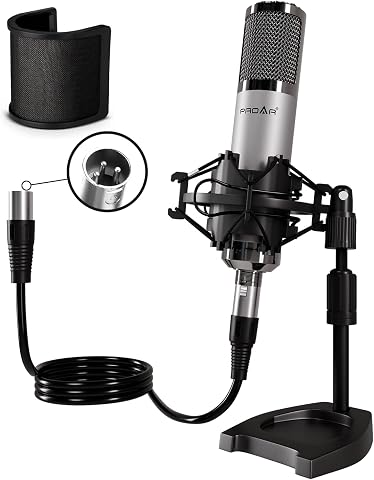 XLR Condenser Microphone with Desktop Stand for Vocals and PodcastingView on Amazon →
Impact of AI Microphones on Recording Quality and Workflow
The integration of AI into studio condenser microphones significantly impacts the recording industry by improving sound fidelity, reducing technical barriers, and increasing efficiency. For professionals, this means less time spent on editing and mixing, while hobbyists and content creators can achieve studio-quality results with less technical expertise. As AI technology matures, these microphones could become standard equipment, elevating the overall quality of audio content across various sectors.
Evolution of Microphones and AI Integration in 2026
Traditional studio condenser microphones have long been valued for their sound quality but often require manual adjustments and extensive post-processing. Over the past decade, manufacturers have increasingly incorporated digital features, such as built-in DSP and connectivity options. The current trend toward AI integration builds on this evolution, leveraging machine learning to automate and optimize recording parameters. Major brands like Shure and Audio-Technica have announced models featuring AI capabilities, signaling a new era in audio technology.
“Our new NT1 Signature Series incorporates AI-driven noise reduction, setting a new standard for studio microphones.”
— RØDE spokesperson
Uncertainties Surrounding AI Microphone Adoption and Performance
While several models have been announced, full performance validation and long-term reliability of AI features in studio microphones remain under evaluation. It is also unclear how quickly these models will become widely adopted across different segments, and whether the cost premium will limit accessibility for some users. Additionally, the extent to which AI can adapt to diverse recording environments without user intervention is still being tested.
Upcoming Releases and Industry Adoption Milestones in 2026
Expect further product launches from major manufacturers throughout 2026, with ongoing real-world testing and user feedback shaping future iterations. Industry experts anticipate that AI-enabled microphones will gradually become standard in professional studios and high-end consumer setups by the end of the year. Key milestones include validation of AI algorithms’ robustness, broader market availability, and potential integration with other smart studio tools.
Key Questions
How do AI-enabled microphones improve sound quality?
They analyze incoming audio in real time, automatically adjusting settings like gain, noise suppression, and polar pattern to optimize sound quality without manual intervention.
Are AI microphones suitable for professional studio use?
Yes, many models are designed to meet professional standards, offering features like adaptive noise reduction and precise control, though full validation is ongoing.
Will AI features increase the cost of studio microphones?
Typically, AI integration adds to the price, but manufacturers aim to balance cost and advanced capabilities, making high-quality AI microphones accessible to a broader audience over time.
Can AI microphones replace traditional manual adjustments entirely?
While AI can automate many settings, some users may still prefer manual control for specific creative or technical reasons. AI is intended to complement, not fully replace, user input.
What are the limitations of current AI microphone technology?
Current AI models are still being tested for long-term reliability and adaptability across diverse environments. They may also require updates and calibration for optimal performance.
Source: ThorstenMeyerAI.com
Evergreen bestsellers Picks
bestsellers
As an affiliate, we earn on qualifying purchases.