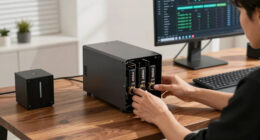

Choosing the best computer for local large language model (LLM) experiments requires balancing performance, cost, and versatility. The GMKtec X3 AI Mini PC stands out as the best overall for its compact design and powerful AMD Ryzen AI Max+ processor. For those seeking raw computing power, the NVIDIA DGX Spark™ 2 Pack offers a specialized supercomputing setup, though at a higher price point. Meanwhile, the MINISFORUM Mini PC AI X1 Pro provides a strong middle ground with high specs and a more accessible price. Each option involves tradeoffs between size, performance, and budget, so continue reading for the full breakdown to find your ideal match.

Get hardware and tech essentials delivered free — and shop member deals
- Fast, free delivery on millions of items
- Access to Prime Big Deal Days deals on October 6–7
- Prime Video, Amazon Music and more included
Key Takeaways
- High-performance CPU and GPU are essential for efficient local LLM training and inference.
- Memory capacity greatly impacts the ability to handle large models—aim for at least 64GB of RAM for serious work.
- Form factor varies widely; mini PCs can save space but may limit expansion or cooling options.
- Specialized hardware like NVIDIA‘s GB10 Superchip or Grace chips significantly boost training speed but come at premium costs.
- Balancing budget and needs is key—top-tier options deliver speed but may be overkill for smaller projects.
| GMKtec X3 AI Mini PC with AMD Ryzen AI Max+ 395, 128GB LPDDR5X, 2TB PCIe 4.0 SSD |  | Best Overall for Compact AI Power | Processor: AMD Ryzen AI Max+ 395, 16 cores, 32 threads, up to 5.1GHz | AI Performance: 126 TOPS | GPU: AMD Radeon RX 8060S with 40 CUs, up to 2.9 GHz | VIEW LATEST PRICE | See Our Full Breakdown |
| ASUS Ascent GX10 Personal AI Supercomputer with NVIDIA GB10 Superchip |  | Best for Dedicated AI Research and Development | Processor: NVIDIA GB10 Grace Blackwell Superchip with 20-core Arm CPU | GPU: Blackwell GPU architecture | Memory: 128GB LPDDR5x unified memory | VIEW LATEST PRICE | See Our Full Breakdown |
| NVIDIA DGX Spark™ 2 Pack with Cable Bundle – Personal AI Desktop Supercomputer |  | Best for Enterprise-Grade AI on Your Desk | Operating System: NVIDIA DGX OS | Memory: 128GB unified system memory | Storage: 4TB NVMe M.2 SSD with self-encryption | VIEW LATEST PRICE | See Our Full Breakdown |
| MINISFORUM Mini PC AI X1 Pro AMD Ryzen 9 HX370, 96GB DDR5, 2TB SSD, 8K Output, Dual LAN, WiFi 7, BT 5.4, Copilot AI |  | Best for Versatile Local AI Workstations | Processor: AMD Ryzen 9 HX370, 12 cores/24 threads, up to 5.1 GHz | Graphics: AMD Radeon 890M, GDDR6 | Memory: 96GB DDR5 (support up to 128GB) | VIEW LATEST PRICE | See Our Full Breakdown |
| AMD Ryzen AI Halo Personal AI Desktop Computer Developer Platform Linux OS |  | Best for AI Development and Inference on Linux | Operating System: Linux | Memory: 128 GB DDR5 | Storage: 2 TB SSD | VIEW LATEST PRICE | See Our Full Breakdown |
| GEEKOM A7 Mini PC, Ryzen 9 7940HS, 32GB RAM, 2TB SSD, Radeon 780M |  | Best Overall for Versatile Local LLM Setup | Processor: Ryzen 9 7940HS | RAM: 32GB DDR5 | Storage: 2TB SSD | VIEW LATEST PRICE | See Our Full Breakdown |
| NVIDIA DGX Spark™ – Personal AI Desktop Supercomputer with Grace Blackwell Chip |  | Best for Enterprise-Grade AI and Large Model Experiments | Architecture: Grace Blackwell | AI Performance: up to 1 petaFLOP | Memory: 128GB | VIEW LATEST PRICE | See Our Full Breakdown |
| AMD Ryzen AI Halo – Personal AI Desktop Computer – Windows 11 Pro |  | Best Compact AI Development Station | Processor: AMD Ryzen Max+ 395 | Memory: 128 GB DDR5 | Storage: 2 TB SSD | VIEW LATEST PRICE | See Our Full Breakdown |
| MINISFORUM MS-S1 MAX Mini AI Workstation PC, AMD Ryzen AI Max+ 395, 128GB RAM, 2TB SSD, RDNA3.5 GPU, Dual M.2 PCIe 4.0, Wi-Fi 7, Dual 10GbE |  | Best High-End Mini AI Workstation for Demanding Tasks | Processor: AMD Ryzen AI Max+ 395 | GPU: RDNA 3.5 | Memory: 128GB LPDDR5x-8000MT/s | VIEW LATEST PRICE | See Our Full Breakdown |
| computers for local llm experiment | Processor | Memory | Storage | Connectivity |
|---|---|---|---|---|
| GMKtec X3 AI Mini PC with AMD | AMD Ryzen AI Max+ 395, 16 cores, 32 threads, up to 5.1GHz | 128GB LPDDR5X, up to 8000MT/s | 2 x M.2 PCIe 4.0 SSD, up to 16TB total | Wi-Fi 7, Bluetooth 5.4, 2.5GbE Ethernet |
| ASUS Ascent GX10 Personal AI S | NVIDIA GB10 Grace Blackwell Superchip with 20-core Arm CPU | 128GB LPDDR5x unified memory | 2TB NVMe SSD | Wi-Fi 7, 10GbE, USB-C, HDMI |
| NVIDIA DGX Spark™ 2 Pack with | NVIDIA GB10 Grace Blackwell Superchip, 3.8 GHz | 128GB unified system memory | 4TB NVMe M.2 SSD with self-encryption | — |
| MINISFORUM Mini PC AI X1 Pro A | AMD Ryzen 9 HX370, 12 cores/24 threads, up to 5.1 GHz | 96GB DDR5 (support up to 128GB) | 2TB SSD (supports up to 12TB total) | WiFi 7, Bluetooth 5.4, dual 2.5Gbps Ethernet |
| AMD Ryzen AI Halo Personal AI | AMD Ryzen Max+ 395, 16 cores, 3 GHz (up to 5.1 GHz) | 128 GB DDR5 | 2 TB SSD | 10GbE LAN, Wi-Fi 7, USB-C, HDMI 2.1b |
| GEEKOM A7 Mini PC | Ryzen 9 7940HS | — | 2TB SSD | Wi-Fi 6E, Bluetooth 5.2, 2.5GbE LAN |
| NVIDIA DGX Spark™ | — | 128GB | — | — |
| AMD Ryzen AI Halo | AMD Ryzen Max+ 395 | 128 GB DDR5 | 2 TB SSD | Wi-Fi 7, 10GbE LAN |
| MINISFORUM MS-S1 MAX Mini AI W | AMD Ryzen AI Max+ 395 | 128GB LPDDR5x-8000MT/s | 2TB SSD | — |
More Details on Our Top Picks
GMKtec X3 AI Mini PC with AMD Ryzen AI Max+ 395, 128GB LPDDR5X, 2TB PCIe 4.0 SSD
The GMKtec X3 AI Mini PC stands out for packing high-end AI performance into a small form factor, thanks to its AMD Ryzen AI Max+ 395 processor with 16 cores and 126 TOPS AI capabilities. Compared to the MINISFORUM Mini PC AI X1 Pro, it offers more RAM and faster PCIe 4.0 storage, making it better suited for intensive local AI experiments. However, its complex setup and relatively high power draw mean it’s best for users comfortable with technical configuration. The external GPU support and modern connectivity also future-proof this mini powerhouse. Still, software compatibility details are sparse, which could be a concern for some.
Pros:- High-performance AMD Ryzen AI Max+ 395 processor with 126 TOPS AI capabilities
- Supports external GPU expansion for enhanced graphics and AI workloads
- Fast LPDDR5X memory and PCIe 4.0 SSD for quick data access
- Modern Wi-Fi 7 and Bluetooth 5.4 connectivity
Cons:- Limited info on software compatibility and ecosystem integration
- Potentially high power consumption for a mini PC
- Setup may require technical expertise for optimal performance
Best for: AI developers and content creators needing powerful processing in a compact, upgradeable package.
Not ideal for: Casual users or those seeking plug-and-play simplicity, due to setup complexity and higher power requirements.
- Processor:AMD Ryzen AI Max+ 395, 16 cores, 32 threads, up to 5.1GHz
- AI Performance:126 TOPS
- GPU:AMD Radeon RX 8060S with 40 CUs, up to 2.9 GHz
- Memory:128GB LPDDR5X, up to 8000MT/s
- Storage:2 x M.2 PCIe 4.0 SSD, up to 16TB total
- Connectivity:Wi-Fi 7, Bluetooth 5.4, 2.5GbE Ethernet
Our verdict“This mini PC is ideal for AI developers who need substantial power in a compact form, despite setup and power considerations.”
ASUS Ascent GX10 Personal AI Supercomputer with NVIDIA GB10 Superchip
The ASUS Ascent GX10 is tailored for AI research labs and developers needing raw computational muscle, thanks to its NVIDIA GB10 Grace Blackwell Superchip and 128GB of unified memory. Unlike the NVIDIA DGX Spark™ 2 Pack, which is more compact and desktop-oriented, the GX10 is designed to be a dedicated AI workhorse with extensive connectivity options, including Wi-Fi 7 and 10GbE. Its high-end specs come with a hefty price tag and require technical expertise to operate effectively. This makes it less suitable for casual or entry-level users but perfect for those running demanding AI workloads in a professional setting.
Pros:- Exceptional AI performance with NVIDIA GB10 Superchip
- Large 128GB unified memory for handling extensive datasets
- Fast 2TB NVMe SSD storage for rapid data access
- Supports advanced connectivity including Wi-Fi 7 and 10GbE
Cons:- Likely very expensive for individual or small-scale use
- Requires technical expertise to set up and operate
- Designed primarily for enterprise or research environments
Best for: Research labs and AI professionals wanting a dedicated, high-performance machine for large-scale models.
Not ideal for: Hobbyists or casual experimenters who may find the cost and complexity prohibitive.
- Processor:NVIDIA GB10 Grace Blackwell Superchip with 20-core Arm CPU
- GPU:Blackwell GPU architecture
- Memory:128GB LPDDR5x unified memory
- Storage:2TB NVMe SSD
- Connectivity:Wi-Fi 7, 10GbE, USB-C, HDMI
- Performance:Up to 1 PetaFLOP of FP4 AI performance
Our verdict“This supercomputer is ideal for professional AI research requiring maximum performance and scalability, with a high investment barrier.”
NVIDIA DGX Spark™ 2 Pack with Cable Bundle – Personal AI Desktop Supercomputer
The NVIDIA DGX Spark™ 2 Pack offers a compact AI powerhouse with enterprise-grade performance, supporting large models up to 200 billion parameters. Its design is more energy-efficient and space-conscious compared to larger systems like the ASUS Ascent GX10, making it suitable for dedicated AI workstations. However, its setup demands technical skill, and it lacks a standard power plug, which could complicate deployment. While not intended for casual users, it excels in environments where high AI throughput and large model training are priorities. Its self-encrypting SSD and NVIDIA software stack streamline enterprise workflows but may be overkill for smaller projects.
Pros:- Up to 1 petaFLOP of AI processing power
- Supports large models with high levels of parameter count
- Compact and energy-efficient design suitable for desktop placement
- Seamless NVIDIA AI ecosystem integration
Cons:- Requires significant technical expertise to set up
- No standard power plug included, complicating setup
- Designed mainly for professional and enterprise use
Best for: AI researchers and data scientists requiring a desktop AI supercomputer with enterprise features.
Not ideal for: Individuals seeking a plug-and-play solution or casual AI experimentation, due to setup complexity.
- Operating System:NVIDIA DGX OS
- Memory:128GB unified system memory
- Storage:4TB NVMe M.2 SSD with self-encryption
- Processor:NVIDIA GB10 Grace Blackwell Superchip, 3.8 GHz
- Graphics Output:HDMI
- Dimensions:12 x 8 x 6 inches
Our verdict“This desktop AI supercomputer suits enterprise-style AI work requiring high throughput, despite its setup and complexity hurdles.”
MINISFORUM Mini PC AI X1 Pro AMD Ryzen 9 HX370, 96GB DDR5, 2TB SSD, 8K Output, Dual LAN, WiFi 7, BT 5.4, Copilot AI
The MINISFORUM Mini PC AI X1 Pro delivers a compelling balance of power and features for AI experimentation and demanding multitasking. Its AMD Ryzen 9 HX370 processor with 12 cores and 96GB DDR5 RAM makes it versatile for local AI inference, gaming, and content creation. Compared with the AMD Ryzen AI Halo, it offers more connectivity options like dual LAN and advanced display outputs, making it better suited for multi-monitor setups and network-heavy workflows. The high power consumption at 135W, however, could be a concern for energy-conscious users. Its relatively complex setup is suitable for tech-savvy users who want a flexible, high-performance machine in a compact chassis.
Pros:- Powerful AMD Ryzen 9 HX370 processor with AI support
- Supports up to four 4K displays simultaneously
- Fast data transfer with USB4 and PCIe 4.0 SSD support
- Versatile connectivity including dual LAN, Wi-Fi 7, and multiple expansion slots
Cons:- High power consumption at 135W
- Complex setup might be challenging for less experienced users
- Price could be high for casual or hobbyist users
Best for: AI developers and power users needing a flexible, high-performance desktop with broad connectivity.
Not ideal for: Casual users or those seeking a simple, low-power AI solution, due to high power draw and setup complexity.
- Processor:AMD Ryzen 9 HX370, 12 cores/24 threads, up to 5.1 GHz
- Graphics:AMD Radeon 890M, GDDR6
- Memory:96GB DDR5 (support up to 128GB)
- Storage:2TB SSD (supports up to 12TB total)
- Display Outputs:HDMI 2.1, DisplayPort 2.0, supports 8K output
- Connectivity:WiFi 7, Bluetooth 5.4, dual 2.5Gbps Ethernet
Our verdict“This mini PC offers a high degree of flexibility and power for AI developers and multitaskers willing to handle its setup and energy needs.”
AMD Ryzen AI Halo Personal AI Desktop Computer Developer Platform Linux OS
The AMD Ryzen AI Halo is tailored for AI developers seeking a Linux-based platform with robust capabilities, featuring a 16-core Ryzen Max+ 395 processor and 128GB of unified memory. Its compact 6×6-inch design makes it ideal for dedicated AI research setups. Compared to the GMKtec X3 AI Mini PC, it offers a more developer-focused environment with full Linux support and AMD’s XDNA 2 NPU for inference tasks. Its upgradeability is limited, and the lack of detailed specs on expandability might trouble those with evolving project needs. This device is best for dedicated AI work rather than casual experimentation or general use.
Pros:- High-performance AI development with 128GB unified memory
- Supports large AI models up to 200 billion parameters
- Compact, portable design with advanced connectivity
- Full Linux support with AMD ROCm ecosystem
Cons:- Limited information on upgradeability or expansion options
- Designed mainly for AI development, not general consumer use
- Price and availability may vary without clear details
Best for: AI researchers and developers who prefer Linux and need a compact, dedicated inference platform.
Not ideal for: Users seeking a plug-and-play or Windows-based AI system, or those wanting extensive hardware upgrades.
- Operating System:Linux
- Memory:128 GB DDR5
- Storage:2 TB SSD
- Processor:AMD Ryzen Max+ 395, 16 cores, 3 GHz (up to 5.1 GHz)
- Graphics:AMD Radeon 8060S with 40 RDNA 3.5 compute units
- Connectivity:10GbE LAN, Wi-Fi 7, USB-C, HDMI 2.1b
Our verdict“This platform excels for AI developers needing a compact Linux device for large-model inference, despite its limited upgrade paths.”
GEEKOM A7 Mini PC, Ryzen 9 7940HS, 32GB RAM, 2TB SSD, Radeon 780M
This mini PC stands out for combining high-end computing power with a compact form factor, making it ideal for local LLM experiments that demand both CPU and GPU resources. Compared with the MINISFORUM MS-S1 MAX, it offers a more balanced performance profile with a robust Ryzen 9 processor and ample RAM, though it lacks a dedicated GPU, which could limit certain high-end AI workloads. The support for up to four 8K displays enhances multitasking, and the premium aluminum chassis ensures efficient cooling. However, its internal upgrade options are limited, and the higher price might be a barrier for some. This makes it a versatile choice for those needing a powerful yet space-efficient machine, especially when balanced GPU and CPU performance are desired.
Pros:- Powerful Ryzen 9 7940HS processor with AI acceleration
- Large 32GB DDR5 RAM and 2TB NVMe SSD for fast data access
- Supports up to four displays with 8K output for multitasking
- Premium aluminum chassis with efficient cooling
Cons:- No dedicated discrete GPU, limiting high-end gaming or GPU-centric AI tasks
- Higher price point with limited internal upgradeability
Best for: Developers and researchers needing a compact workstation with strong CPU and multi-display support.
Not ideal for: Enthusiasts seeking dedicated high-end gaming or GPU-intensive tasks, due to the absence of a discrete GPU.
- Processor:Ryzen 9 7940HS
- RAM:32GB DDR5
- Storage:2TB SSD
- Graphics:Radeon 780M
- Connectivity:Wi-Fi 6E, Bluetooth 5.2, 2.5GbE LAN
- Ports:USB4, HDMI (x2), supports 4 displays
Our verdict“This mini PC suits professionals seeking a compact, high-performance machine for multitasking and AI workloads without the need for dedicated GPU upgrades.”
NVIDIA DGX Spark™ – Personal AI Desktop Supercomputer with Grace Blackwell Chip
The NVIDIA DGX Spark™ delivers extraordinary AI performance in a desktop form, supporting up to 1 petaFLOP and large models up to 200 billion parameters at FP4. Compared with the AMD Ryzen AI Halo, it is designed for serious enterprise workloads and offers seamless integration with NVIDIA’s software stack, making it ideal for cutting-edge AI research. Its energy-efficient design and compact size make it suitable for high-demand environments, but the high cost and need for specialized knowledge to operate it effectively mean it is best suited for organizations or advanced users with specific AI needs. This makes it a standout choice for those pushing the boundaries of local large model experimentation.
Pros:- Supports up to 1 petaFLOP of AI performance
- Handles large models up to 200 billion parameters at FP4
- Compact, energy-efficient desktop design
- Seamless NVIDIA AI software integration
Cons:- Likely very high cost, possibly out of reach for smaller projects
- Requires advanced technical knowledge to operate effectively
Best for: AI researchers and enterprise developers working on large-scale models requiring high performance and software integration.
Not ideal for: Individual hobbyists or small teams with limited budgets or less technical expertise, due to its high cost and setup complexity.
- Architecture:Grace Blackwell
- AI Performance:up to 1 petaFLOP
- Memory:128GB
- Model Support:up to 200 billion parameters at FP4
Our verdict“This product excels in enterprise-grade AI experimentation, especially for those developing and testing extremely large models on-site.”
AMD Ryzen AI Halo – Personal AI Desktop Computer – Windows 11 Pro
The AMD Ryzen AI Halo packs impressive AI development capabilities into a small form factor, with 128GB of unified DDR5 memory and a powerful Ryzen Max+ 395 processor. Compared with the larger MINISFORUM MS-S1 MAX, it offers a more integrated design with extensive connectivity, including Wi-Fi 7 and 10GbE LAN, making it suitable for intensive local AI tasks. Its compact size, however, limits upgrade options and expansion, making it less suitable for future-proofing or heavy GPU upgrades. This machine is ideal for developers who prioritize a space-saving but high-powered AI workstation, especially when mobility or desktop footprint matters most.
Pros:- 128GB unified high-speed DDR5 memory
- Powerful Ryzen Max+ 395 processor with 16 cores and high clock speeds
- Extensive connectivity including Wi-Fi 7 and 10GbE LAN
- Compact size for space-constrained setups
Cons:- Limited upgrade options due to small footprint
- Primarily focused on AI/inference, less suited for gaming or multimedia
Best for: AI developers needing a portable yet powerful development environment on Windows 11 Pro.
Not ideal for: Users seeking a machine with extensive upgradeability or for GPU-heavy gaming, as its size limits internal expansion.
- Processor:AMD Ryzen Max+ 395
- Memory:128 GB DDR5
- Storage:2 TB SSD
- Graphics:AMD Radeon 8060S
- Connectivity:Wi-Fi 7, 10GbE LAN
- Operating System:Windows 11 Pro
Our verdict“This compact desktop offers high AI development performance with excellent connectivity, perfect for space-conscious professionals.”
MINISFORUM MS-S1 MAX Mini AI Workstation PC, AMD Ryzen AI Max+ 395, 128GB RAM, 2TB SSD, RDNA3.5 GPU, Dual M.2 PCIe 4.0, Wi-Fi 7, Dual 10GbE
The MINISFORUM MS-S1 MAX combines a high-performance AMD Ryzen AI Max+ 395 CPU and GPU with 128GB of RAM, making it a compelling choice for demanding AI and multimedia workloads. Compared to the GEEKOM A7, it offers significantly more expandability with dual M.2 PCIe slots, a full-length PCIe x16 slot, and dual 10GbE LAN, catering to users with enterprise or clustering needs. Its advanced cooling system ensures stability under heavy loads, but its tiny size may limit internal upgrade options or DIY modifications. This pick makes the most sense for professionals requiring a compact, yet expandable and powerful AI workstation capable of handling large datasets and complex models.
Pros:- High-performance CPU and GPU for demanding AI tasks
- 128GB RAM with low latency UMA architecture
- Extensive connectivity including Wi-Fi 7 and dual 10GbE
- Supports multiple expansion options for future upgrades
Cons:- Limited pre-installed operating system info
- Potentially high cost due to advanced specs
- Small size may restrict some internal upgrades
Best for: AI researchers and developers needing a compact, highly expandable platform for intensive workloads.
Not ideal for: Casual users or those with limited technical skills, since the advanced features and expansion options can be complex to manage.
- Processor:AMD Ryzen AI Max+ 395
- GPU:RDNA 3.5
- Memory:128GB LPDDR5x-8000MT/s
- Storage:2TB SSD
- Networking:Dual 10GbE LAN, Wi-Fi 7
- Expansion Slot:Full-length PCIe x16
Our verdict“This mini workstation is ideal for professionals who need a compact yet highly expandable machine capable of running large AI models and demanding multimedia tasks.”
How We Picked
The products were selected based on their processing power, memory capacity, GPU capabilities, expandability, and overall build quality. Priority was given to systems that can handle large language models locally without requiring cloud dependencies. We also considered price-to-performance ratios, ease of setup, and future-proofing features like upgradeability and connectivity options. The ranking reflects a balance of raw performance, usability, and value for users committed to local LLM experimentation, rather than just flagship models or hyper-specialized supercomputers. Each product was evaluated to identify who it best serves and its main tradeoffs.Factors to Consider When Choosing Best Computers For Local Llm Experiments
When choosing a computer for local LLM experiments, it’s important to consider several key factors that influence performance and usability. Understanding these will help you avoid common pitfalls like overpaying for unnecessary hardware or underestimating cooling needs. The right balance depends on your specific project size, budget, and future plans. Here are some critical factors to keep in mind:Processing Power and GPU Capabilities
Training and running large language models demand powerful CPUs and GPUs. Look for systems with recent multi-core processors like AMD Ryzen 9 or Intel Core i9, and high-end GPUs such as NVIDIA RTX series or specialized chips like NVIDIA Grace or GB10 Superchip. A strong GPU accelerates training and inference, reducing time and energy costs. However, more powerful hardware typically comes with increased costs and heat generation, so consider your cooling solutions and power supply capacity accordingly.
Memory and Storage
Large models require substantial RAM—aim for at least 64GB for serious experimentation. More memory allows you to work with bigger datasets and models without frequent swapping. Storage speed also matters; NVMe SSDs provide faster data access than SATA drives, improving overall system responsiveness during training. Consider future expandability if your projects grow, ensuring the system can accommodate additional RAM or storage upgrades down the line.
Form Factor and Expandability
Mini PCs and compact systems save space but often limit upgrade options and cooling capacity. Larger towers or workstation-class systems typically offer more room for additional RAM, extra GPUs, or advanced cooling solutions. Think about your long-term needs; if you plan to scale your experiments, investing in a more modular setup may save money and effort later.
Cost vs. Performance
High-end hardware delivers faster training but can be prohibitively expensive. Budget-conscious options often compromise on GPU power or memory capacity. It’s important to match your hardware choices with your project scope—not over-invest if your experiments are small-scale, but avoid underpowered systems that slow down progress. Prioritize components that directly impact your workload, like GPU and RAM, over less critical features.
Cooling and Power Considerations
Powerful hardware generates significant heat and consumes more electricity. Ensure your setup includes adequate cooling solutions—especially if you plan to run intensive workloads for extended periods. Also, confirm your power supply can handle peak loads. Overlooking these factors risks thermal throttling or hardware failure, which could interrupt your experiments and lead to costly repairs.
Frequently Asked Questions
Can I use a gaming PC for local LLM experiments?
Yes, a high-end gaming PC with a recent GPU like an NVIDIA RTX 3080 or 4090 can handle many LLM tasks effectively. However, gaming PCs often prioritize aesthetics and may lack the necessary cooling or expandability for sustained AI workloads. If you choose a gaming PC, ensure it has adequate cooling solutions and sufficient RAM, or consider upgrading components as needed to meet your project demands.
Is it worth investing in a dedicated AI desktop supercomputer?
For serious, large-scale local LLM training, investing in dedicated hardware like NVIDIA DGX systems can significantly cut training times and improve reliability. These systems are designed specifically for AI workloads, but they come at a high cost. For smaller projects or learning purposes, more affordable options like high-end mini PCs or workstations may suffice, offering better value for most users.
How much RAM do I need for training large language models?
At least 64GB of RAM is recommended for training sizable models, especially if you’re working with extensive datasets. More RAM reduces the need for data swapping to disk, which can slow down training considerably. For very large models or multi-task setups, 128GB or more may be necessary, but this often requires a workstation or server-class system to support such memory capacities.
Should I prioritize GPU or CPU performance?
For local LLM experiments, the GPU usually matters more because it handles the bulk of the training computations. A powerful GPU accelerates both training and inference, while a strong CPU supports data preprocessing and general system responsiveness. Striking a balance between the two is ideal, but if limited by budget, focus on getting the best GPU within your price range, then upgrade CPU and RAM later if needed.
What is the best form factor for a small-scale AI lab?
Mini PCs or compact workstations are excellent for space-constrained environments. They can still offer impressive performance if equipped with high-end GPUs and ample RAM, but cooling and expansion options are limited. For long-term flexibility and heavier workloads, larger tower systems or dedicated workstations provide more room for upgrades and better cooling, which can be critical for sustained AI experiments.
Conclusion
For those seeking an all-around high-performance setup capable of handling diverse LLM projects, the GMKtec X3 AI Mini PC offers a balanced combination of size, power, and value. If your focus is on maximum speed and scalability, investing in a dedicated supercomputer like the NVIDIA DGX Spark™ makes sense, despite the higher price. Beginners or hobbyists might prefer the GEEKOM A7 Mini PC for its approachable specs and price point. Budget-conscious users should consider systems with a strong GPU and sufficient RAM, while professionals requiring scalability and future-proofing should opt for workstation-class hardware. Ultimately, your choice depends on your workload size, budget, and long-term ambitions in local LLM experimentation.
Evergreen bestsellers Picks
bestsellers
As an affiliate, we earn on qualifying purchases.