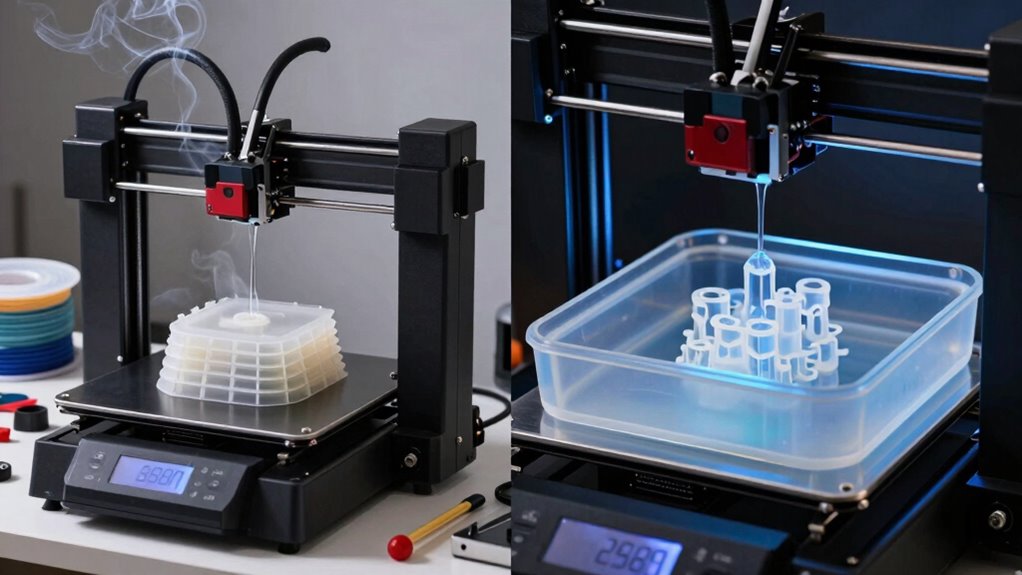

FDM printing is generally cleaner and more beginner-friendly, as it involves melting filament and produces less mess, with simpler cleanup. Resin printing, on the other hand, offers faster print times and superior detail, but it involves handling liquid resin, which can be messy and requires extra safety measures. Neither method is perfect—FDM is slower and less detailed, while resin demands careful maintenance. If you want to find out which suits your project best, there’s more to explore.

Get hardware and tech essentials delivered free — and shop member deals
- Fast, free delivery on millions of items
- Access to Prime Big Deal Days deals on October 6–7
- Prime Video, Amazon Music and more included
Key Takeaways
- FDM printing is generally cleaner and easier to maintain with minimal cleanup compared to resin printing’s liquid spills and resin handling.
- Resin printing offers faster print times due to rapid layer curing, whereas FDM is typically slower, especially for detailed models.
- Neither technology is flawless: FDM produces rougher surfaces and visible layer lines, while resin requires careful handling and environmental precautions.
- FDM is more beginner-friendly, cost-effective, and suited for larger projects, while resin excels in high-detail, intricate miniature work.
- Environmental considerations favor FDM’s lower chemical waste, as resin involves hazardous liquids needing careful disposal.
As an affiliate, we earn on qualifying purchases.
How Do FDM and Resin 3D Printing Technologies Work?
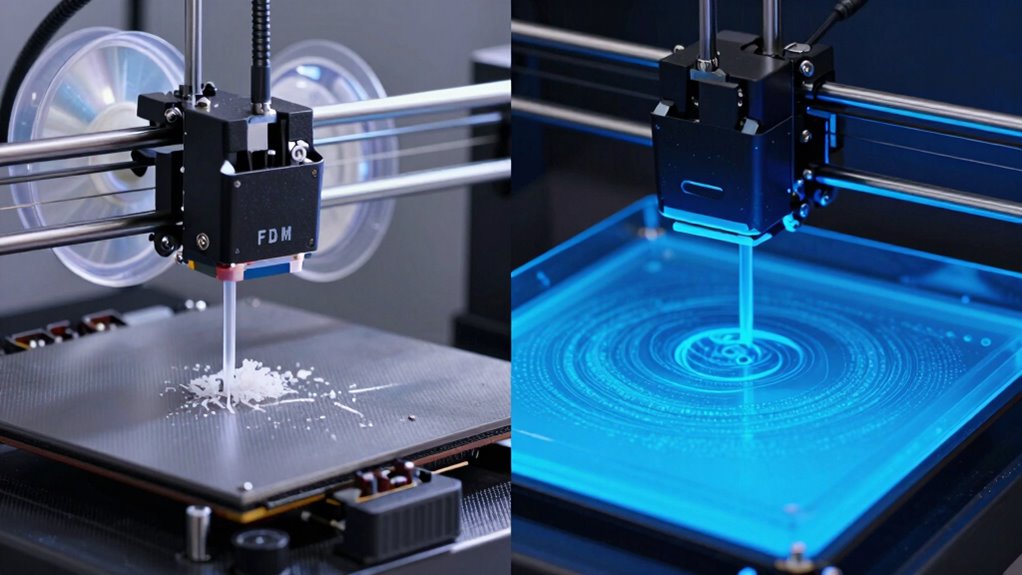
While both FDM and resin 3D printing build objects layer by layer, they use fundamentally different methods to create those layers. FDM printing melts filament, extruding it through a heated nozzle onto a build platform, which makes material compatibility essential for different filaments like PLA, ABS, or PETG. Resin printing, on the other hand, uses liquid resin cured by a UV light, resulting in finer detail but requiring careful printer maintenance to prevent resin spills and guarantee proper cleaning. FDM printers generally demand less frequent maintenance, but filament jams can occur, impacting print quality. Resin printers need thorough cleaning after each print, and resin management is critical for safety and precision. Both technologies require regular upkeep to achieve consistent results.
As an affiliate, we earn on qualifying purchases.
What Are the Main Benefits of FDM Printing for Beginners?
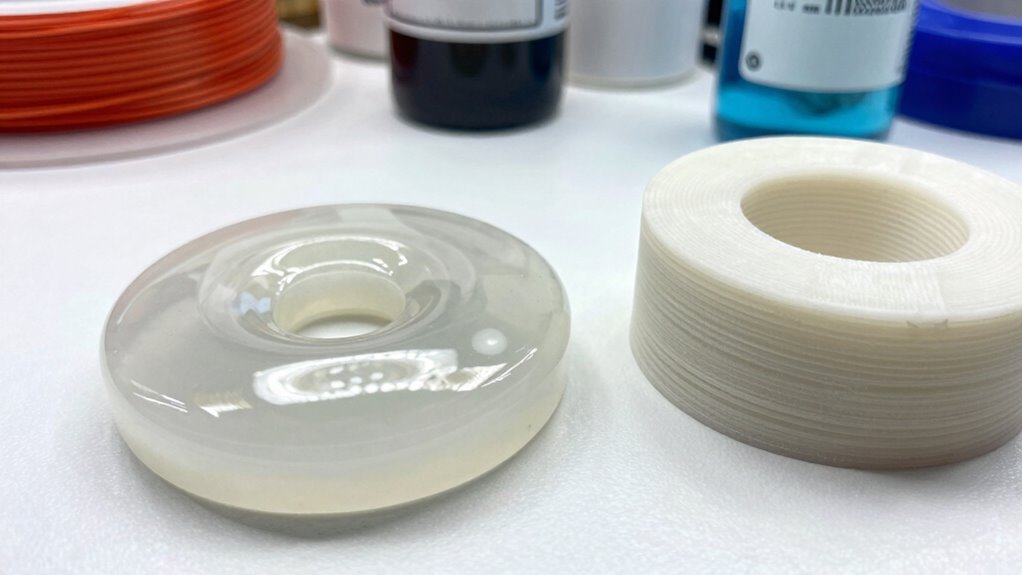
FDM printing offers several advantages that make it an excellent choice for beginners. One key benefit is material flexibility, allowing you to experiment with a wide variety of filaments like PLA, ABS, and PETG. This variety helps you find the right material for your projects without much hassle. Additionally, FDM printers typically have faster printing speeds compared to other methods, meaning you can see results sooner and keep your projects moving. The technology is also generally more affordable and easier to set up, making it accessible for newcomers. Plus, FDM printers are widely supported by communities and resources, so you can easily find help and tutorials. These benefits make FDM an attractive, user-friendly option for those just starting their 3D printing journey. Incorporating home safety automation features can also enhance your overall experience by providing safer, more connected environments for your projects.
3D printing filament PLA ABS PETG
As an affiliate, we earn on qualifying purchases.
As an affiliate, we earn on qualifying purchases.
Why Are Resin Prints Faster and More Detailed?
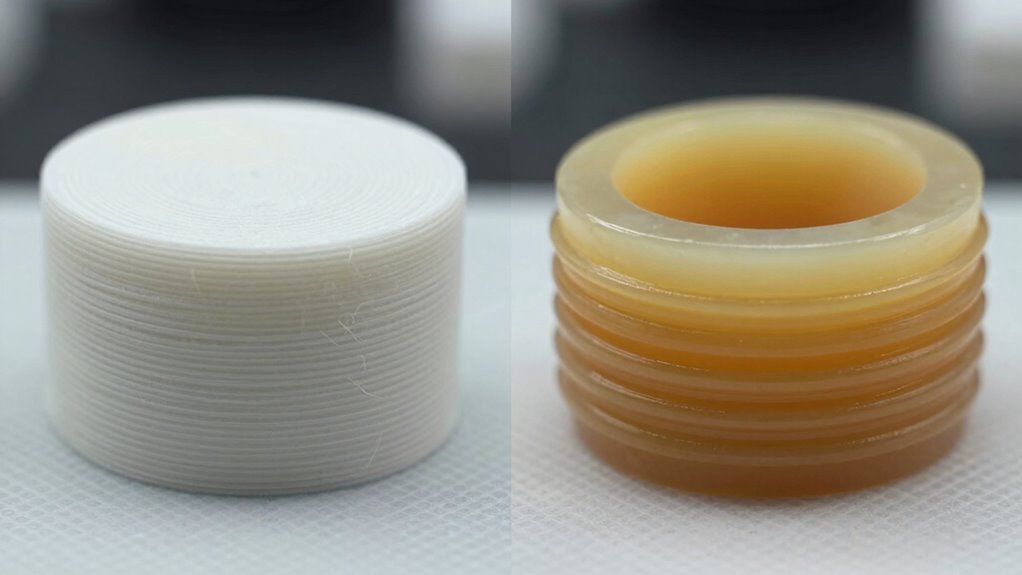
Resin printing achieves faster results because of quicker layer curing times, allowing you to complete prints more efficiently. Its higher resolution capabilities enable you to capture minute details with precision, making your models look sharper. This combination of speed and detail makes resin printing ideal when accuracy and efficiency matter most. Additionally, the high level of detail can be particularly beneficial for creating intricate designs or realistic textures. High-precision printing techniques are essential for achieving these superior results. Furthermore, the printing technology involved often results in cleaner prints with less post-processing required. The environmental impact of resin printing is an important factor to consider, as the materials used can sometimes produce hazardous waste if not handled properly. Proper safety measures are crucial to minimize environmental and health risks associated with resin materials. Advances in resin formulations are also helping to reduce some of these environmental concerns while maintaining high-quality output.
Faster Layer Curing
Because resin printing uses a process called photopolymerization, each layer cures almost instantly when exposed to a specific light source, making it considerably faster than FDM printing. This rapid curing process drastically reduces print times and enhances overall speed. Additionally, resin printers offer material versatility, allowing for a wide range of resins with different properties, from flexible to highly detailed. This variety helps optimize print speed for specific projects without sacrificing quality. The quick layer curing means you spend less time waiting between layers, enabling faster production of complex, detailed models. As a result, resin printing excels in delivering high-quality results in a shorter amount of time, making it an ideal choice when speed and detailed finishes are priorities. photopolymerization is a key factor that contributes to the efficiency and precision of resin printing.
Higher Resolution Capabilities
The high resolution of resin printing stems from its ability to produce extremely fine details, thanks to its precise light-based curing process. This method allows for layer thicknesses as thin as a few microns, resulting in sharper, more detailed prints. Resin printers excel in material compatibility, handling specialized resins that enable various finishes and properties. Because the curing process is rapid and focused, printing speed remains high even at these detailed levels. Unlike FDM, which relies on extruded filament, resin printing’s light projection quickly solidifies each layer, reducing the time needed for complex, high-resolution models. This combination of material versatility and swift curing makes resin printing ideal for detailed, high-quality prototypes and miniatures, where clarity and fine features are essential. Additionally, the layer resolution achievable with resin printers surpasses that of traditional FDM models, enabling more intricate designs and smoother surfaces. When combined with faster curing times, resin printers can produce detailed prints more efficiently without sacrificing quality. Furthermore, the precision of light-based curing allows for even finer control over each layer, enhancing the overall detail.
Precise Detail Reproduction
Resin printers achieve faster, more detailed prints because their light-based curing process is highly precise and efficient. This allows for intricate features and fine details that FDM struggles to replicate. Resin’s high resolution depends on the size of the laser or LCD pixel, enabling you to produce complex geometries with smooth surfaces. Material compatibility varies, but resin’s ability to capture tiny details enhances print durability, especially for models needing fine features. However, some resins may be less durable under stress. The table below highlights key differences:
| Aspect | Resin Printing | FDM Printing | Key Considerations |
|---|---|---|---|
| Detail Reproduction | Very high, fine features | Moderate, layer visibility | Resin excels in detail |
| Speed | Faster for detailed models | Slower, layer-by-layer | Resin’s curing process is quick |
| Material Compatibility | Limited, specialized resins | Broad, filament options | Resin offers fine detail but less durability |
| Print Durability | Varies, often fragile | Generally stronger | Material choice affects strength |
| Surface Finish | Smooth, high-detail surface | Layer lines visible | Resin provides superior surface finish |
Additionally, advancements in microbiome health considerations are making resin and laser helmets safer for scalp treatments.
As an affiliate, we earn on qualifying purchases.
How Messy Is Resin Printing Compared to FDM?
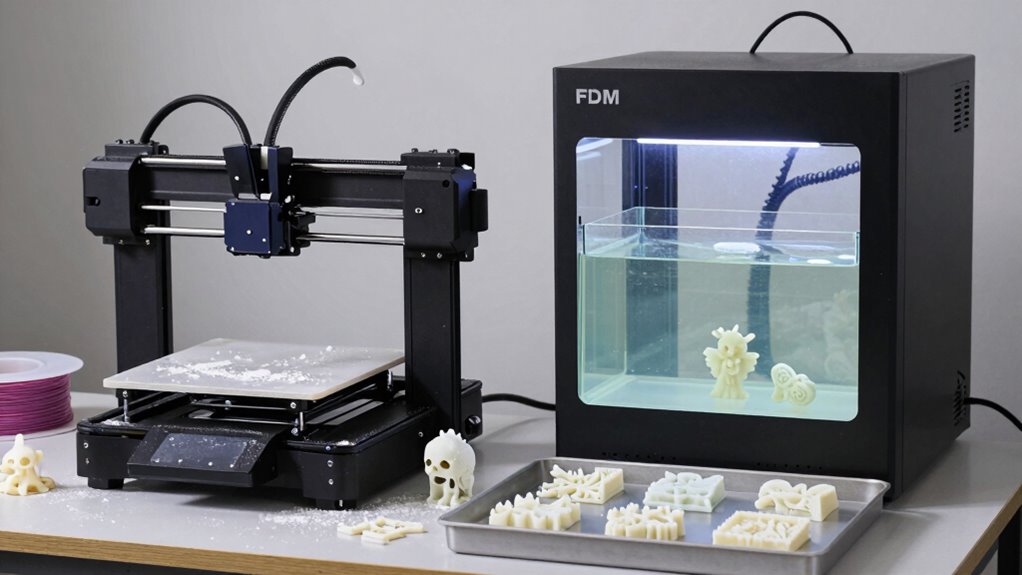
Resin printing can be messier than FDM because of liquid resin spills and the need for careful handling of uncured material. FDM printers usually require only basic cleanup, like removing filament strings and wiping the build plate. With resin, you’ll need to clean parts thoroughly and dispose of chemicals properly, making the process more involved. Additionally, the spiritual connection to land observed in Native cultures underscores the importance of respecting environmental considerations during printing processes. Proper disposal and environmental awareness are vital to minimizing ecological impact, especially given the environmental considerations associated with resin chemicals. Since resin can pose environmental risks if not managed correctly, adopting eco-friendly practices is essential for sustainable 3D printing. Being aware of these environmental impacts can help users make more responsible choices in their printing workflows.
Resin Printing Mess Potential
While both FDM and resin printing have their own cleanup challenges, resin printing tends to be messier overall. During resin printing, you handle liquid resin, which can easily spill or drip, creating a sticky mess that’s hard to clean. The process also produces resin fumes, so you need good ventilation to avoid inhaling harmful vapors. Unlike FDM filament, which stays contained in the extruder, resin’s liquid state makes spills more likely. After printing, you’ll face residual resin on the build platform and vat, which can be messy to remove and requires careful handling. Any splashes or drips can harden quickly, sticking to surfaces and creating ongoing cleanup tasks. Overall, resin printing demands more attention to spill prevention and cleanup, making it messier than FDM. Additionally, the use of natural filtration systems in eco-friendly pools highlights the importance of managing liquids carefully, similar to handling liquid resin in printing.
FDM Cleanup Requirements
FDM printing generally requires less cleanup than resin printing because the filament stays contained within the extruder and build platform. With FDM, you mostly need to remove finished parts and clean the nozzle occasionally. Resin printing, however, involves handling liquid resin that can be messy and requires careful cleanup. You’ll need to rinse the printed parts and clean the build plate thoroughly, usually with isopropyl alcohol. Resin toxicity is a concern, so proper disposal and gloves are essential. Compatibility issues also arise, as some resins may stain or damage certain surfaces, unlike filament compatibility which is broader. Here’s a quick comparison:
| Aspect | FDM | Resin Printing |
|---|---|---|
| Cleanup | Minimal, mainly filament | Extensive, resin liquid handling |
| Toxicity | Low, safe with precautions | Higher, resin is toxic |
| Compatibility | Wide filament options | Resin-specific surfaces |
Additionally, resin printing often requires more post-processing steps to achieve a finished look. Proper ventilation and workspace organization are also recommended due to the resin fumes that can be generated during curing and cleanup. Maintaining a dedicated workspace can also help contain the resin spills and minimize exposure risks associated with resin printing. Ensuring proper workspace setup can significantly reduce the mess and exposure risks associated with resin printing.
Is FDM or Resin Better for Newcomers?
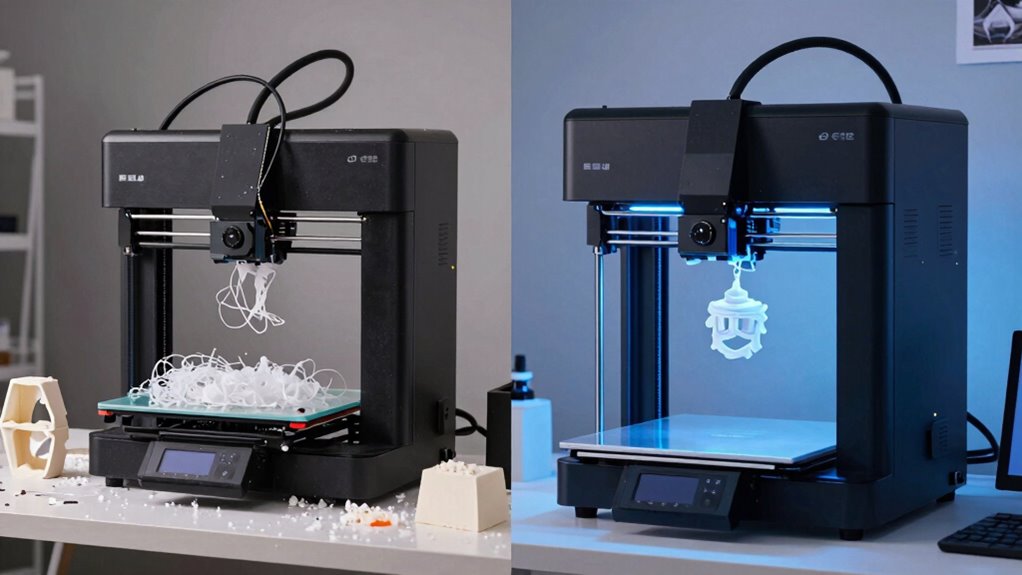
If you’re just starting out with 3D printing, choosing between FDM and resin printing can be confusing. FDM printers are generally more beginner-friendly because they offer better material versatility, allowing you to experiment with various filaments like PLA, ABS, or PETG. They’re also easier to scale for larger projects, making them ideal if you want to print bigger models or multiple items at once. Resin printers, while delivering incredible detail, require more careful handling and maintenance, which can be intimidating for newcomers. However, resin printing’s precision can be motivating if you’re focused on high-quality miniatures or intricate parts. Ultimately, FDM may be better for those seeking simplicity and flexibility, while resin suits those willing to handle a steeper learning curve for finer results. Additionally, understanding passive voice detection can help improve your overall writing clarity and effectiveness. Being aware of market trends and insights can also inform your decision based on current technology advancements and user experiences. Furthermore, considering material properties like heat resistance and durability can influence which type of printer best suits your specific projects.
How Do Quality and Detail Differ Between FDM and Resin?
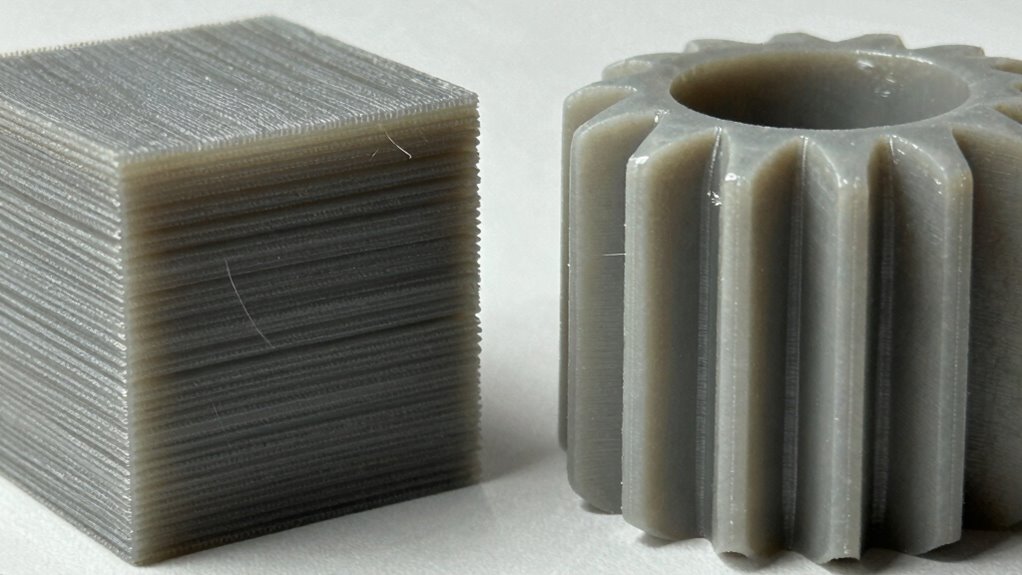
Resin printers produce markedly higher detail and smoother surfaces compared to FDM printers, making them the go-to choice for miniature models, jewelry, or intricate prototypes. They capture fine details with precision, offering superior surface quality. In contrast, FDM prints tend to be rougher, with visible layer lines, but they excel in material flexibility and larger build sizes. When considering print durability, FDM parts often withstand mechanical stress better, while resin parts can be more brittle. Here’s a comparison:
| Feature | Resin Printing | FDM Printing |
|---|---|---|
| Detail & Finish | High, smooth surfaces | Moderate, visible layer lines |
| Material Flexibility | Less flexible | More flexible |
| Print Durability | Brittle, prone to cracking | More durable, impact resistant |
| Surface Quality | Very high, intricate details | Less detailed, rougher finish |
What Are the Costs of FDM and Resin 3D Printers?
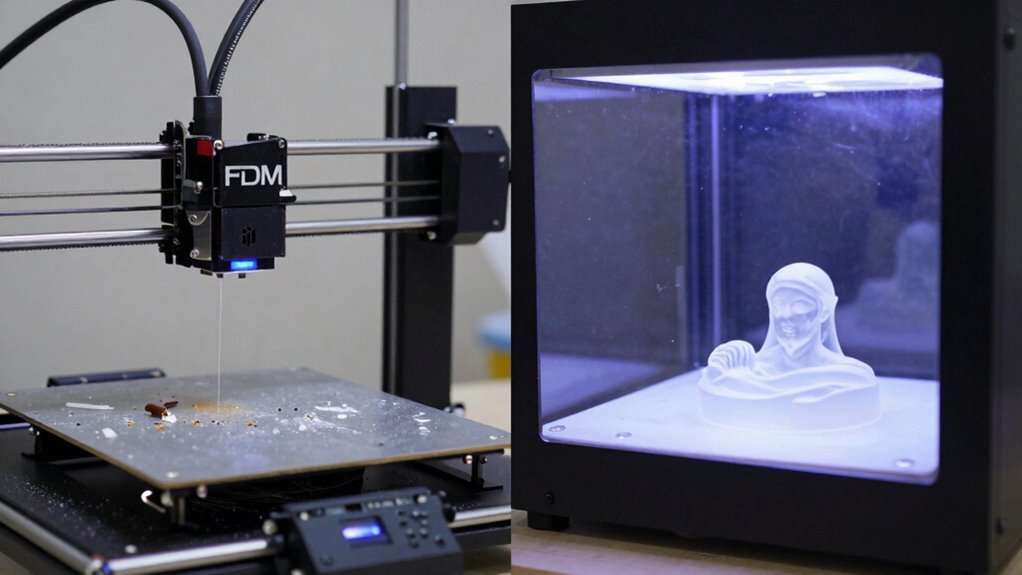
When considering the costs of 3D printing technologies, it’s important to recognize that FDM and resin printers vary substantially in price, both upfront and ongoing. FDM printers generally have a lower initial cost, making them accessible for beginners, but material compatibility and printer maintenance can add up over time. Resin printers tend to be more expensive initially, with higher-quality models costing markedly more.
FDM printers are budget-friendly upfront, but resin printers offer finer detail at a higher initial cost.
- FDM printers often have lower material costs but require regular maintenance.
- Resin printers involve ongoing costs for resin and filters.
- Material compatibility varies, affecting your choice based on project needs.
While resin printers offer finer detail, FDM printers are more budget-friendly for larger or less detailed projects.
What Post-Processing Do FDM and Resin Prints Require?
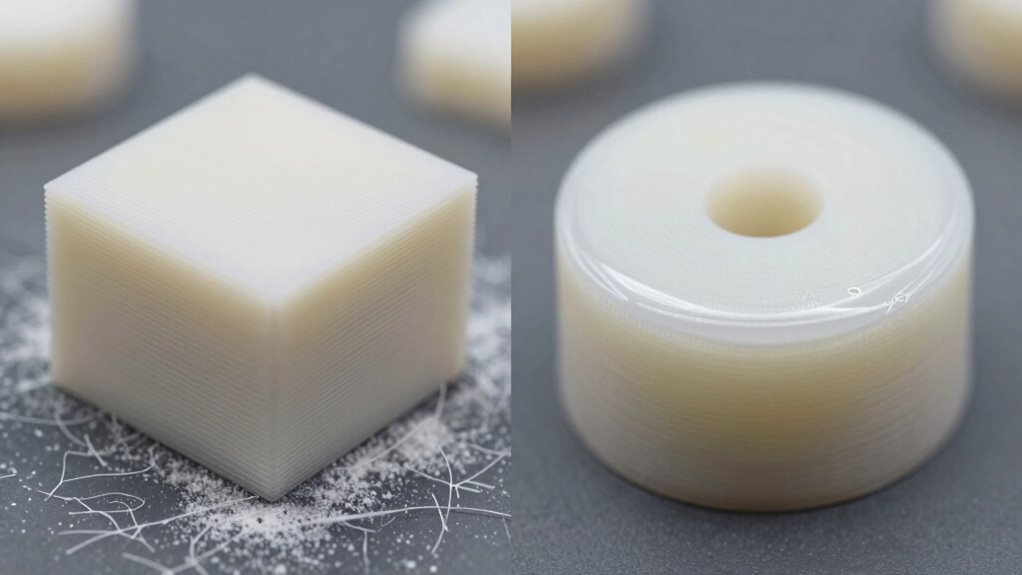
Post-processing is an essential step in achieving the best quality from your 3D printed parts, and the requirements differ considerably between FDM and resin prints. FDM prints often need post processing cleanup, such as removing support structures, sanding, or filing to smooth surfaces. Resin prints, on the other hand, require careful washing with alcohol or other cleaning solutions to remove uncured resin. Chemical safety considerations are critical, especially for resin prints, as handling solvents can pose health risks. Always work in a well-ventilated area and wear gloves. Resin post-processing also involves curing the print under UV light to strengthen it. FDM post-processing is generally less hazardous but still requires cleaning and finishing to meet your desired quality.
Which 3D Printing Method Fits Your Project Goals and Budget?
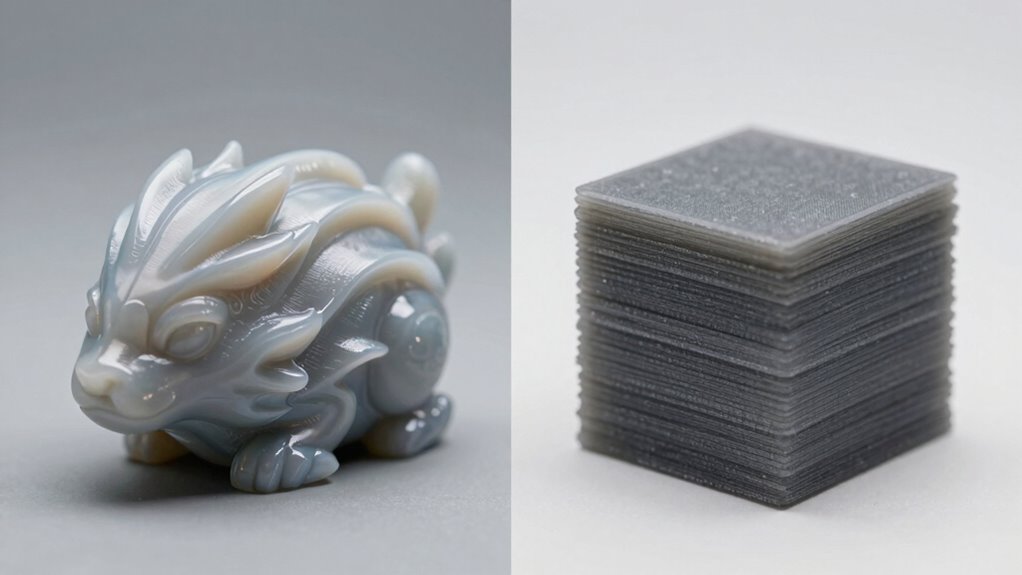
Choosing the right 3D printing method depends heavily on your specific project goals and budget constraints. If you need quick results and high material compatibility, FDM might be your best choice, offering faster printing speeds and a wide range of filament options. Conversely, if your priority is finer detail and smoother finishes, resin printing provides superior resolution, albeit often at a higher cost and slower pace. Consider these factors:
- Material compatibility: FDM supports more filament types, while resin offers specialized options.
- Printing speed: FDM generally prints faster, making it ideal for larger or time-sensitive projects.
- Budget: FDM printers are usually more affordable upfront, but resin materials and maintenance can add up.
Match your project needs with these criteria to select the most suitable method.
Frequently Asked Questions
What Are the Environmental Impacts of FDM Vs Resin Printing?
Your environmental impact varies with FDM and resin printing. FDM produces plastic waste from filament spools, but disposal methods like recycling can reduce harm. Resin printing involves chemicals that require careful disposal to prevent pollution, as improper handling can harm ecosystems. Overall, both methods have environmental footprints, and adopting eco-friendly disposal practices helps minimize their impact. You should always follow proper disposal guidelines to protect the environment.
How Do Material Options Compare Between FDM and Resin Printers?
You’ll find FDM printers offer greater material versatility, allowing you to use various thermoplastics like ABS, PLA, and PETG, which are often more affordable and easier to work with. Resin printers primarily use photopolymer resins, which come in fewer options but provide high detail and smoother finishes. Color options are also limited in resin printing, usually depending on the resin color, whereas FDM filaments come in a wide range of vibrant colors.
Can FDM or Resin Printers Be Used for Professional Applications?
Yes, both FDM and resin printers can be used for professional applications. You’ll need to take into account post-processing procedures, which can be extensive depending on the material and desired finish. Cost considerations also matter; resin printers often have higher material costs but offer finer detail, while FDM printers are more budget-friendly for larger, functional parts. Choose based on your specific needs, quality requirements, and budget constraints.
What Safety Precautions Are Needed for Resin Printing?
You should always prioritize safety when resin printing. Handle resin carefully, avoiding skin contact and inhalation of fumes. Wear appropriate safety gear like gloves, goggles, and a mask to protect yourself from harmful chemicals and UV exposure. Work in a well-ventilated area to minimize fumes. Properly clean up spills immediately, and store resin in a secure, labeled container. These precautions keep you safe during every part of the resin handling process.
How Do Maintenance Needs Differ Between FDM and Resin 3D Printers?
You’ll find that FDM printers need regular maintenance like cleaning the nozzle, checking the filament spool, and ensuring proper filament storage to prevent moisture absorption. Resin printers require post-processing, such as cleaning prints with isopropyl alcohol and curing them under UV light, along with cleaning the resin vat and replacing filters. Both types demand consistent upkeep, but resin printers tend to need more frequent cleaning of optical components and resin handling.
Conclusion
Ultimately, choosing between FDM and resin printing is like picking between a rugged toolbox and a delicate jewelry box. FDM offers sturdy, reliable builds with less mess, perfect for rough drafts and beginners. Resin printing, with its shimmering, intricate details, captures the tiniest features but demands careful handling. Picture your projects as a garden—each method nurtures different blooms. Decide based on your vision, patience, and the kind of masterpiece you want to create.
Fall Picks
fall essentials
As an affiliate, we earn on qualifying purchases.