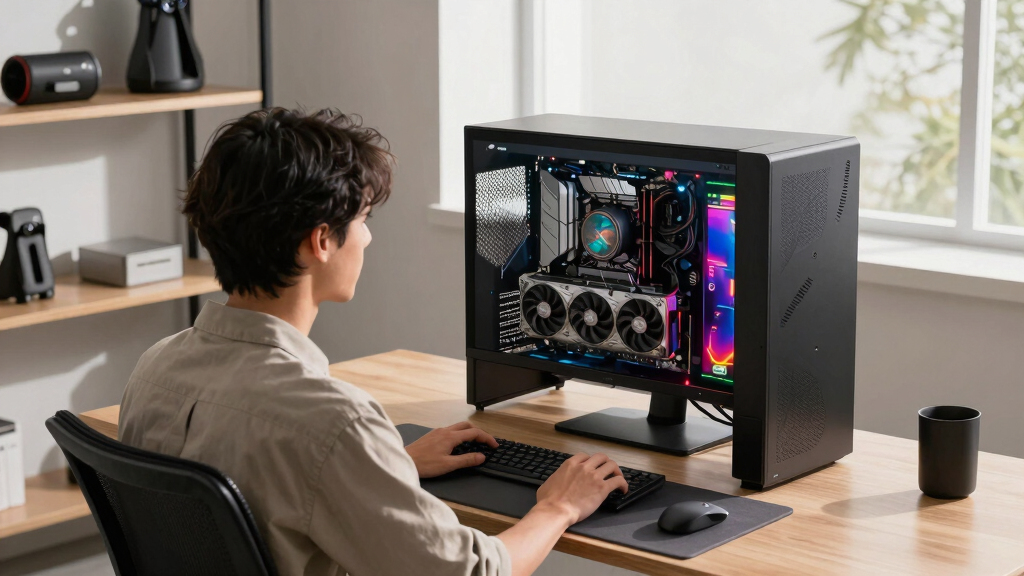

Finding the best AMD graphics card for 1440p gaming involves balancing performance, price, and features. The ASUS Prime Radeon RX 9070 XT OC Edition stands out for its high clock speeds and premium build, making it a top overall choice. For those wanting excellent value, the Sapphire Nitro+ RX 9070 XT offers impressive specs at a more accessible price. Meanwhile, the XFX RX 9060 XT OC delivers solid performance for budget-conscious gamers. Each of these options balances different priorities, but all are capable of delivering smooth 1440p experiences. Continue reading for a detailed breakdown of each card’s strengths and tradeoffs.
Key Takeaways
- The top-performing cards generally feature AMD RDNA 4 architecture with 16GB GDDR6 for optimal 1440p gaming performance.
- Price varies significantly; premium models offer better cooling and higher clock speeds, but budget options can still handle 1440p well.
- Power requirements and PCIe compatibility are key considerations; newer cards often support PCIe 5.0 for future-proofing.
- Silent operation and cooling design can greatly influence gaming comfort, especially in longer sessions.
- The best value choices often balance price with enough performance to handle high settings at 1440p without overspending.




More Details on Our Top Picks
ASUS Prime Radeon™ RX 9070 XT OC Edition Graphics Card, AMD (PCIe 5.0, HDMI/DP 2.1, 2.5-Slot Design, Axial-tech Fans, Ball Bearings, Dual BIOS, GPU Guard)
This ASUS RX 9070 XT OC Edition stands out for delivering exceptional 1440p gaming performance with impressive heat management and quiet operation. Compared to the Sapphire Nitro+ RX 9070 XT, it offers similar core performance but benefits from enhanced cooling features like Axial-tech fans and dual BIOS options that give it an edge in thermal stability and noise control. The 2.5-slot design makes it compatible with most builds while maintaining robust cooling. The phase-change GPU thermal pad and ball bearings contribute to lower temperatures and longer fan lifespan, respectively. Its PCIe 5.0 support future-proofs your system, and dual HDMI 2.1 ports allow versatile display setups. The main tradeoff is its size and slightly higher price, which might be less appealing for compact builds or budget-conscious gamers. Overall, this card suits gamers seeking premium cooling, quiet operation, and high-end performance at 1440p.
Pros:- Excellent cooling with Axial-tech fans and dual BIOS
- Supports PCIe 5.0 for future compatibility
- Quiet operation even under load
Cons:- Large size may not fit smaller cases
- Higher price compared to mid-range options
Best for: Enthusiasts who want top-tier cooling, longevity, and future-ready features in their 1440p gaming setup.
Not ideal for: Small form factor builds or budget gamers seeking the most economical options since it’s large and priced higher.
- PCIe support:PCIe 5.0
- Memory:16 GB GDDR6
- GPU Clock Speed:4000 MHz
- Display Outputs:HDMI 2.1, DP 2.1
- Max Resolution:7680 x 4320
- Cooling:2.5-slot axial-tech fans with ball bearings
- Dimensions:12.3″ L x 5.1″ W
- Warranty:3 years
Bottom line: Ideal for high-end users who prioritize cooling, noise mitigation, and future-proofing at 1440p.
Sapphire 11348-01-20G Nitro+ AMD Radeon™ RX 9070 XT Gaming OC Graphics Card with 16GB GDDR6, AMD RDNA 4
This Sapphire Nitro+ RX 9070 XT OC offers a compelling blend of high performance and value, making it suitable for gamers who want solid 1440p gameplay without overspending. While it doesn’t feature PCIe 5.0 or dual BIOS like the ASUS Prime, it boasts a substantial 16GB GDDR6 memory and a boost clock of up to 3320 MHz, ensuring smooth gameplay in demanding titles. Its cooling solution with triple fans keeps temperatures in check, comparable to the ASUS, but at a more attractive price point. The card’s size fits most mid-tower cases, and its solid build quality supports long gaming sessions. Compared to the XFX RX 9060 XT, it provides a slight edge in clock speeds, but it lacks some of the premium features of high-end models. The tradeoff is less future-proofing and fewer premium features, but it remains a top pick for budget-conscious gamers seeking reliable performance.
Pros:- Excellent value with high core clock speeds
- Large 16GB GDDR6 memory for multitasking and future games
- Effective triple-fan cooling system
Cons:- Lacks PCIe 5.0 support
- No dual BIOS or advanced overclocking features
Best for: Budget-conscious gamers aiming for reliable 1440p performance and good cooling without paying a premium.
Not ideal for: Enthusiasts wanting PCIe 5.0 support or advanced BIOS options, or those needing the absolute lowest temperatures.
- Memory:16 GB GDDR6
- Boost Clock:Up to 3320 MHz
- Video Outputs:2 HDMI, 2 DP
- Dimensions:Standard ATX size
- Architecture:RDNA 4
- Warranty:2 years
Bottom line: Perfect for gamers who want strong 1440p performance at a more accessible price point.
XFX Swift AMD Radeon RX 9060 XT OC Gaming Edition with 16GB GDDR6, AMD RDNA 4
The XFX RX 9060 XT OC Gaming Edition is designed for gamers who want strong 1440p performance with excellent overclocking headroom, matching the Sapphire in VRAM but with a focus on stability and high clock speeds. With a boost clock up to 3320 MHz, it rivals the performance of the RX 9070 XT and the ASUS card at a lower cost. Its dual-fan cooling system provides effective thermal management, comparable to the ASUS but with a slightly lighter weight. While it doesn’t support PCIe 5.0, it offers solid driver support and is easy to install, making it suitable for most gaming rigs. Compared to the Sapphire, the XFX tends to run a bit quieter at high loads but may run hotter if overclocked extensively. The main tradeoff is that it offers fewer premium features, but it remains an excellent choice for stable, high-clock gaming at 1440p.
Pros:- High boost clock up to 3320 MHz
- Effective dual-fan cooling
- Great overclocking stability
Cons:- No PCIe 5.0 support
- Fewer premium features compared to ASUS or Sapphire
Best for: Gamers seeking high clock speeds and overclocking potential without the premium price of the ASUS or Sapphire models.
Not ideal for: Builds with space constraints or users requiring PCIe 5.0, or those who prefer quieter operation at the highest load.
- Memory:16 GB GDDR6
- Boost Clock:Up to 3320 MHz
- Video Outputs:2 HDMI, 2 DP
- Architecture:RDNA 4
- Dimensions:Standard dual-fan
- Warranty:3 years
Bottom line: Best suited for gamers who want aggressive clock speeds and overclocking headroom for 1440p gaming.
ASRock Intel Arc B580 Challenger 12GB OC Graphics Card, 2740 MHz GPU Clock, 12GB GDDR6, DisplayPort 2.1, HDMI 2.1a, Dual Fan Cooling, 0dB Silent Operation
The ASRock Arc B580 Challenger is a compelling choice for those who prioritize quiet operation and content creation alongside gaming. While it doesn’t match the raw horsepower of the AMD RDNA 4 cards, its 2740 MHz GPU clock and 12GB GDDR6 provide smooth performance at 1440p, especially in less demanding titles. The dual fan cooling and 0dB silent operation make it ideal for silent builds or multimedia-focused systems. Its support for DisplayPort 2.1 and HDMI 2.1a ensures compatibility with the latest high-resolution displays, and its power efficiency reduces strain on power supplies. Compared with the AMD cards, it offers a more affordable entry point but at the cost of lower performance in the most demanding titles. It’s best for users who want a balanced mix of gaming, streaming, and content creation without breaking the bank.
Pros:- Silent operation with 0dB cooling
- Supports the latest DisplayPort 2.1 and HDMI 2.1a
- Good power efficiency and thermal management
Cons:- Lower performance in AAA titles compared to AMD RDNA 4 cards
- Limited overclocking headroom
Best for: Content creators and budget gamers who want quiet operation and high-resolution display support at 1440p.
Not ideal for: Enthusiasts seeking maximum gaming performance or high overclocking potential in demanding titles.
- GPU Clock Speed:2740 MHz
- Memory:12 GB GDDR6
- Display Outputs:DisplayPort 2.1, HDMI 2.1a
- Architecture:Xe2-HPG
- Cooling:Dual fan with 0dB silent operation
- Warranty:2 years
Bottom line: Best for budget-conscious users who need quiet operation and future-proof display connectivity at 1440p.
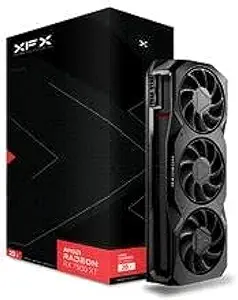
XFX Radeon RX 7900XT Gaming Graphics Card with 20GB GDDR6, AMD RDNA 3 RX-79TMBABF9
The XFX RX 7900 XT with 20GB GDDR6 is designed for users who demand maximum VRAM and performance at 1440p and beyond. While it excels in 4K gaming, its large 20GB VRAM also benefits high-end multitasking or content creation workflows. Its AMD RDNA 3 architecture delivers substantial improvements over previous generations, comparable to the RX 7900 XT in performance. The 2400 MHz boost clock and triple-fan cooling ensure stable and cool operation, similar to premium models like the ASUS. Compared to the RX 9060 XT, it offers more VRAM and better future-proofing, but it comes with a slightly larger footprint and higher power consumption. The main tradeoff is its size and power needs, making it less ideal for compact builds but perfect for high-end gaming rigs.
Pros:- Massive 20GB GDDR6 VRAM for demanding tasks
- High boost clock up to 2400 MHz
- Triple-fan cooling for thermal stability
Cons:- Larger size may not fit smaller cases
- Higher power consumption
Best for: Power users seeking maximum VRAM and 1440p/4K gaming performance with room for content creation.
Not ideal for: Small cases or budget systems due to size and power requirements, or casual gamers who don’t need high VRAM.
- VRAM:20 GB GDDR6
- Boost Clock:Up to 2400 MHz
- Architecture:RDNA 3
- Display Outputs:DisplayPort
- Dimensions:Large triple-fan design
- Warranty:2 years
Bottom line: Perfect for high-end gaming and content creation with large VRAM needs at 1440p or higher resolutions.
GIGABYTE Radeon RX 9060 XT Gaming OC 16G Graphics Card, PCIe 5.0, 16GB GDDR6, GV-R9060XTGAMING OC-16GD Video Card
This GIGABYTE RX 9060 XT stands out for its ample 16GB of GDDR6 memory, which ensures smooth performance even in demanding titles at 1440p, especially compared to the 8GB models like the ASRock RX 7600 Challenger. Powered by AMD RDNA™ 4 architecture, it delivers faster frame rates and stunning visuals, making it ideal for gamers seeking a high-quality experience without overspending. While it offers PCIe 5.0 support for future-proofing, it does involve a higher price point and requires a robust power supply, which might be a barrier for some. Compared to the RX 580, it provides a significant leap in performance and features, but the newer architecture means higher power consumption and potentially more noise under load. This pick makes the most sense for dedicated gamers who want top-tier 1440p performance with room for future upgrades.
Pros:- 16GB of fast GDDR6 memory for demanding games and multitasking
- Supports PCIe 5.0 for compatibility with next-gen motherboards
- Excellent cooling system with Windforce tech ensures stable temperatures
- High frame rates with AMD RDNA™ 4 architecture
Cons:- Higher price compared to 8GB or older models
- Requires a strong power supply, possibly increasing overall build costs
- Potentially louder under load due to cooling system
Best for: High-end gamers who want premium performance and future-proofing at 1440p.
Not ideal for: Casual gamers on a tight budget who only play less demanding titles or are upgrading older systems with limited power capacity.
- Graphics Coprocessor:Radeon RX 9060 XT
- Ram:16 GB GDDR6
- GPU Clock Speed:2700 MHz
- Video Output Interface:DisplayPort, HDMI
- Graphics Ram Type:GDDR6
- Compatible Devices:Desktop
- Interface:PCI-Express x16
- Memory Clock Speed:20000 MHz
- Maximum Resolution:3840 x 2160
Bottom line: This card suits gamers seeking top-tier 1440p performance and future readiness, provided they can accommodate its power needs and budget.
ASRock Radeon RX 7600 Challenger 8GB OC Graphics Card, AMD RDNA 3 Architecture, 8GB GDDR6, PCIe 4.0, Dual Fans, 0dB Silent Cooling, HDMI 2.1, DisplayPort 1.4
The ASRock RX 7600 Challenger makes it easy for gamers who want solid 1440p performance without breaking the bank, especially compared to the higher-end RX 9060 XT. Its 8GB GDDR6 memory and AMD RDNA™ 3 architecture provide a good balance of speed and efficiency, making it suitable for most modern games at medium to high settings. The dual-fan silent cooling keeps temperatures under control while maintaining a quiet operation, ideal for smaller or quieter builds. However, compared to the GIGABYTE RX 9060 XT, it lacks PCIe 5.0 support and has a lower core clock speed, which may impact performance in the most demanding titles. Its PCIe 4.0 interface is still compatible with most systems, but it isn’t as future-proof as PCIe 5.0 cards. This makes for a capable, budget-friendly option for gamers focused on 1440p gaming with some room to grow.
Pros:- Efficient AMD RDNA™ 3 architecture for balanced performance
- Quiet dual-fan cooling system with 0dB mode
- Supports HDMI 2.1 and DisplayPort 1.4 for versatile connectivity
- Good build quality with a stylish design
Cons:- Limited to 8GB VRAM, which may be restrictive in future demanding titles
- Lower clock speeds compared to higher-tier cards
- No PCIe 5.0 support, less future-proof
Best for: Budget-conscious gamers aiming for solid 1440p gaming and upgrade potential.
Not ideal for: Enthusiasts wanting the absolute highest frame rates or future-proofing with PCIe 5.0 support.
- Graphics Coprocessor:Radeon RX 7600
- Ram:8 GB GDDR6
- GPU Clock Speed:2695 MHz
- Video Output Interface:HDMI 2.1, DisplayPort 1.4
- Graphics Ram Type:GDDR6
- Compatible Devices:Desktop
- Interface:PCIe 4.0
- Maximum Resolution:7680 x 4320
- Warranty:3 years
Bottom line: Ideal for gamers on a budget who want decent 1440p performance now, with some limitations in future scalability.
MOUGOL AMD Radeon RX 580 Gaming Graphics Card, 8GB GDDR5 256-Bit, Dual Fan Cooling, DP/HDMI/DVI Video Output, PCI Express X16 3.0, Computer GPU Support Windows 11/10/7 Desktop PC
The MOUGOL RX 580 is a solid choice for gamers with older systems or those seeking a cost-effective upgrade, especially compared to newer models like the RX 7600. Its 8GB GDDR5 memory and 256-bit bus deliver reliable performance at 1440p for less demanding titles, making it suitable for casual gaming or esports titles like Fortnite or Valorant. Its dual-fan cooling system offers decent thermal management, though it may be louder under load than more modern, quieter designs. The PCIe 3.0 interface is compatible with most systems, but it cannot match the raw power or efficiency of the RX 7600 or RX 9060 XT. Its lower clock speeds and older architecture mean it struggles with newer, graphically intensive games at higher settings. Still, for budget builds or upgrading from very old GPUs, this card offers excellent value.
Pros:- Affordable price point for entry-level gaming
- Decent performance in less demanding 1440p titles
- Supports triple display setups with DVI, HDMI, and DisplayPort
- Good thermal management with dual fans
Cons:- Older PCIe 3.0 interface limits bandwidth compared to PCIe 4.0 or 5.0
- Lower performance ceiling in modern AAA titles
- Higher power consumption relative to performance
Best for: Entry-level gamers or those upgrading older systems who want decent 1440p gaming performance at a low cost.
Not ideal for: Gamers seeking high frame rates in modern, demanding titles or future-proofing with the latest features.
- Graphics Coprocessor:Radeon RX 580
- Ram:8 GB GDDR5
- GPU Clock Speed:1206 MHz
- Video Output Interface:DVI, HDMI, DisplayPort
- Graphics Ram Type:GDDR5
- Compatible Devices:Desktop
- Interface:PCI-Express x16 3.0
- Maximum Resolution:7680 x 4320
- Warranty:1 Year
Bottom line: A practical choice for budget-conscious gamers with older PCs, aiming for decent 1440p gaming without high-end demands.
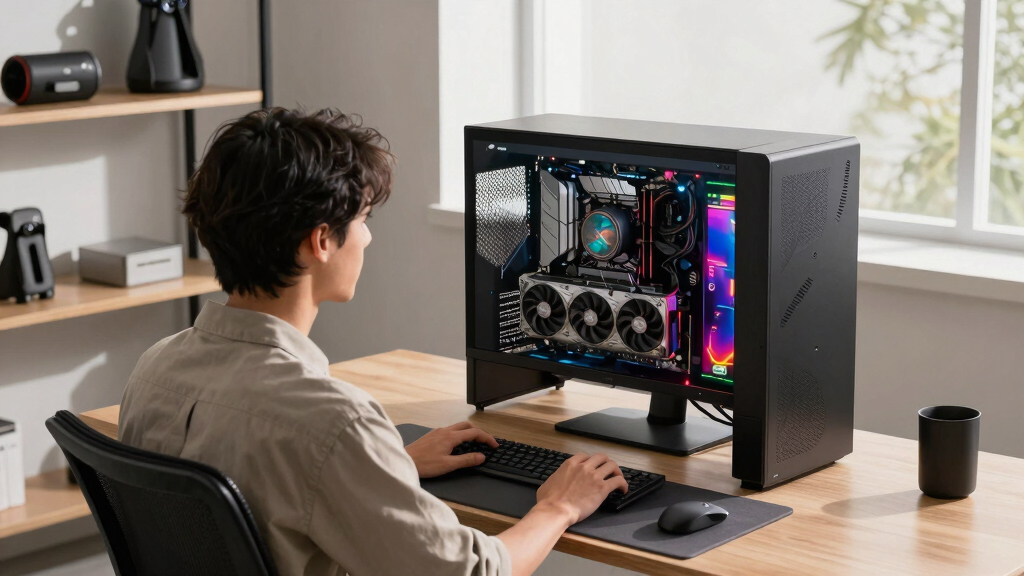
How We Picked
These products were selected based on their ability to confidently run demanding 1440p games at high settings, with a focus on performance, build quality, and value. We prioritized AMD cards with modern architectures like RDNA 3 and RDNA 4, as well as models with sufficient VRAM—generally 8GB or more—to ensure smooth gameplay. Compatibility with current standards such as PCIe 4.0/5.0 and HDMI 2.1 was also considered, along with cooling solutions and noise levels. The ranking reflects a balance between raw performance, price, and features that appeal to a range of gamers from beginners to enthusiasts.Factors to Consider When Choosing Best AMD Graphics Cards For 1440p Gaming
When choosing a graphics card for 1440p gaming, it’s important to understand several key factors that influence performance and value. Considering architecture, VRAM, cooling, and compatibility can help you avoid costly mistakes and select a card that fits your gaming needs and system. Here are the main considerations to keep in mind.Performance and Architecture
AMD’s RDNA 3 and RDNA 4 architectures represent the latest in gaming performance, with RDNA 4 offering notable improvements in efficiency and speed. For 1440p gaming, a card with at least 16GB of GDDR6 VRAM provides ample headroom for high settings and future titles. Choosing a card with higher core counts and faster clock speeds translates directly into smoother gameplay and higher frame rates, especially in demanding titles.
VRAM and Memory Bandwidth
VRAM size is critical for maintaining high-quality textures at 1440p. While 8GB may suffice for many games, 16GB ensures you won’t be bottlenecked by memory in newer or more demanding titles. Additionally, memory bandwidth impacts data transfer speeds, influencing performance during intensive scenes. Ensure your chosen card has a balance of VRAM and bandwidth for the best experience.
Cooling and Noise
Effective cooling solutions keep temperatures low, which extends hardware lifespan and maintains consistent performance. Look for cards with dual or triple fan setups, and pay attention to reviews about noise levels. Silent operation can significantly improve gaming comfort without sacrificing cooling efficiency, especially during extended sessions.
Compatibility and Future-Proofing
Modern cards support PCIe 4.0 or 5.0, with the latter offering better future compatibility. HDMI 2.1 support is also a plus for connecting to high-refresh-rate monitors and TVs. Before purchasing, verify your system’s compatibility with these standards to avoid bottlenecks or the need for upgrades down the line.
Price and Value
Prices for AMD graphics cards can vary widely, often reflecting differences in cooling, clock speeds, and VRAM. A higher price doesn’t always guarantee better performance at 1440p; instead, focus on the features that matter most to your use case. Budget options can still deliver solid performance, but premium models may be worth considering if you plan to game at higher settings or want quieter operation.
Frequently Asked Questions
Is 8GB of VRAM enough for 1440p gaming?
For many current titles, 8GB of VRAM can handle 1440p gaming at high settings, but it may struggle with future or more demanding games that require larger textures. If you tend to play the latest AAA titles with high texture quality, opting for a card with 16GB of VRAM provides more headroom and longer-term performance stability. Budget models with 8GB are suitable for casual play and less demanding titles, but they limit future-proofing.
Should I prioritize cooling or performance when choosing a card?
Both are important, but cooling directly impacts the card’s longevity and noise levels. A well-cooled card maintains higher boost clocks and reduces thermal throttling, ensuring consistent performance. If your case has good airflow, a slightly noisier but faster card might be acceptable, but for quieter gaming sessions, prioritize models with advanced cooling solutions like dual fans or larger heatsinks.
Is PCIe 5.0 support necessary for 1440p gaming?
PCIe 5.0 support offers future-proofing benefits, such as higher bandwidth, but current gaming performance at 1440p isn’t significantly limited by PCIe versions. Your choice should depend more on your system’s compatibility and whether you want to maximize longevity of your build. For now, PCIe 4.0 is sufficient for 1440p gaming, but PCIe 5.0 cards are a good investment if you’re building a new system.
How important is ray tracing support on AMD cards for 1440p gaming?
Ray tracing can enhance visual realism, but its impact on performance at 1440p varies depending on the title and hardware. AMD’s RDNA 3 and RDNA 4 cards include ray tracing capabilities, but enabling these features may reduce frame rates if the card isn’t high-end. For smooth gameplay, prioritize a balance of performance and ray tracing, and consider turning off ray tracing in demanding titles if frame rate consistency is your goal.
Should I buy a premium AMD card or a budget option for 1440p?
If you want the highest possible frame rates and best visual quality, investing in a premium card with higher VRAM and better cooling makes sense. However, budget options can still deliver a very good 1440p experience if you’re willing to tweak settings. Your choice depends on your budget and gaming expectations: premium cards suit enthusiasts, while budget models are suitable for more casual gamers or those upgrading on a tight budget.
Conclusion
For gamers seeking the best overall performance, the ASUS Prime Radeon RX 9070 XT OC Edition makes a compelling choice thanks to its high clock speeds and premium features. The Sapphire Nitro+ RX 9070 XT offers outstanding value with comparable performance at a more accessible price point, ideal for budget-conscious players. If you’re new to gaming or building a mid-range rig, the ASRock Radeon RX 7600 Challenger provides a straightforward and quiet experience. For those prioritizing raw power, the XFX RX 9060 XT OC and GIGABYTE RX 9060 XT Gaming OC are excellent premium options. Ultimately, your choice should align with your budget, gaming needs, and future plans.