
Even with a fast internet plan, your connection can still feel slow if your router is outdated or struggling with data. Interference, placement, or too many devices can overload it, causing lag and buffering. Upgrading to a high-performance router with modern features like MU-MIMO and dual-band support can make a big difference. To find out more about fixing your speed issues and upgrading properly, keep exploring these tips.
Key Takeaways
- Outdated router firmware can limit speed and cause responsiveness issues despite a fast internet plan.
- Wireless interference and poor placement can weaken signals, making fast plans feel sluggish.
- Multiple connected devices can overload the router, reducing overall network performance.
- Lacking advanced features like MU-MIMO or QoS can prevent optimal bandwidth distribution.
- Using an outdated or low-capacity router may not support the latest Wi-Fi standards, bottlenecking speed.

TP-Link AC1900 Smart WiFi Router (Archer A8) -High Speed MU-MIMO Wireless Router, Dual Band Router for Wireless Internet, Gigabit, Supports Guest WiFi
- Wireless Speed: Up to 600 Mbps on 2.4GHz, 1300 Mbps on 5GHz
- Dual Band WiFi: Supports 2.4GHz and 5GHz bands
- OneMesh Compatibility: Creates seamless WiFi with extenders
As an affiliate, we earn on qualifying purchases.
As an affiliate, we earn on qualifying purchases.
How Does Your Router Affect Your Internet Speed?
Your router plays an essential role in determining your internet speed because it is the device that manages how data is transmitted between your modem and your devices. Wireless interference from other electronics, neighboring networks, or thick walls can disrupt this transmission, slowing down your connection. Additionally, keeping your router’s firmware updated is critical, as updates often improve performance, fix bugs, and enhance security. If your firmware is outdated, your router might struggle to handle high-speed data or resolve interference issues effectively. Regularly checking for and installing firmware updates ensures your router operates smoothly and efficiently. Understanding how wireless interference and firmware updates impact your router helps you optimize your network for faster, more reliable internet. Ensuring your router’s performance is optimized is key to avoiding bottlenecks and maintaining internet speed. Furthermore, monitoring your network traffic can help identify devices or applications that may be consuming excessive bandwidth, further improving overall speed. Staying aware of your router’s capabilities can also help you determine if an upgrade is necessary to support higher speeds or more connected devices. Proper placement and minimizing physical obstructions can also significantly improve wireless signals, enhancing overall network performance.

TP-Link BE6500 Dual-Band WiFi 7 Router (BE400)
- Wi-Fi 7 Technology: Supports Multi-Link Operation and 4K-QAM
- High-Speed Dual-Band: Up to 5764 Mbps on 5GHz, 688 Mbps on 2.4GHz
- Wide Coverage: Covers up to 2,400 sq. ft. for 90 devices
As an affiliate, we earn on qualifying purchases.
As an affiliate, we earn on qualifying purchases.
What Are the Signs Your Router Is Slowing Down Your Network?
When your internet feels sluggish despite a fast plan, signs often point to your router as the culprit. You might notice frequent disconnects, slow loading times, or buffering when streaming. Network congestion can cause your router to struggle, especially if multiple devices are connected simultaneously. Outdated firmware updates can also hinder performance, making your network less responsive. Other signs include weak Wi-Fi signals in certain areas, delayed downloads, or difficulty connecting new devices. If your router feels overburdened or its performance degrades during peak hours, it’s a clear indicator it’s slowing your network. Monitoring these signs helps identify if your router needs an upgrade, firmware update, or repositioning to improve your overall internet experience. Additionally, proper maintenance of your hardware can prevent many common performance issues. Regularly checking for firmware updates ensures your device runs smoothly and securely.

ASUS RT-AX3000 Ultra-Fast Dual Band Gigabit Wireless Router – Next Gen WiFi 6, Adaptive QoS, and AiProtection by Trend Micro | 1x WAN, 4X 1G LAN, 1x USB 3.0 – AiMesh Compatible
- Maximum Coverage: 3000 sq ft range
- Power Supply: AC 110V-240V, DC 12V/19V
- Operating Compatibility: Windows and iOS
As an affiliate, we earn on qualifying purchases.
As an affiliate, we earn on qualifying purchases.
Which Features Should You Look for in a High-Performance Router?
Choosing a high-performance router involves focusing on key features that guarantee fast, reliable internet across multiple devices. Look for strong wireless security to protect your network from threats and unauthorized access. Advanced encryption protocols, like WPA3, are essential. Parental controls help you manage internet access and filter content, giving you peace of mind and keeping your family safe online. Additionally, prioritize routers with dual or tri-band capabilities to handle multiple devices without slowing down. MU-MIMO technology ensures your router can communicate efficiently with several gadgets simultaneously. Quality of Service (QoS) features allow you to prioritize bandwidth for important activities. Incorporating balance and motivation into your setup can improve overall connectivity experience. Ensuring your router has top security features helps safeguard your network from emerging threats. Understanding how wireless standards impact speed and coverage can further optimize your network’s performance. Exploring network management tools can also help you monitor and troubleshoot your connection more effectively. Considering the influence of philosophical insights can inspire better decision-making when selecting technology solutions. Overall, these features combine to create a secure, efficient, and high-performing network that maximizes your internet speed and stability.

TP-Link AX5400 WiFi 6 Router (Archer AX73)- Dual Band Gigabit Wireless Internet Router for Streaming, Long Range Coverage
- High-Speed WiFi: Up to 5400 Mbps for streaming and gaming
- WiFi 6 Technology: Supports 4T4R and HE160 for fast connections
- Connect Multiple Devices: Supports MU-MIMO and OFDMA for reduced congestion
As an affiliate, we earn on qualifying purchases.
As an affiliate, we earn on qualifying purchases.
How Can You Upgrade Your Router to Boost Your Internet Speed?
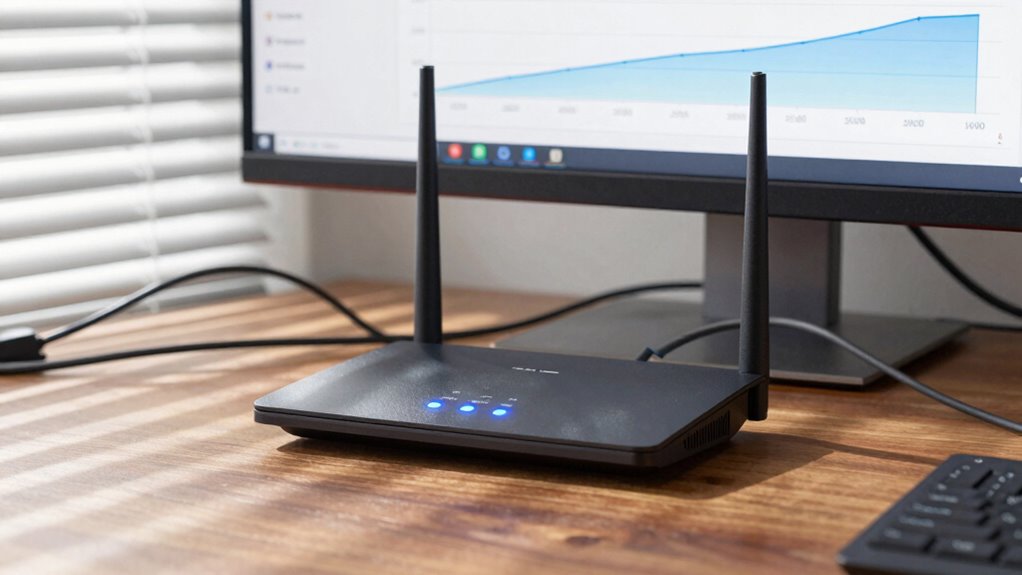
Upgrading your router is one of the most straightforward ways to improve your internet speed. First, guarantee ideal router placement—position it centrally, elevated, and away from obstructions to maximize coverage. Next, keep your firmware updated; manufacturers often release updates that fix bugs and boost performance. When choosing a new router, look for models with the latest Wi-Fi standards, like Wi-Fi 6, for faster speeds and better device management. Additionally, consider routers with multiple antennas for improved signal strength. Regularly check and update your router’s firmware, and experiment with placement to eliminate dead spots. Understanding network infrastructure can help you identify other factors that may be affecting your internet speed. These simple steps can markedly enhance your internet experience without the need for complex setups or additional service plans.
Troubleshooting Common Router Issues That Reduce Your Connection Speed
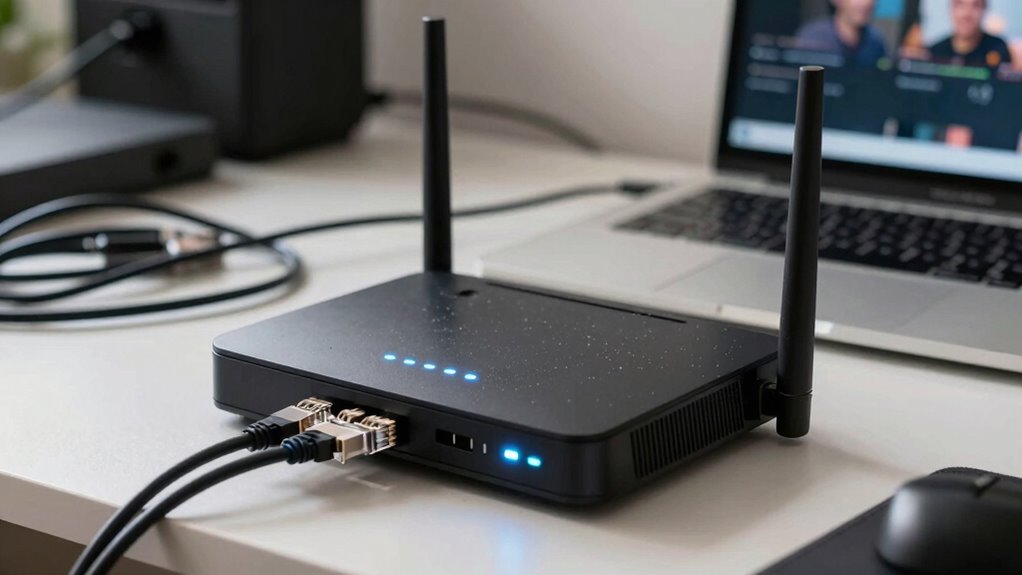
Many common router issues can silently drag down your connection speed, even if your internet plan is fast. A poor DIY setup often leads to weak signals or interference, slowing down your network. Start by checking your router placement—avoid placing it near thick walls, metal objects, or electronic devices that cause interference. Ideal placement is central, elevated, and unobstructed. Also, make sure your firmware is up to date, as outdated software can hinder performance. Restart your router regularly to clear any glitches. Check for connected devices that may be hogging bandwidth and disconnect unnecessary ones. Finally, consider changing your Wi-Fi channel if you experience persistent interference. Proper router placement is crucial for optimal performance. Troubleshooting these common issues can greatly improve your connection speed without needing a new router. Regularly reviewing your network setup can help keep your connection running smoothly over time, especially when you optimize your Wi-Fi environment for fewer disruptions. Keeping your router free from interference sources can make a noticeable difference in speed and reliability.
Frequently Asked Questions
How Often Should I Update My Router’s Firmware for Optimal Performance?
You should update your router’s firmware whenever a new version is released, ideally every few months, to guarantee peak performance. Regular firmware updates improve security, fix bugs, and enhance compatibility with your devices. Before updating, check your router’s compatibility with the latest firmware and follow the manufacturer’s instructions. Staying current with firmware updates keeps your network running smoothly and prevents potential slowdowns caused by outdated software.
Can Router Placement Affect My Internet Speed and Connection Stability?
Did you know that poor router placement can reduce your Wi-Fi signal by up to 50%? Yes, placement truly impacts internet speed and connection stability. Keep your router in a central, elevated spot away from walls and electronics. For larger homes, consider mesh networks or signal boosters to improve coverage. Proper placement guarantees you get the most out of your fast internet plan, reducing dead zones and buffering.
Do All Devices Use the Same Bandwidth When Connected to the Router?
No, not all devices use the same bandwidth when connected to your router. Device bandwidth varies based on their activity and network congestion. Network segmentation can help prioritize certain devices, ensuring important tasks get the needed bandwidth. If multiple devices stream videos or play online games simultaneously, they compete for bandwidth, which can slow everything down. Managing device bandwidth and network segmentation helps optimize your internet experience.
How Does Wi-Fi Interference Impact My Internet Speed?
Wi-Fi interference can markedly slow down your internet speed. Wireless congestion from many devices or neighboring networks causes signal interference, making your Wi-Fi less stable and reducing throughput. This results in buffering videos, slow downloads, or laggy gaming. To improve, try changing your router’s channel, moving it to a central location, or using a less congested frequency band like 5GHz. Minimizing wireless congestion and signal interference boosts your internet’s performance.
What Security Settings Can Slow Down My Router’s Performance?
Like a fortress guarding its secrets, your router’s security settings can slow performance if overly complex. Using strong password complexity increases security but may cause slight delays during authentication. Enabling a guest network adds an extra layer, but if misconfigured, it can strain bandwidth and reduce speed for your main devices. Strike a balance by choosing simpler passwords and optimizing guest network settings to keep performance smooth without sacrificing security.
Conclusion
Upgrading your router can considerably improve your internet speed, especially since over 50% of users experience slowdowns due to outdated equipment. By choosing a high-performance router with the right features, you can eliminate bottlenecks and enjoy faster, more reliable connections. Don’t overlook your router’s role; a simple upgrade might be all you need to transform your online experience and keep pace with today’s data demands.