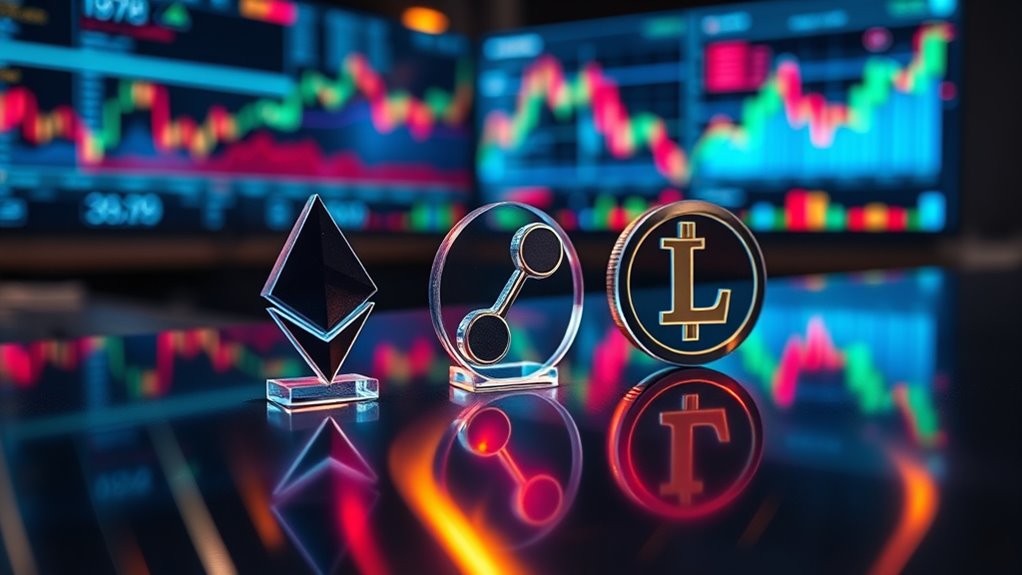

Altcoins are alternative cryptocurrencies to Bitcoin that aim to improve on its features or focus on specific industries like privacy or DeFi. Unlike Bitcoin, many altcoins introduce new tech features and standards, such as Ethereum’s ERC-20, which support smart contracts and governance. Their market caps show how big and established they are, but each has unique qualities driven by different standards. To discover more about how these innovations shape the crypto world, keep exploring further.

Get hardware and tech essentials delivered free — and shop member deals
- Fast, free delivery on millions of items
- Access to Prime Big Deal Days deals on October 6–7
- Prime Video, Amazon Music and more included
Key Takeaways
- Altcoins are alternative cryptocurrencies to Bitcoin, offering new features and focusing on specific industries like privacy or DeFi.
- They often use different token standards, such as Ethereum’s ERC-20, impacting their functionality and security.
- Market capitalization measures an altcoin’s size and importance, reflecting investor confidence and project maturity.
- Many altcoins aim to overcome Bitcoin’s limitations or enhance its features through innovative technologies.
- Altcoins support diverse applications like smart contracts, voting rights, and staking, making them more adaptable for various use cases.

Have you ever wondered what sets altcoins apart from Bitcoin? While Bitcoin is the most well-known cryptocurrency, altcoins — or alternative coins — bring a wide range of features and innovations to the table. One key difference lies in their underlying technology, particularly their token standards. Token standards are the rules that define how tokens function on a blockchain, dictating everything from transaction methods to compatibility with various wallets and exchanges. Ethereum’s ERC-20 standard, for example, has become a popular foundation for many altcoins because it enables interoperability and easy integration into the existing ecosystem. Different token standards can influence an altcoin’s functionality, security, and potential use cases, making each one unique. Additionally, the choice of token standard can impact an altcoin’s security features and resistance to hacking attempts, which is a critical consideration for investors and developers alike. Market capitalization is another vital aspect that helps distinguish altcoins from Bitcoin and from each other. It refers to the total value of all tokens in circulation, calculated by multiplying the current price by the total supply. Market cap gives you a snapshot of an altcoin’s relative size and significance within the crypto landscape. Some altcoins have a modest market cap, reflecting their niche appeal or early-stage development, while others have grown markedly, surpassing Bitcoin’s market cap in some cases. This metric helps you gauge the level of investor confidence, liquidity, and overall potential of a coin. A higher market cap often indicates a more established project with a broader user base and more substantial backing, but it doesn’t necessarily guarantee long-term success.
Altcoins often aim to improve upon Bitcoin’s limitations or focus on specific industries, such as privacy, gaming, or decentralized finance. They may also experiment with different consensus mechanisms, like proof of stake or delegated proof of stake, to enhance scalability and energy efficiency. These innovations are frequently made possible by diverse token standards, which support various features like smart contracts, voting rights, or staking. Because of this variety, some altcoins are better suited for particular applications than Bitcoin, which primarily functions as a store of value and digital gold.
Frequently Asked Questions
How Do Altcoins Differ From Bitcoin Technically?
Altcoins differ from Bitcoin mainly through their blockchain protocols and consensus mechanisms. You’ll find that many altcoins use different algorithms, like proof of stake instead of Bitcoin’s proof of work, making transactions faster or more energy-efficient. They often add new features or improve security, so you can see how they extend or challenge Bitcoin’s basic design, giving you more options and flexibility in your crypto activities.
Are All Altcoins Suitable for Investment?
Not all altcoins are suitable for investment. You should consider diversification strategies to spread your risk and evaluate altcoin valuation carefully. Some altcoins offer innovative features or strong development teams, making them promising, while others may lack solid fundamentals. Always research thoroughly, assess market trends, and avoid putting all your funds into a single altcoin. Proper due diligence helps you make informed investment decisions and manage potential risks effectively.
How Are Altcoins Created and Launched?
You create and launch altcoins through blockchain forks or by developing new tokens based on established token standards like ERC-20. First, you modify the original blockchain code or create a new one, then implement the token standards to define its functions. After testing, you launch your altcoin, often through a crowdsale or exchange listing. This process requires technical expertise and understanding of blockchain development and security.
What Are the Risks Associated With Altcoin Trading?
Are you aware of the risks when trading altcoins? You face regulatory challenges that can suddenly impact prices or limit access, and market volatility that can cause swift, unpredictable swings. This unpredictability makes altcoin trading risky, especially if you’re not prepared for sudden dips or regulatory crackdowns. Always research thoroughly and stay updated on legal changes to protect your investments and avoid unnecessary losses.
Can Altcoins Replace Bitcoin as the Dominant Cryptocurrency?
Altcoins could potentially replace Bitcoin as the dominant cryptocurrency, but it’s unlikely anytime soon. You should consider that Bitcoin’s large market capitalization and widespread adoption give it a strong edge. However, regulatory challenges and technological advancements could shift the landscape. While altcoins offer innovation, they need to overcome hurdles like market trust and legal issues to challenge Bitcoin’s dominance effectively.
Conclusion
Now that you understand altcoins, think of them as a vibrant forest beyond Bitcoin’s towering tree. Each altcoin offers unique features and opportunities, adding color and diversity to your crypto journey. While Bitcoin may be the pioneer, exploring these digital assets can open new paths for growth and innovation. Just remember, like traversing a dense forest, approach altcoins with curiosity and caution—there’s a whole world waiting to be discovered beyond the familiar.
Halloween Picks
halloween
As an affiliate, we earn on qualifying purchases.