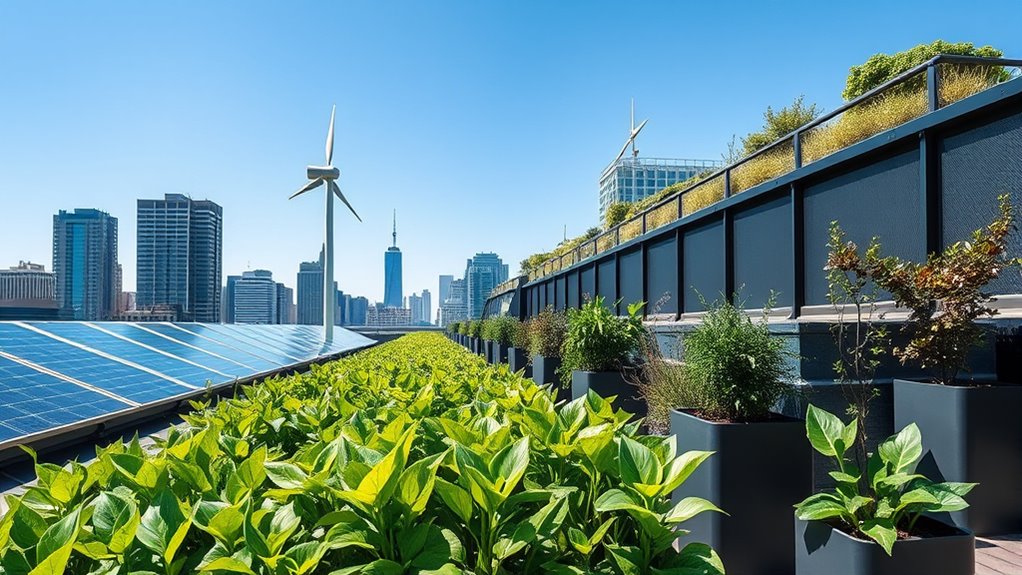

Green tech helps you protect the environment by reducing pollution, cutting greenhouse gases, and promoting sustainable growth. It uses innovations like renewable energy sources, eco-friendly manufacturing, and smart technology to lower your carbon footprint and save energy costs. These solutions create jobs and support eco-conscious choices. By adopting green tech, you contribute to a healthier planet. Keep exploring how these advancements can make a difference, and you’ll discover even more ways to get involved.
Key Takeaways
- Green technology reduces environmental impact by integrating renewable energy sources like solar and wind into various sectors.
- Innovative manufacturing practices minimize waste and use eco-friendly materials, promoting sustainable production.
- Sensors and data analytics enable real-time monitoring, improving efficiency and reducing resource consumption.
- Adoption of green tech supports energy independence and lowers carbon emissions, combating climate change.
- Technological advancements foster economic growth through new green jobs and cost-effective, eco-friendly solutions.
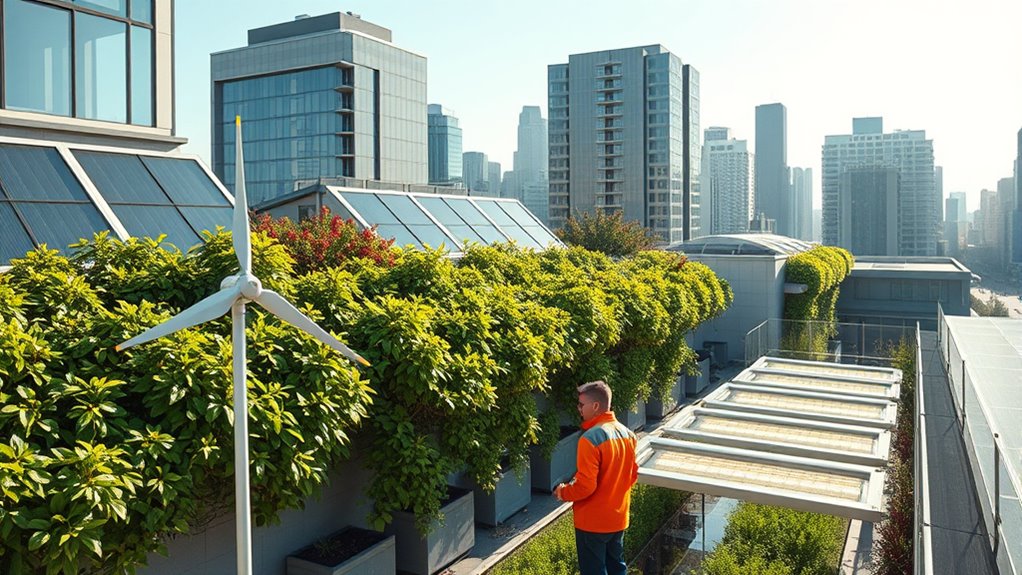
Have you ever wondered how technology can help protect our planet? It’s a question more people are asking as the impacts of climate change become clearer. The answer lies in innovative solutions that focus on reducing environmental footprints, especially through renewable energy and sustainable manufacturing practices. These advancements are transforming industries and offering hope for a cleaner, greener future.
Renewable energy plays an essential role in this shift. Instead of relying on fossil fuels, which pollute the air and deplete finite resources, renewable sources like solar, wind, and hydropower harness natural processes to generate electricity. You can see the benefits every time a solar panel captures sunlight or a wind turbine spins in the breeze. These technologies produce clean energy without releasing greenhouse gases, helping to slow global warming. As more communities and companies invest in renewable energy, they cut their dependence on polluting fuels and lower their carbon footprint. This change isn’t just good for the environment; it also creates economic opportunities, from new jobs in renewable sectors to reduced energy costs over time.
Renewable energy reduces emissions, creates jobs, and lowers costs, paving the way for a sustainable future.
Sustainable manufacturing is another key area where technology makes a difference. Traditional manufacturing often involves high energy consumption and waste, which harm ecosystems and deplete resources. However, advances in sustainable manufacturing emphasize efficiency and environmental responsibility. For example, using smarter automation can minimize waste and optimize resource use. Eco-friendly materials and recycling techniques reduce the need for virgin resources, while innovations like 3D printing can cut down on excess production. Companies adopting sustainable manufacturing practices not only lessen their environmental impact but also appeal to eco-conscious consumers. They often find that these methods lead to cost savings and brand loyalty, creating a win-win situation. The integration of sensors and data analytics allows manufacturers to monitor their processes in real time, quickly identifying inefficiencies and reducing waste. This proactive approach helps companies stay environmentally responsible without sacrificing productivity. Additionally, advancements in renewable energy tech are increasingly integrated into manufacturing facilities to further reduce their carbon footprint and energy costs.
Together, renewable energy and sustainable manufacturing demonstrate how technology can be a force for good. They show that economic growth and environmental health aren’t mutually exclusive. When you support or adopt these innovations—whether by choosing green energy options or advocating for eco-friendly products—you actively participate in protecting the planet. The push toward cleaner energy sources and smarter manufacturing practices is accelerating, driven by technological progress and growing awareness. With each new breakthrough, we get closer to a world where economic development doesn’t come at the expense of the environment. It’s clear that technology isn’t just changing how we live and work; it’s shaping a more sustainable future, one step at a time.
Frequently Asked Questions
What Are the Main Challenges Facing Green Technology Adoption?
You face challenges like technological barriers, which can slow down innovation and implementation, and policy hurdles that hinder widespread adoption. These obstacles make it tough to integrate green tech into existing systems. To overcome them, you need to advocate for supportive policies and invest in research to improve technology. Addressing these issues helps accelerate green tech adoption, making it easier for you to contribute to a more sustainable future.
How Does Green Tech Impact Economic Growth?
Think of green tech as a fertile field where innovation blooms. You’ll find that investment in renewable energy and green innovation sparks economic growth, creating new jobs and industries. As these technologies expand, they fuel a cycle of prosperity, making economies more resilient and sustainable. When you embrace green tech, you’re planting seeds for a thriving future, where environmental health and economic vigor grow hand in hand, shaping a brighter tomorrow.
Are Green Technologies Affordable for Developing Countries?
Green technologies can be affordable for developing countries, but you need to address cost barriers and leverage policy incentives. By investing in affordable solutions and seeking government support, you can reduce upfront costs and make green tech accessible. Collaborating with international organizations and prioritizing policies that promote clean energy can help you overcome financial challenges, ensuring sustainable growth without excessive expenses.
What Are the Potential Environmental Risks of Green Tech?
You might worry that green tech could cause environmental pollution or deplete resources. While it’s designed to help, some technologies, like solar panels or batteries, may involve resource extraction or generate waste. If improperly managed, they can contribute to pollution or deplete finite resources. It’s essential to develop sustainable practices and recycling methods to minimize these risks and guarantee green tech truly benefits the environment.
How Can Individuals Contribute to Green Technology Initiatives?
You can contribute to green technology initiatives by adopting eco-friendly personal habits, like reducing energy consumption and recycling. Get involved in community projects that promote renewable energy or sustainable practices. Advocate for green policies and support companies committed to eco-conscious innovation. Your active participation not only helps advance green tech but also inspires others to join the movement, creating a collective impact for a healthier planet.

Meta Quest 2 — Advanced All-In-One Virtual Reality Headset — 256 GB (Renewed)
- Storage Capacity: 256GB
- High-Resolution Display: 1832 x 1920 Pixels Per Eye
- Powerful Processor: Blazing-fast VR performance
As an affiliate, we earn on qualifying purchases.
Conclusion
You can make a real difference by embracing green tech and supporting sustainable innovations. Every small step counts, just like the saying “A journey of a thousand miles begins with a single step.” By staying informed and choosing eco-friendly solutions, you help protect our planet for future generations. Remember, technology is a powerful tool—use it wisely and responsibly. Together, we can turn the tide and create a greener, healthier world for all.

FEEBZ 3D VR Headset for Kids 2.0 + Android Remote
- Wide Compatibility: Fits most iPhone and Android phones
As an affiliate, we earn on qualifying purchases.

VR Headset 3D VR Glasses Universal Virtual Reality Goggles Support 360°Panorama Large Screen An-ti Bluelight Adjustable Pupil Distance Eye Protection VR Goggles for Movies Games Gift for Kids Adults
- Supports Myopia Users: Designed for comfortable use with myopia
- Immersive 360° View: Provides panoramic, immersive VR experience
- Adjustable Pupil Distance: Customizable for clear, comfortable viewing
As an affiliate, we earn on qualifying purchases.