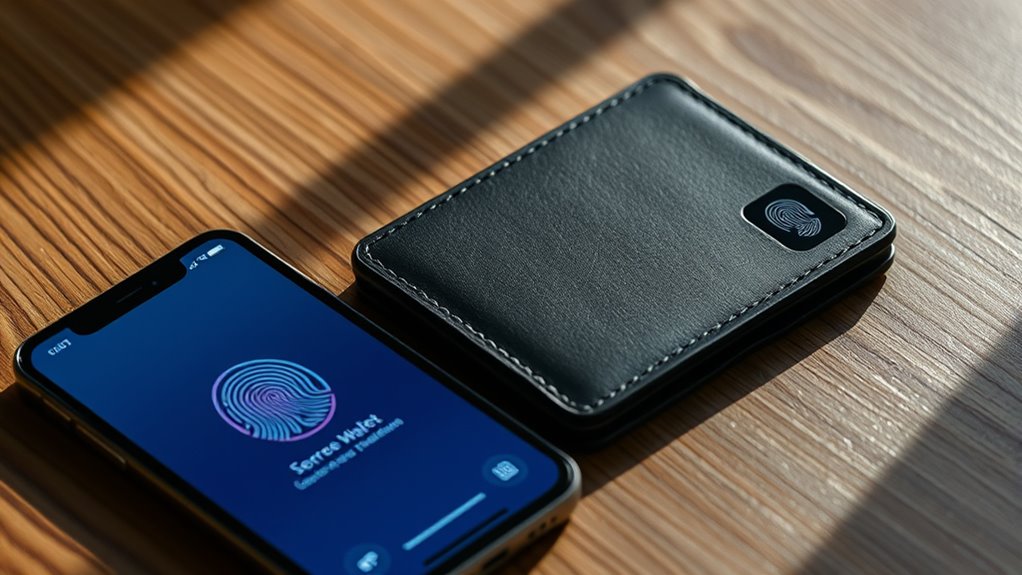

When choosing a digital wallet, look for features like biometric authentication, which uses your fingerprint or face for quick, secure access. Confirm it has strong encryption protocols that protect your transaction data from cybercriminals. Multi-factor authentication adds extra layers of security, making unauthorized access much harder. Features like real-time alerts and remote lock or wipe options give you control if your device is lost or stolen. Keep exploring to find out how these tools work together for maximum protection.
Key Takeaways
- Biometric authentication (fingerprints, facial recognition) for quick, secure access and reduced unauthorized entry.
- End-to-end encryption to protect transaction data and sensitive information from cyber threats.
- Multi-factor authentication combining biometrics, passwords, or PINs for layered security.
- Real-time alerts and remote lock/wipe features to respond swiftly to suspicious activity or device loss.
- Regularly updated security protocols to counter evolving cyberattack methods and ensure ongoing protection.
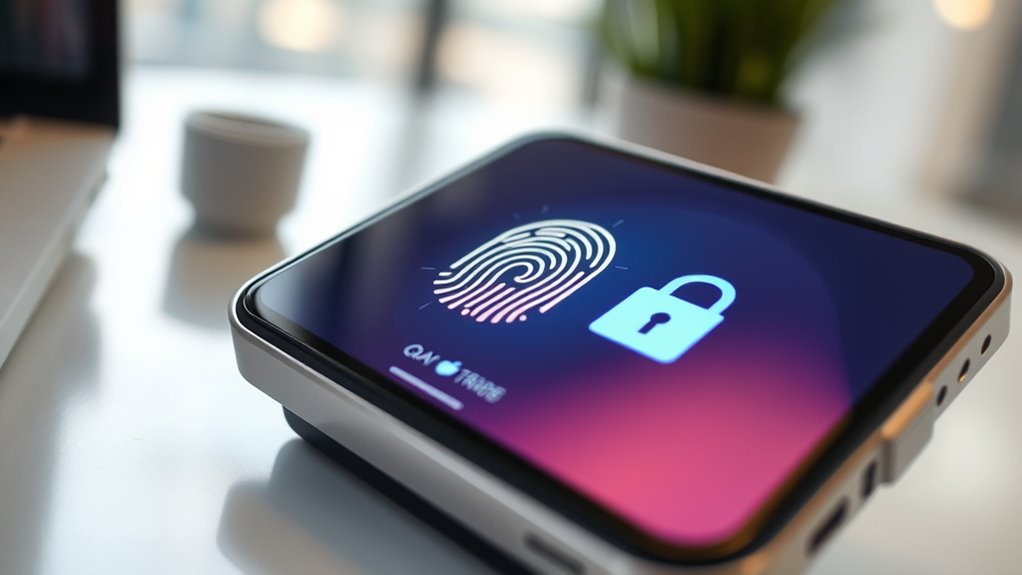
In today’s digital age, protecting your financial information is more important than ever, especially with the rise of digital wallets. As you rely more on these tools to handle your transactions, guaranteeing their security becomes crucial. One of the most effective security features to look for is biometric authentication. This technology uses unique physical characteristics—such as your fingerprint, facial recognition, or iris scan—to verify your identity. Unlike passwords or PINs, biometric data is difficult for hackers to duplicate or steal, adding an extra layer of protection. When your digital wallet employs biometric authentication, you can access it quickly and securely, reducing the risk of unauthorized access if your device is lost or stolen. Always check if your chosen wallet supports multiple biometric options, giving you flexibility and added security. Additionally, staying informed about cookie management policies can help you understand how your data is being protected and used across digital platforms.
Biometric authentication enhances digital wallet security through unique physical traits like fingerprints and facial recognition.
Another vital feature to consider is robust encryption protocols. Encryption transforms your sensitive data into an unreadable format that only authorized devices or systems can decode. When your digital wallet uses advanced encryption protocols, your financial details—such as card numbers and transaction history—are protected from cybercriminals trying to intercept or access your information during online or contactless payments. Look for wallets that update their encryption standards regularly, as technology evolves and so do cyber threats. End-to-end encryption, in particular, ensures that your data remains secure from the moment it leaves your device until it reaches the intended recipient, making it nearly impossible for malicious actors to tamper with or eavesdrop on your transactions.
In addition to biometric authentication and encryption protocols, you should also verify if the digital wallet offers multi-factor authentication (MFA). MFA combines two or more security layers, such as a password and a fingerprint, to confirm your identity. This layered approach greatly reduces the chances of unauthorized access, especially if one security measure is compromised. You should also consider whether the wallet provides real-time transaction alerts and remote lock or wipe capabilities, so you can respond promptly if your device is lost or stolen.
Ultimately, the security features you choose should give you peace of mind that your financial information is protected against evolving threats. Prioritize wallets that use biometric authentication, uphold advanced encryption protocols, and offer multi-factor authentication options. These features work together to create a strong defense against cyberattacks, helping you manage your digital finances confidently and securely.

Arculus Crypto Cold Storage Wallet, Secure Bitcoin Wallet, Supports 95% of Cryptocurrency Market Cap, 3-Factor Authentication, Black
Superior Security – Elevate the cold storage safety of your digital assets with Arculus's innovative 3-factor authentication system:…
As an affiliate, we earn on qualifying purchases.
As an affiliate, we earn on qualifying purchases.
Frequently Asked Questions
How Often Should I Update My Digital Wallet Security Settings?
You should update your digital wallet security settings regularly, ideally every three to six months, to stay protected. Keep an eye on security updates from your provider and enable automatic updates when available. Practice good password management by changing passwords periodically and using strong, unique passwords. Regular updates help prevent unauthorized access and keep your financial information safe, ensuring your digital wallet remains secure against evolving threats.
Can I Recover My Digital Wallet if I Forget My Password?
If you forget your password, most digital wallets offer password recovery options, such as email verification or security questions. You should also set up backup options, like a recovery phrase or seed phrase, to regain access. Always guarantee your backup options are stored securely offline. By doing so, you can recover your digital wallet without losing your funds, making password recovery and backups essential safety measures.
Are Biometric Security Features Foolproof for Digital Wallets?
Biometric security features aren’t foolproof, as they have vulnerabilities like false acceptance, where someone else’s fingerprint or face is mistakenly recognized. While these features add convenience, skilled hackers can exploit biometric vulnerabilities through sophisticated methods. You should combine biometrics with other security measures, like PINs or two-factor authentication, to better protect your digital wallet. Relying solely on biometrics leaves you exposed to potential false acceptance risks.
What Should I Do if My Digital Wallet Is Compromised?
Think of your compromised digital wallet like a leaky boat—you need to act fast. Immediately, change your passwords and enable two-factor authentication to prevent further fraud. Contact your wallet provider for account recovery options and report the issue. Keep an eye on your transaction history to spot suspicious activity. These steps help you regain control and bolster fraud prevention, ensuring your funds stay safe moving forward.
Does Multi-Factor Authentication Improve My Digital Wallet’s Security?
Yes, multi-factor authentication improves your digital wallet’s security considerably. It adds extra layers beyond just a password, making biometric bypass or weak password attacks harder for hackers. Even if someone guesses your password or tricks your biometric, the second factor—like a fingerprint or a one-time code—keeps your funds safe. Strengthening your password and enabling multi-factor authentication ensures a more robust defense against unauthorized access.

TANGEM Crypto Wallet Pack of 2 – Trusted Cold Storage Hardware Wallet for Bitcoin, Ethereum, NFTs & Altcoins – 100% Offline Crypto Cold Wallet
Proven security at scale: Over 9 years and millions of cards issued with no known remote hacks, while…
As an affiliate, we earn on qualifying purchases.
As an affiliate, we earn on qualifying purchases.
Conclusion
As you navigate your digital wallet, think of it as a fortress guarding your treasures. Look for strong security features like biometric locks and encryption that act as your vigilant guards, keeping your finances safe from lurking threats. With these protections in place, your digital wallet becomes a trusted vault, allowing you to carry your financial world confidently wherever you go. Trust in these features, and let your digital money stay secure behind an invisible shield.

Yubico – YubiKey 5C NFC – Multi-Factor authentication (MFA) Security Key and passkey, Connect via USB-C or NFC, FIDO Certified – Protect Your Online Accounts
POWERFUL SECURITY KEY: The YubiKey 5C NFC is the most versatile physical passkey, protecting your digital life from…
As an affiliate, we earn on qualifying purchases.
As an affiliate, we earn on qualifying purchases.

Nukii 256GB Encrypted USB-C Flash Drive — Patented NFC Tap-to-Unlock, Auto-Lock Security, Cold Storage & Password Vault | Write-Protect | Remote Wipe | Works with iPhone, Android, Mac & PC
[PATENTED NFC TAP-TO-UNLOCK — NO PASSWORDS NEEDED] Nukii replaces complex passwords and clunky software with patented NFC sensor…
As an affiliate, we earn on qualifying purchases.
As an affiliate, we earn on qualifying purchases.