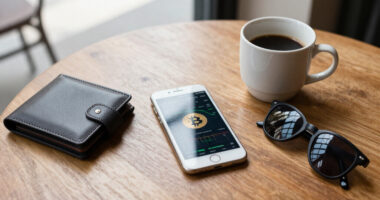

The blockchain keeps your Bitcoin safe through cryptographic security and decentralization. Transactions are validated by miners using proof of work, making it nearly impossible to alter history or double-spend coins. Once confirmed, your transaction is cryptographically secured, preventing tampering. To enhance protection, avoid long-term storage on exchanges and consider offline hardware wallets for private keys. Staying informed about security best practices helps protect your assets—there’s more to discover about how blockchain technology safeguards your BTC.

Get hardware and tech essentials delivered free with Prime
- Fast, free delivery on millions of items
- Prime Video, Amazon Music and more included
- Member-only deals all year
Key Takeaways
- Blockchain uses cryptographic hashing and decentralization to secure transaction data and prevent tampering.
- Proof of work by miners validates transactions, ensuring integrity and preventing double-spending.
- Once confirmed, transaction history is cryptographically linked, making alterations extremely difficult.
- The decentralized network reduces the risk of a single point of failure or attack.
- Combining blockchain security with private key protection enhances overall Bitcoin safety.

How secure is your Bitcoin? That question weighs heavily on anyone involved in the cryptocurrency world. The truth is, your Bitcoin’s security depends on how well you understand the risks and the measures you take to protect your assets. While the blockchain itself is designed to be secure through cryptographic principles and decentralized verification, your own security practices play a vital role. Many people store their Bitcoin on cryptocurrency exchanges for convenience, but these platforms can be vulnerable targets for hackers. If you leave your Bitcoin on an exchange, you’re trusting that exchange’s security protocols to keep your funds safe. History has shown that some exchanges have been compromised, resulting in significant losses for users. That’s why many experienced traders and investors prefer to transfer their Bitcoin to a hardware wallet after buying or trading. Hardware wallets are physical devices that store your private keys offline, making them immune to online hacking attempts. Using a hardware wallet means your Bitcoin isn’t exposed to the vulnerabilities of online platforms, and it’s much harder for hackers to access your funds without physical possession of the device.
The blockchain’s security relies on a network of miners who validate transactions and add them to the distributed ledger. This process, called proof of work, makes it extremely difficult for anyone to alter transaction history or double-spend coins. When your Bitcoin transaction is confirmed on the blockchain, it’s cryptographically secured and nearly impossible to reverse or tamper with. Additionally, understanding cryptographic principles involved in blockchain security can help you appreciate its robustness. However, your security doesn’t end there. You should also safeguard your private keys—the secret codes that give you access to your Bitcoin. If someone gains access to your private keys, they can control your Bitcoin regardless of how secure the blockchain is. That’s why storing private keys securely, preferably on a hardware wallet, is essential. Additionally, enabling two-factor authentication on your exchange accounts adds another layer of security, preventing unauthorized access even if your password is compromised.
In the end, the security of your Bitcoin hinges on a combination of the blockchain’s robust design and your personal security measures. While the blockchain provides an inherently secure infrastructure, your choice of where and how to store your Bitcoin makes all the difference. Avoid leaving your coins on exchanges long-term, and opt for hardware wallets to keep your private keys safe. Stay vigilant about security practices and stay informed about potential threats. By doing so, you guarantee that your Bitcoin remains protected, giving you peace of mind as you navigate the exciting world of cryptocurrency.
As an affiliate, we earn on qualifying purchases.
Frequently Asked Questions
How Are Private Keys Generated and Stored Securely?
You generate private keys using secure cryptographic algorithms, often through trusted wallet software or hardware devices. To store them securely, you should practice good key management by keeping your private keys offline in cold storage or hardware wallets, avoiding online threats. This way, you minimize risks of theft or loss, ensuring your BTC remains safe. Always back up your keys in a secure location to prevent accidental loss.
What Role Do Hardware Wallets Play in Bitcoin Security?
Hardware wallets hold your-hands and hold your holdings securely. They safeguard your private keys offline, shielding them from cyber threats and hacking. By isolating sensitive information, they provide a fortress against phishing and malware. In a world of fluctuating cryptocurrency regulations and evolving cyber threats, user education about hardware wallets‘ importance becomes essential. You get peace of mind knowing your Bitcoin stays secure, protected by a physical device that’s practically impenetrable.
How Does Multi-Signature Technology Enhance Transaction Safety?
Multi-signature authentication boosts your transaction safety by requiring multiple approvals before processing. It enhances transaction verification, making it harder for hackers to access your funds alone. With multi-signature technology, you and trusted parties must sign off on transactions, adding an extra layer of security. This process minimizes risks of theft or unauthorized transfers, ensuring your Bitcoin remains protected even if one key gets compromised.
What Are Common Methods Hackers Use to Attack Bitcoin Wallets?
You should be aware that hackers often use phishing scams and malware attacks to target bitcoin wallets. They trick you into revealing private keys or credentials through fake emails or compromised links. Malware can also infect your device, stealing wallet information or logging keystrokes. To stay safe, avoid clicking suspicious links, keep your software updated, and use strong, unique passwords along with multi-signature setups for added protection.
How Does the Blockchain Prevent Double-Spending?
You can trust the blockchain to prevent double-spending through its consensus mechanism. When you make a transaction, it gets verified and added to a block only if it’s unique and unspent. The blockchain’s decentralized consensus ensures all nodes agree on transaction history, making double-spending nearly impossible. This system keeps your BTC safe by permanently recording transactions and preventing any attempt to spend the same coins twice.
Bitcoin private key storage device
As an affiliate, we earn on qualifying purchases.
As an affiliate, we earn on qualifying purchases.
Conclusion
Just like a fortress built on a bedrock of code, the blockchain keeps your Bitcoin safe, standing strong against storms of threat. Every block, a brick; every miner, a watchful guard, ensures your treasure remains unbreakable. As long as you trust in this unyielding chain, your Bitcoin’s security is woven into a tapestry of resilience. Embrace the rhythm of the blockchain, and let it be the heartbeat that guards your digital gold.
As an affiliate, we earn on qualifying purchases.
As an affiliate, we earn on qualifying purchases.
Columbus Day / Indigenous Peoples' Day Picks
long weekend sales
As an affiliate, we earn on qualifying purchases.