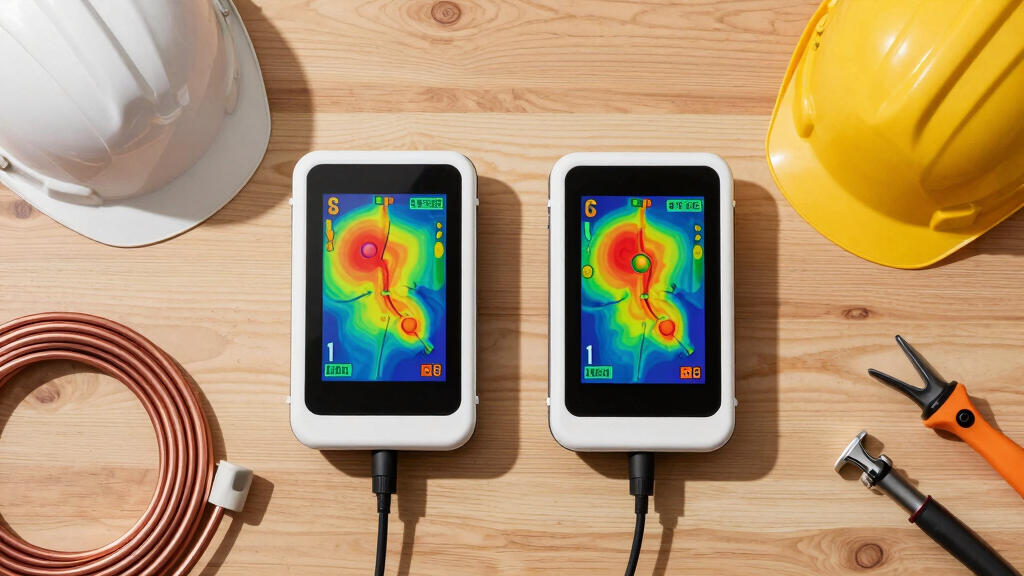

Mining setups demand precise thermal management to prevent hardware failures and maximize efficiency. In 2026, choosing the right thermal monitor hinges on your technical skill, hardware compatibility, and monitoring depth. The Thermal Grizzly WireView Pro II GPU Monitoring Device excels for those needing detailed per-pin current data and system safety, ideal for professional diagnostics. In contrast, the Thermal Grizzly WireView Pro GPU 90° offers comprehensive power and temperature monitoring tailored specifically for GPUs with 12VHPWR connectors, providing instant insights with an OLED display. Both tools bring unique strengths but also require careful consideration of their setup complexity and hardware compatibility, making them suitable for different types of mining operators.

Get hardware and tech essentials delivered free — and shop member deals
- Fast, free delivery on millions of items
- Access to Prime Big Deal Days deals on October 6–7
- Prime Video, Amazon Music and more included
Key Takeaways
- The WireView Pro II is better suited for detailed GPU diagnostics and professional setups.
- The WireView Pro 90° is ideal for real-time power and temperature monitoring on compatible graphics cards.
- Both devices demand some technical knowledge for installation and operation.
- Choosing between them depends on hardware compatibility and the level of monitoring detail needed.
- Tradeoffs include setup complexity versus ease of use and hardware-specific features.
| Thermal Grizzly WireView Pro II GPU Monitoring Device |  | Best for Professional GPU Diagnostics and Per-Pin Monitoring | Product Dimensions: 8 x 8 x 4 inches | Item Weight: 6.7 ounces | Compatibility: 12V-2×6 and 12VHPWR graphics cards | VIEW LATEST PRICE | See Our Full Breakdown |
| Thermal Grizzly WireView Pro GPU 90° – Advanced Power Meter for Graphics Cards |  | Best for Real-Time Power and Temperature Monitoring on Compatible GPUs | Connector: 12VHPWR | Display: OLED | Features: Real-time power, voltage, current monitoring; Temperature sensors; Audible alarm | VIEW LATEST PRICE | See Our Full Breakdown |
| thermal monitors for mining setup | Display | Product Dimensions | Item Weight | Compatibility |
|---|---|---|---|---|
| Thermal Grizzly WireView Pro I | 320×170 TFT-IPS | 8 x 8 x 4 inches | 6.7 ounces | 12V-2×6 and 12VHPWR graphics cards |
| Thermal Grizzly WireView Pro G | OLED | — | — | — |
More Details on Our Top Picks
Thermal Grizzly WireView Pro II GPU Monitoring Device
The WireView Pro II stands out for its detailed per-pin current readings, making it an excellent choice for those who need granular GPU diagnostics. Its 320×170 TFT-IPS display offers clear real-time data, and the device’s hardware-based design ensures system safety during operation. Compared with simpler power meters, this model caters to users comfortable with technical setups and who require high-precision monitoring for optimizing or troubleshooting mining hardware. Its support for cable management and logging features makes it suitable for professional or semi-professional mining farms, though the setup can be complex for casual or beginner users.
Pros:- High-precision per-pin current monitoring
- Real-time data logging and alert system
- Hardware-based operation enhances safety
- Supports cable routing for organized setups
Cons:- Requires technical knowledge for installation
- Limited software expandability details
- Design may be complex for casual users
Best for: Professional miners and technicians needing detailed GPU diagnostics
Not ideal for: Casual miners or those unfamiliar with hardware diagnostics
- Product Dimensions:8 x 8 x 4 inches
- Item Weight:6.7 ounces
- Compatibility:12V-2×6 and 12VHPWR graphics cards
- Display:320×170 TFT-IPS
- Monitoring Features:Per-pin current, temperature, warnings, logging
- Fan:Semi-passive 30 mm fan
Our verdict“This device is perfect for experienced users requiring detailed GPU health data and system safety features.”
Thermal Grizzly WireView Pro GPU 90° – Advanced Power Meter for Graphics Cards
The WireView Pro GPU 90° excels as a dedicated power and temperature monitor for graphics cards equipped with 12VHPWR connectors. Its OLED display provides clear, immediate data on power consumption, voltage, and current, complemented by temperature sensors and an audible alarm that triggers if safety thresholds are exceeded. This model is especially well-suited for users who want a straightforward, real-time view of their GPU’s power profile without the need for detailed per-pin diagnostics. However, its focus on 12VHPWR-compatible cards limits its use with older or different GPU types, and setup requires a good understanding of power metrics.
Pros:- Real-time power and temperature monitoring
- OLED display for easy data reading
- Includes audible alarms for safety thresholds
- Simple to read and interpret during mining operations
Cons:- Limited to 12VHPWR connector-equipped cards
- Requires understanding of power metrics for setup
- Less detailed diagnostics than per-pin devices
Best for: GPU miners with 12VHPWR connectors seeking real-time power monitoring
Not ideal for: Users with incompatible GPU connectors or those seeking detailed per-pin data
- Connector:12VHPWR
- Display:OLED
- Features:Real-time power, voltage, current monitoring; Temperature sensors; Audible alarm
Our verdict“This power meter is ideal for GPU miners focusing on real-time power consumption and safety alerts for compatible hardware.”
How We Picked
Our selection process focused on devices that deliver precise thermal and power data, compatibility with mining GPU hardware, and features that support system safety. We prioritized options offering real-time monitoring, alerts, and logging capabilities, while considering ease of setup and user interface. Each product was evaluated for its unique role in a mining environment, balancing technical sophistication with practical usability, to present a lineup that addresses different buyer needs and technical expertise.
Factors to Consider When Choosing Best Thermal Monitors For Mining Setups
Selecting the right thermal monitor for a mining setup depends largely on your hardware configuration, monitoring needs, and technical comfort level. A good device should provide accurate, real-time data on critical parameters like temperature, power, and current, while fitting seamlessly into your hardware environment. The following sections explore key considerations to help you choose the best thermal monitoring tool for your mining operation.Compatibility with Hardware
Before making a purchase, verify that the monitor supports your mining hardware’s connectors and specifications. Devices like the WireView Pro II are designed for detailed diagnostics on various GPU types, while the Power Meter targets specific GPU power connectors like 12VHPWR. Ensuring compatibility prevents setup issues and guarantees accurate readings.
Monitoring Depth and Data Detail
Decide if you need comprehensive per-pin current readings or if real-time power and temperature data suffice. The WireView Pro II offers high-precision, granular data suitable for troubleshooting and optimization, whereas the Power Meter provides quick, actionable insights during mining operations. Match the device’s capabilities to your technical expertise and monitoring goals.
Ease of Use and Setup
While advanced devices provide richer data, they often require more complex installation and setup procedures. Beginners or those seeking plug-and-play solutions should prioritize monitors with straightforward interfaces and minimal configuration. Balance your need for detail with your comfort level in hardware integration.
Safety and Alerts
Monitoring devices with alert features, like audible alarms or logging, help prevent hardware damage by notifying you of abnormal conditions early. Consider devices that offer customizable thresholds for temperature and power, especially during long mining sessions, to protect your investment.
Frequently Asked Questions
What is a thermal monitor for mining hardware?
A thermal monitor for mining hardware is a device that tracks parameters like temperature, power consumption, and current flow within your GPUs or other mining components. This real-time data helps prevent overheating, power inefficiencies, and hardware failures, ensuring your mining operation runs smoothly and safely.
Do I need a detailed per-pin current monitor for mining setups?
Per-pin current monitors are primarily useful for troubleshooting and diagnosing complex GPU issues, especially in professional environments. For most mining setups, real-time power and temperature readings are sufficient. If you’re optimizing system performance or managing multiple GPUs, investing in a detailed device like the WireView Pro II can provide valuable insights.
Can these monitors be used with any GPU?
Compatibility depends on the device. The WireView Pro II supports various GPU connectors, including 12V-2×6 and 12VHPWR, making it versatile for different setups. The Power Meter is limited to GPUs with 12VHPWR connectors, common in newer high-power cards. Always verify your hardware’s connectors before purchasing.
Are these devices easy to install?
Installation complexity varies. Devices like the Power Meter are generally straightforward, with plug-and-play operation for compatible hardware. In contrast, the WireView Pro II involves more technical setup, including cable management and configuration, making it more suitable for users with technical experience.
What are the main benefits of using a thermal monitor in mining?
Thermal monitors help maintain optimal GPU temperatures, prevent overheating, and monitor power efficiency, which can extend hardware lifespan and enhance mining profitability. They also provide early warnings of potential issues, reducing downtime and costly repairs.
Conclusion
For professional mining operators or those with technical expertise seeking detailed diagnostics, the Thermal Grizzly WireView Pro II GPU Monitoring Device offers the depth of data needed for advanced management. Casual miners or those prioritizing ease of use and quick insights will find the WireView Pro GPU 90° to be a practical choice, especially if their hardware supports 12VHPWR connectors. Selecting the right monitor hinges on your specific hardware setup, monitoring needs, and comfort with installation complexity.
Fall Picks
fall essentials
As an affiliate, we earn on qualifying purchases.