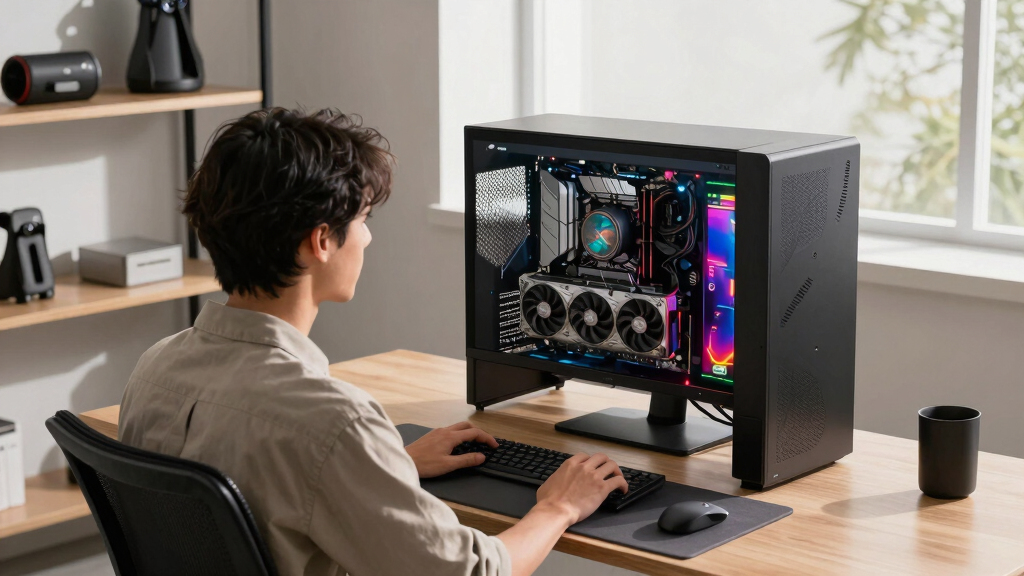

When it comes to 1440p gaming, selecting the right AMD graphics card hinges on your performance needs and budget. The Sapphire Nitro+ AMD Radeon RX 9070 XT Gaming OC stands out as the best overall choice, offering high frame rates and robust features for demanding titles. For those prioritizing affordability without sacrificing too much power, the ASRock Radeon RX 7700 XT Challenger 12GB provides a solid balance of performance and price. Meanwhile, the GIGABYTE Radeon RX 9070 XT Gaming OC is an excellent premium pick for enthusiasts seeking top-tier specs. The main tradeoffs in this category involve balancing raw power, features, and cost—more expensive cards tend to provide higher performance, but not always at a proportional value. Continue reading for a detailed breakdown of each option to find the best fit for your gaming setup.

Get hardware and tech essentials delivered free with Prime
- Fast, free delivery on millions of items
- Prime Video, Amazon Music and more included
- Member-only deals all year
Key Takeaways
- The RX 9070 XT models dominate the top tier, offering the highest performance at 1440p with high frame rates and future-proof features.
- Price-to-performance varies significantly; the ASRock RX 7700 XT Challenger 12GB makes a compelling case for budget-conscious buyers.
- VRAM size is less critical at 1440p but can impact future-proofing; 16GB cards are generally more versatile long-term.
- Cooling and noise levels differ, with triple-fan designs typically providing better thermals but possibly more noise.
- PCIe 5.0 support is relatively rare but offers potential benefits for future upgrades, making some cards more adaptable.
| Sapphire Nitro+ AMD Radeon RX 9070 XT Gaming OC Graphics Card with 16GB GDDR6 |  | Best Overall for High-Performance 1440p Gaming | Memory Size: 16 GB | Memory Interface: 256-bit | Outputs: 2 x HDMI, 2 x DisplayPort | VIEW LATEST PRICE | See Our Full Breakdown |
| XFX Swift AMD Radeon RX 9060 XT OC Triple Fan Gaming Edition Graphics Card | 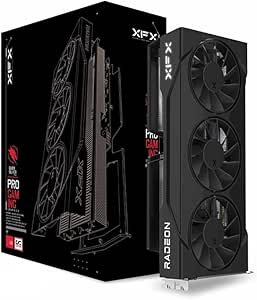 | Best Performance for Enthusiasts Who Need Speed | Chipset: AMD RX 9060 XT | Memory: 16 GB GDDR6 | Cooling: Triple Fan | VIEW LATEST PRICE | See Our Full Breakdown |
| ASRock Radeon RX 7700 XT Challenger 12GB OC Graphics Card |  | Best for Content Creators and Versatile 1440p Gaming | Graphics Coprocessor: AMD Radeon RX 7700 XT | Memory: 12 GB GDDR6 | Memory Bus: 192-bit | VIEW LATEST PRICE | See Our Full Breakdown |
| PowerColor Reaper AMD Radeon RX 9060 XT 16GB GDDR6 |  | Best Compact Design for Versatile 1440p Builds | Power Connector: 8-pin PCI Express | Minimum System Power: 500W | Internal Card Length: 200 mm | VIEW LATEST PRICE | See Our Full Breakdown |
| ASRock Radeon RX 9060 XT Steel Legend 16GB GDDR6 OC Graphics Card |  | Best for 4K and Content Creation with Future-Proof Features | VRAM: 16GB GDDR6 | Boost Clock: 3275 MHz | Architecture: AMD RDNA 4 | VIEW LATEST PRICE | See Our Full Breakdown |
| ASRock Radeon RX 9060 XT Challenger 8GB GDDR6 OC Graphics Card with Dual Fans and PCIe 5.0 |  | Best Compact Option for 1440p Gaming | Graphics Coprocessor: AMD Radeon RX 9060 XT | RAM: 8 GB | GPU Clock Speed: 3290 MHz | VIEW LATEST PRICE | See Our Full Breakdown |
| ASRock Radeon RX 9060 XT Challenger 16GB OC Graphics Card |  | Best for Demanding 1440p and 4K Gaming | Graphics Coprocessor: AMD Radeon RX 9060 XT | Graphics Card RAM: 16 GB | GPU Clock Speed: 3290 MHz | VIEW LATEST PRICE | See Our Full Breakdown |
| GIGABYTE Radeon RX 9070 XT Gaming OC 16G Graphics Card |  | Best for Ultra-High-Resolution and Demanding 1440p/4K Gaming | Graphics Coprocessor: AMD Radeon RX 9070 XT | RAM: 16 GB | GPU Clock Speed: 3060 MHz | VIEW LATEST PRICE | See Our Full Breakdown |
| AMD graphics cards for 1440p gaming | Graphics Coprocessor |
|---|---|
| Sapphire Nitro+ AMD Radeon RX | — |
| XFX Swift AMD Radeon RX 9060 X | — |
| ASRock Radeon RX 7700 XT Chall | AMD Radeon RX 7700 XT |
| PowerColor Reaper AMD Radeon R | — |
| ASRock Radeon RX 9060 XT Steel | — |
| ASRock Radeon RX 9060 XT Chall | AMD Radeon RX 9060 XT |
| ASRock Radeon RX 9060 XT Chall | AMD Radeon RX 9060 XT |
| GIGABYTE Radeon RX 9070 XT Gam | AMD Radeon RX 9070 XT |
More Details on Our Top Picks
Sapphire Nitro+ AMD Radeon RX 9070 XT Gaming OC Graphics Card with 16GB GDDR6
This model stands out for its substantial 16GB GDDR6 memory and versatile connectivity options, making it an excellent choice for gamers who want smooth, high-quality performance at 1440p. Compared to the ASRock Radeon RX 7700 XT Challenger, it offers more memory, which is beneficial for demanding titles and future-proofing, but it may also consume more power and require a stronger PSU. Its high memory capacity ensures excellent frame stability during intensive gaming, yet the lack of detailed specifications suggests it might need a robust cooling setup to sustain performance. Overall, this card is ideal for enthusiasts seeking top-tier performance without compromise, provided their system can support its power needs.
Pros:- 16GB GDDR6 memory ensures smooth performance in demanding titles
- Multiple output options for flexible connectivity
- Optimized for high-performance gaming and graphics workloads
Cons:- Potentially high power consumption requiring a robust PSU
- Limited detailed specifications may obscure cooling or thermal details
Best for: High-end gamers who prioritize performance and future-proofing at 1440p
Not ideal for: Budget-conscious builders or those with limited power supplies, as it may require high wattage and a compatible system
- Memory Size:16 GB
- Memory Interface:256-bit
- Outputs:2 x HDMI, 2 x DisplayPort
Our verdict“This card is perfect for gamers seeking top-tier 1440p performance and ample VRAM, assuming system compatibility.”
XFX Swift AMD Radeon RX 9060 XT OC Triple Fan Gaming Edition Graphics Card
This model is tailored for gamers demanding high clock speeds, with a boosted clock of up to 3320 MHz and triple fan cooling to manage thermal output. Compared with the PowerColor Reaper RX 9060 XT, it offers a higher boost clock, which can translate into better frame rates in demanding titles at 1440p. However, the lack of detailed specs and absence of reviews make it harder to assess cooling efficiency and noise levels, especially under long gaming sessions. Its high clock speed makes it ideal for those who prioritize raw performance, but it may come at the cost of increased power draw and potential thermal noise if not cooled properly.
Pros:- Boost clock up to 3320 MHz for fast gaming performance
- Triple fan cooling system effectively manages heat
- 16GB GDDR6 memory supports demanding games and applications
Cons:- Limited detailed specifications hinder full performance assessment
- No price or user ratings available, making value judgment difficult
Best for: Performance-focused gamers who want maximum clock speeds for 1440p gaming
Not ideal for: Casual gamers or those with limited case airflow, as thermal management might be more critical
- Chipset:AMD RX 9060 XT
- Memory:16 GB GDDR6
- Cooling:Triple Fan
- Boost Clock:up to 3320 MHz
Our verdict“Best suited for gamers seeking maximum clock speeds and a triple fan cooling solution for 1440p gaming.”
ASRock Radeon RX 7700 XT Challenger 12GB OC Graphics Card
This card offers a balanced mix of high boost clock speed and efficient cooling, making it suitable for both gaming and content creation at 1440p. Compared with the Sapphire Nitro+ RX 9070 XT, it provides less VRAM but benefits from a more compact size and quieter operation thanks to the dual fan setup. Its 12GB VRAM is still ample for most gaming and editing tasks, but might fall short in future AAA titles or heavy editing workloads. The inclusion of multiple outputs and a metal backplate adds to its durability and versatility, though its compatibility with all pre-built systems should be verified before purchase.
Pros:- High boost clock of 2584 MHz for smooth gameplay
- Efficient dual fan cooling with silent operation at low loads
- Supports high-resolution displays with multiple outputs
Cons:- Requires dual 8-pin power connectors, which may need a strong power supply
- Not compatible with all pre-built systems; verify before buying
Best for: Content creators who want a reliable, high-performance card for 1440p and light 4K work
Not ideal for: Power users running extremely demanding titles or working with large datasets requiring more VRAM
- Graphics Coprocessor:AMD Radeon RX 7700 XT
- Memory:12 GB GDDR6
- Memory Bus:192-bit
- Boost Clock:2584 MHz
- Outputs:3 x DisplayPort 2.1, 1 x HDMI 2.1
Our verdict“Ideal for content creators and gamers seeking a balanced, high-performance 1440p card with reliable cooling.”
PowerColor Reaper AMD Radeon RX 9060 XT 16GB GDDR6
This card’s compact 200mm length makes it suitable for smaller cases, while still offering 16GB of GDDR6 memory for demanding applications. Compared with the ASRock RX 7700 XT Challenger, it provides similar VRAM but in a more space-efficient form factor, ideal for builds with limited room. The inclusion of HDMI 2.1b and DisplayPort 2.1a ensures compatibility with modern high-resolution displays. However, the limited information on cooling and performance means potential buyers should verify thermal management and power requirements before purchasing, especially since it demands a 500W power supply. It’s a good choice for those who need a high VRAM card in a small form factor, but details on cooling are sparse.
Pros:- Compact size fits in smaller cases
- 16GB GDDR6 memory for demanding workloads
- Modern display outputs including HDMI 2.1b and DisplayPort 2.1a
Cons:- Requires a substantial 500W power supply
- Limited details on cooling and thermal management
Best for: Small form factor builders who want 16GB VRAM for 1440p gaming
Not ideal for: Power users or those planning to overclock heavily, due to limited cooling info and high power draw
- Power Connector:8-pin PCI Express
- Minimum System Power:500W
- Internal Card Length:200 mm
- Display Connectors:1 x HDMI 2.1b, 2 x DisplayPort 2.1a
Our verdict“Best for small builds needing high VRAM, provided system power and cooling are adequate.”
ASRock Radeon RX 9060 XT Steel Legend 16GB GDDR6 OC Graphics Card
This high-end model stands out with a 3275 MHz boost clock, 16GB VRAM, and support for 8K/120Hz and 4K/240Hz displays, making it ideal for demanding 1440p to 4K gaming and content creation. Compared to the Sapphire Nitro+ RX 9070 XT, it offers a significantly higher boost clock and future-proof connectivity options like PCIe 5.0, along with advanced cooling featuring triple fans and silent operation. The durable metal backplate and RGB lighting add to its premium appeal, but such high performance comes with increased power requirements and system compatibility considerations. This card is designed for users who want a future-proof, high-performance GPU capable of handling the most demanding resolutions and workloads.
Pros:- High 16GB GDDR6 VRAM suitable for 4K and content creation
- Silent triple fan cooling system ensures quiet operation
- Supports advanced display resolutions and future-proof connectivity
Cons:- High power consumption requiring compatible high-wattage PSU
- Requires a compatible motherboard with PCIe 5.0 support
Best for: High-end gamers and content creators seeking a future-proof, 4K-capable GPU for demanding tasks
Not ideal for: Budget builders or those with non-compatible systems, due to high power demands and system requirements
- VRAM:16GB GDDR6
- Boost Clock:3275 MHz
- Architecture:AMD RDNA 4
- Compute Units:32
- Ray Tracing:3rd Gen
Our verdict“A top choice for enthusiasts wanting a future-proof, 4K-ready card with premium features.”
ASRock Radeon RX 9060 XT Challenger 8GB GDDR6 OC Graphics Card with Dual Fans and PCIe 5.0
This model stands out for its balance of performance and size, making it an ideal choice for gamers who want high-quality visuals without the bulk of larger cards like the GIGABYTE RX 9070 XT. Its 3290 MHz boost clock ensures responsive gameplay, and dual fans with 0dB operation keep noise levels low during casual gaming. However, the need for a PCIe 5.0 slot limits compatibility with older systems, and the limited user feedback suggests less proven reliability. Compared to the 16GB options, this card offers less VRAM, which might impact future-proofing for demanding titles. Still, for those with compatible systems, this card provides a solid 1440p experience with minimal noise and fuss.
Pros:- Compact size suitable for smaller cases
- High boost clock of 3290 MHz for snappy performance
- Silent operation at low loads with dual fans
- Supports high resolutions up to 4K and beyond
Cons:- Limited compatibility with older PCIe 4.0 systems
- Fewer VRAM options may affect future game demands
Best for: Gamers with modern PCIe 5.0 systems seeking a quiet, space-efficient GPU for 1440p gaming.
Not ideal for: Anyone with older motherboards or limited cases, as it requires PCIe 5.0 and may be incompatible or difficult to install.
- Graphics Coprocessor:AMD Radeon RX 9060 XT
- RAM:8 GB
- GPU Clock Speed:3290 MHz
- Video Output Interface:DisplayPort, HDMI
- Graphics RAM Type:GDDR6
- Maximum Resolution:3840×2160 pixels
Our verdict“A great choice for those with PCIe 5.0 slots who prioritize quiet operation and a smaller form factor for 1440p gaming.”
ASRock Radeon RX 9060 XT Challenger 16GB OC Graphics Card
This card makes the most sense for gamers who want to push beyond 1440p into higher resolutions or future-proofing. Its 16GB of VRAM, paired with a boost clock of up to 3290 MHz, supports demanding titles and creative workloads alike. Compared with the 8GB model, it offers significantly more headroom for high-resolution textures and multi-monitor setups. The dual fans with effective cooling ensure thermal stability during extended gaming sessions, but the power requirements mean verifying compatibility with your PSU and chassis space. Unlike the GIGABYTE RX 9070 XT, this model is slightly more accessible in size, yet still packs enough punch for serious gamers aiming for high settings at 1440p or even 4K.
Pros:- Large 16GB GDDR6 VRAM ideal for demanding games
- High boost clock of 3290 MHz for smooth gameplay
- Supports resolutions up to 8K for future-proofing
- Dual fans provide effective cooling
Cons:- Requires an 8-pin power connector, check compatibility
- Larger size may not fit in compact cases
Best for: Enthusiasts seeking high VRAM capacity and performance for 1440p gaming and beyond.
Not ideal for: Players with limited case space or weaker power supplies, as this card’s size and power draw are more demanding.
- Graphics Coprocessor:AMD Radeon RX 9060 XT
- Graphics Card RAM:16 GB
- GPU Clock Speed:3290 MHz
- Video Output Interface:DisplayPort, HDMI
- Graphics RAM Type:GDDR6
- Maximum Resolution:7680 x 4320
Our verdict“Perfect for gamers who need high VRAM and performance headroom for 1440p or 4K gaming with a balanced size and cooling setup.”
GIGABYTE Radeon RX 9070 XT Gaming OC 16G Graphics Card
This pick makes the most sense for gamers who want top-tier performance with plenty of VRAM, supporting resolutions up to 8K. Its 16GB GDDR6 memory and PCIe 5.0 interface promise fast data transfer and smooth gameplay even at ultra-high settings. The GIGABYTE’s cooling system is robust, ensuring stable thermal management during intensive sessions, but its size and power consumption are notable. Compared to the ASRock RX 9060 XT 16GB, it offers slightly higher power draw and a larger footprint, which could be limiting for smaller builds. Still, for those with the space and power capacity, it delivers exceptional 1440p performance with an eye toward 4K and future games.
Pros:- Massive 16GB GDDR6 VRAM for demanding applications
- Supports PCIe 5.0 for faster data throughput
- Excellent cooling system for thermal stability
- Supports resolutions up to 8K for future-ready gaming
Cons:- High power consumption requires a strong PSU
- Large size may require spacious case compatibility
- Premium pricing limits accessibility
Best for: High-end gamers and content creators who demand maximum performance, VRAM, and resolution support.
Not ideal for: Users with smaller cases or limited power supply capacity, due to its size and power needs.
- Graphics Coprocessor:AMD Radeon RX 9070 XT
- RAM:16 GB
- GPU Clock Speed:3060 MHz
- Video Output Interface:DisplayPort
- Graphics RAM Type:GDDR6
- Maximum Resolution:7680 x 4320
Our verdict“Designed for gamers and creators seeking maximum VRAM and ultra-high-resolution support with high-end features, provided your system can handle its size and power demands.”

How We Picked
The selection process focused on performance benchmarks relevant to 1440p gaming, including frame rates in popular titles and stability under load. We also valued build quality, cooling efficiency, noise levels, and energy consumption. Price was a key factor, ensuring options offered good value across different budgets. Finally, features like VRAM size, PCIe support, and aesthetic design were considered to recommend cards suited for a range of gamers—from enthusiasts to casual players. The ranking reflects a balance of these factors, prioritizing real-world gaming performance over raw specifications alone.| AMD graphics cards for 1440p gaming | Graphics Coprocessor |
|---|---|
| Sapphire Nitro+ AMD Radeon RX | — |
| XFX Swift AMD Radeon RX 9060 X | — |
| ASRock Radeon RX 7700 XT Chall | AMD Radeon RX 7700 XT |
| PowerColor Reaper AMD Radeon R | — |
| ASRock Radeon RX 9060 XT Steel | — |
| ASRock Radeon RX 9060 XT Chall | AMD Radeon RX 9060 XT |
| ASRock Radeon RX 9060 XT Chall | AMD Radeon RX 9060 XT |
| GIGABYTE Radeon RX 9070 XT Gam | AMD Radeon RX 9070 XT |
Factors to Consider When Choosing Best AMD Graphics Cards For 1440p Gaming
Choosing the best AMD graphics card for 1440p gaming involves several considerations beyond raw performance. Understanding these factors helps ensure you select a card that aligns with your gaming habits, future plans, and system compatibility. This guide covers key aspects to keep in mind, helping you avoid common pitfalls and make a well-informed decision.Performance and Frame Rates
At 1440p, the primary goal is smooth gameplay with high frame rates. Look for cards that can consistently deliver 60+ FPS in your favorite titles, especially if you enjoy fast-paced or competitive games. Benchmark data and reviews can help gauge real-world performance, but remember that driver updates and game optimization can influence these results over time. Balancing raw power with your monitor’s refresh rate ensures you get the most out of your setup without bottlenecks.
VRAM and Future-Proofing
While 8GB of VRAM is usually sufficient for current 1440p gaming, opting for 12GB or 16GB can provide additional headroom for future titles and higher settings. Be cautious of over-investing solely in VRAM, as it doesn’t necessarily guarantee better performance; instead, focus on the GPU’s core capabilities. Consider your gaming habits—if you plan to play upcoming demanding titles or use your PC for creative work, higher VRAM can extend your system’s relevance.
Cooling and Noise Levels
Effective cooling is essential to maintain performance and lifespan, especially during extended gaming sessions. Cards with triple-fan setups generally offer better thermals but may produce more noise. Conversely, more compact designs or single-fan solutions might run quieter but risk higher temperatures. Evaluate your system’s airflow and your tolerance for noise to select a card that maintains good thermals without disrupting your environment.
Power Requirements and Connectors
Matching your power supply capacity to your chosen card is vital. High-end AMD cards often require significant power and multiple PCIe power connectors, so verify your PSU’s wattage and connector compatibility beforehand. Some models support PCIe 5.0 for future upgrades, but this feature is not yet widespread. Ensuring your power setup matches your GPU’s demands prevents stability issues and potential hardware damage.
Price and Value
Pricing can vary widely within this category, influenced by features, brand, and market conditions. Focus on the value each card provides—balancing performance, features, and longevity—rather than just the sticker price. Sometimes, investing a bit more yields significantly better performance or future-proofing, but in other cases, a budget-friendly option may meet your needs perfectly. Avoid overpaying for unnecessary bells and whistles if your primary goal is solid 1440p gaming.
System Compatibility and Aesthetics
Ensure your case can accommodate the card’s size and cooling setup, especially for larger models like triple-fan designs. Compatibility with your motherboard, including PCIe slots and space, is essential. Aesthetics might matter if your build emphasizes visuals; many cards feature RGB lighting or sleek designs. Confirm that the selected GPU aligns with your overall system style and airflow requirements to avoid future compatibility issues.
Frequently Asked Questions
Is 8GB of VRAM enough for 1440p gaming?
In most current titles, 8GB of VRAM is sufficient for 1440p gaming, especially if you play at medium to high settings. However, as games become more demanding, higher VRAM can help maintain stability and prevent texture pop-ins in future releases. If you plan on keeping your system for several years or want to run ultra settings, opting for 12GB or more offers extra headroom. Always consider your specific game library and resolution needs before deciding.
Should I prioritize cooling or noise levels when choosing a GPU?
Both cooling efficiency and noise levels matter, but your choice depends on your environment. If you prioritize a quiet setup, look for models with optimized cooling solutions designed for low noise operation, even if it means slightly higher temperatures. Conversely, if you want maximum thermal performance, a triple-fan or larger heatsink design will keep your GPU cooler but may produce more sound. Balancing these factors based on your tolerance and system airflow will yield the best overall experience.
Is PCIe 5.0 support important for 1440p gaming now?
Currently, PCIe 5.0 support offers limited benefit for 1440p gaming, as most games do not leverage its bandwidth. However, it provides increased future-proofing, especially if you plan to upgrade other components or want a longer-lasting system. For now, prioritize performance and cooling over PCIe 5.0 support, but keep this feature in mind if you want a more adaptable build for upcoming tech advancements.
How do I know if a GPU will fit in my case?
Check your case’s maximum GPU length and width specifications before purchasing. Larger cards with triple-fan setups require more space and better airflow management. Measure available space around PCIe slots and consider other components like drive cages or power supplies. Selecting a size-appropriate card prevents installation issues and ensures your build remains tidy and functional.
Is it worth paying extra for a factory-overclocked GPU?
Factory-overclocked GPUs typically offer higher performance out of the box, which can translate into better frame rates at 1440p. They often include improved cooling and additional features, but come at a higher cost. If you want the best performance without manual overclocking, these models are worth considering. However, if you’re comfortable overclocking yourself or on a tight budget, standard editions can provide similar long-term value.
Conclusion
For most gamers aiming at 1440p, the Sapphire Nitro+ AMD Radeon RX 9070 XT Gaming OC emerges as the best overall choice, blending high performance with reliability. Budget-conscious buyers should consider the ASRock Radeon RX 7700 XT Challenger 12GB for a balanced mix of price and power. Enthusiasts seeking the ultimate experience might lean toward the GIGABYTE Radeon RX 9070 XT Gaming OC, with premium features and top-tier specs. Beginners or those upgrading from older hardware will find the Challenger models straightforward and compatible. Ultimately, your decision should reflect your specific gaming needs, system compatibility, and future plans.
Halloween Picks
halloween
As an affiliate, we earn on qualifying purchases.