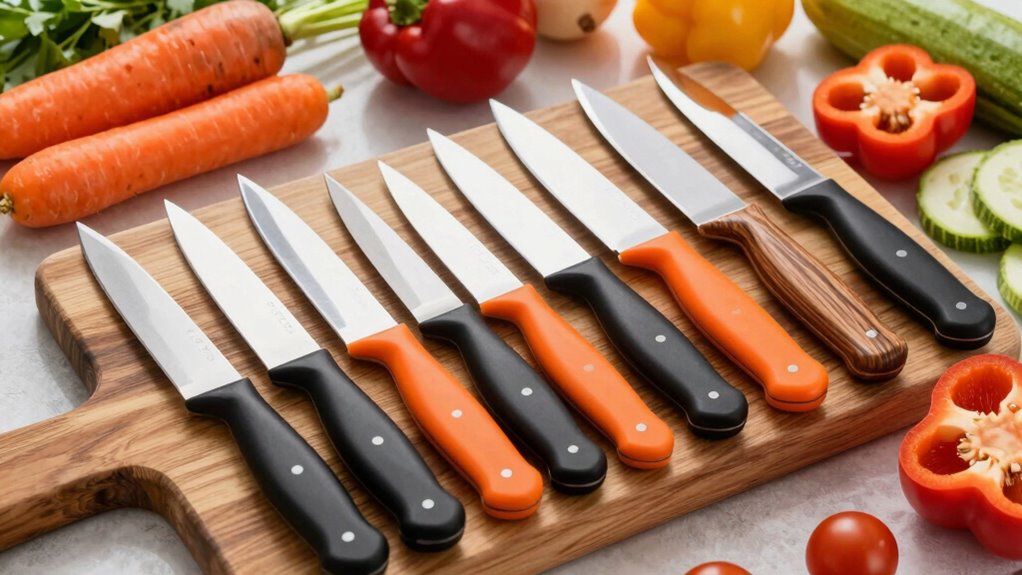

Choosing the right knife for vegetable prep can transform your cooking experience. The best options balance sharpness, comfort, and durability, with the Santoku Knife standing out as the overall top pick due to its versatility and high-quality steel. The Imarku Santoku offers exceptional sharpness for precise slicing, while the HOSHANHO Nakiri specializes in clean, straight cuts ideal for vegetables. However, tradeoffs often include higher cost for premium blades or maintenance challenges. Keep reading for a full breakdown of these top contenders and how they suit different needs.

Get hardware and tech essentials delivered free with Prime
- Fast, free delivery on millions of items
- Prime Video, Amazon Music and more included
- Member-only deals all year
Key Takeaways
- The top-ranked Santoku knives excel in versatility, handling both slicing and dicing with ease.
- Japanese-style Nakiri knives provide cleaner, more precise cuts specifically optimized for vegetables.
- High-carbon stainless steel enhances edge retention but may require more careful maintenance.
- Knife handles vary from ergonomic to traditional, impacting comfort during extended prep sessions.
- Budget-friendly options often sacrifice some sharpness or durability but still deliver good performance for casual use.
| Santoku Knife, 7 Inch Chef’s Knife with High-Carbon German Steel and Ergonomic Handle |  | Best Overall – Versatile, balanced, and comfortable for everyday vegetable prep | Blade Length: 7 inches | Steel Type: High-Carbon German Steel | Edge Angle: 15° double-bevel | VIEW ON AMAZON | See Our Full Breakdown |
| Imarku Santoku Knife 7 Inch – Japanese High Carbon Stainless Steel, Ultra-Sharp, Ergonomic Handle |  | Best Value – High-quality edge retention at an accessible price point | Blade Length: 7 inches | Material: Japanese high carbon stainless steel | Blade Thickness: 2.5mm | VIEW ON AMAZON | See Our Full Breakdown |
| HOSHANHO 7 Inch Nakiri Knife, Ultra Sharp Japanese Kitchen Chef Knife |  | Best for Precision – Dedicated vegetable and fruit slicing with ultra sharpness | Blade Length: 7 inches | Material: Japanese 10Cr15CoMoV high carbon stainless steel | Blade Hardness: 60 HRC | VIEW ON AMAZON | See Our Full Breakdown |
| Sunnecko Nakiri Knife – 7″ Chef Knife for Meat and Vegetable Chopping |  | Best for Versatility – Multi-use vegetable and meat chopping with traditional craftsmanship | Blade Length: 7 inches | Material: High-carbon stainless steel | Edge Angle: 12° double-bevel | VIEW ON AMAZON | See Our Full Breakdown |
| Farberware EdgeKeeper 5-Inch Santoku Knife with Sharpening Cover |  | Best Compact – Small but powerful for precise vegetable prep | Blade Length: 5 inches | Material: High-carbon stainless steel | Handle: Ergonomic | VIEW ON AMAZON | See Our Full Breakdown |
| Farberware Edgekeeper 3.5-Inch Paring Knife with Self-Sharpening Blade Cover |  | Best for Precision and Convenience in Small Tasks | Blade Length: 3.5 inches | Material: High-carbon stainless steel | Handle: Ergonomic | VIEW ON AMAZON | See Our Full Breakdown |
| VITUER 4-Piece Paring Knife Set with Sheaths, 4-Inch Ultra Sharp Kitchen Knives, German Steel, PP Plastic Handles |  | Best for Detailed and Safe Vegetable Prep in a Set | Number of knives: 4 | Blade length: 4 inches | Material: German stainless steel (3Cr13MoV) | VIEW ON AMAZON | See Our Full Breakdown |
| PAUDIN Nakiri Knife – 7″ Razor Sharp Meat Cleaver and Vegetable Kitchen Knife, High Carbon Stainless Steel, Multipurpose Asian Chef Knife |  | Best for Versatile Vegetable and Meat Prep with a Traditional Edge | Blade Length: 7 inches | Steel Type: 5Cr15Mov stainless steel | Hardness: 56+ | VIEW ON AMAZON | See Our Full Breakdown |
| knives for vegetable prep | Blade Length | Handle Material | Material | Edge Angle |
|---|---|---|---|---|
| Santoku Knife | 7 inches | Stainless steel | — | 15° double-bevel |
| Imarku Santoku Knife 7 Inch | 7 inches | Pakkawood | Japanese high carbon stainless steel | 15-18 degrees per side |
| HOSHANHO 7 Inch Nakiri Knife | 7 inches | Pakkawood | Japanese 10Cr15CoMoV high carbon stainless steel | 15 degrees |
| Sunnecko Nakiri Knife | 7 inches | Pakkawood | High-carbon stainless steel | 12° double-bevel |
| Farberware EdgeKeeper 5-Inch S | 5 inches | — | High-carbon stainless steel | — |
| Farberware Edgekeeper 3.5-Inch | 3.5 inches | — | High-carbon stainless steel | — |
| VITUER 4-Piece Paring Knife Se | 4 inches | PP plastic | German stainless steel (3Cr13MoV) | — |
| PAUDIN Nakiri Knife | 7 inches | Pakkawood | — | — |
More Details on Our Top Picks
Santoku Knife, 7 Inch Chef’s Knife with High-Carbon German Steel and Ergonomic Handle
This 7-inch Santoku stands out for its high-carbon German steel blade, offering exceptional sharpness and durability that rivals the Imarku model. Its ergonomic, non-slip handle ensures comfort during extended chopping sessions, making it ideal for home cooks seeking reliable performance. Compared with the Sunnecko Nakiri, it provides a more traditional shape suitable for various cutting styles, though it may require more careful maintenance due to its steel composition. The hollow edge design minimizes sticking, enhancing efficiency, but the limited size might restrict some larger vegetable tasks. Overall, this knife excels in providing a well-balanced, precise cut with a focus on comfort for everyday vegetable prep.
Pros:- Sharp, durable high-carbon German steel blade
- Ergonomic, non-slip handle for extended use comfort
- Hollow edge reduces food sticking
- Balanced weight for precise control
Cons:- Requires hand washing for maintenance
- Limited to 7-inch size, may not suit all tasks
Best for: Home cooks who want a versatile, all-around vegetable prep knife that can handle various tasks comfortably
Not ideal for: Users who prefer a dedicated Nakiri shape for vegetable chopping or need a larger blade for bigger produce
- Blade Length:7 inches
- Steel Type:High-Carbon German Steel
- Edge Angle:15° double-bevel
- Handle Material:Stainless steel
- Handle Features:Contoured finger grooves, palm swell
- Design:Sheep’s foot tip, hollow edge with divots
Our verdict“This knife is perfect for those seeking a reliable, balanced all-purpose vegetable prep blade with comfort in mind.”
Imarku Santoku Knife 7 Inch – Japanese High Carbon Stainless Steel, Ultra-Sharp, Ergonomic Handle
The Imarku Santoku offers a compelling balance of sharpness and affordability. Its Japanese high carbon stainless steel ensures excellent edge retention and resistance to rust, making it comparable to the HOSHANHO Nakiri in durability. The handle, crafted from Pakkawood, provides a comfortable grip, though it may need careful maintenance to prevent cracking over time. Its hollow edge design minimizes sticking, but the 7-inch size is similar to the Santoku by B0FXG4SS9N, which might limit larger vegetable slicing. This pick makes the most sense for budget-conscious cooks who want a sharp, easy-to-maintain knife for daily vegetable prep without sacrificing quality.
Pros:- Excellent sharpness and edge retention
- Comfortable, ergonomic handle reduces wrist tension
- Hollow edge prevents sticking
- Resistant to rust and corrosion
Cons:- Handle may crack if not maintained properly
- Requires careful sharpening to keep edge sharp
- Limited to 7-inch size, not ideal for large vegetables
Best for: Budget-conscious home cooks who want a sharp, durable vegetable knife with minimal maintenance
Not ideal for: Users who prefer low-maintenance handles or larger blades for bigger produce
- Blade Length:7 inches
- Material:Japanese high carbon stainless steel
- Blade Thickness:2.5mm
- Edge Angle:15-18 degrees per side
- Handle Material:Pakkawood
- Included Components:1 piece santoku knife
Our verdict“This knife is suited for budget-minded users seeking high-quality, sharp performance with manageable maintenance.”
HOSHANHO 7 Inch Nakiri Knife, Ultra Sharp Japanese Kitchen Chef Knife
The HOSHANHO Nakiri is designed specifically for vegetable prep with its ultra-sharp, 15-degree hand-polished edge. Its high carbon stainless steel and 60 HRC hardness ensure a level of precision that surpasses more general-purpose knives like the Sunnecko Nakiri, especially for thin, clean cuts. The scallop-shaped hollow design adds a non-stick benefit and aesthetic appeal, though it requires careful handling to maintain the sharpness. While the ergonomic Pakkawood handle offers comfort, it may slip when wet, a potential downside compared to the Sunnecko’s more balanced weight. This knife makes the most sense for those focused on perfect vegetable slices and fine cuts, accepting the need for careful maintenance.
Pros:- Ultra sharp, precisely polished cutting edge
- Ergonomic, comfortable handle
- Stylish scallop hollow design reduces sticking
- Excellent for thin, delicate vegetable slices
Cons:- Requires careful handling to maintain sharpness
- Handle may be slippery when wet
- High carbon steel needs regular rust prevention
Best for: Vegetable enthusiasts or chefs who prioritize precision and sharpness in vegetable slicing
Not ideal for: Users who need a multifunctional knife capable of handling meat or larger produce with ease
- Blade Length:7 inches
- Material:Japanese 10Cr15CoMoV high carbon stainless steel
- Blade Hardness:60 HRC
- Handle Material:Pakkawood
- Edge Angle:15 degrees
Our verdict“This Nakiri is ideal for those who want a dedicated, ultra-sharp vegetable knife for precise, delicate cuts.”
Sunnecko Nakiri Knife – 7″ Chef Knife for Meat and Vegetable Chopping
Best for Versatility – Multi-use vegetable and meat chopping with traditional craftsmanship
View on AmazonThe Sunnecko Nakiri emphasizes versatility, combining vegetable and meat chopping in a single 7-inch blade. Its 12° double-bevel edge offers a sharper, more aggressive cut compared to single-bevel Nakiris like HOSHANHO, making it suitable for slicing both vegetables and boneless meat. The ergonomic Pakkawood handle adds comfort, and its traditional Japanese craftsmanship delivers durability; however, the handle may need maintenance to prevent cracking or drying. Unlike the HOSHANHO Nakiri, it’s less specialized for vegetables alone but provides a balanced option for cooks who want a multi-purpose tool. Its slightly lighter weight and double-bevel design make it accessible for users who prefer a more aggressive cutting angle.
Pros:- Ultra-sharp 12° double-bevel edge
- Ergonomic, non-slip handle
- Made from durable high-carbon stainless steel
- Balanced weight for reduced fatigue
Cons:- Handle may need maintenance to prevent cracking
- Not suitable for cutting through bones or hard materials
- Sheath may dull the blade if not handled carefully
Best for: Home cooks seeking a versatile knife capable of handling vegetables and boneless meat with precision
Not ideal for: Professionals or users needing a dedicated vegetable-only knife for ultra-thin slicing
- Blade Length:7 inches
- Material:High-carbon stainless steel
- Edge Angle:12° double-bevel
- Handle Material:Pakkawood
- Weight:0.48 lbs
Our verdict“This knife is best for those who want a versatile, sharp tool for both vegetables and boneless meat in a single package.”
Farberware EdgeKeeper 5-Inch Santoku Knife with Sharpening Cover
The Farberware EdgeKeeper 5-inch Santoku offers a compact yet effective option for those with limited kitchen space or for precise, small-scale vegetable prep. Its high-carbon stainless steel blade maintains a sharp edge, thanks to the self-sharpening cover that extends its usability over time. Compared to larger blades like the 7-inch models, this pick excels in detailed work or for users who prefer a lightweight, easy-to-handle tool. The ergonomic handle ensures comfort during short prep tasks, but its small size limits its usefulness for larger vegetables or heavier chopping. It’s an excellent choice for small kitchens or for users who want a dedicated, space-saving secondary knife for fine slicing.
Pros:- Self-sharpening sheath maintains razor-sharp edge
- Ergonomic handle reduces fatigue
- Food release indentations improve cutting efficiency
- Compact size fits small kitchens
Cons:- Limited to 5-inch size, not suitable for large vegetables
- Requires hand washing and careful maintenance
- Less effective for heavy chopping or larger produce
Best for: Cooks with limited storage or those needing a precise, small knife for detailed vegetable prep
Not ideal for: Users requiring a larger, more versatile knife for big vegetables or heavy-duty tasks
- Blade Length:5 inches
- Material:High-carbon stainless steel
- Handle:Ergonomic
- Includes:Sharpening cover
Our verdict“This knife is ideal for precise, small-scale vegetable prep in tight spaces or for detailed work.”
Farberware Edgekeeper 3.5-Inch Paring Knife with Self-Sharpening Blade Cover
This paring knife is ideal for those who need a reliable, hassle-free tool for peeling, slicing, and garnishing. Its standout feature is the self-sharpening blade cover, which keeps the edge razor-sharp without manual honing, a clear advantage over traditional knives like the HOSHANHO nakiri, which requires separate sharpening. The ergonomic handle enhances comfort during extended use, making it suitable for those with sensitive hands or who perform delicate work. However, its compact size limits it to small tasks, and it’s not suited for slicing larger vegetables or heavy-duty prep. It’s best suited for home cooks who prioritize quick, precise cuts and minimal maintenance. The need for hand washing can be a drawback for busy kitchens, but overall, this knife simplifies everyday prep for small-scale tasks.
Pros:- Self-sharpening blade cover maintains razor-sharp edge
- Ergonomic handle offers comfortable grip
- Compact size ideal for precision work
Cons:- Hand wash recommended, not dishwasher safe
- Limited to small, precise tasks
Best for: Home cooks seeking a low-maintenance, precise tool for peeling and garnishing
Not ideal for: Users who need a versatile, larger kitchen knife for chopping or slicing bigger vegetables
- Blade Length:3.5 inches
- Material:High-carbon stainless steel
- Handle:Ergonomic
- Blade Cover:Self-sharpening
Our verdict“This pick makes the most sense for users who prioritize convenience and precision in small vegetable prep tasks.”
VITUER 4-Piece Paring Knife Set with Sheaths, 4-Inch Ultra Sharp Kitchen Knives, German Steel, PP Plastic Handles
This set offers four 4-inch knives, making it perfect for those who want a complete range of small prep tools. The ultra sharp blades made from German stainless steel provide excellent control for peeling, slicing, and intricate cuts, surpassing the dulling tendencies of cheaper knives. The included protective sheaths add safety, especially for drawers or travel. Compared with the PAUDIN nakiri, which focuses on one versatile blade, this set provides dedicated knives for different tasks, though it lacks larger blades for bulk chopping. Hand washing is recommended to preserve the edge, which might be inconvenient for frequent use. This set suits cooks who need reliable, detailed tools with safety features, but it’s less ideal for those wanting a single all-purpose knife or heavy-duty prep.
Pros:- Sharp, precise blades for detailed work
- Includes protective sheaths for safe storage
- Ergonomic handles for comfort and control
Cons:- Hand wash recommended to maintain sharpness
- Set does not include larger or heavier-duty knives
Best for: Cooks who prefer a variety of precise small knives for detailed vegetable prep
Not ideal for: People looking for a single, versatile knife for all kitchen duties or heavy chopping tasks
- Number of knives:4
- Blade length:4 inches
- Material:German stainless steel (3Cr13MoV)
- Hardness:56±2 HRC
- Handle material:PP plastic
- Includes:4 knives and 4 sheaths
Our verdict“This set is ideal for those who want multiple small blades with safety features for meticulous vegetable prep.”
PAUDIN Nakiri Knife – 7″ Razor Sharp Meat Cleaver and Vegetable Kitchen Knife, High Carbon Stainless Steel, Multipurpose Asian Chef Knife
The 7-inch PAUDIN nakiri stands out for its size and multipurpose design, making it suitable for slicing, dicing, and chopping both vegetables and meats. Its high carbon stainless steel blade offers excellent edge retention, which is an upgrade over smaller, delicate paring knives like the VITUER set. The wave pattern not only adds aesthetic appeal but also helps reduce food friction, improving cutting efficiency. Nonetheless, it’s not genuine Damascus steel, which might matter to collectors or those seeking authentic Damascus blades. The ergonomic handle provides comfort and balance, but it requires careful cleaning to maintain its appearance. This knife makes the most sense for cooks who want a durable, all-in-one tool capable of handling larger vegetable prep and even light meat slicing, though it may be overkill for very small, delicate tasks.
Pros:- Sharp, durable blade suitable for various tasks
- Ergonomic handle provides comfort and control
- Wave pattern reduces food friction and cleans easily
Cons:- Not genuine Damascus steel, so it lacks the exclusivity
- Handle may require careful cleaning to prevent staining
Best for: Cooks seeking a versatile, all-purpose vegetable and meat prep knife with a traditional look
Not ideal for: Users who only need small, precise paring or garnishing tools and prefer lightweight options
- Blade Length:7 inches
- Steel Type:5Cr15Mov stainless steel
- Hardness:56+
- Handle Material:Pakkawood
- Pattern:Wave
Our verdict“This pick is best for users who want a durable, multipurpose vegetable knife that can also handle light meat slicing with ease.”

How We Picked
The knives in this roundup were selected based on their performance in vegetable prep, focusing on blade sharpness, edge retention, handle comfort, and overall build quality. We prioritized products with proven durability and ease of maintenance, which are critical for consistent vegetable slicing. Value was also a key factor, ensuring options for different budgets without compromising essential features. The rankings reflect a balance of these criteria, highlighting which knives are best suited for everyday use, professional kitchens, or beginner cooks.| knives for vegetable prep | Handle Material | Material |
|---|---|---|
| Santoku Knife | Stainless steel | — |
| Imarku Santoku Knife 7 Inch | Pakkawood | Japanese high carbon stainless steel |
| HOSHANHO 7 Inch Nakiri Knife | Pakkawood | Japanese 10Cr15CoMoV high carbon stainless steel |
| Sunnecko Nakiri Knife | Pakkawood | High-carbon stainless steel |
| Farberware EdgeKeeper 5-Inch S | — | High-carbon stainless steel |
| Farberware Edgekeeper 3.5-Inch | — | High-carbon stainless steel |
| VITUER 4-Piece Paring Knife Se | PP plastic | German stainless steel (3Cr13MoV) |
| PAUDIN Nakiri Knife | Pakkawood | — |
Factors to Consider When Choosing Knives For Vegetable Prep
When choosing knives for vegetable prep, consider factors like blade type, steel quality, handle ergonomics, and maintenance needs. A well-chosen knife can make slicing, dicing, and chopping more efficient and enjoyable, while a poor choice can lead to frustration and uneven cuts. Understanding these factors will help you select a knife that matches your cooking style and budget, reducing the risk of buyer’s remorse.Blade Type and Shape
Different blade shapes serve specific cutting styles. A Santoku knife offers a versatile, all-purpose blade suitable for slicing, dicing, and mincing vegetables. Nakiri knives, with their straight edges, excel at clean, precise cuts and are ideal for uniform vegetable slices. Choosing the right shape depends on your typical prep tasks and preference for chopping or slicing motions.
Steel Quality and Edge Retention
High-carbon stainless steel is favored for its balance of sharpness and durability, but it requires regular honing and careful cleaning to prevent rust. Cheaper steels may dull faster but are more forgiving for casual cooks. Investing in a quality steel can significantly reduce frequent sharpening and improve your prep speed over time.
Handle Comfort and Material
A comfortable handle minimizes fatigue during extended prep. Ergonomic handles with non-slip grips provide better control, especially when chopping large quantities. Traditional wooden handles offer a classic feel but may require more maintenance, while plastic or composite handles tend to be more durable and easier to clean.
Maintenance and Sharpening
Consider how much effort you’re willing to invest in maintaining your knife. Some blades come with self-sharpening covers or are easy to hone at home, saving time and money. Others may need professional sharpening, which can add to long-term costs. Match your maintenance willingness with the knife’s design for sustained performance.
Budget and Value
Prices range from affordable to premium, often reflecting steel quality and craftsmanship. While higher-end knives tend to last longer and perform better, there are excellent budget options that provide good value for occasional use. Prioritize features that align with your cooking frequency and expectations to avoid overspending or underperforming tools.
Frequently Asked Questions
Should I choose a Japanese Nakiri or a Western-style Santoku for vegetable prep?
Both styles are excellent for vegetables but serve slightly different purposes. Nakiri knives have a straight, thin blade designed for clean, precise cuts, making them ideal for vegetables that require uniform slices. Santoku knives are more versatile, blending features of Western and Japanese designs, suitable for a variety of prep tasks including slicing, dicing, and chopping. If your focus is solely on vegetables, a Nakiri might be the better choice; for multi-purpose use, a Santoku offers more flexibility.
How important is steel quality when choosing a vegetable prep knife?
Steel quality directly impacts how sharp the knife stays and how resistant it is to corrosion. High-carbon stainless steel provides excellent edge retention but requires more careful cleaning to prevent rust. Cheaper steels may dull quickly but are easier to maintain and more forgiving for casual cooks. Investing in good steel usually pays off through less frequent sharpening and more consistent performance, especially if you prep vegetables regularly.
Can I use a smaller paring knife for vegetable prep instead of a larger chef’s knife?
While a paring knife can handle small tasks like peeling or mincing, it isn’t ideal for larger vegetable prep work that involves slicing or chopping. A larger knife such as a 7-inch Santoku or Nakiri provides better leverage, control, and efficiency for bulkier tasks. Using a smaller knife for bigger vegetables can lead to uneven cuts and increased fatigue, so it’s best to match your tools to the size of the task.
What handle material is best for durability and comfort?
Handles made from ergonomic plastics or composites tend to be more durable and require less maintenance than wood, which can crack or warp over time. For comfort during long prep sessions, handles with non-slip grips and contoured shapes are preferable. The choice depends on your priorities—if you prefer a traditional feel and don’t mind extra care, wood handles can be charming, but for everyday convenience, synthetic materials usually win out.
Is it worth investing in a high-end knife for vegetable prep?
High-end knives often feature superior steel, better balance, and ergonomic handles, which can improve your prep experience and last longer with proper care. If you cook frequently and value precision and ease of use, investing in a premium knife makes sense. However, for occasional use or beginner cooks, more affordable options can still provide excellent performance without the higher price tag, especially if you’re willing to maintain the blade properly.
Conclusion
For everyday cooks who want a reliable, versatile option, the Santoku Knife makes an excellent overall choice. Budget-conscious buyers or casual preppers should consider the Farberware EdgeKeeper Santoku for good value, while those seeking ultimate precision might prefer the HOSHANHO Nakiri for its straight-edge design. Beginners will benefit from ergonomic handles and straightforward maintenance, whereas professionals or enthusiasts should look at high-carbon steel options for longevity. Ultimately, your choice depends on how often you prep vegetables, your budget, and preferred style—each of these knives offers something distinct for different needs.
Fall Picks
fall essentials
As an affiliate, we earn on qualifying purchases.