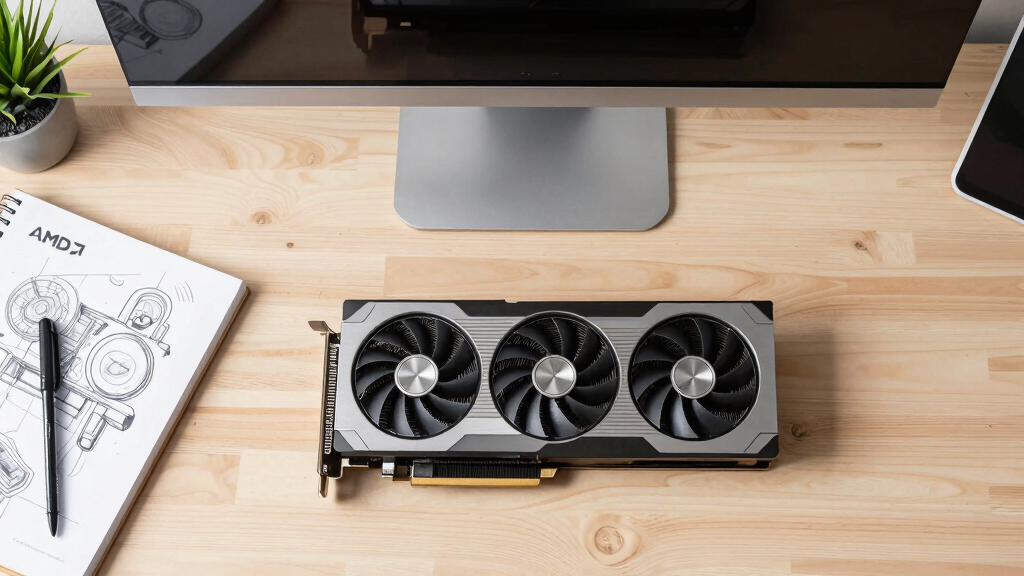

For creators seeking reliable, high-performance graphics cards, AMD offers a range of options tailored to different needs. The ASRock Radeon AI PRO R9700 32GB stands out as the best overall choice for demanding workflows, combining massive VRAM with robust processing power. The GIGABYTE Radeon RX 9070 XT Gaming OC 16G offers excellent gaming and rendering balance, making it a versatile pick. However, tradeoffs include higher costs or limited availability compared to more budget-friendly models. Continue reading for a detailed breakdown of each card’s strengths, weaknesses, and ideal use cases.

Get hardware and tech essentials delivered free — and shop member deals
- Fast, free delivery on millions of items
- Access to Prime Big Deal Days deals on October 6–7
- Prime Video, Amazon Music and more included
Key Takeaways
- Massive VRAM alone doesn’t guarantee better performance for creative tasks; architecture and driver support matter more.
- Premium models like the ASRock Radeon AI PRO R9700 excel in professional workflows but come at a higher price.
- Balanced options such as the GIGABYTE Radeon RX 9070 XT deliver good performance for both rendering and gaming without overspending.
- Workstation-specific cards like the AMD FirePro W9100 prioritize stability and compatibility over raw gaming power.
- Size and form factor can be important; compact cards like the AMD Radeon Pro W7500 are ideal for small workstations but offer less power.
| ASRock Radeon AI PRO R9700 32GB Professional Graphics Card |  | Best Overall for Heavy-Duty AI and Content Creation | Memory: 32GB GDDR6 | Boost Clock: 2920 MHz | GPU Architecture: AMD RDNA 4 | VIEW LATEST PRICE | See Our Full Breakdown |
| AMD FirePro W9100 Graphics Card – 16GB GDDR5 |  | Best for High-Resolution Professional Modeling | Graphics Coprocessor: AMD FirePro W9100 | RAM: 16 GB | Video Output Interface: HDMI | VIEW LATEST PRICE | See Our Full Breakdown |
| GIGABYTE Radeon RX 9070 XT Gaming OC 16G Graphics Card |  | Best High-Performance Creative GPU with Aesthetics | GPU Model: Radeon RX 9070 XT | Memory: 16GB GDDR6 | Interface: PCIe 5.0 | VIEW LATEST PRICE | See Our Full Breakdown |
| AMD Radeon Pro W7500 Graphics Card – 8 GB GDDR6, Full-Height, Desktop, DisplayPort |  | Best Compact Professional Card for Desktop Workstations | Memory: 8 GB GDDR6 | Form Factor: Full-Height | Interface: DisplayPort | VIEW LATEST PRICE | See Our Full Breakdown |
| AMD Radeon Pro WX 9100 Graphics Card – 16 GB |  | Best for 3D Rendering and CAD in Professional Workstations | Memory: 16 GB | VIEW LATEST PRICE | See Our Full Breakdown | ||
| ASRock Radeon RX 9060 XT Challenger 16GB OC Graphics Card |  | Best Mid-Range for Creators Needing High Performance | GPU Architecture: RDNA 4 | Memory: 16GB GDDR6 | Memory Interface: 128-bit | VIEW LATEST PRICE | See Our Full Breakdown |
| AMD Radeon™ Pro W7800 Professional Graphics Card |  | Best for High-End Workstation and 8K+ Creative Work | Compute Units: 70 CU | AI Accelerators: 2 per CU | FP32 Performance: 45 TFLOPS | VIEW LATEST PRICE | See Our Full Breakdown |
| AMD graphics cards for creator | Memory | Interface |
|---|---|---|
| ASRock Radeon AI PRO R9700 32G | 32GB GDDR6 | PCIe 5.0 |
| AMD FirePro W9100 Graphics Car | — | PCI Express |
| GIGABYTE Radeon RX 9070 XT Gam | 16GB GDDR6 | PCIe 5.0 |
| AMD Radeon Pro W7500 Graphics | 8 GB GDDR6 | DisplayPort |
| AMD Radeon Pro WX 9100 Graphic | 16 GB | — |
| ASRock Radeon RX 9060 XT Chall | 16GB GDDR6 | — |
| AMD Radeon™ Pro W7800 Professi | 32GB GDDR6 | — |
More Details on Our Top Picks
ASRock Radeon AI PRO R9700 32GB Professional Graphics Card
The ASRock Radeon AI PRO R9700 stands out for its massive 32GB GDDR6 memory, making it ideal for handling large AI models and 8K video editing tasks. Its advanced RDNA 4 architecture with AI accelerators delivers impressive performance for professional workloads, surpassing more general-purpose cards like the AMD Radeon Pro W7500. However, its blower cooling system and professional focus mean it’s less suitable for gaming or casual use, and its size and system requirements might limit compatibility. This card makes the most sense for users who need serious compute power and high memory capacity, even at a higher cost.
Pros:- Massive 32GB GDDR6 memory supports large AI models and high-res video editing
- Advanced RDNA 4 architecture with AI accelerators for demanding tasks
- Robust blower cooling system designed for continuous workloads
- Supports multiple high-resolution displays with DisplayPort 2.1a
Cons:- Primarily designed for professional workstation and server use, not gaming
- Large physical size and specific system requirements may limit compatibility
- Higher price point due to professional-grade features
Best for: AI developers, content creators working with high-resolution video, and workstation users needing large memory pools
Not ideal for: Gamers or casual users seeking a versatile card for gaming and light creative work
- Memory:32GB GDDR6
- Boost Clock:2920 MHz
- GPU Architecture:AMD RDNA 4
- Compute Units:64
- Ray Tracing:3rd Gen
- AI Accelerators:2nd Gen
- Display Outputs:4 x DisplayPort 2.1a
- Interface:PCIe 5.0
- Cooling:Blower
Our verdict“This pick is best suited for professionals needing maximum memory and compute power for AI and media workflows.”
AMD FirePro W9100 Graphics Card – 16GB GDDR5
The AMD FirePro W9100 offers a solid 16GB GDDR5 memory, making it a reliable choice for detailed 3D modeling and simulation work. Compared to the newer Radeon cards, it provides broad open standards support like OpenCL 2.0, which benefits many professional applications. Its single fan design keeps cooling effective but may struggle under prolonged heavy workloads, especially compared to more modern solutions like the GIGABYTE Radeon RX 9070 XT. This card makes the most sense for professionals prioritizing stability and open standards support over raw gaming performance.
Pros:- High-performance 16GB GDDR5 memory supports demanding modeling tasks
- Supports 4K resolution for crisp visual output
- OpenCL 2.0 support enhances compatibility with professional software
- Efficient single fan cooling for typical workloads
Cons:- Designed mainly for professional applications, not gaming
- Limited information on warranty and support options
- Older architecture compared to newer models, potentially less future-proof
Best for: 3D artists, CAD engineers, and simulation specialists needing consistent professional-grade performance
Not ideal for: Gamers or users seeking a versatile card for mixed workloads including gaming
- Graphics Coprocessor:AMD FirePro W9100
- RAM:16 GB
- Video Output Interface:HDMI
- Memory Type:DDR5 SDRAM
- Compatible Devices:Desktop Graphics Card
- Interface:PCI Express
Our verdict“This card is best for professionals prioritizing stability and open standards over gaming or cutting-edge features.”
GIGABYTE Radeon RX 9070 XT Gaming OC 16G Graphics Card
The GIGABYTE Radeon RX 9070 XT Gaming OC 16G delivers substantial performance with 16GB GDDR6 memory and PCIe 5.0 support, making it suitable for GPU-accelerated creative workflows. Its WINDFORCE cooling system helps manage thermal loads during intensive tasks, while RGB lighting adds a customizable touch. Unlike professional-focused cards like the Radeon Pro WX 9100, it offers a better balance between gaming and creative work, yet it might demand a high power supply and compatible PCIe 5.0 slot. This makes it well-suited for users who want strong performance without sacrificing aesthetics, but less so for those who need absolute stability for critical professional tasks.
Pros:- High-performance 16GB GDDR6 memory supports demanding creative tasks
- Advanced cooling with WINDFORCE technology manages thermal loads
- RGB lighting for personalized aesthetics
- PCIe 5.0 support ensures future compatibility
Cons:- Limited detailed specifications compared to enterprise cards
- High power consumption may require robust power supply
- Requires PCIe 5.0 slot, limiting upgrade options on older systems
Best for: Creative professionals who value both high performance and customizable aesthetics in their GPU
Not ideal for: Purely professional environments requiring certified workstation hardware or those with older motherboard PCIe slots
- GPU Model:Radeon RX 9070 XT
- Memory:16GB GDDR6
- Interface:PCIe 5.0
- Cooling System:WINDFORCE
- Lighting:RGB Lighting
Our verdict“This card is ideal for creators who want a high-performance GPU with aesthetic flexibility and future-proofing features.”
AMD Radeon Pro W7500 Graphics Card – 8 GB GDDR6, Full-Height, Desktop, DisplayPort
The AMD Radeon Pro W7500 with 8GB GDDR6 strikes a balance for professionals needing a reliable, space-efficient GPU. Its full-height design fits standard desktop cases and provides ample memory for typical CAD, video editing, and light 3D tasks. Compared to larger cards like the Radeon WX 9100 or the ASRock Radeon AI PRO, it offers a more compact form factor while still supporting multiple DisplayPort outputs. However, its lower memory and unspecified performance benchmarks make it less suitable for very large projects or intensive AI workloads. This card makes sense for users seeking a professional-grade GPU in a standard-sized case without requiring top-tier memory capacity.
Pros:- Compact full-height design fits standard desktop cases
- 8GB GDDR6 memory supports demanding graphics tasks
- Multiple DisplayPort outputs for multi-monitor setups
- Reliable AMD Radeon Pro series performance
Cons:- Limited memory for very large projects or AI workloads
- Lack of detailed performance metrics or benchmarks
- No mention of additional features like hardware acceleration or support for advanced workflows
Best for: Designers, CAD users, and video editors with limited space but needing reliable professional graphics performance
Not ideal for: High-end AI development or large-scale rendering projects that require more memory and processing power
- Memory:8 GB GDDR6
- Form Factor:Full-Height
- Interface:DisplayPort
- Weight:1.550 lbs
- Color:black
Our verdict“This card is best suited for professionals who need a space-efficient, reliable GPU for everyday demanding tasks.”
AMD Radeon Pro WX 9100 Graphics Card – 16 GB
The AMD Radeon Pro WX 9100 excels for complex 3D rendering and CAD workflows, with its 16GB of memory enabling detailed models and large scene handling. Compared with the FirePro W9100, it offers similar high memory capacity but integrates newer Radeon Pro architecture, potentially offering better stability and driver support. Its primary appeal is in high-end professional environments where reliability and large memory pools are critical. However, limited information on additional features and performance metrics raises questions about its suitability for AI-specific workloads or real-time rendering applications. This card makes the most sense for users focused on CAD, 3D design, and simulation applications requiring substantial VRAM and proven stability.
Pros:- High memory capacity supports large 3D models and complex scenes
- Designed specifically for professional rendering and CAD workflows
- Reliable AMD Radeon Pro series build quality
- Supports demanding professional applications
Cons:- Limited information on advanced features or benchmarks
- Higher cost relative to consumer-grade cards
- Potentially less future-proof compared to newer workstation cards
Best for: Engineers, 3D artists, and CAD specialists requiring extensive VRAM and stable performance
Not ideal for: Casual creative users or gamers seeking versatile or gaming-oriented GPUs
- Memory:16 GB
Our verdict“This card is best for professionals focused on 3D rendering, CAD, and high-fidelity visualization tasks demanding large VRAM pools.”
ASRock Radeon RX 9060 XT Challenger 16GB OC Graphics Card
This model stands out for its impressive boost clock of up to 3290 MHz and 16GB GDDR6 memory, making it well-suited for demanding creative workloads at 1440p. Compared with the AMD Radeon™ Pro W7800, it offers a more accessible option for creators who need strong gaming and acceleration capabilities without the professional-grade price tag. However, it demands a 550W power supply and may not fit smaller cases, which could be a limitation for compact setups. Its dual fans promise quieter operation, but cooling performance details remain limited, suggesting potential thermal tradeoffs under sustained loads.
Pros:- High boost clock of 3290 MHz for smooth rendering and playback
- 16GB GDDR6 memory supports large projects and high-resolution workflows
- Supports latest display standards (DisplayPort 2.1a, HDMI 2.1b)
- Quiet dual-fan operation reduces noise during long sessions
Cons:- Requires a substantial 550W power supply, limiting upgrade options
- Limited cooling performance information raises questions about thermal management under load
Best for: Creative professionals who work with demanding applications like video editing, 3D modeling, or AI at 1440p, and need a balance of performance and affordability.
Not ideal for: Small-form-factor builders or users with limited power supply capacity, as this card requires a 550W PSU and may be physically large for compact cases.
- GPU Architecture:RDNA 4
- Memory:16GB GDDR6
- Memory Interface:128-bit
- Boost Clock:3290 MHz
- Display Outputs:DisplayPort 2.1a, HDMI 2.1b
- Recommended Power Supply:550W
Our verdict“This card makes the most sense for creators needing solid 1440p performance and large memory capacity without stepping into professional workstation territory.”
AMD Radeon™ Pro W7800 Professional Graphics Card
The AMD Radeon™ Pro W7800 earns its place by delivering 45 TFLOPS of FP32 performance and 32GB GDDR6 memory, designed for advanced workflows such as 3D rendering, AI, and 8K video editing. Unlike the RX 9060 XT Challenger, it caters specifically to professional environments where ultra-high-resolution support up to 12K is critical. Its extensive API compatibility and support for multiple 12K displays make it ideal for those needing maximum output and processing power, but this comes at a high price and power requirement—260W TDP and a likely premium cost. This card is not suitable for gaming or users with limited budgets, given its focus on stability and performance in professional tasks.
Pros:- Exceptional 45 TFLOPS FP32 processing power for demanding workloads
- Large 32GB GDDR6 memory supports extensive projects and high-res workflows
- Supports up to 12K displays, ideal for multi-monitor setups and ultra-high-res editing
- Extensive API and application support ensures compatibility with professional software
Cons:- Likely expensive, limiting accessibility for smaller studios or hobbyists
- High power consumption with a 260W TDP requires robust power supply and cooling
- Designed primarily for workstation use, not optimized for gaming or casual tasks
Best for: Professional creators working on complex 3D, AI, or high-resolution video projects requiring maximum GPU power and display support.
Not ideal for: Enthusiast gamers or casual creators, as the high cost and professional focus make it an inefficient choice for standard use.
- Compute Units:70 CU
- AI Accelerators:2 per CU
- FP32 Performance:45 TFLOPS
- Memory:32GB GDDR6
- Display Support:up to 12K at 60Hz
- TDP:260W
Our verdict“This GPU is geared toward advanced professionals who need maximum processing power and high-resolution output, with little regard for cost or gaming performance.”
How We Picked
The products in this roundup were selected based on their relevance to creative professionals, considering performance benchmarks, VRAM capacity, driver stability, compatibility with creative software, and value for money. We prioritized cards that are designed or optimized for content creation, including workstation and gaming-oriented models with professional features. Each card was evaluated for its ability to handle demanding tasks like 3D rendering, video editing, and multi-monitor setups, while also factoring in build quality and user reviews. The ranking reflects a balance between raw power, reliability, and cost-effectiveness for creators in 2026.| AMD graphics cards for creator | Interface |
|---|---|
| ASRock Radeon AI PRO R9700 32G | PCIe 5.0 |
| AMD FirePro W9100 Graphics Car | PCI Express |
| GIGABYTE Radeon RX 9070 XT Gam | PCIe 5.0 |
| AMD Radeon Pro W7500 Graphics | DisplayPort |
| AMD Radeon Pro WX 9100 Graphic | — |
| ASRock Radeon RX 9060 XT Chall | — |
| AMD Radeon™ Pro W7800 Professi | — |
Factors to Consider When Choosing Best AMD Graphics Cards For Creators
Choosing the right AMD graphics card for creative work involves understanding several key factors that impact performance and workflow integration. Not all high-end cards are suitable for every creator, so it’s important to consider your specific needs, software compatibility, and budget. Here are some critical aspects to keep in mind before making a purchase.Performance and VRAM Capacity
For demanding creative tasks such as 3D rendering or large project files, higher VRAM (16GB or more) can significantly reduce rendering times and prevent bottlenecks. However, more VRAM isn’t a substitute for a strong GPU architecture or optimized drivers. It’s essential to match the card’s processing power with your software requirements and project complexity to avoid overpaying for unused capacity.
Software Compatibility and Driver Support
Some AMD cards are optimized for professional applications like Adobe Creative Cloud, Blender, or DaVinci Resolve. Professional drivers often provide better stability and feature support for these workflows, which can make a difference in long-term reliability. Be wary of consumer-grade GPUs with limited driver updates or compatibility issues that could disrupt your workflow.
Form Factor and Power Requirements
Workstation setups or compact cases may require smaller or more energy-efficient cards. It’s important to check dimensions and power connector needs before purchasing. A card that’s too large or power-hungry might require additional upgrades, adding to the overall cost and complexity.
Price-to-Performance Balance
While premium cards deliver top-tier performance, they may be overkill for basic editing or light 3D work. Conversely, budget models might struggle under heavy workloads. Finding a balance based on your typical project size and future growth plans ensures you get the best value without sacrificing necessary performance.
Future-Proofing and Upgrade Paths
Investing in a slightly more powerful card than you currently need can extend its lifespan as your projects grow more complex. Consider the upgrade paths available, including compatibility with upcoming hardware or software changes, to avoid needing an immediate replacement.
Frequently Asked Questions
Will a higher VRAM card improve performance for video editing?
Higher VRAM can help manage larger files and improve performance when working with 4K or higher resolution footage, especially in editing and rendering tasks. However, VRAM alone isn’t enough; the GPU’s processing power, driver support, and software optimization are equally important. For most creators, 16GB of VRAM strikes a good balance, but for very large projects, 32GB may offer additional headroom.
Are workstation AMD cards worth the investment for freelance creators?
Workstation-focused AMD cards like the W9100 or W7800 prioritize stability, driver support, and compatibility with creative software. If your workflow depends on consistent performance and minimal crashes, these cards often provide a worthwhile return on investment. However, for casual or hobbyist creators, gaming-oriented cards may deliver better performance at a lower cost.
Is it better to choose a card with more ports or higher performance?
For creators with multi-monitor setups, multiple ports are advantageous. However, performance should remain the priority, especially for rendering and editing. Many high-performance cards include enough DisplayPorts or HDMI outputs for most setups, so balance your needs based on your monitor count and resolution requirements.
How important are driver updates in long-term workflow stability?
Regular driver updates from AMD are essential for maintaining compatibility, fixing bugs, and improving performance over time. Professional-grade cards often receive more frequent and stable updates tailored for creative applications. Investing in a card with strong driver support can prevent headaches and ensure your workflow stays smooth.
Should I prioritize a card’s gaming performance or professional features?
If your primary focus is content creation, professional features like optimized drivers, certified hardware, and stability are more beneficial than raw gaming benchmarks. While gaming performance can be a bonus, it shouldn’t come at the expense of reliability in creative workflows. For mixed-use PCs, look for a balance, but prioritize professional-grade cards for dedicated creative work.
Conclusion
For demanding professional workflows where stability and large VRAM are priorities, the ASRock Radeon AI PRO R9700 32GB makes the most sense. Creators on a budget or those who need a versatile all-rounder should consider the GIGABYTE Radeon RX 9070 XT Gaming OC 16G for balanced performance. Beginners or hobbyists might find the AMD Radeon Pro W7500 an accessible entry point, while those with specific workstation needs should look at options like the AMD Radeon Pro WX 9100. Ultimately, your choice depends on your project complexity, budget, and whether you prioritize performance or stability.Fall Picks
fall essentials
As an affiliate, we earn on qualifying purchases.