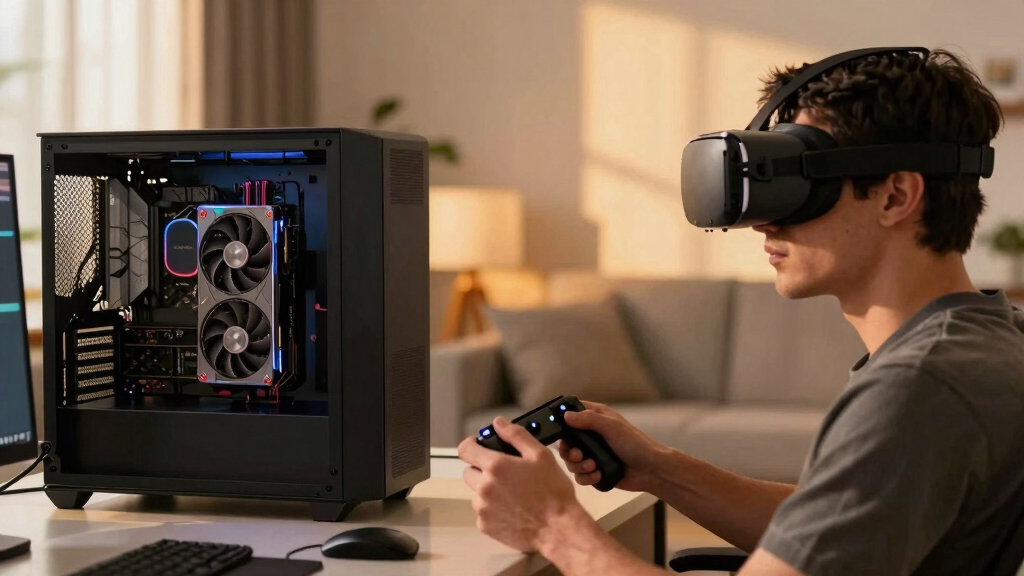

For VR enthusiasts, choosing the right AMD graphics card can make or break your immersive experience. The MSI Gaming Radeon RX 6600 XT MECH 2X 8G OC stands out as a solid overall choice for its balance of performance and affordability. The Sapphire Pulse AMD Radeon RX 9070 XT offers cutting-edge power for demanding VR titles, while more budget-friendly options like the RX 580 series provide decent performance at a lower price. However, tradeoffs between raw power, price, and future-proofing remain. Continue reading to see how these options compare and find the best fit for your VR setup.

Get hardware and tech essentials delivered free with Prime
- Fast, free delivery on millions of items
- Prime Video, Amazon Music and more included
- Member-only deals all year
Key Takeaways
- The latest RX 9070 XT handles VR at high settings thanks to its 16GB GDDR6 and RDNA 4 architecture, making it ideal for demanding titles.
- Budget-friendly options like the RX 580 series still provide playable VR performance, especially for casual or entry-level users.
- Higher VRAM (16GB) generally benefits future-proofing and performance in large, detailed VR environments but comes at a higher cost.
- Power consumption and cooling solutions vary significantly, impacting overall system build and noise levels.
- Price-to-performance ratios differ widely; the most expensive models are not always the best value for mid-range VR needs.
| MSI Gaming Radeon RX 6600 XT MECH 2X 8G OC Graphics Card |  | Best Overall for VR Gaming Performance | Model: Radeon RX 6600 XT MECH 2X 8G OC | Memory: 8GB GDDR6 | Interface: 128-bit | VIEW LATEST PRICE | See Our Full Breakdown |
| Sapphire Pulse AMD Radeon RX 9070 XT Gaming Graphics Card with 16GB GDDR6, AMD RDNA 4 |  | Best High-Capacity VR Card for Demanding Titles | Memory Size: 16 GB | Memory Interface: 256-bit | Output: 2 x HDMI, 2 x DisplayPort | VIEW LATEST PRICE | See Our Full Breakdown |
| ASUS Prime Radeon RX 9060 XT 16GB GDDR6 OC Edition Gaming Graphics Card |  | Best Compact High-Performance VR Card | GPU Clock Speed: 3310 MHz | Memory: 16 GB GDDR6 | Interface: PCI Express | VIEW LATEST PRICE | See Our Full Breakdown |
| XFX Radeon RX 580 GTS Black Edition 8GB GDDR5 Graphics Card (Renewed) |  | Best Budget VR Card with Good Performance | Graphics Coprocessor: AMD Radeon RX 580 | RAM: 8 GB | GPU Clock Speed: 2 GHz | VIEW LATEST PRICE | See Our Full Breakdown |
| ASRock Radeon RX 9060 XT Challenger 16GB OC Graphics Card |  | Best for High-End VR and Creative Work | Boost Clock: 3290 MHz | Memory: 16GB GDDR6 | Memory Speed: 20 Gbps | VIEW LATEST PRICE | See Our Full Breakdown |
| ASRock Radeon RX 7700 XT Challenger 12GB OC Graphics Card |  | Best Overall for VR-Ready High-Performance Gaming | Architecture: AMD RDNA 3 | Compute Units: 54 | Memory: 12GB GDDR6 | VIEW LATEST PRICE | See Our Full Breakdown |
| XFX Swift AMD Radeon RX 9060 XT OC Triple Fan Gaming Edition with 16GB GDDR6 | 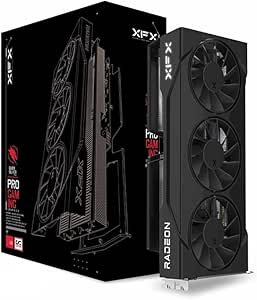 | Best High-Memory VR Card for Demanding Titles | Memory: 16 GB GDDR6 | Cooling: Triple Fan | Boost Clock: up to 3320 MHz | VIEW LATEST PRICE | See Our Full Breakdown |
| XFX Radeon RX 580 GTS XXX Edition 8GB GDDR5 VR Ready Graphics Card |  | Best Budget VR Card with Proven Performance | Graphics Coprocessor: AMD Radeon RX 580 | Memory: 8 GB | Display Maximum Resolution: 3840 x 2160 | VIEW LATEST PRICE | See Our Full Breakdown |
| ASRock AMD Radeon RX 6600 Challenger D 8GB GDDR6 Graphics Card |  | Best for 1080p VR and Creative Work | GPU Architecture: RDNA 2 | Memory: 8GB GDDR6 | Cooling: Dual-fan Challenger D | VIEW LATEST PRICE | See Our Full Breakdown |
| ASRock Radeon RX 7600 Challenger Pro 8GB OC Graphics Card |  | Best for 1080p and 1440p VR with Ray Tracing | GPU Architecture: AMD RDNA 3 | Memory: 8GB GDDR6 | Boost Clock: 2695 MHz | VIEW LATEST PRICE | See Our Full Breakdown |
| AMD graphics cards for VR | Memory |
|---|---|
| MSI Gaming Radeon RX 6600 XT M | 8GB GDDR6 |
| Sapphire Pulse AMD Radeon RX 9 | — |
| ASUS Prime Radeon RX 9060 XT 1 | 16 GB GDDR6 |
| XFX Radeon RX 580 GTS Black Ed | — |
| ASRock Radeon RX 9060 XT Chall | 16GB GDDR6 |
| ASRock Radeon RX 7700 XT Chall | 12GB GDDR6 |
| XFX Swift AMD Radeon RX 9060 X | 16 GB GDDR6 |
| XFX Radeon RX 580 GTS XXX Edit | 8 GB |
| ASRock AMD Radeon RX 6600 Chal | 8GB GDDR6 |
| ASRock Radeon RX 7600 Challeng | 8GB GDDR6 |
More Details on Our Top Picks
MSI Gaming Radeon RX 6600 XT MECH 2X 8G OC Graphics Card
This MSI Radeon RX 6600 XT stands out due to its balance of high-performance 8GB GDDR6 memory and overclocking capabilities, making it a solid choice for VR gamers who want reliable, immersive experiences without overspending. Compared to the ASUS Prime RX 9060 XT, it offers a more accessible price point while still delivering VR readiness, but the overclocking potential can lead to higher power consumption and heat. Its support for FreeSync ensures tear-free visuals, which is essential for smooth VR gameplay. However, as a renewed product, warranty limitations might be a concern for some, and it requires a compatible PC setup to fully leverage its features.
Pros:- High-performance 8GB GDDR6 memory for immersive VR experiences
- Overclocking capabilities for tailored performance boosts
- Supports FreeSync for tearless, smooth visuals
- VR ready with optimized latency
Cons:- Renewed product may have limited warranty coverage
- Potentially increased power draw and heat output due to overclocking
Best for: VR enthusiasts seeking a cost-effective, high-performance GPU with overclocking headroom.
Not ideal for: Users with limited power supplies or those worried about warranty longevity, since it’s a renewed unit.
- Model:Radeon RX 6600 XT MECH 2X 8G OC
- Memory:8GB GDDR6
- Interface:128-bit
- Outputs:DP/HDMI
- Features:Overclocking, VR Ready, FreeSync
Our verdict“This card is ideal for VR gamers who want a balance of performance and affordability with overclocking options.”
Sapphire Pulse AMD Radeon RX 9070 XT Gaming Graphics Card with 16GB GDDR6, AMD RDNA 4
The Sapphire Pulse RX 9070 XT with 16GB GDDR6 offers exceptional memory capacity for VR titles that demand high textures and complex scenes, making it a top pick for gamers who prioritize high fidelity and future-proofing. Compared with the ASUS Prime RX 9060 XT, it provides a larger VRAM buffer, but its lack of detailed specifications and higher price may be a consideration for budget-conscious buyers. Its multiple outputs, including HDMI and DisplayPort, ensure versatile VR headset compatibility. While its performance is promising, limited info on cooling and noise levels means potential buyers should verify system compatibility.
Pros:- Massive 16GB GDDR6 memory supports high-detail VR content
- Multiple output options for flexible headset connections
- Based on AMD RDNA 4 for improved performance and efficiency
Cons:- Limited detailed specs and no customer ratings available
- Potentially high cost, which might not suit casual users
Best for: VR users running high-end titles or those who want extra VRAM for future VR applications.
Not ideal for: Casual gamers or those on a tight budget, due to limited specs info and higher price point.
- Memory Size:16 GB
- Memory Interface:256-bit
- Output:2 x HDMI, 2 x DisplayPort
Our verdict“This card is best suited for demanding VR setups that need maximum VRAM and performance headroom.”
ASUS Prime Radeon RX 9060 XT 16GB GDDR6 OC Edition Gaming Graphics Card
The ASUS Prime RX 9060 XT OC Edition packs a formidable punch with a boost clock up to 3330 MHz and 16GB GDDR6 memory, making it a compelling choice for VR gamers needing a compact yet powerful GPU. Its triple-fan cooling system ensures effective heat dissipation, supporting high clock speeds without throttling. Compared with the Sapphire RX 9070 XT, it offers a more compact form factor that fits in smaller cases, but the high power consumption at peak performance could require a robust power supply. Its support for PCIe 5.0 and latest display outputs makes it a future-proof option for demanding VR applications.
Pros:- High boost clock up to 3330 MHz for fast VR rendering
- Compact 2.5-slot design for easy integration into small builds
- Supports PCIe 5.0 and the latest display interfaces
- Triple-fan cooling for stable operation under load
Cons:- No detailed warranty or noise level info provided
- High power consumption may necessitate a strong PSU
Best for: VR gamers with limited case space who still want high-end performance.
Not ideal for: Users seeking the quietest operation or with limited power capacity, as high clock speeds increase energy demand and noise levels are uncertain.
- GPU Clock Speed:3310 MHz
- Memory:16 GB GDDR6
- Interface:PCI Express
- Display Outputs:DisplayPort, HDMI
Our verdict“This GPU suits VR enthusiasts with limited space who want strong performance and modern interface support.”
XFX Radeon RX 580 GTS Black Edition 8GB GDDR5 Graphics Card (Renewed)
The XFX RX 580 GTS Black Edition offers 8GB GDDR5 memory and a 1425MHz overclocked clock speed, making it a practical choice for budget-conscious VR users. While it can’t match the raw power of newer cards like the RX 9060 XT, it provides decent VR performance for less demanding titles and setups. Its dual BIOS adds flexibility, but as a renewed product, warranty and reliability might be limited, and noise levels could be higher due to dual fans. Compared to the RX 6600 XT, it trades efficiency for affordability, making it suitable for entry-level VR but less ideal for high-end experiences.
Pros:- 8GB GDDR5 memory suitable for standard VR titles
- Overclocked to 1425MHz for enhanced performance
- Dual BIOS for flexible operation
Cons:- Refurbished status may limit warranty and reliability
- Potential for higher noise and heat from dual fans
- Outdated compared to newer AMD architectures
Best for: VR beginners or budget gamers seeking a capable card without breaking the bank.
Not ideal for: High-end VR users or those seeking quiet operation, as older and refurbished hardware may struggle with demanding titles.
- Graphics Coprocessor:AMD Radeon RX 580
- RAM:8 GB
- GPU Clock Speed:2 GHz
- Video Output Interface:DisplayPort
- Graphics RAM Type:GDDR5
Our verdict“This card is best for entry-level VR setups or budget-conscious users willing to accept some limitations.”
ASRock Radeon RX 9060 XT Challenger 16GB OC Graphics Card
The ASRock RX 9060 XT Challenger excels with a 3290 MHz boost clock and 16GB GDDR6 memory, making it a prime candidate for VR enthusiasts who also push into creative fields like 3D rendering or AI tasks. Its RDNA 4 architecture and ray tracing support add to its future-proof appeal. Compared with the RX 9070 XT, it offers a slightly lower VRAM but benefits from a quieter operation with its dual fans and supports next-generation display outputs like DisplayPort 2.1a. Its higher power requirement and larger size mean it’s better suited for spacious cases with robust power supplies. This card strikes a balance between gaming and productivity, but system compatibility should be confirmed beforehand.
Pros:- High boost clock of up to 3290 MHz for fast VR rendering
- 16GB GDDR6 memory supports demanding applications
- Supports next-gen ray tracing and AI acceleration
- Quiet operation with dual fans
Cons:- Large dimensions (249 mm length) may limit smaller cases
- Requires at least a 550W power supply, which may be high for some builds
Best for: VR users who want a versatile GPU capable of high-end gaming and creative workflows.
Not ideal for: Compact system builders or those with limited power supply capacity, due to size and power demands.
- Boost Clock:3290 MHz
- Memory:16GB GDDR6
- Memory Speed:20 Gbps
- Display Outputs:DisplayPort 2.1a, HDMI 2.1b
Our verdict“This GPU fits high-end VR setups where performance and productivity are equally prioritized.”
ASRock Radeon RX 7700 XT Challenger 12GB OC Graphics Card
The ASRock Radeon RX 7700 XT Challenger stands out as the most balanced choice for VR enthusiasts seeking high performance and modern features. Its AMD RDNA 3 architecture and 12GB GDDR6 memory deliver smooth, high-fidelity visuals at high refresh rates, comparable to the RX 7600 Challenger but with increased VR readiness. The dual fan cooling system keeps temperatures low with minimal noise, making it suitable for extended VR sessions. While it’s compatible with PCIe 4.0 and supports high-resolution output, it’s not guaranteed to fit all pre-built systems—so verifying system specs is essential. This card is best suited for serious gamers and content creators who want strong VR performance without paying a premium for top-tier models.
Pros:- Excellent balance of gaming and VR performance
- Efficient dual fan cooling with quiet operation
- Supports high-resolution and high-refresh-rate monitors
Cons:- System compatibility issues may arise; verify before purchase
- Not as premium as higher-tier options like the RX 9060 XT
Best for: High-end gamers and VR content creators who need a reliable, future-proof GPU.
Not ideal for: Users with older pre-built systems or limited space inside their chassis, due to potential compatibility and size constraints.
- Architecture:AMD RDNA 3
- Compute Units:54
- Memory:12GB GDDR6
- Boost Clock:2584 MHz
- Memory Bus:192-bit
- Display Outputs:3 x DisplayPort 2.1, 1 x HDMI 2.1
Our verdict“This GPU offers the best mix of performance, cooling, and features for serious VR users on a mid to high budget.”
XFX Swift AMD Radeon RX 9060 XT OC Triple Fan Gaming Edition with 16GB GDDR6
The XFX RX 9060 XT OC excels for users who prioritize raw memory capacity and boosting raw power, especially for VR and demanding graphical applications. Its 16GB GDDR6 memory surpasses the RX 7700 XT, providing extra headroom for complex VR environments and future titles. The triple fan cooling system helps maintain high boost clocks of up to 3320 MHz, ensuring peak performance even during extended sessions. However, detailed specifications are limited, and high power consumption could pose challenges on some systems. Compatibility may be an issue depending on your PC’s power supply and case size. This pick is best for gamers or VR enthusiasts with a high-end desktop who need maximum VR performance and memory capacity.
Pros:- Massive 16GB VRAM for demanding VR applications
- Triple fan cooling for stable operation under load
- High boost clock speeds for gaming performance
Cons:- Limited detailed specs available online
- Potentially high power draw; verify compatibility
Best for: Power-users with high-end desktops demanding maximum VR and gaming performance.
Not ideal for: Owners with modest systems or limited power supply capacity, as the card may require significant power and space.
- Memory:16 GB GDDR6
- Cooling:Triple Fan
- Boost Clock:up to 3320 MHz
Our verdict“A top-tier choice for users needing maximum VR memory and raw power, suitable for high-end gaming setups.”
XFX Radeon RX 580 GTS XXX Edition 8GB GDDR5 VR Ready Graphics Card
The XFX RX 580 GTS XXX Edition remains a solid choice for budget-conscious VR gamers, especially those who want a reliable, factory-overclocked card without spending a fortune. Its Polaris architecture and 8GB GDDR5 memory still support most VR titles at 1080p and some 1440p scenarios, making it suitable for entry-level VR setups. While it’s less powerful than newer models like the RX 7700 XT, its VR Ready certification and AMD LiquidVR technology ensure decent compatibility and performance. The single fan cooling system is effective for basic use but might struggle under extended VR sessions or heavy loads. This card is best for users new to VR or with limited budgets who want decent performance without high-end specs.
Pros:- Factory overclocked for improved performance
- VR Ready with AMD LiquidVR technology
- Supports high-resolution displays up to 4K
Cons:- Refurbished or limited warranty might affect reliability
- Single fan cooling less effective under prolonged VR use
Best for: Beginners or casual VR users with tight budgets and older systems.
Not ideal for: Enthusiasts seeking high-resolution or ultra-smooth VR experiences, as it may struggle with demanding titles.
- Graphics Coprocessor:AMD Radeon RX 580
- Memory:8 GB
- Display Maximum Resolution:3840 x 2160
- Graphics RAM Type:GDDR5
Our verdict“A dependable, affordable option for newcomers or casual VR users who prioritize value over cutting-edge performance.”
ASRock AMD Radeon RX 6600 Challenger D 8GB GDDR6 Graphics Card
The ASRock RX 6600 Challenger D is geared toward users focused on 1080p VR experiences and creative tasks, offering a cost-effective yet capable solution. Built on RDNA 2, it provides solid performance for less demanding VR titles and general gaming, comparable to the RX 7600 Challenger but at a lower price point. Its dual-fan cooling keeps noise levels and temperatures manageable for extended use. The card’s PCIe 4.0 support and multiple outputs make it versatile, but it’s not designed for 4K VR or ultra-high refresh rates. This GPU is ideal for casual gamers or users with space constraints who don’t need top-tier VR fidelity but want reliable performance in a budget-friendly package.
Pros:- Good 1080p VR and gaming performance
- Quiet dual-fan cooling system
- Supports PCIe 4.0 for high bandwidth
Cons:- Limited to 1080p VR experiences
- Not suitable for demanding or 4K VR titles
Best for: Casual VR gamers and creative users sticking to 1080p workflows.
Not ideal for: High-end VR enthusiasts or those wanting to play at 4K resolutions, as performance and VR smoothness may fall short.
- GPU Architecture:RDNA 2
- Memory:8GB GDDR6
- Cooling:Dual-fan Challenger D
- Support:PCIe 4.0
Our verdict“A practical choice for budget-conscious users who primarily enjoy 1080p VR and casual gaming.”
ASRock Radeon RX 7600 Challenger Pro 8GB OC Graphics Card
The ASRock RX 7600 Challenger Pro offers a compelling upgrade for those targeting 1080p or 1440p VR with features like ray tracing and AI acceleration. Its AMD RDNA 3 architecture and 8GB GDDR6 memory deliver solid performance at a more affordable price than the RX 7700 XT. The triple-fan cooling system maintains thermal stability during extended VR sessions, and its high boost clock of 2695 MHz ensures smooth gameplay. However, it’s slightly bulkier and requires a 550W power supply, so compatibility checks are necessary. This card makes the most sense for gamers wanting enhanced VR visuals with ray tracing but who don’t need the highest-end specs of premium models.
Pros:- Powerful gaming performance with high boost clock
- Supports ray tracing and AI features
- Triple-fan cooling for thermal efficiency
Cons:- Requires a 2.5-slot space in the chassis
- No included software or accessories
Best for: VR gamers seeking a balance of performance, ray tracing, and affordability at 1080p or 1440p.
Not ideal for: Users aiming for 4K VR or ultra-high refresh rate experiences, as it’s optimized for 1080p/1440p gaming.
- GPU Architecture:AMD RDNA 3
- Memory:8GB GDDR6
- Boost Clock:2695 MHz
- Ray Tracing:Yes
Our verdict“An excellent choice for mid-range VR users who want ray tracing features without the high cost of premium GPUs.”
How We Picked
The products in this roundup were evaluated based on their VR-specific performance, including frame rates and latency in popular VR titles. We also considered build quality, power efficiency, and cooling solutions to ensure reliability during extended VR sessions. Price and value were key factors, alongside compatibility with current AMD architectures. Our ranking favors models that balance high VR performance with reasonable costs, while also considering future-proofing and user experience. This approach helps identify options suitable for a range of budgets and VR setups.Factors to Consider When Choosing Best AMD Graphics Cards For VR
When choosing an AMD graphics card for VR, several factors should influence your decision beyond just raw performance. Understanding these can help you avoid common pitfalls and select a card that offers the best experience for your specific needs. From VRAM capacity to power requirements, each aspect impacts not only performance but also your overall setup and future upgrades.VRAM and Memory Capacity
VRAM determines how much data your graphics card can handle at once, directly affecting VR performance with large, complex environments. For most VR applications, 8GB is the minimum, but 12GB or more can offer better longevity and performance in future titles. Picking a card with insufficient VRAM might result in stuttering or lower fidelity, especially with high-resolution headsets or detailed worlds.
Performance Benchmarks and Frame Rates
High frame rates and low latency are essential for comfortable VR experiences. Look for cards that can consistently deliver 90Hz or higher in popular VR titles, as lower frame rates can cause motion sickness. Benchmarks specific to VR workloads help avoid overestimating a card’s capabilities based on traditional gaming tests, which may not reflect VR demands accurately.
Power Consumption and Cooling
VR gaming can be demanding on your GPU, leading to increased heat and power draw. A card with robust cooling solutions and efficient power use reduces noise and prolongs lifespan. Be mindful of your power supply and case airflow, as high-performance AMD cards often require additional power connectors and space.
Compatibility and Future-Proofing
Ensure the card you choose is compatible with your motherboard, PSU, and other hardware. Future-proofing includes selecting a model with enough VRAM and support for upcoming AMD architectures. Investing in a slightly more capable card now can save money later, especially as VR content continues to evolve and demand more from hardware.
Price-to-Performance Ratio
Balancing cost with expected performance is key. While flagship models offer the best power, they may not justify the price for casual VR users. Conversely, mid-range cards can provide excellent value, but might fall short on future-proofing or ultra-high settings. Identifying your specific VR needs and budget helps avoid overpaying for features you won’t utilize.
Frequently Asked Questions
Is VRAM more important than raw GPU power for VR gaming?
VRAM is important because it determines how much data the GPU can handle at once, especially in detailed environments. However, raw GPU power is equally critical for maintaining high frame rates. For most VR setups, a balance of both is ideal, with at least 8GB VRAM being recommended for current titles, and more for future-proofing and higher resolutions.
Can I use a mid-range AMD graphics card for demanding VR titles?
Yes, mid-range AMD cards like the RX 6600 XT or RX 7600 Challenger can handle many demanding VR titles at acceptable settings. However, they might struggle with ultra-high settings or future AAA releases. For casual or less demanding VR experiences, these cards offer a good balance of performance and price, but for more intensive VR, higher-end models may be necessary.
How does cooling impact VR performance in AMD graphics cards?
Effective cooling ensures the GPU operates at optimal temperatures, maintaining stable frame rates during extended VR sessions. Overheating can cause thermal throttling, reducing performance and causing potential artifacts or crashes. Choosing a card with a good cooling solution helps sustain high performance and prolongs the hardware’s lifespan.
Is it worth investing in the latest RDNA 4 architecture for VR?
Latest architectures like RDNA 4 generally offer improvements in efficiency, performance, and future compatibility. For VR, this translates into smoother experiences and longer relevance as VR titles become more demanding. However, they often come at a premium, so consider whether your current needs justify the upgrade or if a slightly older model provides enough power at a better value.
Should I prioritize higher VRAM or higher core clock speeds?
Both matter, but the choice depends on your primary use case. Higher VRAM benefits large textures and future-proofing, while faster core clocks improve raw rendering speed. For VR, a balanced approach—ensuring enough VRAM plus a capable GPU core—is usually best to prevent bottlenecks and ensure smooth performance across various titles.
Conclusion
For most users seeking a reliable VR experience, the MSI Gaming Radeon RX 6600 XT MECH 2X 8G OC offers a solid balance of price and performance, making it ideal for casual VR gaming. Those demanding higher fidelity and future-proofing will find the Sapphire Pulse AMD Radeon RX 9070 XT the best premium option, capable of handling the most intensive VR titles. Budget-conscious buyers should consider older models like the RX 580 series, which still deliver decent performance at a lower cost. Beginners or those upgrading their entire system might prioritize models with better cooling and power efficiency, while advanced users should aim for high VRAM and higher core speeds. Your choice ultimately depends on your specific VR needs, budget, and long-term plans.
Halloween Picks
halloween
As an affiliate, we earn on qualifying purchases.