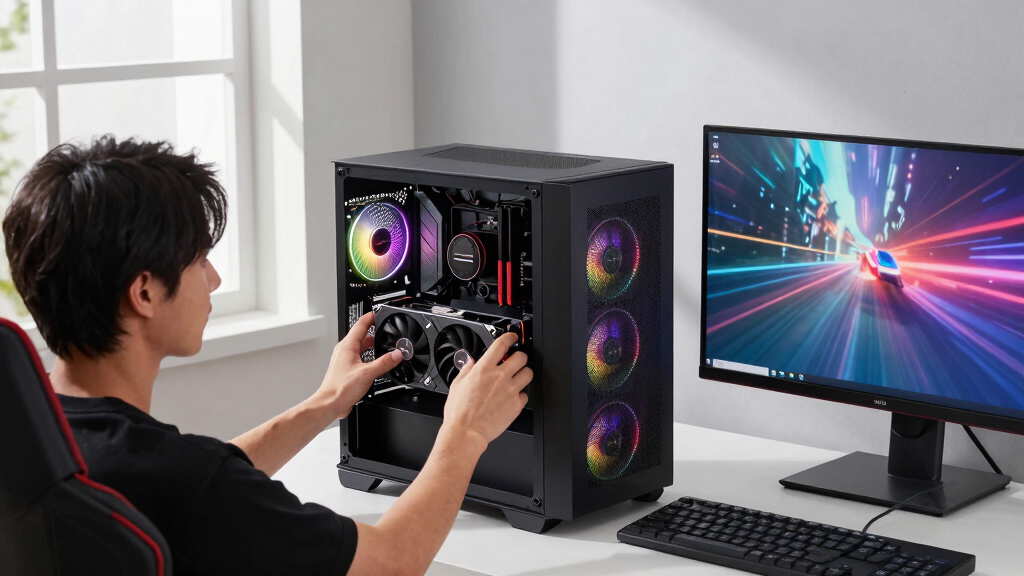

When choosing an AMD graphics card for high refresh monitors, the goal is smooth, tear-free gaming at high frame rates. The AMD RX 7900XT stands out as the best overall due to its robust performance and ample VRAM, making it ideal for demanding titles at high refresh rates. The XFX Speedster MERC319 RX 6950XT offers excellent horsepower for less demanding setups, while budget-conscious gamers might lean toward options like the VisionTek Radeon RX 550 for basic high-resolution needs. Each card involves tradeoffs between price, power, and feature set, especially when targeting ultra-smooth gameplay. Continue reading for a detailed breakdown of how these options compare and which fits your specific setup.
Key Takeaways
- High VRAM capacity, like 20GB on the RX 7900XT, significantly benefits high refresh gaming at 144Hz and above.
- More recent RDNA 3 cards outperform older RDNA 2 options, but they also come with a higher price tag.
- Budget cards like the RX 550 can handle 4K or high-res multi-monitor setups but may struggle with frame rates in fast-paced games.
- Connectivity options, such as multiple DisplayPorts, are critical for multi-monitor setups common with high refresh rate gaming.
- Power requirements vary sharply; high-end cards demand robust power supplies, influencing overall PC build costs.
| XFX Speedster MERC319 RX 6950XT Black Gaming Graphics Card with 16GB GDDR6 HDMI 3xDP, AMD RDNA 2 – RX-695XATBD9 |  | Best Overall for High Refresh Monitors | Memory: 16GB GDDR6 | Boost Clock: Up to 2368MHz | Cooling: Triple fan | VIEW LATEST PRICE | See Our Full Breakdown |
| XFX Radeon RX 7900XT Gaming Graphics Card with 20GB GDDR6, AMD RDNA 3 RX-79TMBABF9 | 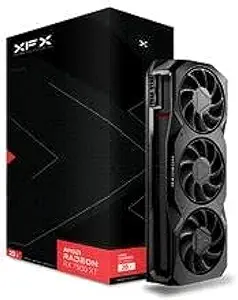 | Best Premium for High Refresh Monitors | Memory: 20GB GDDR6 | Architecture: RDNA 3 | Boost Clock: Up to 2400MHz | VIEW LATEST PRICE | See Our Full Breakdown |
| VisionTek Radeon HD 7750 2GB GDDR5 – 4K Resolution Support Graphics Card |  | Best Budget Option for High Refresh Monitors | Memory: 2GB GDDR5 | Max Resolution: 4096 x 2160 | Core Clock: 650 MHz | VIEW LATEST PRICE | See Our Full Breakdown |
| XFX Radeon RX 580 GTS Black Edition 8GB 256bit GDDR5 |  | Best for Mid-Range High Refresh Monitors | Memory: 8GB GDDR5 | Core Clock: 1405MHz OC | Memory Interface: 256-bit | VIEW LATEST PRICE | See Our Full Breakdown |
| VisionTek AMD Radeon RX 550 4GB GDDR5 for PC – Computer Graphics Card |  | Best for Multi-Display Productivity | Graphics Coprocessor: Radeon RX 550 | Ram: 4 GB GDDR5 | Video Output Interface: 4x DisplayPort 1.4 | VIEW LATEST PRICE | See Our Full Breakdown |
| VisionTek Radeon Rx 550 4GB GDDR5 – 4K Resolution Support Graphics Card | | Best for High-Resolution Gaming and Multi-Display Use | Graphics Coprocessor: Radeon RX 550 | Ram: 4 GB GDDR5 | Video Output Interface: 4x HDMI | VIEW LATEST PRICE | See Our Full Breakdown |
| Radeon R7 350 Mini 6DP 4GB GDDR5 Graphics Card, 6 Monitor Mini Display 6 Port Outputs |  | Best for Compact Multi-Display Setups | Graphics Coprocessor: Radeon R7 350 | Ram: 4 GB GDDR5 | Video Output Interface: 6x Mini-DisplayPort | VIEW LATEST PRICE | See Our Full Breakdown |
More Details on Our Top Picks
XFX Speedster MERC319 RX 6950XT Black Gaming Graphics Card with 16GB GDDR6 HDMI 3xDP, AMD RDNA 2 – RX-695XATBD9
This card stands out for its robust 16GB GDDR6 memory and high boost clock of up to 2368MHz, making it well-suited for demanding high-refresh-rate displays. Its triple fan cooling system ensures consistent performance during extended gaming or high-intensity tasks, outperforming many competitors like the RX 580 in raw power and future-proofing. Compared with the RX 580, it offers significantly better frame rates and higher resolutions, but this comes at a higher price point and increased power requirements. This choice makes the most sense for gamers or content creators who want top-tier performance without compromises, especially on 144Hz or higher monitors. However, users with smaller case sizes or limited power supplies should skip it due to its size and power draw. Pros: High 16GB VRAM, excellent cooling, high boost clock, versatile output options.
Cons: Higher cost, increased power consumption, larger size.Verdict: Ideal for gamers and professionals seeking premium high-refresh monitor performance without budget constraints.
Pros:- 16GB GDDR6 memory provides ample headroom for high-resolution gaming and creative work
- Triple fan cooling system maintains performance during extended use
- High boost clock up to 2368MHz enhances frame rates across demanding titles
- Multiple output options (HDMI and DisplayPorts) for versatile connectivity
Cons:- Premium price might be prohibitive for casual users
- Requires strong power supply and large case space
- Larger size may not fit in smaller PC chassis
Best for: Gamers or content creators using high-refresh monitors who want maximum performance and future-proofing.
Not ideal for: Budget-conscious users or those with small PC cases and limited power capacity.
- Memory:16GB GDDR6
- Boost Clock:Up to 2368MHz
- Cooling:Triple fan
- Outputs:HDMI 3x, DisplayPort
- Dimensions:13.39″ L x 5.43″ W
- Warranty:3 years
Bottom line: This card is best suited for serious gamers and professionals needing high refresh rate support without compromise.
XFX Radeon RX 7900XT Gaming Graphics Card with 20GB GDDR6, AMD RDNA 3 RX-79TMBABF9
This model excels for its 20GB of GDDR6 memory and the advanced RDNA 3 architecture, delivering ultra-high frame rates at 4K max settings, ideal for high-refresh-rate gaming on 144Hz or above. Its triple fan cooling solution ensures thermal stability during prolonged gaming sessions, surpassing the RX 6950XT in raw power and efficiency, making it a top choice for enthusiasts. Unlike the RX 6950XT, it offers newer architecture and greater VRAM, but at a higher price and slightly larger physical footprint. It’s best for those seeking cutting-edge technology and maximum performance on demanding high-refresh monitors, especially at 144Hz or higher. Users with smaller cases or lower budgets should consider less powerful options. Pros: 20GB GDDR6, RDNA 3 architecture, high frame rates at 4K, efficient cooling.
Cons: Higher cost, larger size, premium power requirements.Verdict: Perfect for high-end gamers and professionals who demand the best for high-refresh 4K displays.
Pros:- 20GB VRAM supports high-resolution textures and future game titles
- RDNA 3 architecture offers improved efficiency and performance
- High frame rates at 4K ensure smooth gameplay on high-refresh monitors
- Effective triple fan cooling maintains optimal temperatures
Cons:- Costlier than previous generation cards
- Requires substantial power and large case space
- Potentially overkill for 1080p or 144Hz refresh rates on less demanding titles
Best for: High-end gamers and content creators targeting 4K 144Hz+ displays with maximum settings.
Not ideal for: Casual gamers or users with smaller cases and limited budgets.
- Memory:20GB GDDR6
- Architecture:RDNA 3
- Boost Clock:Up to 2400MHz
- Cooling:Triple fan
- Outputs:Multiple DisplayPort and HDMI
- Dimensions:10.88″ L x 4.43″ W
Bottom line: This is the best choice for enthusiasts who want top-tier performance on high-refresh-rate 4K displays.
VisionTek Radeon HD 7750 2GB GDDR5 – 4K Resolution Support Graphics Card
This card makes it possible to support high-refresh-rate monitors up to 144Hz at a budget, with 2GB GDDR5 RAM and support for 4K resolution. Compared to the RX 580, it offers less VRAM and lower overall performance but remains suitable for casual gaming and general high-refresh display use. Its compact size and passive cooling make it ideal for small cases or HTPC setups, but it’s not suited for demanding AAA titles or high-detail 4K gaming. For those with limited budgets, it delivers decent performance on 1080p and some 144Hz setups, but serious gamers should look elsewhere. It’s best for users who want basic high-refresh support without the need for high settings or future-proofing. Pros: Affordable price, support for 4K, compact low-profile design, multiple monitor support.
Cons: Limited VRAM, lower performance, not suitable for high-end gaming or demanding titles.Verdict: A solid budget choice for casual high-refresh monitor usage and basic 4K support.
Pros:- Affordable price point makes high-refresh support accessible
- Supports up to 4K resolution with decent frame rates
- Small form factor suitable for compact or low-profile builds
- Supports multiple monitors (up to 6)
Cons:- Only 2GB VRAM limits high-detail gaming at 4K
- Lower overall performance compared to newer models
- Not suitable for modern AAA gaming on high settings
Best for: Budget-conscious users needing support for 144Hz or high-refresh monitors at 1080p or light 4K tasks.
Not ideal for: Enthusiasts or gamers aiming for high settings or demanding AAA titles at 4K.
- Memory:2GB GDDR5
- Max Resolution:4096 x 2160
- Core Clock:650 MHz
- Outputs:Dual HDMI
- Size:6.3″ L x 4.76″ W
- Warranty:1 year
Bottom line: Best for users on a budget who want reliable high-refresh support at 1080p and casual 4K use.
XFX Radeon RX 580 GTS Black Edition 8GB 256bit GDDR5
This card offers a strong balance of performance and price, with 8GB GDDR5 memory and factory OC at 1405MHz, making it suitable for gaming at 1080p and some high-refresh-rate setups. While it doesn’t match the raw power of the RX 6950XT or RX 7900XT, it outperforms many budget options like the HD 7750 and is a significant upgrade over older cards for high-refresh monitors. Its dual BIOS and cooling technology help sustain performance, but it’s still best for gamers targeting 1080p or entry-level 144Hz gaming. Those wanting to push beyond 144Hz or higher resolutions should consider more advanced models. It’s an excellent choice for mainstream gamers who want reliable high-refresh support without premium costs. Pros: 8GB VRAM, factory overclocked, dual BIOS, solid cooling performance.
Cons: Slightly older architecture, limited to 1080p/144Hz, not ideal for 4K gaming.Verdict: A dependable mid-range card perfect for gamers aiming for high-refresh 1080p or entry-level 144Hz monitors.
Pros:- 8GB VRAM supports high-refresh gaming at 1080p and some 144Hz setups
- Factory overclock increases baseline performance
- Dual BIOS adds reliability and flexibility
- Effective cooling system for sustained performance
Cons:- Older architecture compared to RX 6950XT or RX 7900XT
- Limited to 1080p and 144Hz gaming, not suited for 4K
- Performance drops with modern AAA titles at ultra settings
Best for: Mainstream gamers seeking good performance at 1080p and 144Hz monitors on a reasonable budget.
Not ideal for: High-end users or those wanting to game at 4K or ultra-high settings on high-refresh displays.
- Memory:8GB GDDR5
- Core Clock:1405MHz OC
- Memory Interface:256-bit
- Outputs:3xDP, HDMI
- Warranty:3 years
- Dimensions:11″ L x 4.5″ W
Bottom line: A well-rounded choice for gamers wanting stable high-refresh performance at 1080p and 144Hz.
VisionTek AMD Radeon RX 550 4GB GDDR5 for PC – Computer Graphics Card
This Radeon RX 550 stands out for its ability to support up to 4 monitors at 4K resolution through DisplayPort 1.4, making it ideal for multi-monitor setups focused on productivity or digital signage. Compared to the RX 550 with HDMI outputs, this version offers more flexible connectivity for high-refresh monitors, especially those with DisplayPort inputs. Its 4GB GDDR5 memory ensures smooth performance for demanding applications, and the bus-powered design simplifies installation. However, its core clock of 1071MHz and modest performance limits its suitability for gaming or graphics-intensive tasks. The 3-year warranty adds peace of mind, but the card’s low power draw and support for FreeSync 2 make it a strong choice for high-refresh workflows.
bestFor: Professionals needing multiple 4K displays for productivity or digital signage.
notIdealFor: Gamers or users seeking high-end gaming performance, as this card isn’t designed for demanding graphics or high frame rate gaming.
pros: Supports 4x 4K displays, Bus-powered for easy setup, FreeSync 2 technology, Reliable 3-year warranty.
cons: Limited gaming performance, Low core clock speed, Not suitable for graphics-intensive tasks.
Verdict: This card makes the most sense for users prioritizing multi-display productivity over gaming.Pros:- Supports 4x 4K displays via DisplayPort 1.4
- Bus-powered design simplifies installation
- Equipped with AMD FreeSync 2 for smooth visuals
- 3-year limited warranty for peace of mind
Cons:- Core clock of 1071MHz limits gaming performance
- Not suitable for demanding 3D rendering or gaming
- Performance may be insufficient for high-end creative workflows
Best for: Professionals needing to run multiple high-resolution displays simultaneously.
Not ideal for: Gamers or creative professionals requiring high graphics processing power.
- Graphics Coprocessor:Radeon RX 550
- Ram:4 GB GDDR5
- Video Output Interface:4x DisplayPort 1.4
- Memory Clock Speed:1500 MHz
- Maximum Resolution:4096×2160 pixels
- Item Dimensions:6.9″L x 9.4″W
- Warranty:3 years
- Bus Power:PCIe 3.0
- DirectX Support:12
Bottom line: This Radeon RX 550 is best suited for users who need reliable multi-monitor support for productivity rather than gaming or intensive graphics work.
VisionTek Radeon Rx 550 4GB GDDR5 – 4K Resolution Support Graphics Card
This Radeon RX 550 makes the list for its ability to support up to 4 monitors at 4K resolution with HDMI outputs, making it suitable for gaming setups with high-resolution displays. Compared to the RX 550 with DisplayPort, this version’s multiple HDMI outputs simplify connecting multiple HDMI-based high-refresh monitors, ideal for gaming or home theater environments. Its 4GB GDDR5 memory provides reasonable performance for casual gaming and multimedia tasks, and Radeon FreeSync 2 ensures tear-free gameplay. The bus-powered design and 3-year warranty make it a hassle-free upgrade. Still, its core clock of 1071MHz and entry-level GPU architecture limit its capacity for demanding modern AAA titles or intensive creative work. This card suits users who want high-res multi-monitor gaming on a budget.
bestFor: Gamers and multimedia enthusiasts wanting multi-monitor 4K gaming or streaming.
notIdealFor: Creative professionals needing high-end GPU power or 3D rendering capabilities.
pros: Supports 4x 4K displays, HDMI outputs for easy setup, Radeon FreeSync 2, 3-year warranty.
cons: Moderate gaming performance, Limited to low/medium settings, Not designed for demanding workloads.
Verdict: This card offers a solid multi-display 4K gaming experience for casual or budget-conscious gamers.Pros:- Supports 4x 4K displays via HDMI
- Radeon FreeSync 2 for tear-free gaming
- Easy bus-powered installation
- 3-year warranty
Cons:- Core clock of 1071MHz limits high-end gaming
- Not suitable for demanding AAA titles
- Entry-level GPU architecture for intensive tasks
Best for: Home gamers wanting multi-monitor high-resolution gaming or media setup.
Not ideal for: Power users requiring high-performance GPU for professional creative work.
- Graphics Coprocessor:Radeon RX 550
- Ram:4 GB GDDR5
- Video Output Interface:4x HDMI
- Memory Clock Speed:1500 MHz
- Maximum Resolution:4096×2160 pixels
- Item Dimensions:7.09″L x 4.7″W
- Warranty:3 years
- Bus Power:PCIe 3.0
- DirectX Support:12
Bottom line: This Radeon RX 550 is best for gamers seeking affordable, multi-monitor 4K gaming and media without demanding high-end performance.
Radeon R7 350 Mini 6DP 4GB GDDR5 Graphics Card, 6 Monitor Mini Display 6 Port Outputs
This Radeon R7 350 Mini with 6 Mini-DisplayPort outputs earns its spot for users who need a compact, multi-monitor solution supporting up to 6 displays at 1080p or higher. Compared to the RX 550 models, this card’s low profile and 6-display support make it ideal for small form-factor or specialized multi-monitor applications like surveillance, digital signage, or compact workstations. Its 4GB GDDR5 memory at 1125MHz core clock offers decent performance for multi-display tasks but isn’t meant for gaming or heavy creative workloads. The card’s PCIe 3.0 x16 interface and support for AMD Eyefinity technology facilitate seamless multi-screen setups, though its lower clock speeds restrict gaming or rendering capabilities. This pick is perfect for users needing a space-efficient, multi-monitor GPU.
bestFor: Compact workstations or digital signage setups requiring multiple displays.
notIdealFor: Gaming enthusiasts or users with demanding 3D workloads due to limited clock speed.
pros: Supports 6 monitors, Low profile design, AMD Eyefinity support, No extra power connector needed.
cons: Limited gaming performance, Lower core clock speed, Not suitable for intensive graphics tasks.
Verdict: This card excels in multi-monitor environments where space and setup simplicity matter more than high-end graphics processing.Pros:- Supports up to 6 monitors via Mini-DisplayPort
- Compact, low-profile form factor
- No additional power connection required
- Supports AMD Eyefinity technology
Cons:- Limited to 1125MHz core clock, not suitable for gaming
- Lower overall performance for demanding tasks
- Primarily designed for multi-display applications only
Best for: Space-constrained environments needing multi-display output for surveillance, digital signage, or multi-tasking.
Not ideal for: Gamers or professionals requiring high-performance GPU for creative or gaming workloads.
- Graphics Coprocessor:Radeon R7 350
- Ram:4 GB GDDR5
- Video Output Interface:6x Mini-DisplayPort
- Memory Clock Speed:1125 MHz
- Maximum Resolution:3840×2160 pixels
- Item Dimensions:7.09″L x 4.7″W
- Warranty:Not specified
- Bus Power:PCIe 3.0
- DirectX Support:12
Bottom line: This Radeon R7 350 Mini is best for users needing a space-efficient GPU for multi-display setups rather than gaming or intensive processing.

How We Picked
I evaluated these AMD graphics cards based on their ability to support high refresh rate monitors, focusing on performance at 1080p and 1440p resolutions. Key factors included frame rendering capabilities, VRAM size, connectivity options, and compatibility with high refresh rate technologies like FreeSync. I also considered build quality, power efficiency, and value for the intended use case—whether gaming, multi-monitor setups, or budget constraints. The ranking reflects a balance between raw performance, feature set, and price, aiming to recommend options across different user needs and budgets.Factors to Consider When Choosing Best AMD Cards For High Refresh Monitors
Selecting the right AMD card for high refresh monitors involves understanding several core factors. Beyond raw performance, consider your display resolution, refresh rate, and whether your system can support the power demands of high-end GPUs. Compatibility with FreeSync and multi-monitor setups can enhance your experience, but also add complexity. Budget constraints often influence the choice, making it important to prioritize features that deliver the most value for your gaming or productivity goals. Keep in mind that newer generation cards typically offer better efficiency and performance, but at a higher cost.Performance and Frame Rates
For high refresh monitors, the primary goal is achieving high frame rates that match or exceed your monitor’s refresh rate. AMD’s RDNA 3 cards, like the RX 7900XT, excel here, providing smooth gameplay even in demanding titles. Mid-range options such as the RX 580 or RX 6950XT can still deliver excellent performance, but may require lower settings to maintain stable frame rates. Be cautious with older or lower VRAM cards, as they may struggle with high-resolution, high-refresh scenarios or future game releases.
VRAM Capacity
VRAM influences how well a card handles high-resolution textures and multi-monitor setups. For high refresh rates at 1440p or 4K, 8GB of VRAM is generally the minimum, with 16GB or more providing better future-proofing. Cards like the RX 7900XT with 20GB VRAM stand out for multi-monitor configurations or high-fidelity gaming. Conversely, lower VRAM options, such as the RX 550, are more suitable for basic high-resolution tasks but won’t sustain high frame rates in fast-paced games at ultra settings.
Connectivity and Multi-Monitor Support
Multi-monitor setups demand multiple display outputs, often HDMI and DisplayPort. Check that your chosen card provides enough ports and supports AMD’s FreeSync for tear-free gameplay. Cards with multiple DisplayPorts, like the RX 6950XT, facilitate multi-monitor arrays without extra adapters. Be mindful of the maximum resolution and refresh rate supported per port, especially if you plan to run several high-refresh monitors simultaneously.
Power and Size Considerations
High-performance AMD cards often require substantial power supplies and physical space. For example, the RX 7900XT demands a robust PSU and ample case clearance. Budget models like the RX 550 consume less power and fit in smaller cases, but at the expense of raw performance. Always verify your system’s compatibility with the card’s wattage and dimensions to avoid bottlenecks or installation issues.
Price and Futureproofing
Investing in a newer RDNA 3 card can provide longer-term value thanks to improved efficiency and support for upcoming technologies. However, these come at a premium. Mid-range cards like the RX 6950XT strike a balance between performance and cost, appealing to gamers who want high refresh support without overspending. Budget options, while affordable, may need upgrading sooner as games evolve and demand more graphics power.
Frequently Asked Questions
Can I use a lower-end AMD card for a high refresh monitor?
While lower-end AMD cards can support high refresh monitors at basic resolutions, they often struggle with maintaining high frame rates in demanding titles. If your priority is smooth gameplay at 144Hz or higher, investing in a mid-range or high-end card like the RX 7900XT provides a better experience. Budget options may suffice for less demanding games or multitasking, but expect compromises in frame rate and visual fidelity with more intense gaming.
Is VRAM more important than raw performance for high refresh gaming?
Both VRAM and raw performance matter, but for high refresh rates at high resolutions, VRAM plays a crucial role in handling large textures and multi-monitor setups. More VRAM allows the card to store more data locally, reducing lag or stuttering. However, without sufficient processing power, high VRAM alone won’t guarantee smooth gameplay. Ideally, aim for a balanced combination of both to maximize your high refresh gaming experience.
Should I choose a card with multiple HDMI ports or DisplayPorts?
The choice depends on your monitor setup. DisplayPort generally offers higher bandwidth and supports higher refresh rates and resolutions, making it preferable for gaming at 144Hz or above. HDMI is more common but can have limitations at very high refresh rates or resolutions, depending on the version. For multi-monitor configurations, ensure the card has enough ports and supports the desired refresh rates for each display.
How much power should I allocate for a high-end AMD GPU?
High-end AMD cards like the RX 7900XT typically require at least a 650W power supply, with some models demanding more. Check the specific wattage recommendations from the manufacturer and add some headroom for other components. A stable, high-quality power supply ensures reliable operation and prevents system crashes or damage during intensive gaming sessions. Budget models like the RX 550, however, need much less power, often compatible with 300-400W PSUs.
Is it worth paying extra for the latest RDNA 3 cards?
Yes, investing in RDNA 3 cards like the RX 7900XT offers better performance, greater energy efficiency, and longer support for future gaming titles. These cards also feature improvements in ray tracing and multi-monitor support, making them a solid choice for high refresh gaming in 2026. However, the higher cost can be a barrier, so evaluate your needs and budget carefully—if you primarily play less demanding games, a mid-range RDNA 2 card might suffice.
Conclusion
The best overall pick for high refresh monitors remains the RX 7900XT, offering top-tier performance and future-proofing for demanding gamers. The XFX Speedster MERC319 RX 6950XT stands out as a great mid-range option that balances power and price, ideal for most high-refresh setups. Budget-conscious users or those with simpler needs will find the VisionTek Radeon RX 550 sufficient, especially for 4K or multi-monitor use without breaking the bank. For beginners, a less powerful but more affordable card like the RX 580 offers a manageable entry point. Ultimately, your choice depends on your gaming demands, monitor specs, and system compatibility—matching the card to your specific high refresh rate goals will ensure the best experience.