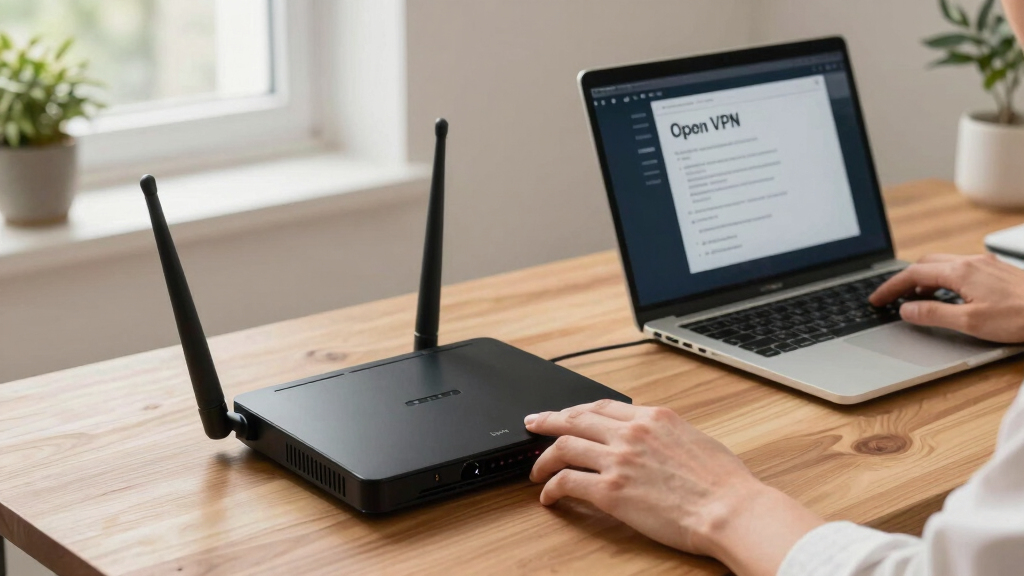
When searching for the best routers with VPN support, the goal is to find a device that balances speed, security, and ease of use. The top pick, Cudy BE6500, stands out for its fast Wi-Fi 7 capabilities combined with robust VPN client and server features. TP-Link AXE5400 offers cutting-edge Wi-Fi 6E for streaming and gaming, with built-in VPN options, while the GL.iNet MT5000 is geared toward remote workers needing secure, wired VPN connections. These options highlight the key tradeoffs: pure performance versus versatility and ease of setup. Keep reading for a detailed breakdown to find the best fit for your needs.

Get hardware and tech essentials delivered free with Prime
- Fast, free delivery on millions of items
- Prime Video, Amazon Music and more included
- Member-only deals all year
Key Takeaways
- The strongest VPN support often comes with enterprise-grade routers, but they can be complex for everyday users.
- Wi-Fi 6 and Wi-Fi 7 routers provide faster speeds, but VPN performance may vary depending on hardware and firmware.
- Portable routers like GL.iNet models excel for travel and remote work, though they may lack some advanced features of full-sized units.
- Multi-WAN support and load balancing features are essential for small businesses needing reliable, secure internet access.
- Ease of setup and user interface quality heavily influence overall satisfaction, especially for beginners.


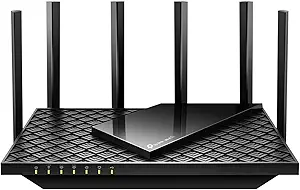


More Details on Our Top Picks
Cudy BE6500 WiFi 7 Router Dual Band Gigabit Gaming Router, 6500Mbps, VPN Client and Server, Cudy Mesh and APP Compatible, Broadcom 2 GHz Quad-Core CPU, WR6500
This WiFi 7 router stands out for delivering blazing-fast speeds up to 6.5Gbps, perfect for gaming, 4K streaming, and video calls. Compared with the TP-Link AXE75, it emphasizes raw throughput and supports both VPN server and client modes, making it ideal for privacy-conscious users needing remote access. Its focus on speed may involve tradeoffs like higher power consumption and potentially more complex setup processes. The integration with Cudy Mesh and app control makes management straightforward via smartphone, but the interface might be less intuitive for beginners. This model excels for gamers and streamers who prioritize maximum speed and VPN flexibility, yet it might be overkill for simple browsing or small households.
Pros:- Blazing-fast WiFi 7 speeds up to 6.5Gbps for smooth gaming and streaming
- Supports both VPN client and server modes for flexible remote access
- Full gigabit ports for high-speed wired connections
- Cudy Mesh and APP support for easy management
Cons:- Complex setup process may challenge less tech-savvy users
- Higher power consumption due to high-speed WiFi 7 technology
Best for: Gamers and streamers who need ultra-fast WiFi 7 with VPN support for remote gaming and media streaming.
Not ideal for: Users seeking a simple, budget-friendly router for basic web browsing, as it involves a higher price and more complex setup.
- WiFi Speed:up to 6.5Gbps
- CPU:Broadcom 2 GHz Quad-Core
- Ports:Full gigabit ports
- Mesh Compatibility:Yes
- VPN Support:Client and Server
- App Control:Yes
Bottom line: This router is ideal for players and streamers needing top-tier speed and VPN options, but it may be too advanced for casual users.
TP-Link Dual-Band AX3000 Wi-Fi 6 Router Archer AX55 | Wireless Gigabit Internet Router for Home | EasyMesh Compatible | VPN Clients & Server | HomeShield, OFDMA, MU-MIMO | USB 3.0 | Secure by Design
This dual-band Wi-Fi 6 router offers reliable speeds of 2402 Mbps on 5GHz, with robust security features and VPN support, making it well-suited for busy households with multiple devices. Unlike the TP-Link AXE75, it emphasizes comprehensive security with HomeShield and easy integration with existing mesh networks, providing a balance of speed and protection. Its focus on coverage and security makes it ideal for families who want protected, whole-home WiFi, though it doesn’t support WiFi 7 speeds or the latest 6E band. Setup is user-friendly thanks to the TP-Link app, but the maximum speed may fall short for heavy-duty gaming or 8K streaming. This pick makes the most sense for households needing dependable WiFi with VPN support and security, but less so for ultra-high-speed gaming setups.
Pros:- Supports WiFi 6 with speeds up to 2402 Mbps on 5 GHz
- Supports VPN client and server modes for secure remote access
- EasyMesh compatible for extending coverage
- Built-in TP-Link HomeShield security suite
Cons:- Limited to WiFi 6, not the latest WiFi 7 standard
- Maximum speeds may be insufficient for high-end gaming or 8K streaming
Best for: Families or remote workers needing reliable WiFi coverage with VPN and security features.
Not ideal for: Hardcore gamers or tech enthusiasts seeking WiFi 7 speeds or ultra-low latency, as this is a WiFi 6 model with moderate throughput.
- WiFi Speed:2402 Mbps on 5 GHz
- Security:HomeShield, WPA3
- VPN Support:Yes (Client & Server)
- Ports:1 x USB 3.0, gigabit LAN
- Mesh Compatibility:Yes
- OFDMA & MU-MIMO:Yes
Bottom line: A balanced choice for families seeking reliable, secure WiFi with VPN support and broad coverage, but not for those craving the latest WiFi 7 speeds.
TP-Link AXE5400 Tri-Band WiFi 6E Router (Archer AXE75), 2025 PCMag Editors’ Choice, Gigabit Internet for Gaming & Streaming, New 6GHz Band, 160MHz, OneMesh, Quad-Core CPU, VPN & WPA3 Security
This WiFi 6E tri-band router delivers speeds up to 5400 Mbps across three bands, including the new 6 GHz spectrum for near-zero latency and high bandwidth. Compared to the AX55, the AXE75 emphasizes ultra-fast, low-latency connections suitable for gaming, streaming, and smart home integration. Its support for VPN server and client modes, along with WPA3 security, makes it highly versatile for privacy-focused users. The 1.7 GHz quad-core CPU and 8 antennas support long-range, high-capacity networks, but the complexity of setup may challenge less experienced users. Its focus on the latest WiFi 6E technology makes it ideal for future-proofing a home network, though current devices need WiFi 6E compatibility to fully utilize its benefits. This router is perfect for early adopters who want the fastest available WiFi for gaming and streaming, with VPN support, but it might be overkill for average internet use.
Pros:- Supports WiFi 6E with speeds up to 5400 Mbps across three bands
- Low latency with the new 6 GHz band for gaming and streaming
- Supports VPN server and client modes for privacy
- Powerful 1.7 GHz quad-core CPU and 8 antennas for long-range coverage
Cons:- Requires WiFi 6E compatible devices to benefit fully
- Higher cost due to advanced WiFi 6E features
Best for: Tech-savvy users and gamers seeking the latest WiFi 6E speeds with VPN and low latency for demanding applications.
Not ideal for: Casual users with basic internet needs, as the advanced features come with higher cost and complexity.
- WiFi Speed:up to 5400 Mbps
- WiFi Band:Tri-band (including 6 GHz)
- Security:WPA3
- VPN Support:Yes (Server & Client)
- Processor:1.7 GHz Quad-Core
- Antennas:8
Bottom line: Ideal for early adopters and gamers wanting the latest WiFi 6E speeds with VPN, though it may be overkill for typical home users.
GL.iNet MT5000 (Brume 3) High-Speed Wired VPN Security Gateway for Home Office and Remote Work – Up to 1100 Mbps, 3× 2.5G Multi-WAN, DPI Security, VPN Obfuscation, OpenWrt, NO Wi-Fi
This wired-only VPN gateway excels in providing high-speed, secure remote access with up to 1100 Mbps throughput, ideal for home offices and small business setups. Unlike the wireless-focused routers, it emphasizes wired multi-WAN support, VPN obfuscation, and DPI security, making it a strong choice for security-conscious users needing reliable VPN performance. Its support for OpenWrt allows extensive customization, but the lack of Wi-Fi limits its use for general household internet. The device’s multi-gigabit ports and VPN acceleration deliver robust performance, though it involves a steeper learning curve for configuration. Its focus on VPN obfuscation and DPI security makes it perfect for remote work with strict privacy needs, but users seeking Wi-Fi connectivity should look elsewhere. This is best for wired network environments demanding high VPN throughput and failover capabilities, not for wireless or casual use.
Pros:- Supports high-speed VPN throughput up to 1100 Mbps
- Multi-Gigabit 2.5G ports for flexible wired connections
- VPN obfuscation and DPI security for enhanced privacy
- OpenWrt support for extensive customization
Cons:- No Wi-Fi capability, limiting household internet use
- Requires technical expertise for setup and management
Best for: Remote workers and small businesses needing a wired VPN gateway with multi-WAN support and high security.
Not ideal for: Users seeking wireless connectivity or easy setup for casual browsing, as this device is wired-only and complex to configure.
- VPN Throughput:up to 1100 Mbps
- Ports:3× 2.5G Multi-WAN, 1 × USB WAN
- Security:DPI, VPN obfuscation
- Operating System:OpenWrt
- Speed:up to 1100 Mbps
- Multi-WAN:Yes
Bottom line: Best suited for security-focused remote work and wired VPN setups, but not for general household Wi-Fi needs.
TP-Link ER605 V2 Wired Gigabit VPN Router, Up to 3 WAN Ethernet Ports + 1 USB WAN, SPI Firewall SMB Router, Omada SDN Integrated, Load Balance, Lightning Protection
This VPN router with up to 3 WAN ports and Omada SDN integration offers enterprise-level features in a compact form, making it ideal for small business networks requiring load balancing and high security. Compared with the GL.iNet MT5000, it emphasizes multi-WAN support and centralized management, suitable for more complex network setups. Its SPI firewall, lightning protection, and load balancing enhance reliability and security, but it lacks Wi-Fi, limiting it to wired connections. Setup may be more involved for less experienced users, but its stable performance and extensive configuration options make it a top choice for SMBs. The device is less suited for home consumers without a business need for multiple WAN links or SDN management. This router is perfect for SMBs needing reliable, secure multiple WAN connections with VPN support, but not for casual or wireless home use.
Pros:- Supports up to 3 WAN Ethernet ports with load balancing
- Integrated Omada SDN for centralized network management
- Supports multiple VPN protocols including IPsec, OpenVPN, L2TP, PPTP
- Enhanced security with SPI firewall and lightning protection
Cons:- No Wi-Fi, limiting use to wired networks
- Complex configuration may require technical expertise
Best for: Small businesses and remote offices requiring multi-WAN VPN routing with load balancing and centralized management.
Not ideal for: Home users or single-device households without multi-WAN needs, as the device lacks Wi-Fi and has a more complex setup.
- WAN Ports:3× Ethernet + 1 USB WAN
- VPN Support:IPsec, OpenVPN, L2TP, PPTP
- Firewall:SPI
- Lightning Protection:Yes
- Speed:Up to 1 Gbps
- Management:Omada SDN
Bottom line: A robust solution for SMBs needing multi-WAN VPN routing and load balancing, but unsuitable for simple home setups.
TP-Link ER8411 Enterprise Wired 10G VPN Router – Up to 10 WAN Ports, High Network Capacity, SPI Firewall, Support Omada SDN, Load Balance, Lightning Protection, 5 Yr Manufacturer Warranty, Dual-Band
This router stands out for its extensive port configuration and high concurrent session capacity, making it ideal for large networks needing VPN support. Compared to the TP-Link AX1800, it offers significantly more WAN ports and load balancing, but sacrifices ease of setup and home-friendly features. Its support for Omada SDN allows centralized management across multiple sites, a major advantage for businesses. However, it involves a steep learning curve and higher cost, making it less suitable for small or home use. Tradeoffs include complexity versus scalability, with this model favoring enterprise environments over simplicity. Who should buy this: Large organizations with demanding VPN needs and multiple WAN connections. Who should skip: Small offices or home users who prefer plug-and-play setups. Pros: High network capacity, multiple WAN ports, comprehensive security features, SDN support. Cons: Complex configuration, expensive, overkill for home use.
Verdict: Best suited for enterprises requiring robust VPN and load balancing with centralized control.Pros:- Exceptional scalability with up to 10 WAN ports
- Supports Omada SDN for centralized management
- High concurrency sessions for demanding networks
- Robust security and lightning protection
Cons:- Complex initial setup requiring technical expertise
- High cost not suitable for small networks
- Bulkier and less aesthetically suited for home use
Best for: Large enterprises or data centers with extensive VPN and load balancing needs
Not ideal for: Home users or small office setups seeking simple, plug-and-play routers
- WAN Ports:Up to 10
- Concurrent Sessions:2,300,000
- Client Support:1000+
- Firewall:SPI, DoS defense
- SDN Support:Yes
- Wireless:Dual-Band
- Warranty:5 years
TP-Link AX1800 WiFi 6 Router (Archer AX21 V5) – Dual Band Wireless Internet, Gigabit, Easy Mesh, Works with Alexa – A Certified for Humans Device, Free Expert Support
This model is selected for its approachable setup and reliable Wi-Fi 6 performance, making it ideal for users who want fast, secure internet with VPN server capabilities without complexity. Unlike the TP-Link ER8411, it’s designed for home environments, offering an easy app-based setup and compatibility with Alexa. Its support for OpenVPN and PPTP makes it versatile for personal VPN use, but it lacks the extensive WAN ports and enterprise features of higher-end models. Tradeoffs involve ease of use versus enterprise-grade security and scalability. Who should buy: Small households or tech-savvy users wanting VPN support and Wi-Fi 6 speed. Who should skip: Large organizations or users needing multi-WAN configurations. Pros: Easy setup, Wi-Fi 6 support for multiple devices, Alexa compatibility, VPN server support. Cons: Limited to home use, fewer WAN ports, no advanced network management features.
Verdict: Perfect for small homes seeking fast Wi-Fi with simple VPN server support, without the complexity of enterprise routers.Pros:- Simple setup ideal for non-tech users
- Supports Wi-Fi 6 for future-proof speed and capacity
- VPN server capabilities built-in
- Works seamlessly with Alexa and smart home devices
Cons:- Limited WAN ports for complex networks
- Not suitable for enterprise or multi-WAN setups
- Lacks advanced network management features
Best for: Small households or individuals wanting fast, secure Wi-Fi with VPN server capability
Not ideal for: Large offices or users needing multiple WAN connections and advanced network controls
- Wi-Fi Standard:Wi-Fi 6 (802.11ax)
- Speed:Up to 1.8 Gbps
- Ports:Gigabit Ethernet
- VPN Server:Yes (OpenVPN, PPTP)
- Mesh Support:EasyMesh
- Control Method:App, Alexa
- Warranty:2 years
TP-Link Dual-Band BE3600 Wi-Fi 7 Router Archer BE230 | 4-Stream | 2×2.5G + 3×1G Ports, USB 3.0, 2.0 GHz Quad Core, VPN, EasyMesh, HomeShield, MLO, Private IOT | Free Expert Support
This router is selected for its cutting-edge Wi-Fi 7 capabilities, offering blazing speeds and low latency ideal for gaming and streaming, with robust VPN and security features. When compared to the AX1800, it delivers significantly higher speeds and supports MLO and Wi-Fi 7 standards, but it’s more expensive and complex to configure. Its support for dual 2.5G ports and VPN makes it a strong choice for tech enthusiasts and gamers, yet it’s overkill for basic browsing needs. Tradeoffs include higher cost and setup complexity versus future-proof performance. Who should buy: Tech-savvy users seeking the latest Wi-Fi standard with VPN support. Who should skip: Casual users or those with simpler needs. Pros: Wi-Fi 7 support with multi-Gigabit speeds, VPN and security features, USB 3.0, EasyMesh compatibility. Cons: Higher price point, complexity of setup, overkill for basic users.
Verdict: Ideal for enthusiasts and future-proof homes needing ultra-fast Wi-Fi with VPN and smart security features.Pros:- Next-generation Wi-Fi 7 speeds and low latency
- Supports multi-Gigabit ports for fast wired connections
- Built-in VPN and advanced security
- Future-proof with MLO and Wi-Fi 7 features
Cons:- Premium price for advanced features
- Setup complexity requires familiarity with Wi-Fi 7
- Overkill for basic internet needs
Best for: Tech enthusiasts or gamers seeking ultra-fast, future-proof Wi-Fi with VPN support
Not ideal for: Average consumers or users with minimal networking needs
- Wi-Fi Standard:Wi-Fi 7 (802.11.be)
- Speed:Up to 3.6 Gbps
- Ports:2x 2.5G, 3x 1G, USB 3.0
- Security:HomeShield, WPA3
- Coverage:2000 sq ft
- Processor:Quad-Core 2 GHz
- Warranty:2 years
GL.iNet GL-BE9300 (Flint 3) Tri-Band WiFi 7 Router, High-Speed 6GHz Gaming WiFi Router for Wireless Internet, Long Range, 5 x 2.5G VPN Routers for Fiber Optic Modem, Computer Routers, Home & Business
This compact router makes the list for its portability, Wi-Fi 7 support, and robust VPN features, perfect for travelers and remote workers. Compared to the larger enterprise routers like the TP-Link ER8411, it’s simpler to carry and set up, but offers less scalability and fewer WAN ports. Its support for WireGuard and OpenVPN, along with OpenWrt customization, provides versatile VPN options, yet the limited wired ports and smaller coverage area restrict its use to mobile and small-scale environments. Tradeoffs include portability versus network size and complexity. Who should buy: Travelers, remote workers, or small business owners needing secure internet on the go. Who should skip: Large households or enterprises with extensive network demands. Pros: Portable size, Wi-Fi 7 support, VPN with OpenWrt customization, multiple 2.5G ports. Cons: Limited wired ports, smaller coverage, higher cost for a travel device.
Verdict: Excellent for mobile use, travel, and remote work environments seeking fast Wi-Fi 7 with VPN support.Pros:- Highly portable with Wi-Fi 7 support
- Supports advanced VPN protocols with OpenWrt
- Multiple 2.5G ports for fast wired connections
- Ideal for travel and remote working
Cons:- Limited wired ports for extensive networks
- Smaller coverage area
- Premium price for a travel router
Best for: Travelers, remote workers, and small businesses needing secure, fast Wi-Fi on the go
Not ideal for: Large homes or enterprises with multiple wired connections
- Wi-Fi Standard:Wi-Fi 7 (802.11.be)
- Speed:Up to 6.88 Gbps
- Ports:5 x 2.5G, USB 3.0
- VPN:WireGuard, OpenVPN
- Coverage:Up to 120 devices
- Operating System:OpenWrt
- Warranty:2 years
GL.iNet GL-BE3600 (Slate 7) Portable Travel Router, Pocket Dual-Band Wi-Fi 7, 2.5G Router, Portable VPN Routers WiFi for Travel, Public Computer Routers, Business Trip, Mobile/RV/Cruise/Plane
The GL.iNet GL-BE3600 stands out for its impressive Wi-Fi 7 performance combined with OpenWrt firmware, offering maximum customization and compatibility with over 30 VPN providers. Its touchscreen interface simplifies toggling VPNs, monitoring speed, and switching modes, making it ideal for tech-savvy travelers. Compared to the Cudy R700, which lacks Wi-Fi 7 and a touchscreen, the Slate 7 provides faster wireless speeds and more user-friendly controls, but at a higher price and bulkier size. The Slate 7’s dual 2.5G Ethernet ports and USB 3.0 support extend its versatility, perfect for remote work on the go. However, its open-source firmware, while powerful, requires some technical knowledge to configure optimally. This device is best suited for frequent travelers, digital nomads, and those who want full control over their VPN setup without sacrificing speed. It’s less suitable for users seeking a plug-and-play, budget-friendly solution.
Pros:- Wi-Fi 7 support with high wireless speeds (688Mbps 2.4G + 2882Mbps 5G)
- Built-in touchscreen for easy VPN toggle and network monitoring
- OpenWrt firmware allows extensive customization and plugin installation
- Pre-installed OpenVPN and WireGuard, compatible with 30+ VPN providers
Cons:- Relatively high cost compared to simpler travel routers
- Requires technical knowledge to fully leverage open-source firmware
- Bulkier and heavier than compact hotspot devices
Best for: Travelers who want a high-performance, customizable VPN router with advanced features
Not ideal for: Casual users or those preferring simple setup without technical adjustments
- Wireless Speed:688Mbps (2.4G) + 2882Mbps (5G)
- Ports:2.5G Ethernet (WAN & LAN), USB 3.0
- Firmware:OpenWrt 23.05
- VPN Support:OpenVPN & WireGuard
- Security Protocols:WPA3, DNS over HTTPS/TLS, IPv6
- Size & Weight:Portable, compact
- Max VPN Speed:100 Mbps (OpenVPN), 540 Mbps (WireGuard)
- Display:Touchscreen interface
Bottom line: Ideal for tech-savvy frequent travelers seeking a powerful, customizable VPN router with Wi-Fi 7 capabilities.
TP-Link ER707-M2 | Omada Multi-Gigabit VPN Router | Dual 2.5Gig WAN Ports | High Network Capacity | SPI Firewall | Omada SDN Integrated | Load Balance | Lightning Protection
The TP-Link ER707-M2 excels with its multi-gigabit ports and robust Omada SDN management, making it suitable for small business environments or demanding home networks. Its dual 2.5Gb WAN ports support high bandwidth aggregation, outperforming many consumer-grade routers like the GL.iNet GL-BE3600 which lacks Multi-Gig ports and centralized control. With support for up to 1000+ clients and 500,000 concurrent sessions, it handles heavy traffic efficiently. Its extensive VPN capabilities include IPsec, OpenVPN, and L2TP, ideal for secure enterprise connections. Unlike the Cudy R700, which has fewer ports and less advanced security features, the ER707-M2 offers enhanced load balancing and lightning protection for reliable operation during adverse conditions. However, its complexity and higher price make it less suitable for casual users or those seeking plug-and-play simplicity. This router makes the most sense for small businesses or power users needing high capacity VPN and network management.
Pros:- Dual 2.5Gb WAN ports support high-speed link aggregation
- Supports up to 1000+ clients with high network capacity
- Omada SDN for centralized, remote management
- Comprehensive VPN support including IPsec, OpenVPN, L2TP
Cons:- Complex setup and management requiring technical knowledge
- Higher cost compared to basic consumer VPN routers
- Bulkier size less suited for portability
Best for: Small business owners or advanced home users requiring high bandwidth, VPN flexibility, and centralized management
Not ideal for: Average home users or those seeking a simple, budget-friendly VPN router
- Ports:2× 2.5Gb WAN, 4× Gigabit LAN, 1× SFP, 1× USB 2.0
- Network Capacity:Up to 1000+ clients, 500,000 sessions
- VPN Support:IPsec, OpenVPN, L2TP
- Security:SPI Firewall, Lightning protection
- Management:Omada SDN
- Size & Weight:Compact, desktop
- Max Data Rate:2500 Mbps
- Warranty:5 years
Bottom line: Best suited for small businesses or power users who need high-capacity VPN with centralized control and multi-gigabit speeds.
Cudy New Gigabit Multi-WAN VPN Router, Up to 4 Gigabit WAN Ports, SMB, Load Balance, Lightning Protection, PPTP L2TP WireGuard OpenVPN IPsec VPN Router
The Cudy R700 offers a versatile multi-WAN setup with support for up to 4 gigabit WAN ports, making it ideal for SMBs needing redundancy and load balancing. Its support for a broad array of VPN protocols, including PPTP, L2TP, OpenVPN, WireGuard, and IPsec, provides comprehensive VPN options for secure remote access. Compared to the TP-Link ER707-M2, which emphasizes network capacity and SDN management, the R700 focuses on flexible WAN configurations and straightforward VPN support, though it lacks centralized cloud management. Its lightning protection feature enhances reliability during electrical surges, a plus over less protected routers like the GL.iNet GL-BE3600. However, it doesn’t support Wi-Fi natively, making it less suitable for wireless needs. This router is best for SMBs or tech-savvy users needing multiple WAN connections and extensive VPN options without complex management interfaces.
Pros:- Supports up to 4 gigabit WAN ports with load balancing
- Supports a wide range of VPN protocols including WireGuard and IPsec
- Built-in lightning protection for electrical surge safety
- Flexible WAN configurations for redundancy
Cons:- No built-in Wi-Fi; requires separate wireless access points
- More complex setup for users unfamiliar with multi-WAN configurations
- Limited management features compared to enterprise-grade solutions
Best for: Small to medium-sized businesses needing multiple WAN connections, load balancing, and extensive VPN support
Not ideal for: Home users seeking integrated Wi-Fi or simple setup without multiple WAN ports
- WAN Ports:4× Gigabit
- VPN Protocols:PPTP, L2TP, OpenVPN, WireGuard, IPsec
- Protection:Lightning surge protection
- Max Data Rate:1 Gbps per port
- Support:SMB, load balancing
- Size & Weight:Desktop, durable metal casing
- Management:Basic, no centralized cloud
- Warranty:2 years
Bottom line: Best for SMBs or advanced users needing multiple WAN links, load balancing, and robust VPN protocols without integrated wireless.

How We Picked
Our evaluation focused on performance, security features, ease of setup, and value. We prioritized routers that support both VPN client and server functions, as these provide more flexible security options. Hardware quality, firmware stability, and update frequency also factored into our ranking, as they impact long-term reliability. We compared models based on real-world use cases including gaming, remote work, small business, and travel. Devices that balance advanced features with user-friendly interfaces earned higher spots, while tradeoffs like cost or complexity were carefully considered to match different buyer needs.
Factors to Consider When Choosing Best Routers With Vpn Support
Choosing the best router with VPN support depends on your specific needs. Whether you want maximum speed, advanced security, or ease of use, understanding key factors can help you make an informed decision. Here are some considerations to keep in mind before purchasing.Performance and Speed
Look for routers that support the latest Wi-Fi standards such as Wi-Fi 6 or Wi-Fi 7 for faster speeds, especially if you stream or game. Keep in mind that VPN encryption can reduce overall throughput, so a powerful processor is essential for maintaining high speeds. If your primary goal is secure browsing without sacrificing performance, prioritize routers with high-end CPUs and dedicated VPN hardware support.
VPN Support and Security Features
Check whether the router supports both VPN client and server modes—this flexibility is key for most users. Features like WPA3 encryption, VPN obfuscation, and multiple VPN protocols (OpenVPN, WireGuard, IPsec) enhance security and privacy. Be cautious of routers that only support VPN pass-through, as they don’t handle VPN encryption directly, which can limit performance and security.
Ease of Setup and User Interface
A straightforward setup process and intuitive interface make managing VPN settings easier, especially for less tech-savvy users. Look for routers with mobile apps or web dashboards that clearly guide you through configuration. Complex enterprise routers may offer advanced features but can be overwhelming for everyday use, so balance feature set with usability.
Hardware and Build Quality
Robust hardware, including a quad-core CPU and sufficient RAM, ensures stable VPN operation and fast Wi-Fi. Ports matter too—multi-Gig Ethernet and USB support can expand your network’s capabilities. Avoid cheap, poorly built models that may lack firmware updates or have flaky connections, as they can compromise both speed and security.
Price and Value
High-end routers with extensive VPN features tend to be more expensive, but they offer better performance and security. For most home users, mid-range models provide excellent value, balancing cost and capabilities. Small businesses or power users might justify investing in premium devices with enterprise features, but always consider your actual needs versus the added expense.
Frequently Asked Questions
Can I use a consumer router with VPN support for secure remote work?
Yes, many consumer routers support VPN client and server modes, making them suitable for remote work. However, the effectiveness depends on the router’s processing power and VPN protocol support. Higher-end models with dedicated VPN hardware or powerful CPUs tend to deliver better speeds and stability, which is important when working with large files or video conferencing. Always ensure the router’s firmware is regularly updated to patch security vulnerabilities and improve performance.
Is it necessary to buy a dedicated VPN router, or can I configure VPN on any router?
While many routers can be configured with VPN settings, a dedicated VPN router with built-in support usually offers better performance and easier management. Consumer-grade routers may support VPN pass-through, but they might not handle encryption efficiently, leading to slower speeds. For consistent, reliable VPN performance—especially if multiple devices need secure connections—a router with native VPN support is a smarter investment.
What VPN protocols should I look for in a router?
The most important VPN protocols supported are WireGuard, OpenVPN, and IPsec. WireGuard is gaining popularity for its speed and simplicity, making it ideal for high-performance needs. OpenVPN remains widely supported and highly configurable, while IPsec is often used for site-to-site VPNs. Check that your chosen router supports at least two of these protocols to maximize flexibility and security.
How does VPN impact my Wi-Fi speed, and what can I do about it?
VPN encryption can reduce your Wi-Fi speeds because it adds an extra layer of processing. The impact depends on your router’s CPU and the VPN protocol used; high-end routers with hardware acceleration mitigate this slowdown. To improve performance, choose a router with a powerful processor, and optimize VPN settings for speed rather than maximum encryption if speed is a priority. Regular firmware updates can also help maintain optimal performance.
Are portable routers with VPN support suitable for travel or mobile use?
Portable routers with VPN support are excellent for travel, remote work, or secure public Wi-Fi use. They are compact, easy to configure, and often support multiple VPN protocols. However, they might lack the advanced features of full-sized routers, such as multi-Gig ports or extensive firmware options. Consider your specific needs—if security and mobility are priorities, a portable VPN router can be a practical solution.
Conclusion
The best overall choice for most users is the Cudy BE6500, thanks to its combination of Wi-Fi 7 speed and comprehensive VPN features. For those prioritizing value, the TP-Link AX1800 offers solid performance with VPN support at a budget-friendly price. Power users or small businesses should consider the TP-Link ER8411 or ER707-M2 for enterprise-grade features. Beginners will appreciate the user-friendly interfaces of models like the TP-Link AX1800, while travelers might prefer portable options like the GL.iNet GL-MT3600BE. Match your specific needs with these picks to find the ideal router with VPN support in 2026.
Halloween Picks
halloween
As an affiliate, we earn on qualifying purchases.