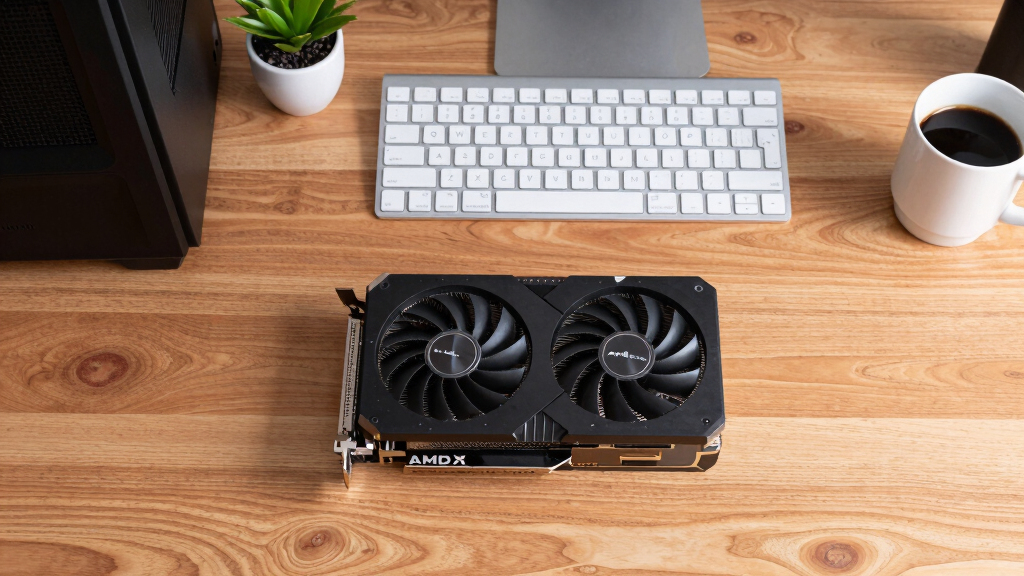

Finding the best AMD GPUs for budget workstations involves balancing performance, compatibility, and price. The Radeon RX580 8GB stands out as the overall best choice for most users, offering solid performance for everyday tasks and moderate workloads. For those focused on multi-monitor setups, the Radeon RX 550 LP provides excellent value with support for multiple displays at a low cost. Budget-conscious buyers should be aware of the tradeoffs between raw power and scalability—cheaper models often lack the horsepower needed for demanding tasks but excel in multi-display configurations. Keep reading for a detailed breakdown of the top options to fit different needs and budgets.
Open a free Amazon Business account
Business pricing, bulk buying and tax-exempt orders.
Create a free accountAs an affiliate, we earn on qualifying purchases.
Key Takeaways
- The Radeon RX580 8GB remains the most versatile and capable option for budget workstations needing reliable performance.
- Multi-monitor support is common among lower-cost GPUs like the RX 550 series, but performance varies significantly.
- Entry-level integrated solutions like AMD Ryzen with Radeon Graphics can serve light workloads without additional GPU costs.
- Tradeoffs between performance and features are evident; more affordable cards often lack the power for intensive tasks but excel in multi-display setups.
- Pricing and availability fluctuate, making some older models still relevant choices for tight budgets.


More Details on Our Top Picks
Radeon RX580 4G Graphics Card, with 6 HDMI Monitor Graphics Card,Computer PC GPU GDDR5 128 Bit DirectX 12 PCI Express X16 3.0, 6 Port Video Cards (6HDMI AMD RX 580 4G)
This Radeon RX580 4G stands out primarily for its ability to support a full 6-monitor setup, making it ideal for productivity-focused workstations where screen real estate is critical. Compared to the VisionTek Radeon HD 7750, which offers support for up to 6 monitors but with only 2GB of GDDR5 VRAM, the RX580’s 4GB provides a notable advantage for handling multiple applications simultaneously without performance dips. Its 14nm process and DirectX 12 support ensure smooth operation for tasks like surveillance, financial analysis, or large display arrays, though it isn’t suited for gaming or intensive 3D rendering. The energy efficiency and single 6-pin power connector make installation straightforward in standard office PCs. However, the card’s 4GB VRAM may limit performance in high-resolution or video editing workflows, and its six HDMI ports, while versatile, could lead to cable clutter if not managed properly. This pick makes the most sense for professionals needing reliable multi-monitor outputs in a productivity environment, but not for graphics-intensive gaming or 4K video editing.
Pros:- Supports up to 6 HDMI outputs for expansive multi-monitor configurations
- Manufactured on a 14nm process with DirectX 12 support for efficient workflows
- Energy efficient with only 80W maximum power draw
Cons:- Limited 4GB VRAM may hinder performance in video editing or high-resolution tasks
- Lacks modern display interface options like DisplayPort or USB-C, leading to potential cable management issues
Best for: Workstation users requiring extensive multi-monitor setups for surveillance, finance, or multimedia display tasks.
Not ideal for: Gamers or creative professionals who need high VRAM for 4K video editing or 3D rendering, as this card is optimized for display outputs over raw power.
- Graphics Coprocessor:AMD Radeon RX 580
- Memory:4 GB GDDR5
- GPU Clock Speed:1244 MHz
- Video Output Interface:6 HDMI 2.0
- Graphics Card Interface:PCI-Express x16
- Memory Clock Speed:1500 MHz
- Maximum Display Resolution:3840×2160@60Hz
- Power Consumption:80W
Bottom line: Ideal for professionals who prioritize multi-monitor connectivity over high-end graphics performance.
VISIONTEK AMD Radeon RX 580 6M Single Fan 8GB GDDR5 PCIe 3.0 Graphics Card
This VISIONTEK RX 580 8GB offers a significant boost in VRAM compared to the RX580 4G, making it well-suited for more demanding multi-monitor environments, including high-resolution digital signage or detailed surveillance arrays. Its PCIe 3.0 interface ensures fast data transfer, and the single fan design keeps noise low, which is advantageous in office settings. Compared to the Radeon HD 7750, which is limited to 2GB of VRAM and fewer modern features, this card provides a more future-proof solution for multi-display tasks. Nevertheless, the single-fan cooling may struggle under extended periods of heavy load, potentially leading to thermal throttling in confined cases. The absence of explicit pricing details makes it less clear if it offers good value at its current market cost. This model makes the most sense for users needing a budget-friendly yet capable GPU for multi-monitor productivity, but less so for gaming or high-end creative work.
Pros:- 8GB GDDR5 VRAM supports demanding multi-monitor use
- PCIe 3.0 interface ensures rapid data transfer
- Single fan design maintains quiet operation
Cons:- Cooling may be inadequate for prolonged heavy workloads
- Price and availability are not specified, affecting perceived value
Best for: Office professionals managing multiple high-resolution displays in surveillance, finance, or creative visual tasks.
Not ideal for: High-end gamers or 4K video editors who require extensive VRAM and advanced cooling solutions, as it primarily targets multi-monitor productivity.
- Memory:8 GB GDDR5
- Interface:PCIe 3.0
- Cooling:Single fan
- Maximum Resolution:4096×2160
- Video Output:Multiple HDMI ports
- Graphics Card Interface:PCI-Express x16
Bottom line: A strong choice for budget-conscious professionals needing reliable multi-display support without gaming focus.
AMD Ryzen™ 7 5700G 8-Core, 16-Thread Desktop Processor with Radeon™ Graphics
This Ryzen 7 5700G is an excellent choice for those who prefer a CPU with integrated graphics, eliminating the need for a discrete GPU in budget workstations. Its 8 cores and 16 threads deliver reliable performance for multitasking, office productivity, and light creative tasks, rivaling entry-level discrete GPUs in some scenarios. Compared to the AMD Radeon RX 580 cards, which are dedicated GPUs supporting multiple displays, the 5700G’s integrated Radeon graphics are ideal for systems where budget and power efficiency matter more than high-end visual output. It also supports DDR4-3200, making it compatible with many existing systems. The main tradeoff is that this CPU cannot handle intensive 3D rendering or gaming, limiting its use to productivity and basic multimedia. It’s best suited for users who want a streamlined, all-in-one solution for office and light creative work, not high-performance graphics tasks.
Pros:- 8-core, 16-thread performance suitable for multitasking
- Integrated Radeon graphics eliminate need for discrete GPU
- Supports DDR4-3200 for broad compatibility
Cons:- Limited in handling high-end graphics or gaming workloads
- Not suitable for intensive 3D rendering or professional video editing
Best for: Small office setups or home workstations needing decent integrated graphics without discrete GPU costs.
Not ideal for: Creative professionals or gamers requiring dedicated GPU performance for demanding tasks like 3D modeling or high-resolution video editing.
- Processor Series:AMD Ryzen 7 5700G
- Core Count:8 cores
- Thread Count:16 threads
- Max Boost Clock:4.6 GHz
- Integrated Graphics:Radeon Graphics
- Socket:AM4
- Cache:20 MB
- TDP:65W
Bottom line: A smart choice for budget workstations prioritizing CPU performance and integrated graphics over discrete GPU power.
Lenovo ThinkStation P2 Tower Desktop AI PC, Intel Core Ultra 5 225, 32GB DDR5, 1TB SSD, Wi-Fi 7, Support 3-Display 4K, HDMI, DP, Optical Disc Drive, Windows 11 Pro, Business Workstation, w/Bundle
This Lenovo ThinkStation P2 with an Intel Core Ultra 5 225 processor and 32GB DDR5 RAM offers robust performance for demanding office and light creative tasks, especially in multi-display environments. Its 1TB SSD provides fast boot and data access, while Wi-Fi 7 ensures high-speed connectivity. Compared to the AMD Ryzen 7 5700G, which is more CPU-centric, this Lenovo setup emphasizes modern connectivity and professional features suitable for business environments that need reliable, scalable performance. Its support for three 4K displays makes it a strong contender for productivity suites and lightweight multimedia editing. On the downside, it is more expensive and geared towards enterprise users rather than gaming or heavy graphics work. This makes it ideal for professionals who value stability, modern ports, and future-proofing over raw gaming performance.
Pros:- Powerful 10-core, 10-thread processor with up to 4.9 GHz turbo
- Supports 3 simultaneous 4K displays
- Fast 1TB SSD for quick data access
Cons:- Higher cost compared to consumer-grade options
- Limited upgrade flexibility in some configurations
Best for: Small business or professional users seeking a reliable, high-performance budget workstation with advanced connectivity.
Not ideal for: High-end gamers or creative professionals requiring discrete GPU performance for rendering or editing large video files.
- Processor:Intel Core Ultra 5 225
- Cores/Threads:10 cores / 10 threads
- Max Turbo Frequency:4.9 GHz
- Memory:32 GB DDR5
- Storage:1TB SSD
- Connectivity:Wi-Fi 7, HDMI, DP
- Display Support:3x 4K
- OS:Windows 11 Pro
Bottom line: Excellent for professionals needing a stable, modern budget workstation with multiple 4K outputs and fast storage.
VisionTek Radeon HD 7750 2GB GDDR5 – 4K Resolution Support Graphics Card – Support up to 6 Monitors with Mini DisplayPort Outputs – AMD Eyefinity 2.0 – Suitable Graphics Card for Gaming PC
The Radeon HD 7750 Eyefinity 6 Edition is a versatile and affordable option for multi-monitor setups, supporting up to 6 displays, making it suitable for specialized workspaces like healthcare, finance, or marketing. Its 2GB GDDR5 memory is enough for basic display tasks, and the mix of mini DisplayPort outputs with AMD Eyefinity 2.0 technology allows flexible configurations, including ultra-wide and wrap-around displays. Compared to the AMD RX580 cards, the HD 7750 offers fewer modern features and less VRAM but excels in multi-monitor support at a lower cost. However, it’s not designed for high-end gaming or intensive creative work, and its 2GB VRAM could limit performance in detailed multimedia applications. This card makes sense for users needing multi-display support on a tight budget, but not for graphics-intensive workflows.
Pros:- Supports up to 6 monitors with mini DisplayPort outputs
- Affordable solution for multi-display environments
- AMD Eyefinity 2.0 technology for flexible configurations
Cons:- Limited 2GB VRAM restricts high-resolution multimedia tasks
- Not suitable for gaming or GPU-intensive creative workflows
Best for: Professionals needing extensive multi-monitor support in a cost-effective workstation or display environment.
Not ideal for: Gamers or video editors who need higher VRAM and GPU acceleration for complex rendering or 4K editing.
- Memory:2 GB GDDR5
- Display Outputs:Multiple mini DisplayPorts
- Maximum Resolution:4096×2160
- Supported Technologies:Eyefinity 2.0
- Interface:PCI-Express x16
- Video Support:Up to 6 monitors
Bottom line: Best suited for professionals requiring multi-monitor setups without high-end graphics demands on a budget.
GMKtec Gaming PC, K11 AMD Ryzen 9 8945HS(8C/16T, Up to 5.2GHz), 32GB DDR5 RAM 1TB Mini PC Desktop Computer, Oculink, Dual NIC 2.5GbE LAN, HDMI/DisplayPort/USB4*2
This mini PC stands out for its impressive combination of high-end components, connectivity options, and multitasking capabilities. Equipped with the AMD Ryzen 9 8945HS and 32GB DDR5 RAM, it delivers exceptional performance for demanding tasks, rivaling full-sized desktops at a fraction of the space. Its Oculink port and dual PCIe 4.0 SSD slots significantly enhance expandability and data transfer speeds—features rare in mini PCs. Compared to traditional workstations, it offers a compact footprint without sacrificing power, though it sacrifices S3 sleep support and has some firmware limitations. The dual NICs and upgraded cooling system ensure stability during intensive workloads. However, the device’s energy consumption at 54W and lack of dedicated graphics card mean it’s less suitable for graphics-intensive tasks. This pick makes sense for professionals needing a powerful, space-saving workstation that can handle multitasking and high data throughput without a hefty price tag.
Pros:- Exceptional multitasking with Ryzen 9 8945HS and DDR5 RAM
- Advanced connectivity with dual 2.5GbE LAN, USB4, and Oculink port
- Expandable storage with three M.2 slots and lightning-fast PCIe 4.0 SSDs
- Efficient cooling system maintaining stability during heavy use
Cons:- Lacks support for S3 sleep state, limiting power-saving options
- Integrated Radeon 780M graphics may not suffice for graphics-intensive tasks
- Firmware limitations may affect sleep and TPM functionalities
Best for: Small business professionals or content creators who need a compact yet powerful multitasking machine.
Not ideal for: High-end gamers or 3D rendering specialists who require dedicated graphics and advanced power management.
- Processor:AMD Ryzen 9 8945HS Up to 5.2GHz
- RAM:32GB DDR5 5600 MT/s
- Storage:1TB PCIe 4.0 SSD
- Connectivity:Dual 2.5GbE LAN, USB4, Oculink
- Display Support:4x 4K outputs via HDMI, DisplayPort, USB4
- Power Consumption:54W
- Size:Mini PC form factor
- Graphics:AMD Radeon 780M integrated
- Warranty:1 year
Bottom line: Ideal for professionals needing a compact, high-performance mini PC with extensive connectivity, but not for graphics-heavy workloads.
Thermaltake LCGS View i560T-170 Gaming Desktop (Intel Core™ i7-14700F, ToughRam 16GB DDR5 6000MT/s RGB Memory, NVIDIA® GeForce RTX™ 5060 Ti 8G, 1TB NVMe M.2, WiFi, Windows 11) V17B-B76B-56T-LCS
This desktop offers a compelling balance between gaming performance and workstation capability. Powered by the Intel Core i7-14700F and equipped with 16GB DDR5 RAM, it handles multitasking and productivity with ease. Its NVIDIA GeForce RTX 5060 Ti 8GB provides decent entry-level gaming and acceleration for GPU-accelerated tasks, making it suitable for light creative workloads. The 1TB NVMe SSD ensures fast load times, and the ARGB RAM adds visual appeal. Compared to the mini PC, it provides better dedicated graphics but consumes more space and power, with some tradeoffs in noise levels due to the tower cooler. Its overall value makes it a solid choice for users who want decent gaming and productivity in a single package, but it may be overkill for purely office tasks.
Pros:- Strong CPU performance with i7-14700F and DDR5 RAM
- Dedicated NVIDIA RTX 5060 Ti GPU for gaming and acceleration
- Fast 1TB NVMe SSD for quick responsiveness
- Attractive RGB lighting and aesthetic design
Cons:- Larger footprint compared to mini PCs
- Higher power consumption and noise levels
- Limited upgradeability due to pre-built design
Best for: Budget-conscious gamers or creative professionals who need a versatile, all-in-one desktop.
Not ideal for: Those seeking a small form factor or ultra-low power efficiency for simple tasks.
- Processor:Intel Core i7-14700F
- RAM:16GB DDR5 6000 MT/s
- Graphics:NVIDIA GeForce RTX 5060 Ti 8GB
- Storage:1TB NVMe M.2 SSD
- Operating System:Windows 11
- Connectivity:Wi-Fi 6, Bluetooth
- Power Consumption:Variable depending on load
- Size:Full tower
- Warranty:Standard 1-year
Bottom line: A good choice for users needing a balanced gaming and productivity machine within a budget, but not for those prioritizing space savings.
51RISC Radeon RX 550 LP Graphics Card, Low Profile 4GB GDDR5 Small Form Factor Video Card for Gaming 4K Display Desktop/Mini PC SFF Video Card (RX 550 4GB Low Profile)
This low-profile graphics card excels in compact builds needing decent 4K display support. Its RX 550 4GB GDDR5 core clock of up to 1183 MHz and 80 stream processors deliver reliable performance for everyday tasks, light gaming, and multimedia. The fanless design ensures silent operation, ideal for quiet office environments. It supports dual monitors via DVI, HDMI, and VGA, offering flexibility for multi-display setups. Compared to integrated graphics like the Radeon 780M, it provides a significant boost for GPU-accelerated tasks, though it’s limited for modern, demanding workloads. The low power consumption and no external power required make it suitable for budget builds with modest power supplies. Its main drawbacks are limited gaming performance and outdated architecture, making it unsuitable for intensive 3D rendering or modern gaming.
Pros:- Compact, low-profile form factor fits in small cases
- Fanless, silent operation with heatsink cooling
- Supports dual monitors with flexible outputs
- No external power supply needed
Cons:- Limited performance for modern gaming and intensive tasks
- Outdated GDDR5 memory and architecture
- Not suitable for demanding creative workflows
Best for: Small business or home office users with space-constrained setups needing basic GPU acceleration.
Not ideal for: Gaming enthusiasts or creators who require high-performance GPU capabilities.
- Memory:4GB GDDR5
- Core Clock:Up to 1183 MHz
- Bus Interface:PCIe 3.0 x16
- Outputs:DVI, HDMI, VGA
- Form Factor:Low Profile
- Power Consumption:35W
- Maximum Resolution:3840×2160
- Warranty:Limited
Bottom line: A practical low-profile GPU for basic multimedia and light GPU tasks in space-limited workstations, but not for high-end gaming or rendering.
KAMRUI Pinova P1 Mini PC Computer, AMD Ryzen 4300U (Beats i3-10110U/3500U), 16GB RAM 256GB SSD, Mini Desktop Computer Support Triple 4K, USB-C, WiFi, Bluetooth, Ethernet for Business, Education, Home
The KAMRUI Pinova P1 offers impressive performance for its size, driven by the AMD Ryzen 4300U and 16GB RAM, making it suitable for multitasking and media workloads. Its support for triple 4K displays across HDMI 2.0, DisplayPort 1.4, and USB-C provides exceptional productivity benefits in compact spaces. The 256GB SSD and dual M.2 slots support significant storage expansion, ideal for media libraries or light server duties. Compared to larger desktops, this mini PC excels in portability while maintaining decent performance. However, it’s limited in graphics power, relying on integrated Radeon graphics, which may fall short for 3D rendering or heavy creative work. Its low power draw at 28W and quiet operation make it perfect for small offices or home setups needing multiple screens without a bulky tower.
Pros:- Supports triple 4K display outputs
- Compact size fits in tight spaces
- Low power consumption and quiet operation
- Good for multitasking and media consumption
Cons:- Limited to integrated Radeon graphics, not suitable for heavy rendering
- Smaller storage capacity out of the box
- Upgrade options are limited
Best for: Small business users or students needing a compact, multi-monitor setup with reliable performance.
Not ideal for: Users requiring high-end graphics or intensive video editing and gaming.
- Processor:AMD Ryzen 4300U 2.7-3.7GHz
- RAM:16GB LPDDR4
- Storage:256GB SSD + dual M.2 slots
- Display Support:Triple 4K via HDMI, DP, USB-C
- Power Consumption:28W
- Connectivity:WiFi 5, Bluetooth 5
- Size:Mini PC
- Warranty:2 years
Bottom line: A versatile mini PC that excels in multi-screen productivity in space-constrained environments, but not for graphics-intensive tasks.
QTHREE Radeon HD 5450 Graphics Card,2GB,GDDR3,64 Bit,DVI,HDMI,VGA,Low Profile Video Card for PC,Computer GPU,PCI Express x16,DirectX 11,2 Monitors Support
This budget-oriented HD 5450 is suitable for basic multi-monitor setups and office tasks. Its 2GB GDDR3 memory and core clock of 650MHz provide modest acceleration for everyday multimedia and productivity, supporting up to two monitors via DVI, HDMI, and VGA. The fanless design ensures silent operation, ideal for quiet office environments. It’s an affordable upgrade over integrated graphics for users who need dual displays and modest GPU capabilities without increasing power draw or noise. The low profile form factor makes it compatible with small cases. However, its architecture is outdated for demanding tasks, and it cannot handle modern gaming, 3D rendering, or intensive creative workloads. Best suited for legacy systems or basic multi-monitor use in budget builds.
Pros:- Low profile and space-saving design
- Fanless, silent operation
- Supports dual monitors with multiple outputs
- No external power required
Cons:- Outdated architecture and performance
- Limited to basic multimedia tasks
- Not suitable for gaming or heavy GPU workloads
Best for: Small business or home office users needing simple dual-monitor support on space-limited systems.
Not ideal for: Gamers or creative professionals requiring modern GPU features and performance.
- Memory:2GB GDDR3
- Core Clock:650MHz
- Bus Interface:PCIe 3.0 x16
- Outputs:DVI, HDMI, VGA
- Form Factor:Low Profile
- Power Consumption:19W
- Maximum Resolution:1920×1080
- Warranty:Limited
Bottom line: A cost-effective low-profile GPU for basic multi-monitor setups and legacy systems, but not for demanding applications.
VisionTek Radeon Rx 550 4GB GDDR5 – 4K Resolution Support Graphics Card – x4 HDMI Outputs, Radeon Freesync 2, PCI Express 3.0, DirectX 12, Bus-Powered – Suitable Graphic Card for Gaming PC
This graphics card excels at supporting multiple 4K displays, connecting up to four monitors at 60Hz, making it ideal for multi-monitor workstations where screen real estate matters. Compared with the Radeon RX580 4G, which offers higher gaming performance, the RX 550 prioritizes display versatility over raw power, making it a better choice for professional or productivity setups. Its bus-powered design simplifies installation, with no additional power connectors needed, but this limits its overall performance ceiling. The 4GB GDDR5 memory and Radeon FreeSync 2 technology contribute to smooth visuals, especially in scenarios with multiple displays, though it falls short for GPU-intensive tasks like 3D modeling or heavy rendering. This model makes the most sense for users who need reliable multi-monitor support for productivity or light multimedia work, not demanding graphics workloads.
Pros:- Supports up to 4x 4K displays simultaneously for expansive workspace
- Bus-powered design simplifies installation without extra power connectors
- Includes Radeon FreeSync 2 for tear-free visual experience
Cons:- Limited to 4GB GDDR5 memory, restricting performance in intensive tasks
- Not suitable for high-end gaming or GPU-accelerated workflows
- Lower core and memory clock speeds compared to higher-tier AMD cards
Best for: Professionals setting up multi-screen workstations on a tight budget
Not ideal for: Gamers or 3D artists requiring high GPU performance and rendering capabilities
- Graphics Coprocessor:Radeon RX 550
- Ram:4 GB GDDR5
- Video Output Interface:HDMI x4
- Memory Clock Speed:1500 MHz
- Display Maximum Resolution:4096×2160 pixels
- Item Dimensions L x W:6.9″ x 9.4″
Bottom line: This pick is ideal for users who prioritize multi-monitor support and affordability over raw GPU power.

How We Picked
I evaluated these AMD GPUs based on several critical factors that matter to budget workstation users. Performance benchmarks in typical productivity and light creative workloads, compatibility with existing systems, multi-monitor support, and power efficiency played key roles. Additionally, I considered build quality, ease of installation, and price-to-value ratio. The ranking reflects a balance between cost and capability, favoring models that offer dependable performance in everyday tasks without overspending on unnecessary features. Products are ordered to highlight the best overall options first, followed by those tailored for specific needs or price points.Factors to Consider When Choosing Best AMD GPUs For Budget Workstations
When selecting an AMD GPU for a budget workstation, it’s important to focus on core factors that impact your workflow and long-term satisfaction. Understanding the balance between performance, connectivity, and cost helps prevent overspending on features you won’t use. Consider the typical workload—light productivity, multi-monitor setups, or occasional creative work—so you can choose a GPU that matches your needs without paying for excess power. Compatibility with your existing PC components and power supply also matters to avoid upgrade hassles. Lastly, look for reliable brands and warranties to protect your investment in case of future issues.Performance Needs vs. Budget Limits
Matching GPU performance with your workload prevents overspending while ensuring smooth operation. For basic tasks like web browsing or office applications, integrated AMD Radeon Graphics or entry-level cards like the RX 550 series are sufficient. If you do light creative work or multi-task across several monitors, slightly more powerful options like the RX580 8GB offer a noticeable boost. Avoid over-investing in high-end GPUs meant for gaming or intensive rendering, as they rarely provide additional benefits in typical workstation tasks within a tight budget. Balancing these factors ensures your workstation runs efficiently without unnecessary costs.
Multi-Monitor Support and Connectivity
Many budget AMD GPUs excel at supporting multiple displays, which is crucial for increased productivity in workstations. Look for cards with multiple HDMI or DisplayPort outputs—models like the RX550 LP or RX580 variants often support up to four monitors. However, more ports might come with tradeoffs in performance or power consumption. Confirm your system’s compatibility with your chosen GPU, especially regarding PCIe slots and power requirements. A multi-monitor setup can dramatically improve workflow, but it’s important to select a GPU that balances this feature with overall performance.
Power Efficiency and System Compatibility
Budget GPUs tend to have lower power demands, which can be beneficial for smaller or older systems. Still, it’s vital to verify your power supply’s capacity and available connectors—many entry-level AMD cards are bus-powered and don’t require additional power cables. Power efficiency also relates to thermal performance; a GPU that runs cool and consumes less power can prolong your system’s lifespan and reduce noise. Avoid overestimating your power supply’s capability, as a mismatch can lead to stability issues or hardware damage.
Longevity and Future-Proofing
While budget GPUs are designed for current needs, considering future expansion plans or software updates can save money in the long run. Look for models with support for current standards like DirectX 12 and PCI Express 3.0, which ensure compatibility with upcoming software. Some older models, like the Radeon HD 7750, may still support basic tasks but lack modern features and efficiency. Investing slightly more in a recent, well-supported GPU can extend the usefulness of your workstation as your workload grows.
Brand Reliability and Warranty
Choosing a reputable brand reduces the risk of early failure or compatibility issues. Brands like AMD, VisionTek, and GMKtec offer varying levels of warranty and customer support. Read reviews about specific models to gauge reliability, especially for budget options that might see frequent use. A decent warranty provides peace of mind and can save money if the card develops issues after purchase. Prioritizing trusted manufacturers also often means better driver support and firmware updates, which improve stability over time.
Frequently Asked Questions
Can I use a budget AMD GPU for professional work like CAD or 3D modeling?
While budget AMD GPUs can handle basic CAD or 3D modeling tasks, their performance may be limited compared to higher-end options. They are suitable for light to moderate workloads and can support multi-monitor setups, but complex rendering or intensive design work might require more powerful hardware. For professional-grade applications, investing in a mid-range workstation GPU could provide significantly better performance and stability. Always check software compatibility and driver support before making a decision.
Is it worth upgrading from integrated graphics to a dedicated AMD GPU in a budget workstation?
Upgrading from integrated graphics to a dedicated AMD GPU generally offers a noticeable performance boost, especially for multi-monitor setups or light creative tasks. Budget dedicated cards like the RX580 or RX550 series deliver better graphics rendering, smoother multitasking, and more display outputs. However, consider your specific workload and whether the cost aligns with your performance needs. For very light tasks, integrated graphics might suffice, but for a more responsive and capable system, a dedicated GPU is usually a worthwhile upgrade.
How important is VRAM size in choosing a budget AMD GPU?
VRAM size directly impacts how well a GPU can handle multiple or high-resolution displays and larger files. For most budget workstations doing typical productivity tasks, 4GB to 8GB of VRAM is adequate. If you plan to run multiple monitors at high resolutions or do some light creative work, opting for at least 4GB ensures smoother performance. However, more VRAM often comes with a higher price, so balance your needs based on the complexity of your workflows and future expansion plans.
Are older AMD models still viable choices for budget workstations in 2026?
Many older AMD GPUs like the Radeon HD 7750 or RX 550 remain relevant for basic tasks due to their low cost and decent multi-monitor support. However, they lack the modern features, efficiency, and driver support of newer models. If your workload is light and your budget is tight, these older cards can serve well temporarily, but for longer-term reliability and compatibility, investing in a recent model like the RX580 series typically offers better value and future-proofing.
Should I prioritize GPU brand or model over price when selecting a budget AMD GPU?
While price is a significant factor, prioritizing a reputable brand and a model with good reviews can lead to greater reliability and better driver support. Trusted brands often provide improved warranties and customer service, which can save headaches down the line. It’s wise to compare models within your budget range, focusing on features like multi-monitor support, power consumption, and compatibility. Balancing cost with brand reputation helps ensure your investment remains functional and dependable for years to come.
Conclusion
For most users seeking a reliable, budget-friendly AMD GPU, the Radeon RX580 8GB offers the best overall performance and versatility. Those with a strict budget or minimal workload should consider the RX 550 LP for multi-monitor setups at a low price. Beginners or casual users might find integrated solutions or older models sufficient, while professionals needing a bit more power should look at slightly higher-tier options. If future expandability matters, investing in newer models with current features provides better longevity. Ultimately, your choice depends on your specific workload, display needs, and budget constraints.
Fall yard work Picks
leaf blowers
As an affiliate, we earn on qualifying purchases.