
Upgrading an older gaming PC with a Radeon graphics card offers a noticeable boost in gaming performance, especially when the original GPU struggles with new titles. The PowerColor AMD Radeon RX 6500 XT stands out as a solid overall choice for budget builds, providing decent performance at an affordable price. For those seeking more memory and future-proofing, the ASUS Dual Radeon RX 9060 XT 16GB offers impressive specs, albeit at a higher cost. The main tradeoffs in this category involve balancing budget constraints against desired frame rates, resolution, and compatibility with existing systems. Keep reading for a detailed breakdown to help you pick the best fit for your setup.
Key Takeaways
- The top-ranked options balance performance and affordability, with the RX 6500 XT leading as the best overall for budget-conscious gamers.
- Higher-end picks like the RX 9060 XT and RX 9070 XT provide significant performance gains but require more recent system compatibility and higher budgets.
- Memory size varies greatly; 8GB cards tend to future-proof better than 4GB models for gaming at 1080p and beyond.
- Form factor and power requirements are critical; smaller, low-profile cards like the RX 550 suit compact cases, but often with lower performance.
- Price-to-performance ratio is key; the best upgrades deliver noticeable gains without overpaying for features unnecessary for older systems.




More Details on Our Top Picks
PowerColor AMD Radeon RX 6500 XT ITX Gaming Graphics Card with 4GB GDDR6 Memory
This PowerColor RX 6500 XT ITX stands out for its small form factor, making it an excellent choice for upgrading older PCs with limited space. Compared to the CyberPowerPC Gamer Master with its full-sized Radeon RX 6500 XT, this model sacrifices some cooling capacity but offers a much smaller footprint, ideal for mini-ITX cases. Its 4GB GDDR6 memory provides decent performance for 1080p gaming but may struggle with more demanding titles or future-proofing, which is a tradeoff against its compact size. The boost clock of 2815MHz ensures solid performance for light to moderate gaming, but thermal management could be a concern in poorly ventilated cases. This pick makes the most sense for users who need a straightforward upgrade in a small case without high overclocking ambitions.
Pros:- Very small form factor fits into tight cases
- Low power requirements simplify power supply needs
- Decent performance at 1080p for casual gaming
Cons:- Limited 4GB VRAM may bottleneck in newer or high-resolution games
- Thermal performance can be constrained in poorly ventilated cases
- Lacks ray tracing support compared to higher-end models
Best for: Gamers or users upgrading small-form-factor PCs who want a compact, easy-to-install GPU.
Not ideal for: Enthusiasts seeking high frame rates or future-proofing for demanding AAA titles, as this card has limited VRAM and cooling.
- Memory Speed:18.0 Gbps
- Digital Max Resolution:7680×4320
- Stream Processor:1024
- Game Clock:2610MHz
- Boost Clock:2815MHz
- Memory Type:GDDR6
Bottom line: This GPU is best for budget-conscious users with small cases who primarily play less demanding games or want basic upgrades.
MOUGOL AMD Radeon RX 580 Graphics Card, 8GB GDDR5 256 Bit Video Card for PC Gaming, HDMI/DP/DVI PCI Express x 16 3.0 Dual Fans Computer Gaming GPU
The MOUGOL RX 580 8GB offers a balanced mix of performance and affordability, making it a solid upgrade for older gaming PCs aiming for smooth 1080p gameplay. Compared with the VisionTek RX 550, which supports only 4K displays at lower performance, the RX 580’s 8GB of GDDR5 memory and 256-bit bus provide significantly better frame rates and texture handling. Its dual-fan cooling system helps maintain stable temperatures during long gaming sessions, although noise levels can rise under heavy load—something to consider if quiet operation is a priority. The 1244MHz GPU clock is adequate for most games, but it won’t match the higher clocks of newer cards like the ASUS RX 9060 XT. This card is ideal for gamers who want a reliable, no-fuss upgrade that can handle high-res textures and demanding titles without breaking the bank.
Pros:- 8GB GDDR5 memory handles high-res textures well
- Dual fan cooling provides effective heat dissipation
- Supports multiple outputs including HDMI, DP, DVI
Cons:- Power consumption and heat are higher than newer, more efficient cards
- Performance lags behind newer architectures like RDNA 2 or RDNA 3
- Relatively noisy under load
Best for: Budget-conscious gamers looking to upgrade an older system for 1080p high-quality gaming.
Not ideal for: Future-proofing or 4K enthusiasts, as the card’s VRAM and bandwidth are more suited for 1080p gaming.
- GPU Clock Speed:1244 MHz
- Memory:8GB GDDR5
- Memory Bus:256-bit
- Maximum Resolution:4K (3840×2160)
- Video Outputs:HDMI, DP, DVI
Bottom line: This is a smart choice for gamers seeking a cost-effective upgrade for 1080p gaming on older PCs.
CyberPowerPC Gamer Master Gaming PC, AMD Ryzen 5 5500 3.6GHz, Radeon RX 6500 XT 4GB, 8GB DDR4, 500GB PCIe 4.0 SSD, Windows 11 Home
This CyberPowerPC Gamer Master combines a recent Ryzen 5 5500 CPU with a Radeon RX 6500 XT, making it an excellent choice for users who want a ready-made upgrade path. Unlike standalone GPU upgrades like the PowerColor RX 6500 XT, this system offers a balanced platform with DDR4 RAM and a fast PCIe 4.0 SSD, reducing bottlenecks and improving overall responsiveness. It’s well-suited for gamers seeking a straightforward upgrade without building from scratch, though the 8GB DDR4 memory could be limiting in multitasking or future gaming titles. The case’s airflow and cooling are designed for moderate use; overclocking or intensive workloads might require additional cooling solutions. This system makes the most sense for those wanting a plug-and-play upgrade with a modern CPU and GPU combo.
Pros:- Balanced CPU and GPU combination for gaming and general use
- Fast PCIe 4.0 SSD improves load times
- Prebuilt convenience saves time and effort
Cons:- Limited 8GB DDR4 RAM may bottleneck multitasking
- Upgrading may be constrained by case airflow and cooling
- No overclocking potential without modifications
Best for: Users wanting an all-in-one upgrade in a prebuilt system with recent CPU and GPU technology.
Not ideal for: Enthusiasts aiming for high overclocking or maximum future-proofing, as RAM and cooling may be limiting.
- Processor:AMD Ryzen 5 5500 3.6GHz
- Graphics:Radeon RX 6500 XT 4GB
- Memory:8GB DDR4
- Storage:500GB PCIe 4.0 SSD
- Operating System:Windows 11 Home
Bottom line: This system is ideal for users who want a modern, hassle-free upgrade that covers CPU, GPU, and storage in one package.
ASUS Dual Radeon™ RX 9060 XT 16GB GDDR6 Graphics Card (PCIe 5.0, HDMI 2.1b, DisplayPort 2.1a, 2.5-Slot Design)
The ASUS RX 9060 XT 16GB offers a substantial leap in performance for gamers seeking a premium upgrade, especially compatible with newer PCIe 5.0 motherboards. Its 16GB GDDR6 memory surpasses the GIGABYTE RX 9070 XT in raw VRAM capacity, making it more future-proof for demanding titles and higher resolutions. The advanced cooling design with Axial-tech fans and 0dB technology ensures quiet operation during light gaming, while the dual BIOS switch provides flexibility between quiet and performance modes. However, the 2.5-slot design increases the card’s size, requiring a spacious case, and its premium features come at a higher price point. This makes it well-suited for enthusiasts who want a top-tier GPU ready for the latest titles and high-res multi-monitor setups.
Pros:- 16GB GDDR6 VRAM enhances high-resolution gaming
- PCIe 5.0 support offers future upgrade potential
- Effective cooling with Axial-tech fans and 0dB technology
Cons:- Requires a large case due to 2.5-slot design
- Higher cost compared to mid-range options
- Overkill for users only gaming at 1080p
Best for: High-end gamers and enthusiasts with spacious cases looking for top-tier performance and future-proofing.
Not ideal for: Budget builders or users with small cases, due to its size and cost.
- Memory:16GB GDDR6
- Interface:PCIe 5.0
- HDMI:HDMI 2.1b
- DisplayPort:DP 2.1a
- Design:2.5-Slot
Bottom line: This GPU is best for gamers who demand the highest performance and can accommodate a spacious case, with an eye toward future gaming needs.
STGAubron Gaming PC Desktop Computer, Intel Core i7 up to 3.9GHz, Radeon RX 580 8G, 16G RAM, 512G SSD, WiFi 6, BT 5.0, RGB Fan x4, Windows 11 Home
This prebuilt desktop combines a powerful Intel Core i7 processor with the Radeon RX 580 8G, making it an excellent choice for gamers who also want to handle creative or work tasks. Compared to the RX 550 or RX 6500 XT options, this setup offers more VRAM and better performance in demanding titles, especially at 1080p, though it doesn’t support the latest ray tracing features of newer cards like the RX 9060 XT. The system’s 16GB RAM and fast SSD provide smooth multitasking and quick load times. Its RGB cooling fans and aesthetic features appeal to gamers who want style alongside performance, but the bulkier case and power draw are tradeoffs for versatility. This pick is ideal for users seeking a balanced upgrade that covers gaming, streaming, and productivity, while those focused solely on 4K gaming or future-proofing might look elsewhere.
Pros:- Strong multi-use performance with gaming and productivity tasks
- Includes 16GB RAM and a fast 512GB SSD for smooth multitasking
- RGB fans and lighting add aesthetic appeal
Cons:- Larger, bulkier case may not fit in compact spaces
- Higher power consumption and heat output compared to newer models
- Limited to 60+ FPS in demanding titles at high settings
Best for: Gamers wanting a balanced system for gaming, streaming, and content creation without the need for cutting-edge ray tracing.
Not ideal for: Players seeking the highest possible ray tracing or 4K performance, as this setup is more tuned for 1080p gaming.
- Processor:Intel Core i7 4th up to 3.9GHz
- Graphics Card:Radeon RX 580 8G GDDR5
- Memory:16GB RAM
- Storage:512GB SSD
- Connectivity:WiFi 6, Bluetooth 5.0
- Operating System:Windows 11 Home
Bottom line: This system suits users who want a well-rounded, stylish upgrade that performs well across a variety of tasks without the latest ray tracing tech.
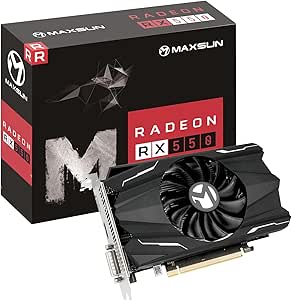
maxsun AMD Radeon RX 550 4GB GDDR5 ITX Computer PC Gaming Video Graphics Card GPU 128-Bit DirectX 12 PCI Express X16 DVI-D Dual Link, HDMI, DisplayPort
This compact Radeon RX 550 4GB card offers a simple, budget-friendly upgrade for older or small form factor PCs, supporting 1080p gaming and basic multimedia tasks. Compared to the RX 580 or RX 9060 XT, it provides less raw power but is ideal for light gaming and multi-monitor setups, especially where space and power are limited. Its plug-and-play design with no extra power connector makes installation straightforward, suitable for prebuilt or office PCs. However, its performance is limited in newer titles or high settings, and it lacks features like ray tracing or high refresh rate support. This card is perfect for casual gamers or office upgrades, but not for demanding AAA titles or future-proofing.
Pros:- Compact size fits small form factor cases
- No external power connector needed, easy to install
- Supports DirectX 12 and multiple outputs
Cons:- Limited to 4GB VRAM, restricting high-detail gaming
- Lower performance compared to RX 580 or newer models
- Not suitable for demanding AAA games or 4K gaming
Best for: Casual gamers and office users with limited space or older power supplies needing a low-cost upgrade.
Not ideal for: Enthusiasts seeking high frame rates or high-resolution gaming at settings above 1080p.
- GPU:Radeon RX 550 4GB GDDR5
- Memory Speed:6000 MHz
- Interface:PCI-Express x16
- Outputs:DVI-D, HDMI, DisplayPort
- Power Consumption:55W TDP
- Size:Small form factor ITX
Bottom line: Ideal for budget-conscious users aiming to boost older systems for light gaming and multimedia, but not for high-end gaming or future-proofing.
XFX Swift AMD Radeon RX 9060 XT OC Triple Fan Gaming Edition with 16GB GDDR6 HDMI 2xDP, AMD RDNA 4 RX 9060XT RX-96TS316BA
The XFX RX 9060 XT OC 16GB offers a significant step up with 16GB of GDDR6 memory and a boost clock reaching 3320 MHz, making it suitable for high-resolution gaming at 1440p and even 4K. Compared to the RX 580 or RX 550, this card provides much higher frame rates and future-proofing, though it doesn’t match the ray tracing capabilities of the latest top-tier cards like the RX 9070 XT. Its triple-fan cooling ensures stable operation under load, but the larger size and premium price are tradeoffs. This upgrade is ideal for gamers wanting high-quality visuals and performance without stepping into the most expensive GPU tiers, but it may be overkill for casual or older titles at lower resolutions.
Pros:- Huge 16GB GDDR6 VRAM for high-resolution and future games
- High boost clock up to 3320 MHz for excellent rasterization
- Triple fan cooling for thermal stability
Cons:- Larger physical size may not fit all cases
- Higher cost compared to mid-range options
- Limited ray tracing performance relative to newer models
Best for: High-end gamers looking for a substantial upgrade for 1440p and 4K gaming with future potential.
Not ideal for: Budget or space-constrained builds that can’t accommodate the larger card size or higher power requirements.
- GPU:AMD RX 9060 XT
- Memory:16GB GDDR6
- Boost Clock:up to 3320 MHz
- Outputs:HDMI 2.1b, 2x DisplayPort 2.1a
- Interface:PCIe 4.0
- Size:Triple fan, large form factor
Bottom line: A premium upgrade for serious gamers targeting 1440p or 4K, balancing performance and future-proofing, but requires ample space and budget.
GIGABYTE Radeon RX 9070 XT Gaming OC 16G Graphics Card, PCIe 5.0, 16GB GDDR6, GV-R9070XTGAMING OC-16GD
The GIGABYTE RX 9070 XT Gaming OC 16G leverages PCIe 5.0 for maximum bandwidth and features 16GB GDDR6 memory paired with a 3060 MHz core clock, offering exceptional performance for 4K gaming and demanding workloads. Compared to the RX 9060 XT or RX 580, this card delivers superior ray tracing, higher frame rates, and robust future compatibility. Its advanced cooling system and OC factory settings ensure stable operation even under heavy loads, but the size and premium price may be prohibitive for smaller or budget builds. This card is ideal for enthusiasts seeking cutting-edge performance, but overkill for users only gaming at 1080p or with limited space.
Pros:- High-performance PCIe 5.0 support for future upgrades
- 16GB GDDR6 VRAM suitable for 4K and professional workloads
- Factory OC for enhanced rasterization and ray tracing
Cons:- Large size requiring spacious case
- High cost relative to mid-range options
- Potential bottleneck in older PCIe 3.0 slots
Best for: Gaming enthusiasts and content creators aiming for top-tier 4K performance and PCIe 5.0 benefits.
Not ideal for: Compact or budget PCs that can’t fit the larger card or don’t need PCIe 5.0 bandwidth.
- GPU:Radeon RX 9070 XT
- Memory:16GB GDDR6
- Core Clock:3060 MHz
- Outputs:HDMI 2.1b, DisplayPort 2.1a
- Interface:PCIe 5.0
- Cooling:OC Triple Fan
Bottom line: This flagship-grade card is perfect for high-end gaming and professional tasks, provided your system can accommodate its size and price.
Radeon R7 350 Low Profile Graphics Card, 4GB GDDR3 55W TDP, No Power Connector Needed, PCIe 3.0 ×16, 2 ×HDMI, for SFF & OEM Business PC Upgrade
The Radeon R7 350 4GB provides a cost-effective, space-friendly upgrade for older SFF and OEM desktops, supporting basic multimedia and light gaming. Compared with the RX 550 or RX 580, it offers less performance but excels in compatibility with compact cases, requiring no external power connectors. Its 55W TDP and dual HDMI outputs make it suitable for multi-monitor setups and office tasks, but it cannot handle modern AAA titles or high-resolution gaming. It’s a reliable choice for upgrading legacy systems where space and power are limited, but not for gamers seeking high FPS or detailed graphics.
Pros:- No external power connector needed, easy to install
- Low TDP suitable for minimal power supplies
- Dual HDMI outputs support multi-monitor setups
Cons:- Limited performance for modern gaming
- GDDR3 VRAM is less efficient than newer GDDR6 models
- Not suitable for high detail or 4K gaming
Best for: Office or media PCs in need of a simple, low-power, space-saving upgrade.
Not ideal for: Gamers wanting high frame rates or high-res gaming on demanding titles.
- GPU:Radeon R7 350
- Memory:4GB GDDR3
- TDP:55W
- Outputs:2 × HDMI
- Interface:PCIe 3.0 x16
- Size:Low profile
Bottom line: This card is perfect for upgrading older, space-constrained office PCs for multimedia and light gaming, but not for high-performance needs.
XFX Speedster SWFT309 Radeon RX 6700 Gaming Graphics Card with 10GB GDDR6 HDMI 3xDP, AMD RDNA 2 RX-67XLKWFDV
The XFX Speedster SWFT309 Radeon RX 6700 stands out for delivering exceptional performance in older gaming PCs, especially at 1440p and 4K resolutions. Its 10GB of GDDR6 memory provides ample room for modern titles, and the RDNA 2 architecture ensures efficient power use and stable frame rates. Compared to the PowerColor AMD Radeon RX 6500 XT, which has only 4GB and is better suited for entry-level gaming, the RX 6700 offers a significant leap in performance. The triple-fan cooling system maintains optimal temperatures during extended play, but this design can be slightly louder than more compact options like the RX 6500 XT. The card’s sleek aerodynamic design maximizes airflow and looks great in a variety of builds. However, its size may pose compatibility issues in smaller cases. Overall, this pick is ideal for gamers seeking a reliable upgrade that balances power and cooling without breaking the bank—best for those who want a future-proof upgrade for high-res titles.
Pros:- 10GB GDDR6 memory supports high-res textures
- Efficient RDNA 2 architecture for stable performance
- Triple-fan cooling system for thermal stability
- Elegant aerodynamic design enhances airflow
Cons:- Size may cause fitment issues in compact cases
- Slightly louder under load compared to smaller cards
Best for: Gamers with mid-tower or full-size cases looking to boost 1440p and 4K performance.
Not ideal for: Owners of small form-factor PCs or those on a tight budget who only need basic HD gaming.
- Graphics Coprocessor:AMD RX 6700
- Memory:10 GB GDDR6
- Cooling:XFX SWFT 309 Triple Fan
- Boost Clock:Up To 2425MHz
- Video Output Interface:HDMI, 3x DisplayPort
- Item Dimensions L x W:11.97″ x 4.84″
- Warranty:3 years
- Rank:#863
- Customer Review:4.6/5
Bottom line: This card is best suited for gamers wanting a powerful, future-proof upgrade for high-resolution gaming in larger cases.

How We Picked
The products were evaluated based on performance potential relative to older gaming PCs, compatibility with typical system configurations, build quality, and value. Priority was given to cards that offered a clear upgrade path for systems with PCIe 3.0 or earlier, and that could operate with common power supplies. We also considered factors like VRAM size, cooling design, and future-proofing features. The ranking reflects a balance between cost-effectiveness and performance gains, ensuring that each choice addresses specific needs—from budget upgrades to premium enhancements.Factors to Consider When Choosing Best Radeon Upgrades For Older Gaming PCs
Choosing the best Radeon upgrade for an older gaming PC involves several key considerations. First, compatibility with your existing motherboard and power supply is essential to avoid costly upgrades or replacements. Next, consider the VRAM capacity; more memory helps with modern games at higher resolutions. Performance targets should align with your preferred gaming resolution and frame rate, especially if you plan to game at 1080p or 1440p. Additionally, cooling solutions and form factor influence installation, especially in smaller cases. Finally, weigh the cost against expected gains—sometimes investing more yields significantly better gaming experiences, but not always if your system is too dated.Compatibility and System Limits
Before selecting a Radeon card, verify your system’s PCIe slot version, power supply capacity, and available space. Older motherboards might only support PCIe 3.0, which generally doesn’t bottleneck most current cards but can influence certain models’ performance. Power requirements vary; some cards need additional supplemental power connectors, which older PSUs may lack. Form factor also matters—low-profile cards fit in compact cases but often have lower performance. Being aware of these limitations prevents buying a GPU that simply won’t fit or work properly with your existing setup.
Performance Needs and Gaming Resolution
Understanding your gaming resolution and desired frame rate guides your choice. For 1080p gaming, mid-range cards like the RX 6500 XT or RX 580 deliver solid performance. If you want to push into 1440p or higher, investing in cards like the RX 9060 XT or RX 9070 XT makes sense, but ensure your CPU won’t bottleneck these upgrades. Remember, older systems may struggle to feed data fast enough for high-end GPUs, which can lead to CPU bottlenecks. Matching the GPU’s capabilities with your system’s overall performance is key to a balanced gaming experience.
VRAM and Future-Proofing
VRAM size directly impacts a card’s ability to handle modern textures and higher resolutions. For gaming at 1080p, 4GB might suffice temporarily, but 8GB or more provides better longevity and smoother gameplay with upcoming titles. Cards like the RX 9060 XT with 16GB are better suited for future-proofing, but they often come at a premium. Consider how long you plan to keep the upgrade; investing in more VRAM can delay the need for another upgrade down the line, especially if you play demanding titles or use high-resolution monitors.
Cooling, Noise, and Size
Cooling solutions impact both performance and noise levels. Larger, triple-fan designs like the RX 9060 XT OC tend to run cooler and quieter but require more space. Smaller, single-fan or low-profile cards like the RX 550 are ideal for compact cases but may generate more heat and noise under load. Check your case’s airflow and space constraints before choosing a card. Better cooling not only prolongs the GPU’s lifespan but also maintains stable performance during extended gaming sessions.
Cost-Effectiveness and Long-Term Value
Not all upgrades deliver the same value; sometimes paying more results in diminishing returns if your system can’t leverage the extra power. Focus on cards that offer the best performance uplift for your budget. For example, the RX 6500 XT provides a noticeable boost at a low price point, ideal for casual gamers. Conversely, high-end options like the RX 9070 XT are better suited for gamers who already have a relatively modern CPU and motherboard capable of matching their GPU’s capabilities. Avoid over-investing if your system’s CPU or RAM bottlenecks the GPU’s potential.
Frequently Asked Questions
Will a newer Radeon card work with my older motherboard?
Most recent Radeon cards are backward compatible with older motherboards that support PCIe 3.0 or higher, but always check the specific PCIe version and BIOS compatibility. Some newer cards may have features requiring BIOS updates or may not fully utilize PCIe 4.0 and above if your motherboard only supports PCIe 3.0. Compatibility is usually straightforward, but verifying your motherboard’s specifications and updating firmware if necessary can prevent potential issues.
How much VRAM do I need for gaming at 1080p on an older PC?
For gaming at 1080p, 4GB of VRAM can suffice for many titles, but newer or more demanding games benefit from 8GB or more, especially if you want better future-proofing. Higher VRAM helps with high-resolution textures and smooth gameplay, reducing stuttering. If your budget allows, choosing a card with 8GB of VRAM provides more headroom and can extend the usable life of your upgrade, particularly as game textures continue to grow in size.
Is it worth upgrading my GPU if my CPU is quite old?
Upgrading your GPU can still improve gaming performance, but if your CPU is significantly outdated, it might bottleneck the GPU, limiting the overall benefit. In such cases, a balanced upgrade—either a better CPU, more RAM, or both—may be more effective. If you’re on a tight budget, upgrading the GPU can still provide noticeable improvements at lower resolutions, but for the best results, consider a more comprehensive system upgrade eventually.
Should I prioritize performance or price when choosing a Radeon upgrade?
The decision depends on your gaming goals and budget. If you want the best possible experience without breaking the bank, look for cards that offer the highest performance within your price range, like the RX 6500 XT or RX 580. However, if your system is quite dated, investing in a higher-end card may not yield proportional gains if other components bottleneck performance. Aim for a balance where the GPU’s capabilities match your system’s overall performance to maximize value.
Can I upgrade to a high-end Radeon card if my power supply is limited?
High-end Radeon GPUs often require more power, sometimes needing additional power connectors. Check your power supply’s wattage and available connectors before purchasing a premium card. If your PSU is underpowered, upgrading it is essential to avoid stability issues or damage. In some cases, you might need a more capable power supply, which adds to the overall upgrade cost. Always prioritize safety and compatibility to ensure a reliable gaming experience.
Conclusion
For budget-conscious gamers and those with older systems, the PowerColor Radeon RX 6500 XT offers a balanced upgrade that can breathe new life into gaming at 1080p. If you’re seeking higher performance and have a slightly more modern system, the ASUS Dual Radeon RX 9060 XT 16GB stands out for future-proofing and higher resolutions. For premium needs and demanding titles, the GIGABYTE Radeon RX 9070 XT delivers impressive power but requires a compatible system. Beginners should focus on cards with lower power requirements and easy installation, while enthusiasts aiming for maximum performance should consider high VRAM and advanced cooling options. Matching your system’s capabilities and gaming goals will ensure you pick the right Radeon upgrade for your older PC.