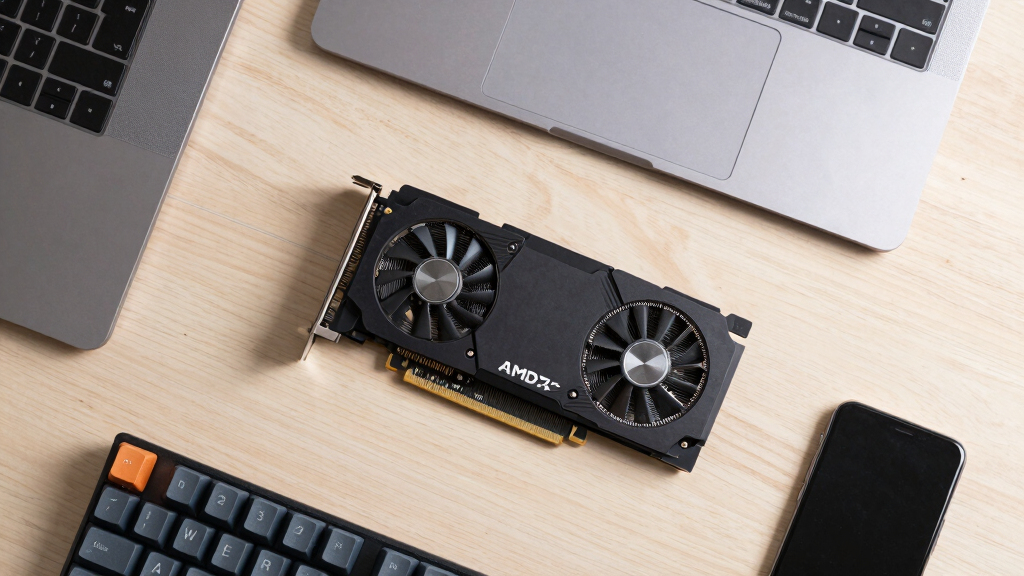

When searching for the best AMD GPUs with 16GB VRAM, performance, durability, and features matter most. The ASRock Radeon RX 9070 XT Steel Legend stands out as the top overall pick thanks to its robust build and advanced features. For those prioritizing cooling and overclocking, the ASRock Radeon RX 9070 XT Taichi offers exceptional performance. Budget-conscious buyers should consider the Sapphire Nitro+ RX 7800 XT for solid value. However, each option involves tradeoffs between price, power, and features. Keep reading for a detailed breakdown that helps clarify which GPU best fits your needs.
Key Takeaways
- The top-ranked AMD GPUs blend high performance with reliable build quality, making them suitable for demanding tasks.
- Cooling solutions, such as triple fans or advanced heatsinks, significantly impact long-term stability and overclocking potential.
- Newer architectures like RDNA 4 provide better efficiency and future-proofing compared to older RDNA 3 or RDNA 3-based models.
- Price varies widely, with premium models offering advanced features at higher costs, while entry-level options focus on core performance.
- Connectivity options like HDMI 2.1a and DisplayPort 2.1 are standard in most top picks, supporting higher resolutions and refresh rates.


More Details on Our Top Picks
ASRock Radeon RX 9070 XT Steel Legend 16GB Graphics Card, AMD RDNA 4 Architecture, 16GB GDDR6, PCIe 5.0, Triple Fans, Polychrome SYNC, Reinforced Metal Frame, DisplayPort 2.1a, HDMI 2.1b
This flagship model stands out for its powerful AMD RDNA 4 architecture and massive 16GB GDDR6 VRAM, making it ideal for demanding 4K gaming and professional workloads. Compared to the GIGABYTE RX 9060 XT Gaming OC ICE, it offers a higher boost clock (up to 2970 MHz vs. 2780 MHz) and a reinforced metal frame for durability, but this comes with a larger size and potentially higher power requirements. The triple-fan cooling with advanced heatpipes ensures superior thermal management even under load, and PCIe 5.0 readiness future-proofs your setup. Its factory overclocking outperforms most mid-tier options, making it perfect for enthusiasts. However, its premium build and performance come at a higher price point, which might be a drawback for budget-conscious buyers.
Pros:- Unmatched performance thanks to AMD RDNA 4 architecture and factory overclocking
- Massive 16GB GDDR6 VRAM ideal for 4K textures and professional content
- Robust triple-fan cooling system with heatpipe technology
Cons:- Large size may require a spacious case and high power supply
- Higher price compared to mid-range models like the ASUS Prime RX 9060 XT
Best for: Power users who want top-tier performance for gaming, AI workloads, and creative tasks without compromise.
Not ideal for: Casual gamers or those with small PC cases who need a more compact or budget-friendly option.
- GPU Architecture:AMD RDNA 4
- VRAM:16GB GDDR6
- Boost Clock:2970 MHz
- Memory Clock:20 Gbps
- Interface:PCIe 5.0
- Cooling System:Triple Fans with heatpipes
Bottom line: This card makes the most sense for high-end users seeking uncompromising performance and future-proofing for demanding applications.
ASRock Radeon RX 9070 XT Taichi 16GB OC Graphics Card, AMD RDNA 4 Architecture, 16GB GDDR6, PCIe 5.0, Taichi 3X Cooling, Reverse Spin, Dual BIOS, 16‑Phase SPS, Polychrome SYNC
This model excels for extreme out-of-the-box performance, with a boost clock reaching 3100 MHz—highest among its peers—and a sophisticated Taichi 3X cooling system featuring reverse-spinning fans for enhanced thermal efficiency. Compared to the GIGABYTE RX 9060 XT Gaming OC ICE, it offers a higher factory overclock and dual BIOS options for tailored performance or quiet operation. Its 16-phase SPS power delivery ensures stability during intensive workloads, and PCIe 5.0 support keeps it ahead of current standards. The premium cooling and overclocking make it ideal for overclockers and tech enthusiasts. The tradeoff is its premium price and larger size, which might limit compatibility with smaller cases.
Pros:- Highest factory overclock at 3100 MHz for peak gaming and creative performance
- Superior cooling with Taichi 3X triple fans and reverse spin technology
- Dual BIOS for performance and silent modes
Cons:- Premium price point limits accessibility for budget-conscious buyers
- Larger footprint may not fit smaller cases
Best for: Overclockers and users who want maximum factory performance with advanced cooling for gaming and professional tasks.
Not ideal for: Casual gamers or those with space-limited builds who prefer a more affordable or compact GPU.
- GPU Architecture:AMD RDNA 4
- VRAM:16GB GDDR6
- Boost Clock:3100 MHz
- Memory Clock:20 Gbps
- Interface:PCIe 5.0
- Cooling System:Taichi 3X Triple Fans
Bottom line: Ideal for enthusiasts who prioritize maximum factory performance and cooling, willing to invest in a premium GPU.
ASUS Prime Radeon™ RX 9060 XT 16GB GDDR6 OC Edition Graphics Card (PCIe 5.0, HDMI/DP 2.1, 2.5-Slot Design, axial-tech Fans, Dual Ball Fan Bearings, Dual BIOS, GPU Guard)
This OC edition from ASUS offers a balanced blend of performance and compatibility, with a compact 2.5-slot design suitable for smaller builds. Its axial-tech fans with dual ball bearings ensure durability and efficient airflow, making it a solid choice for users seeking reliable cooling without bulk. Compared to the larger ASRock RX 9070 XT Steel Legend, it sacrifices some overclocking headroom but compensates with easier fitment and dual BIOS for flexibility. The inclusion of GPU Guard adds protection for the card’s components. It’s ideal for gamers and content creators who need a dependable, space-efficient GPU, though it doesn’t match the overclocking capabilities of flagship models.
Pros:- Compact 2.5-slot design suits smaller PC builds
- Dual BIOS switch for performance or quiet modes
- Reliable axial-tech fans with dual ball bearings
Cons:- Lower overclocking potential compared to premium models
- Slightly lower performance ceiling for demanding workloads
Best for: Budget-conscious builders or those with small cases seeking dependable performance with dual BIOS options.
Not ideal for: Users wanting the highest possible overclocking or thermal performance in large setups.
- GPU Architecture:AMD RDNA 4
- VRAM:16GB GDDR6
- GPU Clock Speed:7000 MHz
- Interface:PCIe 5.0
- Display Outputs:HDMI 2.1b / DisplayPort 2.1a
- Cooling System:Axial-tech Fans
Bottom line: A practical pick for users needing a space-efficient, reliable GPU with flexible BIOS options.
ASUS Dual Radeon™ RX 9060 XT 16GB GDDR6 Graphics Card (PCIe 5.0, HDMI 2.1b, DisplayPort 2.1a, 2.5-Slot Design, Axial-tech Fan Design, 0dB Technology, and More)
This model emphasizes quiet operation with its 0dB technology and is designed for users who prioritize silent gaming or professional work. Its dual axial-tech fans provide effective cooling within a 2.5-slot form factor, making it suitable for a wide range of builds. Compared to the ASUS Prime RX 9060 XT OC, it offers similar performance but with a focus on noise reduction and simplicity. The dual BIOS switch allows toggling between different performance profiles, and the sturdy design ensures longevity. It’s an excellent choice for users who want high performance without noise, although it may not push the highest overclocks as aggressively as premium models.
Pros:- Excellent noise performance with 0dB technology
- Broad compatibility due to 2.5-slot design
- Dual BIOS for flexible operation modes
Cons:- Limited overclocking headroom compared to flagship models
- Performance may be less optimal for extreme workloads
Best for: Content creators and gamers needing a reliable, quiet GPU for everyday use.
Not ideal for: Overclockers seeking maximum performance or users with small cases that need ultra-compact GPUs.
- GPU Architecture:AMD RDNA 4
- VRAM:16GB GDDR6
- GPU Clock Speed:3250 MHz
- Memory Clock:20 Gbps
- Interface:PCIe 5.0
- Cooling System:Axial-tech Fans
Bottom line: A smart choice for users who want quiet operation combined with dependable performance.
GIGABYTE Radeon™ RX 9060 XT Gaming OC ICE 16G Graphics Card, PCIe 5.0, 16GB GDDR6, GV-R906XGAMINGOCICE-16GD
This GIGABYTE model makes a strong case for gamers seeking high frame rates at 4K with its up to 2780 MHz GPU clock and robust cooling system featuring server-grade thermal gel and multiple fans. Compared to the ASRock RX 9070 XT Steel Legend, it offers slightly lower boost clocks but still delivers excellent thermal performance thanks to its innovative Hawk fans and reinforced structure. Its PCIe 5.0 compatibility and 16GB GDDR6 VRAM support demanding games and creative workloads. The cooling system, with its copper heat pipes and active fans, helps maintain consistent performance during extended gaming sessions. The tradeoff is its slightly less aggressive factory overclock, but it remains a top-tier gaming card for most users.
Pros:- Strong gaming performance with 2780 MHz GPU clock
- Exceptional thermal management with server-grade gel and multiple fans
- Reinforced structure for durability
Cons:- Factory overclock is not as high as some premium models
- Larger size may limit compatibility with small cases
Best for: Gamers who want high performance and excellent cooling for extended sessions.
Not ideal for: Users needing the absolute highest factory overclock or ultra-compact builds.
- GPU Architecture:AMD RDNA 4
- VRAM:16GB GDDR6
- GPU Clock Speed:2780 MHz
- Memory Clock:18,000 MHz
- Interface:PCIe 5.0
- Cooling System:Hawk Fans with server-grade gel
Bottom line: A great choice for gamers prioritizing thermal stability and high frame rates without the highest overclocking demands.
Sapphire 11330-01-20G Nitro+ AMD Radeon RX 7800 XT Gaming Graphics Card with 16GB GDDR6, AMD RDNA 3
This Sapphire RX 7800 XT stands out for its robust AMD RDNA 3 architecture, offering excellent performance for demanding titles. Compared with the GIGABYTE RX 9060 XT, it delivers slightly better efficiency and features a more compact 3-slot design, making it ideal for high-end gaming setups. Its boost clock of up to 2565 MHz ensures smooth frame rates, but this power comes with a higher power draw and a pricier position in the market. The dual HDMI and DisplayPort outputs support high-resolution displays, perfect for immersive gaming and content creation. However, the card’s size and cooling system may be overkill for casual users or small cases. Overall, this card is best suited for gamers who want top-tier performance without sacrificing space or features.
Pros:- Excellent performance with up to 2565 MHz boost clock
- Compact 3-slot design fits well in most high-end cases
- Reliable cooling with efficient Nitro+ design
- Supports high-resolution outputs up to 7680×4320
Cons:- Relatively high power consumption
- Premium price point may be a barrier for some
- Limited overclocking headroom compared to some competitors
Best for: hardcore gamers seeking the best performance and build quality in a mid-sized card
Not ideal for: budget-conscious users or small form factor builds due to its size and premium price
- Boost Clock:2565 MHz
- Memory Size:16GB GDDR6
- Memory Bus:256-bit
- Video Outputs:2 x HDMI, 2 x DisplayPort
- Form Factor:3 slot
- Dimensions:320 x 134.85 x 61.57 mm
Bottom line: Ideal for serious gamers who want a balanced mix of performance, reliability, and features in a mid-sized card.
GIGABYTE Radeon RX 9060 XT Gaming OC 16G Graphics Card, PCIe 5.0, 16GB GDDR6, GV-R9060XTGAMING OC-16GD
This GIGABYTE RX 9060 XT Gaming OC leverages AMD RDNA 4 architecture, promising next-generation performance and advanced ray tracing. It offers a core clock of up to 2700 MHz, surpassing the RX 7800 XT in raw speed, and includes server-grade thermal paste for enhanced cooling efficiency. Its PCIe 5.0 interface ensures future-proof connectivity, making it a solid choice for enthusiasts and content creators. While it excels in performance, its larger size and specialized cooling system demand a spacious case and higher power supply. Compared to the Sapphire RX 7800 XT, it emphasizes raw speed and future readiness but at a higher cost and complexity. This card makes the most sense for users who want the latest tech and are willing to invest in premium features.
Pros:- High core clock of 2700 MHz for superior speed
- PCIe 5.0 support for future compatibility
- Advanced cooling with Windforce design
- Supports 8K resolution for demanding applications
Cons:- Higher price compared to mid-range options
- Requires a spacious case and robust power supply
- Potentially overkill for casual gaming
Best for: power users and enthusiasts demanding the latest architecture and maximum performance
Not ideal for: small case builds or budget users due to size and cost
- Core Clock Speed:2700 MHz
- Memory Size:16GB GDDR6
- Memory Bus:128-bit
- Interface:PCIe 5.0
- Cooling System:Windforce
- Maximum Resolution:7680 x 4320
Bottom line: Best suited for enthusiasts who prioritize cutting-edge technology and top-tier performance.
Gigabyte Radeon RX 7600 XT Gaming OC 16GB Graphics Card – 2810 MHz Core, 16GB GDDR6
The RX 7600 XT Gaming OC offers a compelling mix of performance and value, with a boost clock up to 2810 MHz, slightly edging out the RX 7800 XT in raw speed for certain workloads. Based on AMD RDNA 3 architecture, it provides solid gaming performance at 1080p and 1440p, making it ideal for gamers who don’t need 4K power but want smooth gameplay. Its 16GB GDDR6 and PCIe 4.0 support deliver modern features at a more accessible price point. However, compared with the RX 7800 XT, it has a narrower memory bus (128-bit) and slightly lower overall efficiency, limiting its future-proofing. This card is best for budget-conscious gamers who prioritize high settings at 1080p/1440p rather than high-end 4K experiences.
Pros:- High boost clock of 2810 MHz
- Great value with 16GB GDDR6 memory
- Solid performance in mainstream gaming
- Supports PCIe 4.0 for current systems
Cons:- Limited to PCIe 4.0, less future-proof
- Smaller 128-bit memory bus limits bandwidth
- Lower overclocking headroom compared to higher-end cards
Best for: budget-conscious gamers seeking high frame rates at 1080p or 1440p
Not ideal for: users wanting 4K gaming or future-proofing with PCIe 5.0 features
- Boost Clock:2810 MHz
- Memory Size:16GB GDDR6
- Memory Bus:128-bit
- Interface:PCIe 4.0
- GPU Architecture:RDNA 3
- Maximum Resolution:3840 x 2160
Bottom line: Best for gamers who want a strong 1080p/1440p card without paying for top-tier features.
Gigabyte GeForce RTX 5060 Ti Gaming OC 16G Graphics Card – 16GB GDDR7, PCI-E 5.0, 2647MHz Core Frequency
This Nvidia-based RTX 5060 Ti provides impressive core clock speeds up to 2647 MHz and 16GB of GDDR7 memory, offering high-performance gaming at both 1440p and 4K. Its PCIe 5.0 interface ensures compatibility with the latest systems, and the triple-fan Windforce cooling system keeps thermals in check during intense sessions. Compared to the AMD-based options, it emphasizes Nvidia’s DLSS 4 technology and ray tracing capabilities, making it an excellent choice for gamers who prioritize cutting-edge graphics features. On the downside, it might be overkill for casual or budget gamers, and its availability and pricing can fluctuate. This card is ideal for gamers wanting Nvidia’s ecosystem with excellent performance in demanding titles.
Pros:- High core clock of 2647 MHz
- Supports PCIe 5.0 for future compatibility
- Excellent ray tracing and DLSS 4 capabilities
- Great for 1440p and 4K high settings
Cons:- Premium price compared to AMD equivalents
- Larger size requiring spacious cases
- Limited overclocking headroom
Best for: gamers who want Nvidia’s ray tracing and DLSS 4 in a 16GB package
Not ideal for: users on a tight budget or with small cases due to its size and premium cost
- Core Clock Speed:2647 MHz
- Memory Size:16GB GDDR7
- Memory Interface:128-bit
- Interface:PCIe 5.0
- Cooling System:Windforce
- Maximum Resolution:7680 x 4320
Bottom line: Best suited for Nvidia fans and gamers aiming for high-quality ray tracing at 1440p/4K resolution.
XFX Swift AMD Radeon RX 9060 XT OC Gaming Edition with 16GB GDDR6 HDMI 2xDP, AMD RDNA 4 RX-96TSW16BQ
The XFX RX 9060 XT OC offers AMD RDNA 4 architecture with a boost clock up to 3320 MHz, making it one of the fastest in this roundup. Its 16GB GDDR6 memory and dual HDMI/DisplayPort outputs support high-resolution gaming and professional workflows. The dual fan cooling system and robust construction make it a reliable choice for 4K gaming and content creation, especially with the support for AV1 encoding. Compared to the Nvidia RTX 5060 Ti, it emphasizes AMD’s efficiency and price advantage but may lack some of Nvidia’s advanced features like DLSS. The card’s high clock speeds and ample memory make it a strong contender for users demanding raw power and high resolution, though it requires a 700W power supply and suitable case size.
Pros:- Very high boost clock of 3320 MHz
- Supports 4K gaming with ease
- Excellent for content creation with AV1 encoding
- Reliable cooling with dual fans
Cons:- Requires a high-capacity 700W power supply
- Larger physical size
- No Nvidia DLSS technology for upscaling
Best for: avid gamers and content creators seeking maximum performance at 4K
Not ideal for: casual gamers or those with smaller cases and lower wattage PSU
- Boost Clock:3320 MHz
- Memory Size:16GB GDDR6
- Memory Type:GDDR6
- Interface:PCIe 4.0
- Maximum Resolution:3840 x 2160
- Cooling System:Dual Fan
Bottom line: Best for users who need top-tier 4K performance and content creation features in a high-end AMD card.
XFX Swift AMD Radeon RX 9060 XT OC Gaming Edition with 16GB GDDR6 HDMI 2xDP, AMD RDNA 4 RX-96TSW16BQ
The XFX RX 9060 XT OC offers AMD RDNA 4 architecture with a boost clock up to 3320 MHz, making it one of the fastest in this roundup. Its 16GB GDDR6 memory and dual HDMI/DisplayPort outputs support high-resolution gaming and professional workflows. The dual fan cooling system and robust construction make it a reliable choice for 4K gaming and content creation, especially with the support for AV1 encoding. Compared to the Nvidia RTX 5060 Ti, it emphasizes AMD’s efficiency and price advantage but may lack some of Nvidia’s advanced features like DLSS. The card’s high clock speeds and ample memory make it a strong contender for users demanding raw power and high resolution, though it requires a 700W power supply and suitable case size.
Pros:- Very high boost clock of 3320 MHz
- Supports 4K gaming with ease
- Excellent for content creation with AV1 encoding
- Reliable cooling with dual fans
Cons:- Requires a high-capacity 700W power supply
- Larger physical size
- No Nvidia DLSS technology for upscaling
Best for: avid gamers and content creators seeking maximum performance at 4K
Not ideal for: casual gamers or those with smaller cases and lower wattage PSU
- Boost Clock:3320 MHz
- Memory Size:16GB GDDR6
- Memory Type:GDDR6
- Interface:PCIe 4.0
- Maximum Resolution:3840 x 2160
- Cooling System:Dual Fan
Bottom line: Best for users who need top-tier 4K performance and content creation features in a high-end AMD card.

How We Picked
The selection process centered on evaluating performance metrics, build quality, and feature sets relevant to high-VRAM gaming and professional workloads. We prioritized GPUs with 16GB VRAM that utilize the latest AMD architectures, ensuring they are capable of handling modern games and demanding applications. Reliability, cooling efficiency, and value for money also played key roles in the rankings. Products were ranked based on a balance of technical specs, user reviews, and overall versatility, with a focus on models that deliver consistent performance across various use cases.Factors to Consider When Choosing Best AMD GPUs With 16GB VRAM
Choosing the best AMD GPU with 16GB VRAM involves several critical considerations. Beyond raw power, factors like cooling, connectivity, and architectural longevity influence how well a card will perform over time. Understanding these elements helps buyers avoid overspending on features they won’t need or selecting models that won’t meet their future demands.Performance and Architecture
Performance is the primary concern for most buyers, especially for gaming at high resolutions or professional workloads. AMD’s latest RDNA 4 architecture offers improved efficiency and higher throughput, making newer models more future-proof. Consider how much graphical power you need; a top-tier model will handle demanding tasks smoothly, but may come at a premium, while mid-range cards offer solid performance for most users at a better price point.
Cooling and Noise Levels
Effective cooling solutions like triple-fan setups or advanced heatsinks extend the lifespan of the GPU and support better overclocking. However, more robust cooling often means larger, noisier cards. If your setup is sensitive to noise or space-constrained, you should weigh the cooling efficiency against these factors. Quiet operation can significantly improve your overall experience, especially during long gaming sessions or intensive workloads.
Connectivity and Compatibility
Most high-end AMD GPUs with 16GB VRAM now support HDMI 2.1a and DisplayPort 2.1, enabling ultra-high resolutions and refresh rates. Ensure your monitor and power supply are compatible with the GPU’s outputs and power requirements. Also, check the PCIe interface—PCIe 4.0 versus PCIe 5.0—though most current motherboards support both, PCIe 5.0 offers marginal future benefits for bandwidth.
Price and Value
Prices for these GPUs can vary significantly, reflecting differences in features, performance, and brand reputation. High-end models justify their cost with premium cooling, overclocking headroom, and extended durability. Conversely, mid-range options focus on delivering good performance without the bells and whistles, making them ideal for budget-conscious buyers who still want 16GB VRAM. Avoid overpaying for features you won’t use, and look for models that offer the best balance of performance and price.
Future-Proofing and Longevity
Investing in a GPU with the latest AMD architecture can extend its usability, especially as games and applications become more demanding. Consider the availability of driver updates and the manufacturer’s support lifecycle. A more recent architecture like RDNA 4 is likely to stay relevant longer, providing better value over time. Avoid models based on older architectures if you want to maximize long-term performance.
Frequently Asked Questions
Is 16GB VRAM necessary for gaming in 2026?
While 16GB VRAM is currently more than enough for most gaming scenarios, its necessity depends on resolution and game complexity. For 4K gaming or future titles with higher texture demands, 16GB provides a buffer against VRAM bottlenecks. However, for 1080p or 1440p gaming, lower VRAM options may suffice. Consider your specific use case and whether you plan to upgrade your monitor or play very demanding titles in the future.
Should I choose an AMD GPU with RDNA 3 or RDNA 4 architecture?
RDNA 4 architecture offers better efficiency, higher performance, and longer future support compared to RDNA 3. If your budget allows, opting for a RDNA 4-based GPU will likely provide better performance longevity, improved power consumption, and enhanced features. However, RDNA 3 models can still be a good choice if they are significantly more affordable and meet your current needs without issue.
What’s more important: cooling or price when choosing these GPUs?
Both factors are vital, but cooling generally has a longer-term impact on GPU health and performance stability. Adequate cooling prevents thermal throttling, reduces noise, and prolongs the lifespan of the card. If you’re on a tight budget, you can compromise slightly on cooling, but be prepared for potential noise and thermal limits. Investing in a better cooling system often pays off through sustained performance and durability.
Are premium AMD GPUs worth the extra cost?
Premium models come with advanced cooling, higher factory overclocks, and sometimes longer warranties, which can justify their higher prices if you need top-tier performance or plan to overclock. For most gamers and professionals, a high-quality mid-range GPU offers excellent value, but if your workload demands maximum performance and stability, paying more for a premium GPU makes sense. Consider your long-term needs and whether the extra features align with your use case.
How do I know if my power supply can handle these GPUs?
Most AMD GPUs with 16GB VRAM require at least a 650W power supply, but some high-end models may need 750W or more, especially if overclocked. Check the GPU manufacturer’s recommended wattage and ensure your power supply has the necessary connectors and headroom. Using a quality, reliable power supply prevents stability issues and potential damage, making it a critical component in your upgrade process.
Conclusion
The best overall AMD GPU with 16GB VRAM in 2026 is the ASRock Radeon RX 9070 XT Steel Legend due to its balanced mix of performance, durability, and features. For those seeking the best value, the Sapphire Nitro+ RX 7800 XT offers strong performance at a more accessible price point. If budget is tight, a mid-range model like the Gigabyte RX 7600 XT Gaming OC provides reliable power without overspending. For users prioritizing premium features and overclocking headroom, the ASRock Taichi or GIGABYTE Gaming OC are excellent choices. Finally, beginners or casual users should focus on models with simpler cooling and connectivity, ensuring they get reliable performance without unnecessary complexity.