
NFT royalties sparked big debate because they bring up questions about fair pay for artists in secondary sales. Many platforms don’t enforce these royalties, causing artists to lose income as their work resells elsewhere. Smart contracts help, but inconsistent enforcement creates loopholes. The industry is trying to find standards that protect creators while keeping the market flexible. If you’re curious about how these issues are shaping the future of digital ownership, there’s more to explore.

Get hardware and tech essentials delivered free — and shop member deals
- Fast, free delivery on millions of items
- Access to Prime Big Deal Days deals on October 6–7
- Prime Video, Amazon Music and more included
Key Takeaways
- NFT royalties ensure ongoing artist compensation through smart contracts, challenging traditional one-time payment models.
- Not all marketplaces enforce embedded royalties, leading to disputes over fair artist payment.
- Lack of standardization creates loopholes, allowing resales on platforms that ignore royalty rules.
- Some platforms prioritize user flexibility and lower fees over protecting artist rights.
- Technological efforts aim to improve enforcement, but inconsistent adherence fuels ongoing debate.
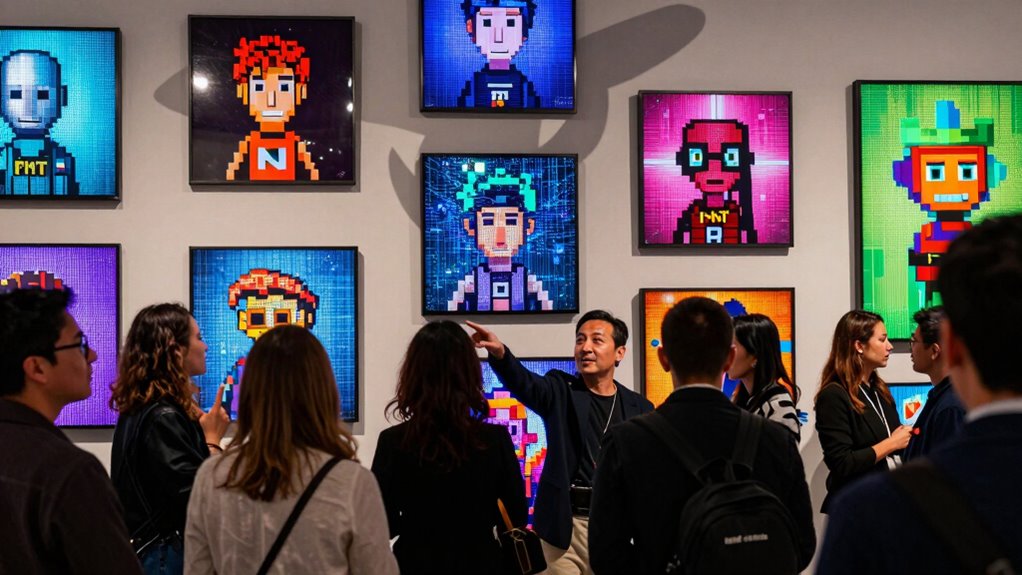
The debate over NFT royalties has become a hot topic in the digital art world, as creators and platforms clash over how artists should be compensated for secondary sales. At the core of this discussion is digital ownership—how it’s defined, transferred, and protected in an increasingly digital marketplace. When you buy an NFT, you’re not just purchasing a digital file; you’re acquiring a form of digital ownership that can be resold, often generating royalties for the original artist. This new model promises a way for artists to earn ongoing income from their work, unlike traditional art sales where they receive only a one-time payment. But the controversy arises because the implementation of these royalties isn’t always straightforward or universally accepted.
NFT royalties spark debate over digital ownership, fair artist compensation, and the challenges of enforcement in a growing marketplace.
Some platforms automate artist compensation by embedding royalty rules directly into the smart contracts of NFTs. This means that every time a digital artwork is resold, a percentage automatically goes back to the creator. For artists, this creates an opportunity to benefit from the increasing value of their work over time. It’s a revolutionary shift, promising a more equitable system for earning from secondary sales, which historically have benefited collectors and speculators more than the original creators. However, not all marketplaces respect these royalties or enforce them, leading to disputes and frustration among artists who rely on these ongoing payments. When a resale occurs on a platform that doesn’t recognize the embedded royalties, the artist misses out on potential income, undermining the very purpose of digital ownership designed to guarantee fair artist compensation.
Critics argue that the lack of enforceability creates a loophole that undermines the integrity of the royalty system. Some developers and marketplaces prefer to prioritize user flexibility and lower fees, which can mean ignoring royalties altogether. As a result, artists fear their work might be resold freely without proper compensation, threatening the sustainability of their careers. On the other hand, proponents believe that enforcing royalties through blockchain technology is a step toward a fairer, more transparent ecosystem. They see it as a way for creators to benefit financially from the increasing value of their digital assets, reinforcing the importance of digital ownership in protecting artists’ rights. Additionally, smart contracts are being developed to help ensure that royalties are more reliably enforced across platforms. Furthermore, ongoing discussions about standardized royalty agreements aim to create uniformity and clarity in how these payments are handled, which could help resolve some of the current disputes. Recognizing the importance of enforceable royalties, some industry leaders are advocating for international standards to prevent discrepancies across platforms.
Ultimately, the debate over NFT royalties taps into larger questions about how digital ownership should function and how artist compensation can be built into the very fabric of blockchain transactions. As the market evolves, you’ll need to stay informed about which platforms respect royalty rules and how they’re implemented. This ongoing discussion highlights the need for clearer standards and smarter technology that can balance creator rights with market flexibility. Without such solutions, the future of artist compensation in the NFT space remains uncertain, fueling ongoing debate and innovation.
NFT royalty enforcement software
As an affiliate, we earn on qualifying purchases.
As an affiliate, we earn on qualifying purchases.
Frequently Asked Questions
How Are NFT Royalties Initially Set and Enforced?
You set NFT royalties initially through smart contract enforcement, which embeds royalty fee structures directly into the blockchain code. When someone resells your NFT, the smart contract automatically enforces the royalty payment, ensuring you receive a percentage of future sales. This decentralized approach helps maintain consistent royalty enforcement without relying on third parties, making it clear how artists and creators can earn ongoing income from their work.
Do Artists Benefit Equally From Secondary Sales?
Artists don’t benefit equally from secondary sales because market fairness varies based on how royalties are enforced and who controls the platform. While some artists receive consistent artist compensation through automatic royalties, others miss out due to platform limitations or lack of enforcement. This imbalance sparks debate over fairness, prompting calls for more transparent and equitable systems that guarantee all artists benefit fairly from their work’s ongoing value.
How Do Different Blockchain Platforms Handle Royalty Payments?
You’ll find that different blockchain platforms handle royalty payments in varied ways, often influenced by smart contract security and cross-platform compatibility. Some platforms, like Ethereum, automate royalties through secure smart contracts that guarantee artists get paid on secondary sales. Others may lack universal compatibility, making royalty enforcement tricky across different marketplaces. Making sure smart contract security and seamless cross-platform compatibility is essential for fair, consistent royalty payments in the evolving NFT space.
Can Royalty Disputes Be Resolved Automatically?
Can royalty disputes be resolved automatically? Absolutely, thanks to smart contracts designed for royalty enforcement. These self-executing contracts automatically enforce royalty payments whenever an NFT is resold, reducing the need for manual intervention. But are they foolproof? Not quite, since some disputes may still require human judgment or platform intervention. Still, smart contracts considerably streamline royalty management, making automatic resolution more feasible and reliable than ever before.
Are There Alternative Models to Traditional NFT Royalties?
Yes, there are alternative models to traditional NFT royalties. You can explore smart contract design that allows for royalty customization, giving artists more control over how royalties are distributed across different sales. Some platforms implement dynamic royalties, where percentages can change based on specific conditions or interactions. These models offer flexibility, empowering creators to tailor compensation methods and address concerns about the rigidity of standard royalty structures.
As an affiliate, we earn on qualifying purchases.
Conclusion
As you navigate the NFT royalties debate, remember that technology often sparks both progress and conflict. While creators seek ongoing earnings, collectors and platforms see challenges in enforcing royalties. It’s a tug-of-war between innovation and tradition, profit and fairness. Just like art has always evolved, so too will the rules around royalties. In this clash of ideals, the future of NFT royalties hinges on balancing creator rights with community trust—an ongoing dance between what’s fair and what’s feasible.
As an affiliate, we earn on qualifying purchases.
NFT marketplace with royalty support
As an affiliate, we earn on qualifying purchases.
As an affiliate, we earn on qualifying purchases.
Halloween Picks
halloween
As an affiliate, we earn on qualifying purchases.