

All-flash NAS offers incredible speed and performance, making it perfect if you handle large files or need rapid data access for demanding applications. It reduces wait times, improves cloud integration, and supports future growth. However, it’s a costly investment that may be wasteful if your workload is light or your budget is tight. To discover if this high-performance storage suits your needs, keep exploring the details.

Get hardware and tech essentials delivered free with Prime
- Fast, free delivery on millions of items
- Prime Video, Amazon Music and more included
- Member-only deals all year
Key Takeaways
- All-flash NAS offers high speed and performance ideal for demanding workloads and large-file handling.
- The high upfront cost may be unjustified for users with moderate or infrequent data access needs.
- Cloud-dependent users benefit from faster local access, reducing cloud bandwidth reliance.
- Suitable for expanding data requirements and future scalability; less necessary for stable, small workloads.
- Cost-effectiveness depends on workload demands; high-performance benefits may outweigh expenses for some, but not all.
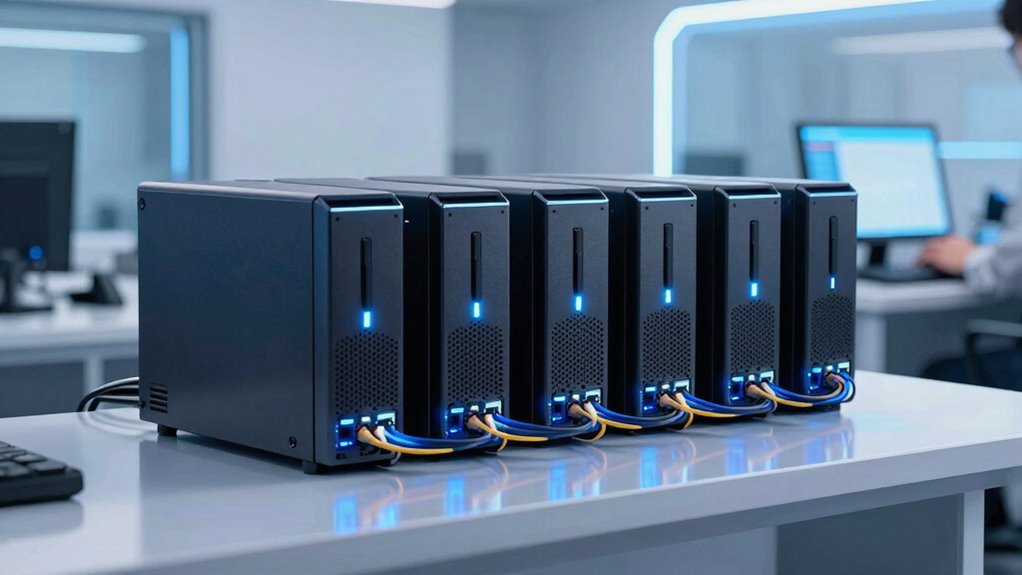
All-flash NAS devices are gaining popularity because they deliver exceptional speed and performance for data storage needs. If you handle large files regularly—such as high-resolution videos, complex databases, or intensive applications—an all-flash NAS can drastically reduce wait times and boost productivity. These devices excel in environments where quick access and seamless data transfer matter most. With cloud integration, they often allow you to back up data effortlessly to remote servers or access files remotely, enhancing flexibility and disaster recovery options. This combination makes them appealing for businesses that require both local speed and cloud-based scalability.
All-flash NAS devices boost performance for large files, ensuring quick access and seamless data transfer.
However, before jumping into an all-flash NAS setup, you need to consider cost considerations carefully. These systems are significantly more expensive upfront than traditional hard drive-based NAS devices. The high price comes from the advanced SSD technology, which offers superior performance but at a premium. If your workload doesn’t demand rapid data access or if your data isn’t accessed frequently, investing in an all-flash system might not be cost-effective. You could end up paying a lot for performance that you don’t fully utilize, making it an inefficient choice for more budget-conscious users or small-scale operations.
Your decision also depends on your cloud strategy. For those who rely heavily on cloud integration, the benefits of all-flash NAS might be even more compelling. Faster local access means less reliance on cloud bandwidth for routine operations, which can lower data transfer costs and reduce latency issues. On the other hand, if you’re primarily a casual user or only need occasional access to stored files, the added speed won’t significantly impact your workflow, and the extra expense may not justify the benefits. Additionally, understanding SSD technology can help you evaluate whether the performance gains align with your specific needs. Moreover, assessing your cost-benefit ratio can help determine if the investment is justified based on your workload and future growth plans.
Furthermore, you should assess your future needs. If you expect your data storage requirements to grow rapidly or your workload to become more intensive, an all-flash NAS can be a worthwhile investment. The performance gains can keep up with increasing demands, providing a more scalable solution. Conversely, if your storage needs are stable and modest, a traditional NAS with HDDs might serve you just as well at a fraction of the cost, making it a more pragmatic choice.
As an affiliate, we earn on qualifying purchases.
Frequently Asked Questions
How Does All-Flash NAS Compare to Hybrid Storage Solutions?
All-flash NAS offers faster performance and lower latency compared to hybrid storage solutions, but it’s less cost-efficient for larger data volumes. Hybrid setups combine HDDs and SSDs, providing better cost efficiency while maintaining acceptable performance. If you prioritize data redundancy and speed, all-flash NAS is ideal; however, for budget-conscious users managing vast data, hybrid solutions balance cost efficiency and performance effectively.
What Are the Maintenance Requirements for All-Flash NAS Systems?
Your all-flash NAS demands minimal maintenance, but don’t get complacent. You’ll need regular firmware updates to keep it running smoothly and protect against vulnerabilities. Wear leveling is essential to extend your SSDs’ lifespan, so monitor and optimize it consistently. While it’s less demanding than traditional systems, neglecting these tasks can cause performance drops or premature failure, turning your high-speed storage into a costly headache.
Can All-Flash NAS Handle High Workloads Over Long Periods?
Yes, all-flash NAS can handle high workloads over long periods, thanks to their superior data durability and fast read/write speeds. You benefit from low latency and consistent performance, even during intensive tasks. While they may consume more power, their durability ensures your data remains safe under heavy use. Just keep in mind that prolonged high workloads might increase wear, so regular monitoring helps maintain ideal performance.
Are There Security Concerns Unique to All-Flash NAS?
Imagine your all-flash NAS as a sleek vault, but it’s not without risks. You face encryption vulnerabilities that could expose sensitive data if not properly secured. Plus, data recovery challenges become more complex due to the speed and structure of flash storage. You need to stay vigilant with robust encryption and reliable backup strategies, ensuring your high-speed data remains protected and recoverable amid potential security threats.
What Is the Typical Lifespan of All-Flash Drives in NAS?
All-flash drives in NAS typically last around 5 to 7 years, depending on drive durability and usage patterns. You can expect good data longevity if you regularly monitor the drives’ health and avoid excessive write workloads. High-quality SSDs with wear leveling and enterprise-grade features tend to offer longer lifespans. Proper maintenance guarantees your all-flash NAS remains reliable, maximizing both drive durability and data longevity over its service life.
As an affiliate, we earn on qualifying purchases.
Conclusion
So, whether an all-flash NAS is your perfect match or just an expensive illusion depends on your needs. Think of it as a double-edged sword—offering lightning-fast speeds but at a cost that can cut deep. Do you need that blazing performance, or will traditional storage do? Remember, choosing the right storage isn’t just about the fastest blade in the shed; it’s about wielding the one that fits your hand. Are you ready to make that call?
As an affiliate, we earn on qualifying purchases.
cost-effective NAS for small business
As an affiliate, we earn on qualifying purchases.
As an affiliate, we earn on qualifying purchases.
Fall Picks
fall essentials
As an affiliate, we earn on qualifying purchases.