
Gaming on a projector can be a surprisingly great experience if you keep input lag low. With modern projectors offering high refresh rates and low latency, you can enjoy immersive gameplay just like on a traditional screen. Proper setup and choosing the right projector are key to maximizing visuals and response time. If you want smoother visuals and faster reactions, there are easy steps to improve your setup. Keep going to discover how to get the best gaming experience on a projector.

Get hardware and tech essentials delivered free with Prime
- Fast, free delivery on millions of items
- Prime Video, Amazon Music and more included
- Member-only deals all year
Key Takeaways
- Modern projectors with low latency can deliver responsive gameplay comparable to traditional screens.
- High-resolution and high refresh rate projectors enhance visual clarity without sacrificing responsiveness.
- Proper setup and calibration minimize input lag and optimize image quality for gaming.
- Advanced display technologies like DLP and laser projection reduce delay and improve responsiveness.
- Controlling ambient light and glare ensures clearer images, maximizing the benefits of low-lag projectors.
As an affiliate, we earn on qualifying purchases.
Can You Effectively Play Games on a Projector?
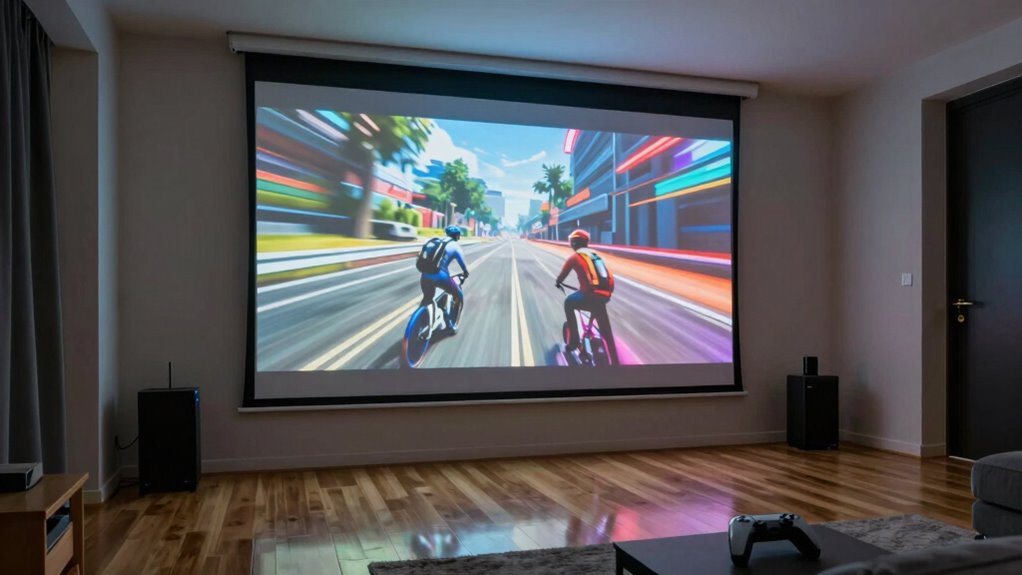
Playing games on a projector can be highly effective if you choose the right setup. Your gaming aesthetics improve when you opt for a projector with good image quality and vibrant colors, making gameplay immersive. Projector portability allows you to easily set up in different spaces, whether indoors or outdoors, giving you flexibility. While some worry about input lag, many modern projectors now feature low latency, making fast-paced games playable without delays. Keep in mind, a lightweight, portable projector means quick setup and less hassle, so you can jump into your gaming session faster. Additionally, digital concepts in projector technology continue to advance, enhancing overall gaming experiences. With the right configuration, a projector can deliver a large, engaging screen that rivals traditional displays, proving you can enjoy gaming effectively without sacrificing convenience or visual appeal. Moreover, selecting a projector with low input lag is crucial for competitive gaming, ensuring that your actions are reflected on screen without noticeable delay.
4K gaming projector with high refresh rate
As an affiliate, we earn on qualifying purchases.
As an affiliate, we earn on qualifying purchases.
How to Choose the Best Projector for Gaming
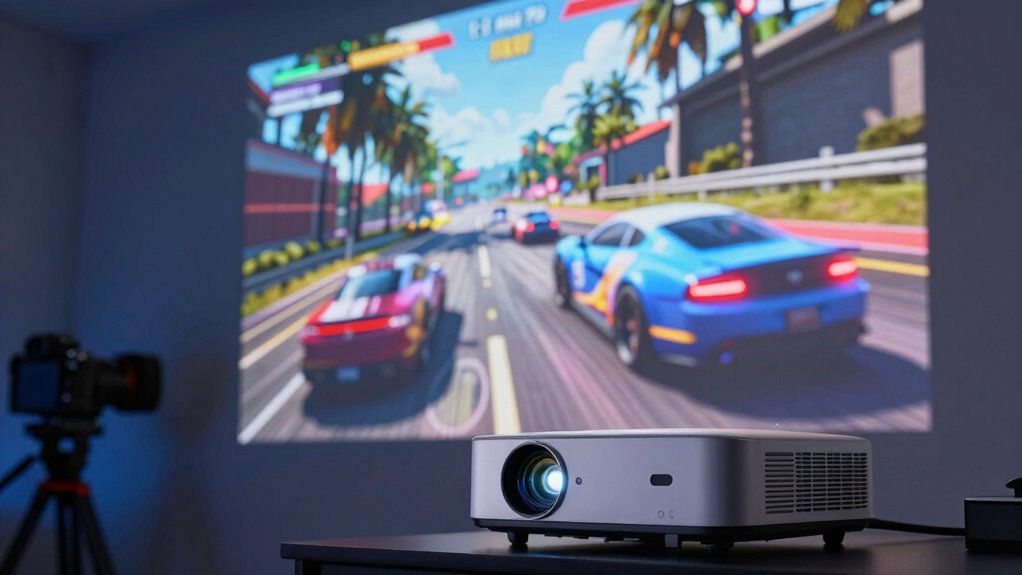
Choosing the right projector for gaming starts with understanding your specific needs and the environment where you’ll use it. First, consider screen resolution; a higher resolution, like 1080p or 4K, guarantees sharp visuals that make gameplay more immersive. Next, think about controller ergonomics—if you’re gaming for hours, a projector with low input lag and compatibility with your controllers is essential to avoid frustration. Brightness levels matter too, especially if you have ambient light, so opt for a projector with sufficient lumens. Portability can be a factor if you plan to move it around. Ultimately, check connectivity options like HDMI to ensure compatibility with your gaming console or PC. Additionally, understanding the input lag of a projector is crucial, as it directly impacts gameplay responsiveness and overall experience. These factors will help you choose a projector that enhances your gaming experience.
portable gaming projector with HDMI
As an affiliate, we earn on qualifying purchases.
As an affiliate, we earn on qualifying purchases.
Setting Up Your Projector for Low Input Lag
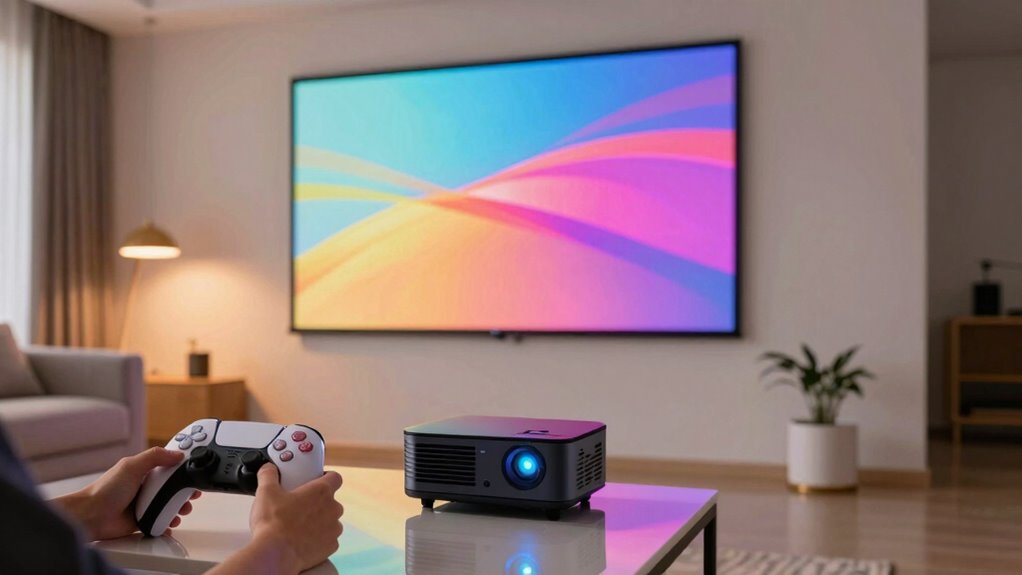
To achieve low input lag, proper setup of your projector is crucial. Begin by adjusting the screen resolution to match your gaming device’s output, ensuring sharp visuals without unnecessary processing delays. Use a high refresh rate setting if available, as this reduces latency. Voice control features can be handy for quick adjustments, but disable any voice command functions that might introduce delays during gameplay. Keep your projector in a well-lit environment to minimize image processing time, and ensure it’s positioned correctly for ideal focus and alignment. Turn off any motion smoothing or image enhancement settings, as these can add lag. Additionally, integrating natural lighting considerations into your setup can help maintain optimal image quality and response time. By fine-tuning these settings, you create a setup that responds swiftly to your inputs, enhancing your gaming experience.
gaming projector calibration tools
As an affiliate, we earn on qualifying purchases.
As an affiliate, we earn on qualifying purchases.
Optimizing Settings for Fast Response and Great Image Quality
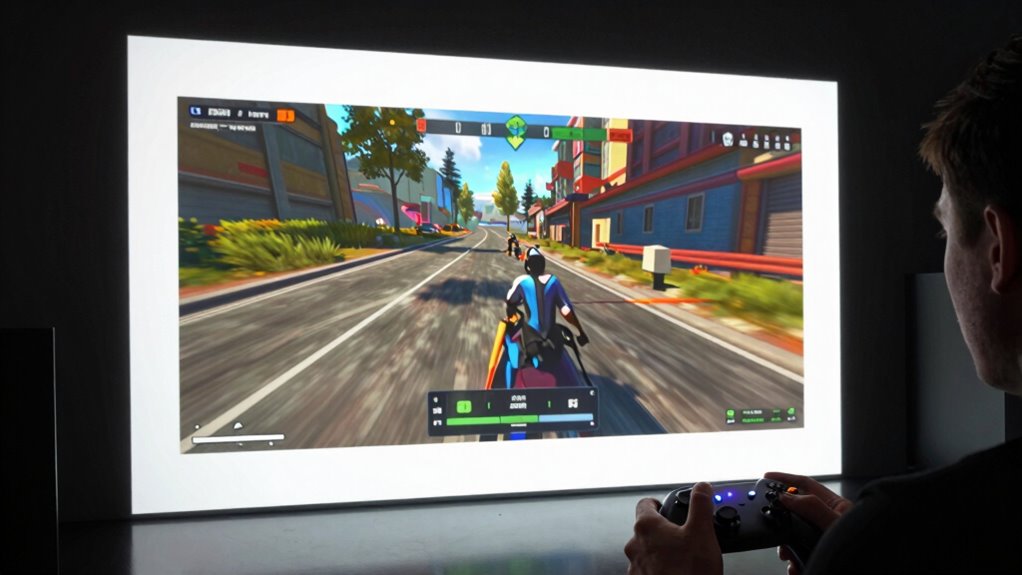
Optimizing your projector settings for both fast response and high-quality images involves balancing performance with visual clarity. To achieve this, start by enabling game mode, which reduces input lag and improves response times. Adjust the refresh rate and resolution to match your gaming device for smoother visuals. Focus on color accuracy by fine-tuning the color settings, ensuring vibrant yet natural images that don’t distort gameplay. Additionally, prioritize sound synchronization to keep audio aligned with visuals, preventing distracting delays. Turn off unnecessary image processing features like motion smoothing or sharpening, as they can introduce lag. By carefully adjusting these settings, you’ll enjoy sharp, responsive gameplay with excellent color fidelity and synchronized sound, making your projector gaming experience both immersive and seamless.
Troubleshooting Common Gaming Issues on Projectors
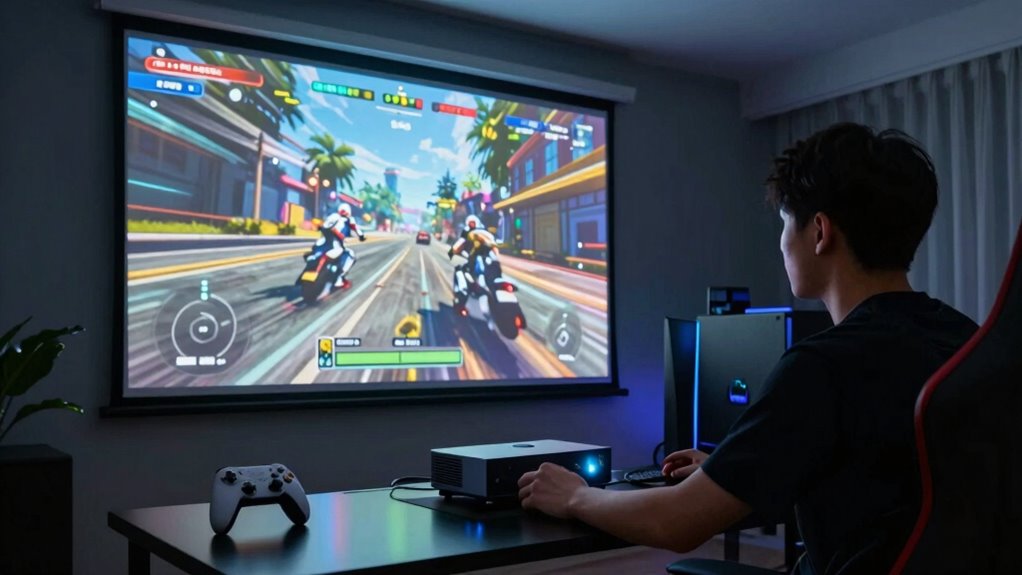
If you’re experiencing gaming issues on your projector, start by calibrating the settings to improve image quality and response. Reducing input lag can make gameplay smoother, so check your connection and display options. Managing ambient light also helps, as it minimizes glare and enhances visibility during intense gaming moments. Additionally, choosing a suitable gaming destination with optimal lighting conditions can significantly enhance your experience. Ensuring your projector is properly calibrated for low latency can further improve responsiveness during fast-paced games. Considering gaming-specific settings, such as enabling game modes, can also contribute to a better gaming experience.
Calibrating Projector Settings
Properly calibrating your projector settings can make a significant difference in your gaming experience. Focus on adjusting color accuracy to guarantee vibrant, true-to-life visuals that help you distinguish details in fast-paced scenes. If colors appear washed out or overly saturated, tweak the color temperature and saturation settings until they look natural. Next, check your screen resolution to match your gaming device’s output; mismatched resolution can cause blurriness or scaling issues. Use the projector’s menu to set the native resolution properly, ensuring sharp, clear images. Additionally, consider adjusting contrast and brightness for peak visibility without losing detail in dark or bright areas. Fine-tuning these settings creates a more immersive, visually accurate gaming environment and reduces distractions caused by poor calibration.
Reducing Input Lag
Reducing input lag is essential for a smooth gaming experience on a projector, especially since even slight delays can affect your response time and gameplay accuracy. To lower input lag, enable game mode or a dedicated low-latency setting on your projector, which minimizes processing delays. Adjusting settings for better color accuracy can also help, as overly aggressive image enhancements may increase lag. Keep sound synchronization in mind—using external speakers or a sound system can reduce audio lag that disrupts gameplay timing. Additionally, connect your gaming device directly via HDMI or DisplayPort to cut down on potential delays caused by wireless connections. By optimizing these factors, you’ll enjoy more responsive gameplay with minimal lag, making your gaming sessions smoother and more immersive.
Managing Ambient Light
Ambient light can considerably impact your gaming experience on a projector, making it harder to see details and diminishing image contrast. To improve visibility, aim for ambient darkness by closing curtains, turning off unnecessary lights, or using blackout blinds. This creates a darker environment that enhances the projector’s contrast and image clarity. Additionally, glare reduction is essential—position your projector away from windows and light sources that cause reflections. Consider using matte screens or anti-glare filters to minimize unwanted reflections. Managing ambient light isn’t about total darkness but controlling brightness levels to prevent washout. Techniques such as heat buffering can help maintain consistent image quality by preventing overheating of projector components. By reducing ambient light and glare, you’ll enjoy sharper images, better color accuracy, and an overall more immersive gaming experience.
Which Types of Projectors Are Best for Gaming?
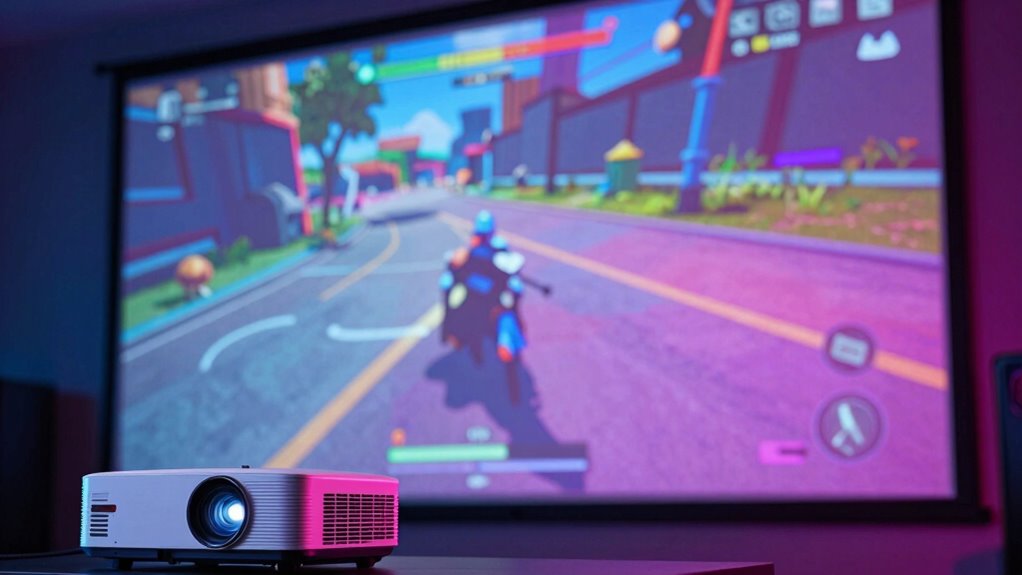
When selecting a projector for gaming, it’s crucial to focus on models that prioritize low input lag and fast response times. DLP projectors are usually the best choice because they offer lower latency, making gameplay smoother. Laser projectors also perform well, with minimal maintenance and longer-lasting brightness, ideal for gaming room design. Avoid older LCD models that tend to have higher input lag, which can hinder fast-paced gameplay. Consider projectors with high refresh rates to reduce motion blur. Proper projector upkeep, like regular cleaning and calibration, guarantees peak performance. When designing your gaming room, choose a projector that fits your space and provides quick setup without sacrificing image quality or response time. This way, your gaming experience remains seamless and immersive. Incorporating connected equipment and calibration tools can further enhance your setup for optimal performance, especially as modern wilderness sensing technology continues to improve display responsiveness. Additionally, understanding input lag and its impact on gameplay can help you make more informed choices when selecting the right projector. Recognizing the importance of AI Ethicist Jobs in tech development can also influence the ethical considerations of smart gaming systems and user privacy. Knowing how visual perception impacts gaming can guide you in selecting projectors with better color and contrast for a more immersive experience.
Can You Improve Visual Quality Without Increasing Input Delay?
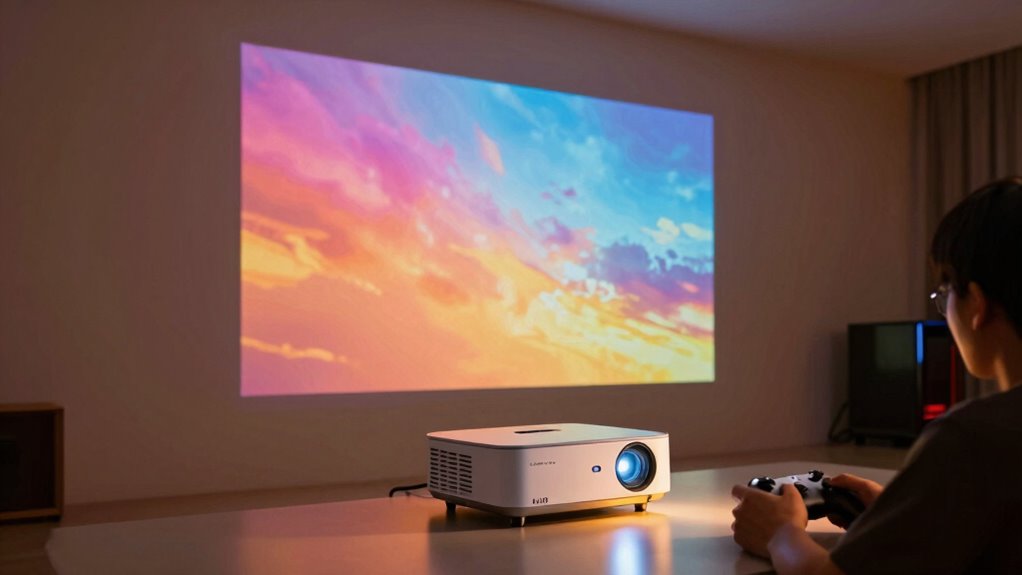
You can boost visual quality without adding input delay by utilizing advanced display technologies and fine-tuning your settings. Proper calibration guarantees sharp images and accurate colors, while optimized hardware reduces processing lag. Focusing on these aspects helps you enjoy better visuals without sacrificing responsiveness. Additionally, selecting the right airless paint spraying gear and techniques can minimize vibrations and latency, contributing to a smoother gaming experience. Incorporating low-latency displays can further enhance your gameplay by reducing the gap between your actions and on-screen responses.
Advanced Display Technologies
Advancements in display technology have made it possible to boost visual quality without sacrificing input responsiveness. Modern displays, including those used for virtual reality and cloud gaming, leverage features like faster refresh rates and low-latency panels to enhance clarity and detail. Virtual reality headsets now offer higher resolutions and smoother visuals, making gameplay more immersive without adding delay. Similarly, cloud gaming platforms use optimized streaming protocols that deliver high-quality images with minimal latency, ensuring your actions feel immediate. New display technologies also include HDR and local dimming, which improve contrast and color accuracy. These innovations allow you to enjoy stunning visuals while maintaining the quick responsiveness needed for competitive gaming, even on big screens or projectors.
Proper Calibration Techniques
Achieving ideal visual quality on a projector without adding input lag requires careful calibration. Start with color calibration to ensure accurate hues and contrast, enhancing immersion without slowing response times. Lens correction adjusts for distortion and keystone effects, sharpening images and improving clarity. Use the table below to guide your calibration process:
| Calibration Step | Purpose |
|---|---|
| Color calibration | Accurate colors and contrast |
| Lens correction | Correct distortion |
| Brightness adjustment | Perfect visibility |
| Contrast tuning | Deep blacks, bright whites |
| Sharpness setting | Clearer image details |
Focusing on these steps helps improve image quality while keeping input delay minimal. Proper calibration maximizes visual fidelity without taxing your system or increasing latency, especially when considering mount leveling kits to ensure the projector is properly aligned.
Optimized Hardware Settings
Optimizing your projector’s hardware settings can considerably enhance visual quality without adding noticeable input delay. Adjusting settings like color accuracy ensures vibrant, true-to-life visuals, making gameplay more immersive. Fine-tune contrast and brightness levels to improve clarity without sacrificing responsiveness. Many projectors offer features for sound synchronization, which helps keep audio aligned with visuals, creating a seamless gaming experience. Turning off unnecessary image processing options, such as motion smoothing or noise reduction, reduces input lag while maintaining image quality. Confirming your projector is set to the correct input mode and resolution also minimizes delay. Additionally, selecting the right vacuum model can help keep your gaming area clean and free of dust that might affect the projector’s performance. By carefully balancing these hardware adjustments, you can boost visual fidelity and sound accuracy, making gaming smoother and more engaging—without compromising your response times.
Final Tips for Getting the Most Out of Gaming on a Projector
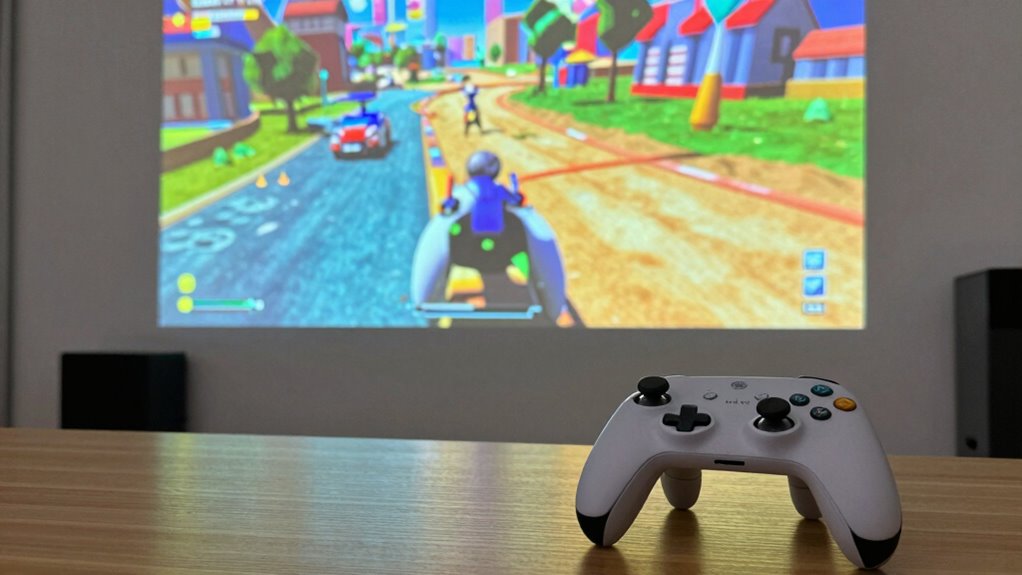
To get the most out of gaming on a projector, focus on minimizing input lag and making sure your setup is optimized for smooth performance. Keep your projector’s refresh rate high and use low-latency settings whenever possible. Consider integrating virtual reality or cloud gaming for diverse experiences without sacrificing performance. Virtual reality can add immersion, but verify your projector supports the necessary hardware and that latency remains low. Cloud gaming reduces the need for powerful local hardware, but a fast internet connection is vital to prevent lag and buffering. Use a dedicated gaming area with controlled lighting to reduce glare and improve image clarity. Regularly update your device firmware and software to keep everything running smoothly. These tips help you enjoy seamless, responsive gaming on your projector.
Frequently Asked Questions
What Are the Typical Input Lag Ranges for Gaming Projectors?
You’ll find that gaming projectors typically have input lag ranges from 16 to 30 milliseconds, especially when you optimize resolution settings and enable game mode. Keep in mind, audio latency can also affect your experience, so using low-latency audio setups helps guarantee sync. By choosing a projector with low input lag and adjusting settings properly, you can enjoy smooth gameplay without noticeable delays.
Do Different Game Genres Perform Better on Projectors?
Like a hero in a quest, you’ll find that fast-paced shooters and fighting games shine on projectors, thanks to low input lag and quick response times. RPGs and story-driven titles benefit from larger screens, enhancing immersion. While VR compatibility isn’t standard, sound quality can elevate your experience across genres. Overall, your choice depends on game style, but projectors can handle many genres if input lag stays low.
Can Projector Screen Size Affect Game Responsiveness?
Yes, your projector’s screen size can affect game responsiveness, especially if it impacts your perception of motion and timing. Larger screens might introduce slight delays, but maintaining high screen resolution helps keep visuals clear, reducing lag perception. Also, ensuring audio synchronization stays tight is vital; any delay between visuals and sound can disrupt your response times, making gameplay feel less responsive. Keep these factors in check for the best gaming experience.
How Does Ambient Lighting Impact Gaming on Projectors?
Imagine a gentle glow softly dancing around your gaming space, and you’ll notice that ambient lighting can influence your experience. Too much ambient light dims your projector’s brightness, making details harder to see, and can cause glare or washed-out images. To keep your game sharp and vibrant, control ambient light with curtains or dim lighting, and guarantee your projector’s brightness is sufficient to overcome the surroundings, keeping visuals crisp and immersive.
Are There Specific Cables or Connections That Reduce Input Delay?
Using high-quality HDMI cables that meet the latest standards, like HDMI 2.1, can help reduce input delay. Wireless adapters designed for gaming also minimize lag by providing a faster, more direct connection. You should avoid older or lower-spec cables, which might introduce delays. Ensuring your setup uses the right HDMI standards and reliable wireless adapters helps keep input lag low, giving you a smoother gaming experience on your projector.
Conclusion
With the right projector and settings, gaming can feel as immersive as sitting in a cozy cinema, your screen flickering with vibrant images and swift responses. Imagine your favorite game unfolding on a giant canvas, every move seamless and lag-free. When you optimize your setup, you turn a simple wall into an epic battleground or adventure landscape. So, gear up, tweak your projector, and get ready for a gaming experience that’s bigger, brighter, and more thrilling than ever.
Halloween Picks
halloween
As an affiliate, we earn on qualifying purchases.