

Open source software is code that you can access, modify, and share freely, fostering collaboration and innovation worldwide. It relies on community contributions, allowing developers to improve programs rapidly through transparency and collective effort. Licensing models define how you can use or adapt the software, ensuring clarity and legal safety. This open approach promotes faster problem-solving and resilient, adaptable tech solutions. Continue exploring to discover how open source shapes the future of software development and your role within it.
Key Takeaways
- Open source software is developed collaboratively by a community of contributors, promoting transparency and continuous improvement.
- It allows anyone to view, modify, and share the code, fostering innovation and rapid problem-solving.
- Licensing models define how open source code can be used, ensuring legal clarity and protecting contributor rights.
- Community involvement lowers barriers for new developers and enhances software security through inspection.
- Its growth influences the future of software development, emphasizing openness, collaboration, and resilient technology.
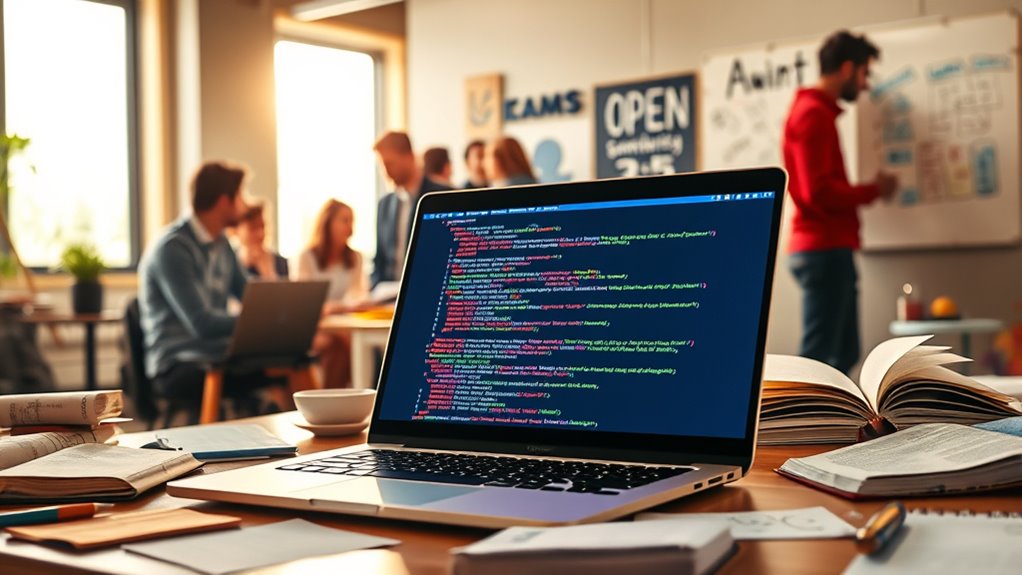
Have you ever wondered how some of the most popular software programs are developed and improved so quickly? The secret often lies in open source software, which relies heavily on community collaboration. Unlike proprietary software, where a single company controls the code, open source projects invite developers from around the world to contribute, review, and refine the code openly. This collaborative approach accelerates innovation, as diverse perspectives and skills come together to solve problems faster and create more robust programs. When you participate in or use open source software, you’re tapping into a global community that’s constantly working to improve it, fixing bugs, adding features, and ensuring security. This collective effort makes open source projects more adaptable and resilient over time.
Another essential aspect of open source software is the licensing models that govern how the code is used, modified, and shared. These licenses are designed to promote openness while setting clear rules for collaboration. For example, licenses like the GNU General Public License (GPL) require that any derivative work also remains open source, ensuring that improvements stay accessible to everyone. Meanwhile, permissive licenses like the MIT License or Apache License allow you more freedom to incorporate open source code into proprietary projects, as long as you include proper attribution. Understanding these licensing models helps you decide how to legally use open source code, whether you’re developing your own software or simply customizing existing projects. They strike a balance between encouraging innovation and protecting the rights of contributors.
Community collaboration and licensing models are intertwined pillars that make open source software both powerful and sustainable. By fostering an environment where anyone can participate, open source projects thrive on shared knowledge and collective effort. It is also important to understand the asset division laws that can impact open source contributions in legal disputes, as they may affect intellectual property rights and distribution. This openness lowers barriers to entry, enabling newcomers to learn from experienced developers and contribute their skills. It also cultivates transparency, as anyone can inspect the code for security flaws or inefficiencies, leading to safer and more reliable software. Licensing models clarify the legal landscape, ensuring that everyone knows their rights and responsibilities, which encourages ongoing participation and trust. Together, these elements create a dynamic ecosystem where software can evolve rapidly without the need for centralized control or costly licensing fees. This is why open source software continues to grow in popularity and influence, shaping the future of how we develop and share technology.
Frequently Asked Questions
How Does Open Source Licensing Differ From Proprietary Licenses?
Open source licensing offers more license flexibility and grants you broader distribution rights compared to proprietary licenses. With open source, you can modify, share, and distribute software freely, as long as you follow the license terms. Proprietary licenses, on the other hand, restrict these rights, limiting how you can use and distribute the software. This openness fosters collaboration and innovation, while proprietary licenses prioritize control and exclusivity.
Can Open Source Software Be Used for Commercial Purposes?
Imagine you’re in a sci-fi movie where open source software is the hero’s toolkit. Yes, you can use it for commercial adoption, thanks to its licensing flexibility. Open source licenses often allow you to modify, distribute, and even sell the software. Just make sure to follow the license terms, and you’re good to go. This makes open source a powerful option for businesses looking to innovate without restrictions.
What Are the Main Security Concerns With Open Source Software?
You should be aware that security concerns with open source software include code vulnerabilities that hackers can exploit. These vulnerabilities can sometimes go unnoticed during development. Additionally, dependency management becomes tricky as outdated or insecure dependencies may introduce risks. To stay safe, regularly update your software, monitor vulnerabilities, and audit dependencies to minimize threats and guarantee your open source tools remain secure.
How Can I Contribute to an Open Source Project?
Jump into open source by exploring project repositories and reading their contribution guidelines. You can start by fixing bugs, adding features, or improving documentation. Engage with community collaboration through discussion forums and pull requests. This active participation helps the project grow and benefits everyone involved. Remember, following contribution guidelines guarantees your work aligns with the project’s standards, making it easier for maintainers to review and accept your contributions.
What Are the Most Popular Open Source Software Applications Today?
You’ll find that popular open source applications like Linux, Firefox, and WordPress thrive thanks to active open source communities. These projects often use diverse licensing models such as MIT or GPL, which influence how you can use and modify the software. By engaging with these communities, you can contribute, learn, and help improve tools widely used across the tech world. Your participation keeps open source vibrant and evolving.
Conclusion
As you explore open source software, imagine stepping into a vast, collaborative landscape where ideas flow freely like a rushing river, fueling innovation and connection. By embracing this open world, you become part of a vibrant ecosystem, shaping tools that evolve with every contribution. It’s more than code — it’s a shared canvas of creativity, empowering you to build, improve, and imagine a future where technology serves everyone’s needs.