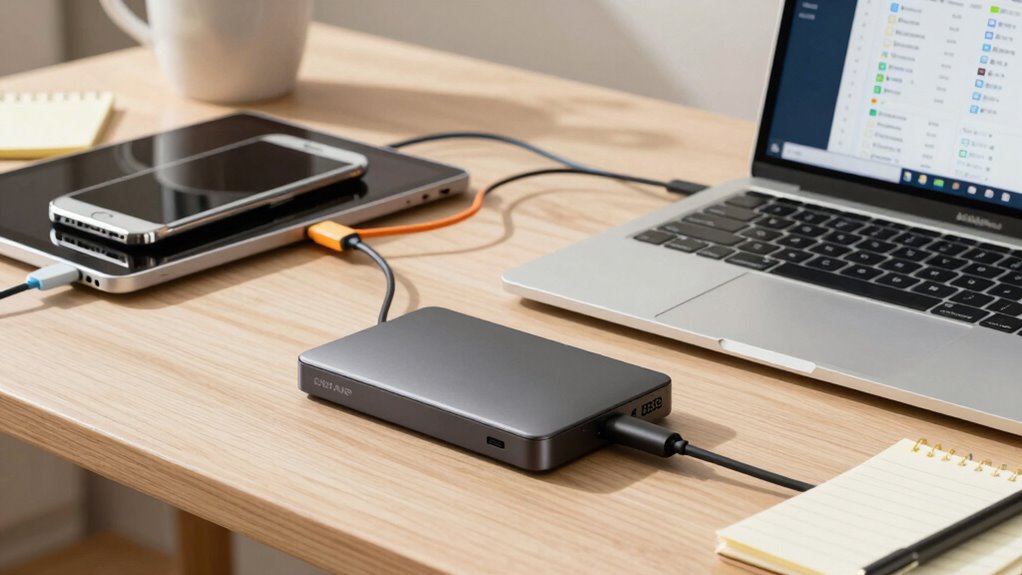

Relying solely on an external drive isn’t enough if you work across multiple devices because it creates a single point of failure and leaves your data vulnerable to physical damage, theft, or hardware failure. External drives are not always secure or automatically updated, making it risky for ongoing use. To keep your data safe and accessible everywhere, you need an extensive backup plan that includes cloud storage and automation. Keep exploring to learn how to build a resilient data backup strategy.

Get hardware and tech essentials delivered free with Prime
- Fast, free delivery on millions of items
- Prime Video, Amazon Music and more included
- Member-only deals all year
Key Takeaways
- External drives are vulnerable to physical damage, theft, or loss, risking total data loss.
- Relying solely on one external drive creates a single point of failure.
- Manual backups can be missed or become outdated, compromising data currency.
- External drives lack automatic synchronization across multiple devices.
- Combining cloud storage with external drives enhances data redundancy and security.
external hard drive with encryption
As an affiliate, we earn on qualifying purchases.
As an affiliate, we earn on qualifying purchases.
Why Relying Only on External Drives Is Risky for Multi-Device Work?
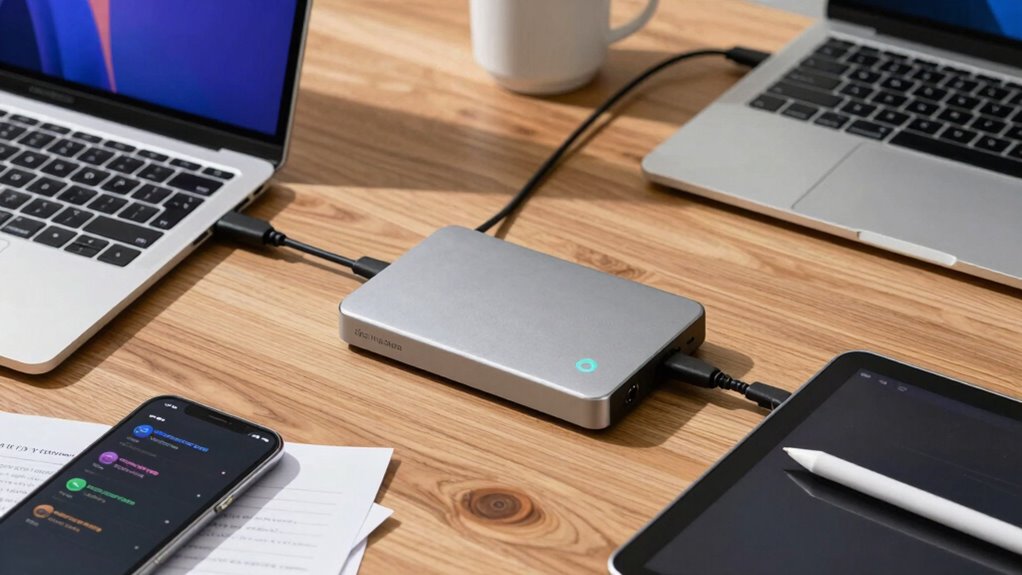
Relying solely on external drives for your backups is risky, especially if you work across multiple devices. External drives can be physically damaged, lost, or stolen, risking valuable data. Without proper data encryption, sensitive information becomes vulnerable if the drive falls into the wrong hands. Additionally, hardware durability varies; some drives may fail unexpectedly due to manufacturing defects or wear and tear. Relying on a single external drive creates a single point of failure, leaving your data unprotected if it malfunctions. Using multiple devices or cloud solutions alongside external drives guarantees redundancy and security. This approach minimizes risks linked to hardware durability issues and helps keep your data safe across all your devices. **hardware durability is a critical factor to consider when relying on external drives for backups.**
cloud backup service subscription
As an affiliate, we earn on qualifying purchases.
As an affiliate, we earn on qualifying purchases.
What Are the Limitations of External Backup Solutions?

While external drives are popular for backups, they come with notable limitations that can compromise your data safety. Physical vulnerabilities pose a major risk—you could lose data if the drive is damaged, stolen, or corrupted. Encryption protocols can help protect your data, but not all external drives offer strong security features, leaving sensitive information exposed. Additionally, external drives require manual updates, making it easy to forget backups or miss important files. They also lack redundancy, so a single failure can result in total data loss. Relying solely on external drives doesn’t account for device compatibility issues or environmental risks like fire or water damage. To provide thorough protection, you need to combine external backups with other strategies that address these vulnerabilities. Understanding the limitations of external backup solutions can help you develop a more resilient data protection plan. Incorporating cloud storage options can mitigate some risks associated with physical damage or theft, offering a more comprehensive backup approach. Ensuring your backup strategy includes redundant copies across multiple platforms can further safeguard your critical data against unforeseen failures. Additionally, understanding the Physical vulnerabilities of external drives emphasizes the importance of diversified backup methods.
automatic backup software for multiple devices
As an affiliate, we earn on qualifying purchases.
As an affiliate, we earn on qualifying purchases.
How Cloud Storage Keeps Your Data Safe and Accessible Across Devices

Cloud storage keeps your data safe and accessible across devices by automatically syncing files to secure servers in real time. This process guarantees you always have the latest version, no matter which device you’re using. Strong encryption protocols protect your data both during upload and at rest, preventing unauthorized access. Additionally, providers implement data redundancy by storing multiple copies of your files across different servers and locations. This setup safeguards against hardware failures or data center issues, ensuring your information remains available and intact. With cloud storage, you don’t have to worry about manual backups or losing access when switching devices. Your files stay synchronized and protected, allowing seamless work or access from anywhere, at any time. data redundancy further enhances your data’s resilience against hardware failures, ensuring natural disaster preparedness.
multi-device data synchronization tools
As an affiliate, we earn on qualifying purchases.
As an affiliate, we earn on qualifying purchases.
How to Automate Backup and Sync Processes on Multiple Devices
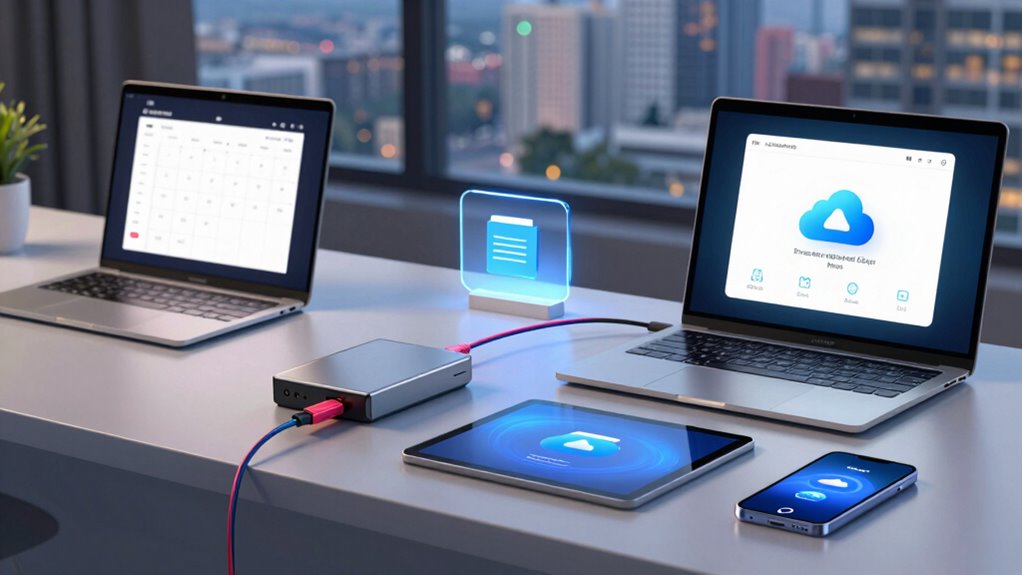
Automating backup and sync processes guarantees your data stays current across all your devices without manual effort. To do this effectively, set up cloud services that support encryption protocols to protect your data during transfer and storage. Manage user access carefully, making certain only authorized devices or users can sync sensitive files. Use automation tools like scheduled backups or real-time sync features to keep everything up to date seamlessly. Regularly review permissions and encryption settings for added security. Additionally, consider these strategies:
- Enable two-factor authentication for cloud services
- Use device-specific encryption keys
- Schedule automatic backups during off-peak hours
- Limit user access to sensitive folders
- Monitor sync logs for unauthorized activity
- Implement filter sizing/flow considerations to optimize data transfer efficiency across your network
This approach guarantees your data remains secure, accessible, and synchronized effortlessly across all your devices.
Creating a Complete Backup Strategy for Your Cross-Device Workflow

To guarantee your cross-device workflow is reliably protected, you need a thorough backup strategy that covers all your data sources and access points. Start by implementing offline encryption to secure sensitive files without relying solely on cloud services. Use hardware with high durability to prevent physical damage during daily use or travel. Regularly back up data to multiple locations, such as external drives and cloud services, ensuring redundancy. Consider the following table for clarity:
| Backup Component | Key Considerations |
|---|---|
| Offline encryption | Protects data from unauthorized access |
| Hardware durability | Ensures longevity and reliability |
| Cloud backups | Provides remote redundancy |
| Local backups | Fast recovery, accessible anytime |
| Automated sync | Keeps data current across devices |
Implementing comprehensive backup strategies helps minimize risks and keeps your workflow resilient, especially when considering the importance of data security in today’s digital environment. Additionally, understanding the horsepower of electric dirt bikes can inform you about the performance capabilities of your devices, which is crucial for ensuring reliable operation across different environments. Recognizing the variety of backup options available allows you to tailor your approach to best suit your specific needs.
Frequently Asked Questions
How Often Should I Back up My Data Across Multiple Devices?
You should back up your data regularly, ideally daily or weekly, especially if you work across multiple devices. Use cloud storage for automatic backups and guarantee data redundancy by saving copies in different locations. Frequent backups prevent data loss from device failure or accidental deletion, keeping your information safe and accessible. Consistent backup routines help maintain data integrity and ensure you can recover files quickly when needed.
What Are the Best Practices for Managing Multiple Backup Versions?
Beware the chaos of unmanaged backups—without version control, you risk losing critical data. To stay safe, regularly label and organize backup versions, keeping track of changes over time. Use cloud integration for seamless access and automatic updates across devices. This way, you can restore specific versions if needed, avoiding confusion and ensuring you always have the right backup at your fingertips. Stay organized, stay protected.
Can External Drives Be Encrypted for Added Security?
Yes, external drives can be encrypted for added security. You can use encryption algorithms like AES (Advanced Encryption Standard) to protect your data, making it unreadable without the key. Additionally, enabling password protection adds an extra layer of security. By combining strong encryption algorithms with password protection, you guarantee that your sensitive files stay safe even if your external drive falls into the wrong hands.
How Do I Recover Data From a Corrupt External Drive?
If your external drive is corrupt, start with data recovery tools like Recuva or EaseUS Data Recovery. Connect the drive to your computer, run the software, and follow prompts to scan for recoverable files. If that doesn’t work, consider drive repair options like using disk utility tools or professional data recovery services. Always avoid writing new data to prevent overwriting, and back up your data regularly to prevent future issues.
What Tools Can Help Synchronize Data Effortlessly Across Devices?
You can use cloud storage services like Dropbox, Google Drive, or OneDrive to effortlessly sync data across devices. Automation tools such as SyncThing or Resilio Sync also help keep files updated in real-time without manual effort. These tools automate the process, ensuring your data stays consistent across all your devices, making it easier to access and manage files wherever you are. Just set them up once, and let them do the work.
Conclusion
Remember, your data is like a ship sailing through unpredictable waters. Relying solely on external drives leaves it vulnerable to storms—loss, theft, or damage. Embrace cloud storage as your lighthouse, guiding your data safely across all your devices. Automate your backups like a steady crew, ensuring your ship stays afloat no matter the tide. With a solid, multi-layered strategy, you’ll navigate the digital seas confidently, knowing your treasures are always protected.
Fall Picks
fall essentials
As an affiliate, we earn on qualifying purchases.