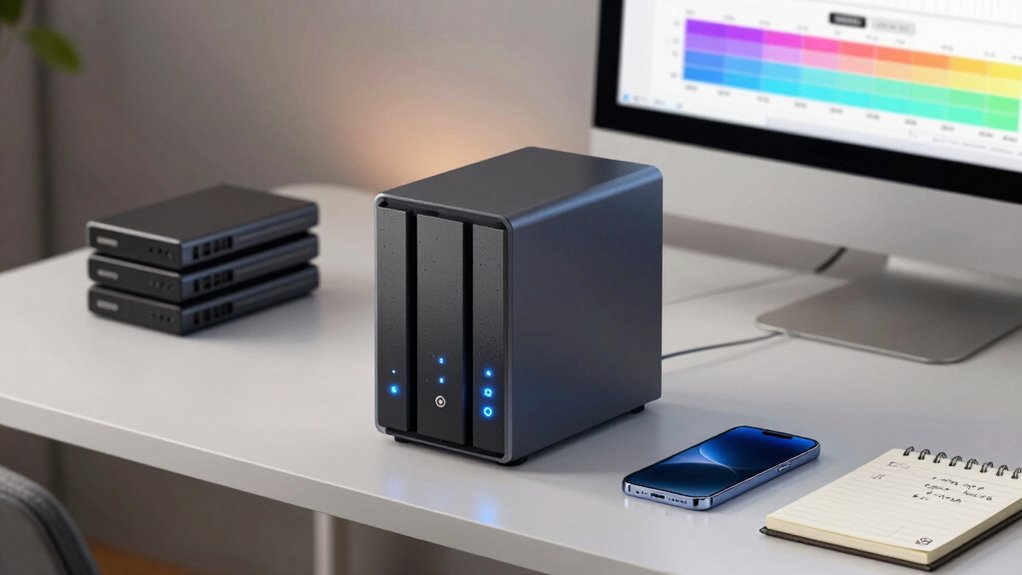

Most people don’t need the biggest NAS; instead, they need a smarter backup plan. Focusing solely on storage size can lead to wasted money and overlooked security. A better approach involves evaluating your current data, choosing the right backup methods—like cloud and local storage—and regularly testing your system. Effective backups protect your important files and save you time during recovery. Keep exploring to learn simple ways to build a more reliable, cost-effective backup strategy.

Get hardware and tech essentials delivered free with Prime
- Fast, free delivery on millions of items
- Prime Video, Amazon Music and more included
- Member-only deals all year
Key Takeaways
- Having a large NAS doesn’t guarantee data safety without proper backup and redundancy strategies.
- Focus on effective backup plans, including regular testing, encryption, and user permissions, rather than just storage capacity.
- Combining cloud and local backups offers better security and accessibility than relying solely on a massive NAS.
- Routine backup verification and updates are essential to ensure data integrity and prevent data loss.
- Cost-effective, smaller backup solutions can provide reliable data protection without the expense of the largest NAS.
best external hard drives for backup
As an affiliate, we earn on qualifying purchases.
As an affiliate, we earn on qualifying purchases.
How to Determine Your Real Storage Needs Before Buying a NAS

Before investing in a NAS, it’s essential to accurately assess your storage needs. Start by estimating your current storage capacity requirements based on your data, such as photos, videos, and documents. Consider future growth, too—your storage needs will likely increase over time. Data compression can help maximize available space, allowing you to store more without upgrading immediately. Evaluate how much space each file type consumes and whether you can compress certain data to save room. Avoid buying a NAS with excessive capacity that you won’t use soon, as this can be a waste of money. Instead, choose a model that fits your current needs while leaving room for growth. This balanced approach saves money and prevents unnecessary upgrades later. Additionally, understanding your digital content and research habits can help tailor your storage solution more effectively. Incorporating insights into projector technology can also inform choices about multimedia storage, especially if you plan to use your NAS for multimedia streaming or home theater setups. Considering your overall data management habits and how they evolve over time will help ensure your storage solution remains functional and efficient.
cloud backup service subscriptions
As an affiliate, we earn on qualifying purchases.
As an affiliate, we earn on qualifying purchases.
Why Backup Strategies Matter More Than Just Having a Big NAS
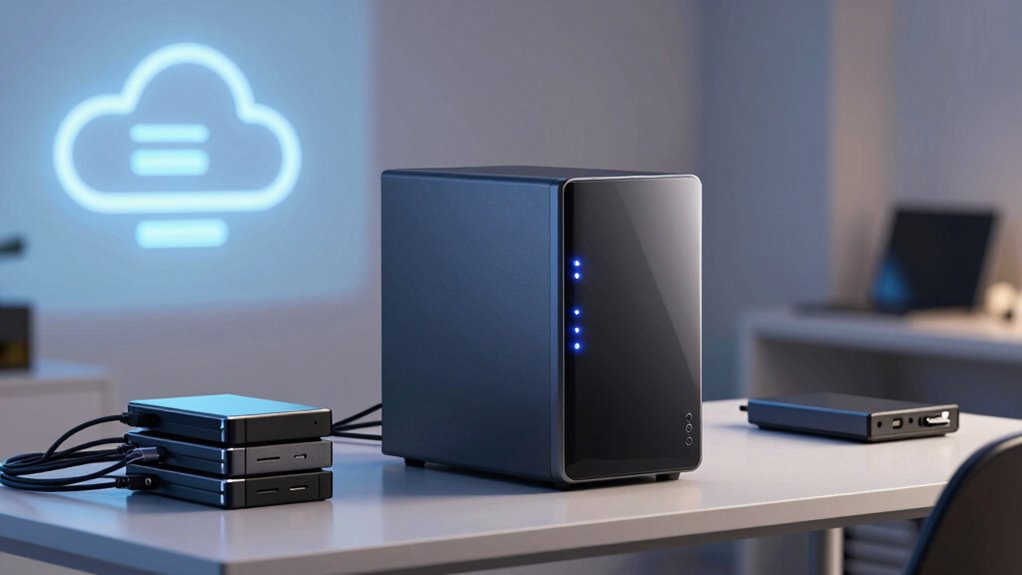
Having a large NAS might seem like a straightforward way to safeguard your data, but size alone doesn’t guarantee safety. A solid backup strategy focuses on storage scalability, ensuring your data remains protected as your needs grow. Relying solely on a big NAS can lead to vulnerabilities if you don’t implement regular backups or fail to update your storage plan. Data encryption is essential to protect sensitive information from unauthorized access, especially if your NAS is connected to the internet. A well-thought-out backup strategy prioritizes data integrity, security, and flexibility. It’s not just about having space; it’s about making sure your data stays safe, accessible, and recoverable in any situation. Proper data management and planning are crucial to adapt to evolving threats and storage requirements. Without this, even the biggest NAS can leave your data exposed and vulnerable. Optical drives and enterprise USB backups can serve as additional layers of redundancy, further strengthening your overall backup plan.
data encryption software for backups
As an affiliate, we earn on qualifying purchases.
As an affiliate, we earn on qualifying purchases.
Common Mistakes to Avoid When Using Large NAS Devices for Backup
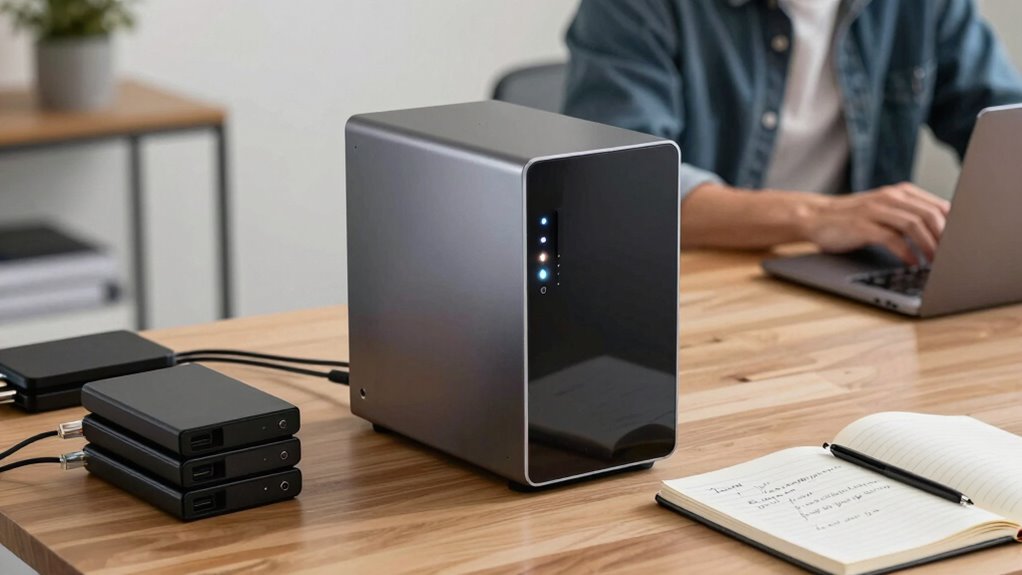
Relying solely on a large NAS for storage can give you a false sense of security. You might overlook essential redundancy measures and skip regular testing of your backups. These mistakes can leave your data vulnerable, even with ample storage space.
Overreliance on Storage Size
Many people assume that a larger NAS will automatically solve their storage needs, but this mindset can lead to dangerous complacency. Storage myths often encourage you to think bigger is always better, but capacity planning is more than just adding more space. Relying solely on a big NAS can make you overlook the importance of efficient data management and backup strategies. You might think that increasing storage will handle everything, but without proper organization, it becomes difficult to find what you need and maintain data integrity. Bigger isn’t always better if you don’t address how you store, categorize, and protect your data. Focus on understanding your actual needs first—then choose the right size—rather than assuming more capacity automatically equals a better backup solution.
Neglecting Redundancy Measures
Even with a large NAS, neglecting redundancy measures can leave your data vulnerable to loss. Relying solely on one device isn’t enough; you need proper data redundancy to protect against hardware failures or corruption. Implement RAID configurations or keep backups on multiple storage solutions to guarantee your data remains safe. Simply assuming your NAS has built-in protection isn’t enough—regular backup verification is essential to confirm your backups are complete and functional. Without redundancy, a single disk failure can result in significant data loss. Take proactive steps to verify that your backup copies are intact and retrievable. This way, you reduce the risk of losing critical data and ensure your backup strategy is truly reliable, not just dependent on a single device.
Ignoring Regular Testing
Neglecting to regularly test your backups can give you a false sense of security, but it’s a mistake that can have serious consequences. Without routine testing, you won’t know if your backup data remains accessible and intact when needed. This oversight diminishes user engagement because you might assume your data is safe, yet discover issues only during a crisis. Ensuring content relevance means verifying that restored files are complete and usable, not just backed up. Regular testing helps identify problems with your backup process early, saving you from data loss or corruption. It also keeps your backup strategy aligned with evolving data and system changes. By actively testing, you build confidence in your backup plan, making sure it truly serves its purpose when emergencies strike.
As an affiliate, we earn on qualifying purchases.
Tips for Building a Smarter, More Reliable Backup Plan
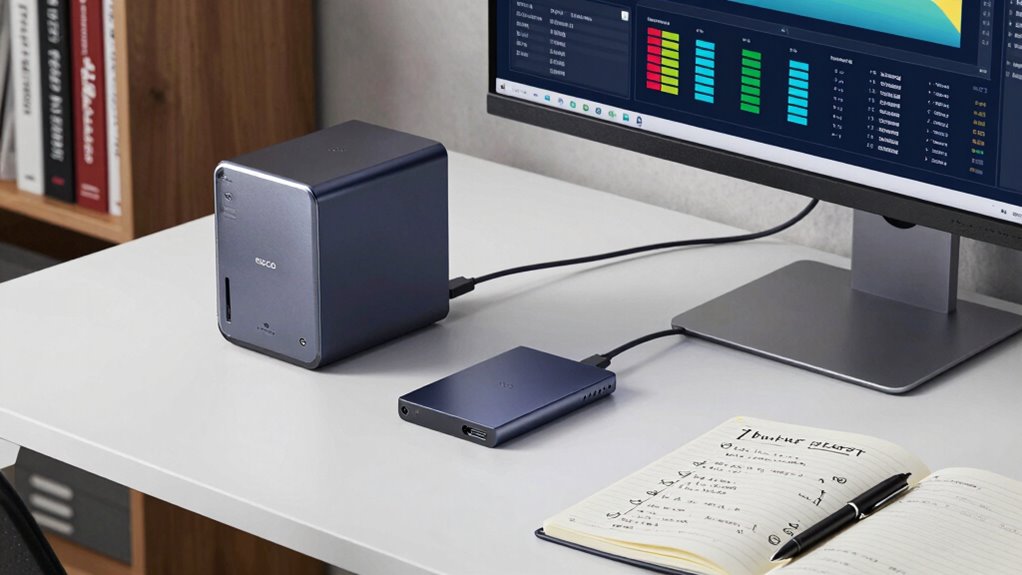
Creating a smarter, more reliable backup plan starts with understanding that simplicity and consistency are key. To protect your data effectively, focus on implementing strong data encryption to keep sensitive information secure during backups and transfers. Additionally, set clear user permissions to control who can access, modify, or restore your backups. Limiting access reduces the risk of accidental or malicious data loss. Use straightforward backup schedules to maintain regularity—daily or weekly, depending on your needs—and stick to them. Automate where possible to eliminate human error. Regularly review and update permissions and encryption protocols to keep pace with evolving security threats. Incorporating proper DIY tools can also streamline your backup process and enhance safety. Being aware of accessibility features can help ensure your backup plans are inclusive and adaptable to different needs. Proper security measures are essential for safeguarding your backups from potential breaches. Additionally, understanding the importance of data integrity helps ensure your backups remain accurate and reliable over time. Employing monitoring systems can further help identify issues early and maintain backup reliability. By keeping your backup process simple, consistent, and secure, you create a dependable safety net for your data.
Which Backup Method Works Best for Your Data?
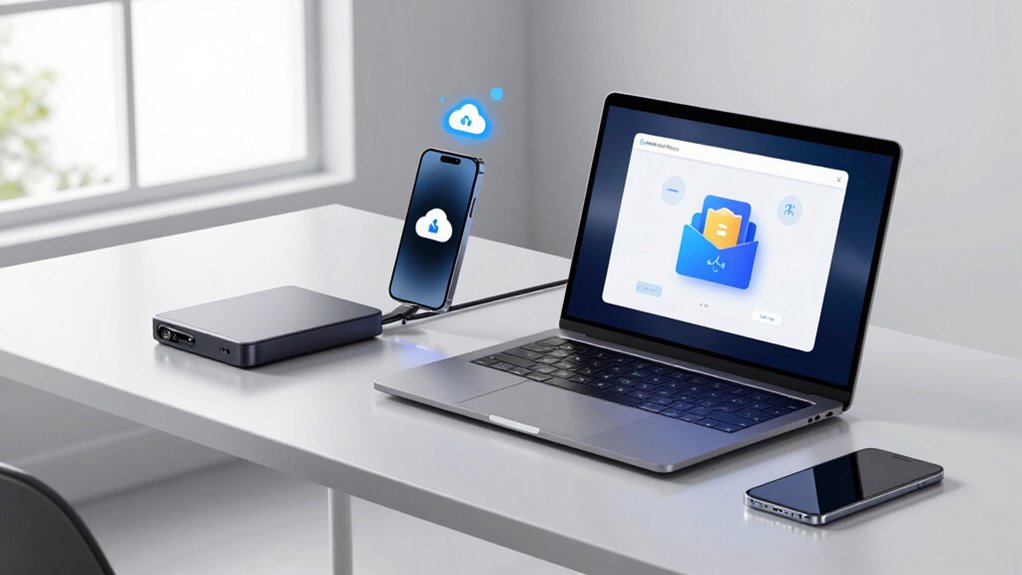
Choosing the right backup method depends on your data needs and priorities. Cloud backups offer convenience and off-site security, while local storage provides quick access and control. Understanding the advantages of each helps you decide whether remote or on-site solutions work best for you.
Cloud Backup Advantages
Have you considered how cloud backup can simplify and strengthen your data protection strategy? Cloud storage offers a secure, off-site solution that’s easy to scale and access. It automatically handles data encryption, ensuring your files stay private during transfer and storage. This reduces the risk of data loss from hardware failure or theft. Additionally, cloud backup provides quick recovery options, so you can restore files swiftly after an incident. Understanding media literacy can also help you evaluate the trustworthiness of online backup services.
Local Versus Remote Storage
Deciding between local and remote storage depends on your specific needs and priorities. Local storage offers quick access, full control, and straightforward data encryption, making it ideal for immediate retrieval and sensitive information. However, it may lack storage scalability unless you invest in additional hardware. Remote storage, like cloud solutions, provides flexible scalability and off-site protection, which is great for disaster recovery. While remote backups often include strong data encryption, you should verify the security measures they use. Consider how much control you want over your backups versus convenience. If your data needs frequent access and tight security, local storage might suit you better. For larger data sets or off-site protection, remote storage offers unlimited scalability and peace of mind—just guarantee your backups are securely encrypted. Additionally, understanding storage scalability can help you choose the most suitable backup method for your future data growth. It’s also important to evaluate the privacy policies of remote providers to ensure your data remains protected, especially as backups become more integral to your data management strategy.
How to Save Money by Implementing Redundancy Smartly

Smart redundancy isn’t about buying the biggest, most expensive NAS; it’s about deploying multiple, smaller backup solutions strategically. By spreading your data across several devices, you reduce costs while maintaining reliability. Focus on securing your backups with data encryption to protect sensitive information from unauthorized access. Carefully control user access, giving only necessary permissions to prevent accidental or malicious data loss. Instead of investing in a single large system, allocate funds toward reliable, well-maintained devices that fit your needs. Regularly review your backup plan to guarantee it’s efficient and cost-effective. Incorporating redundant storage strategies ensures your data remains accessible even if one device fails. This approach allows you to save money while enhancing your data security and access control, ultimately creating a smarter, more resilient backup setup without overspending.
How Cloud Backup Fits Into Your Data Protection Strategy

Cloud backup plays a crucial role in creating an all-encompassing data protection strategy because it offers off-site storage that safeguards your files from local disasters, theft, or hardware failures. It complements your existing backup methods by providing an extra layer of security. Cloud security measures, like data encryption, guarantee your files stay private during transfer and storage. This ensures your data is protected from cyber threats, which are constantly evolving. Understanding the key aspects of cloud backup can help you choose a dependable provider and avoid vulnerabilities. Additionally, understanding cloud security measures ensures your data remains safe from emerging cyber threats.
How to Ensure Fast and Reliable Data Recovery When You Need It

Ensuring fast and reliable data recovery is essential for minimizing downtime and maintaining business continuity. Start by encrypting your backup data to protect it from unauthorized access during recovery. This ensures that sensitive information remains secure, even if the backup falls into the wrong hands. Additionally, control user access carefully, granting only necessary permissions to avoid accidental data deletion or corruption. Use role-based access to streamline recovery processes and prevent delays caused by permission issues. Regularly update access controls to reflect changes in your team. Incorporating time symbolism into your backup strategy can help you better anticipate and manage recovery timelines. To optimize overall recovery efficiency, consider filter sizing and flow principles to ensure your backup systems are configured for peak performance. Understanding the importance of security features in smart office gear can also help you implement comprehensive protections for your data. Combining data encryption with strict user access management helps you recover quickly and securely when needed. This approach minimizes risks, speeds up recovery, and keeps your data safe throughout the process.
Easy Steps to Test and Maintain Your Backup System Regularly
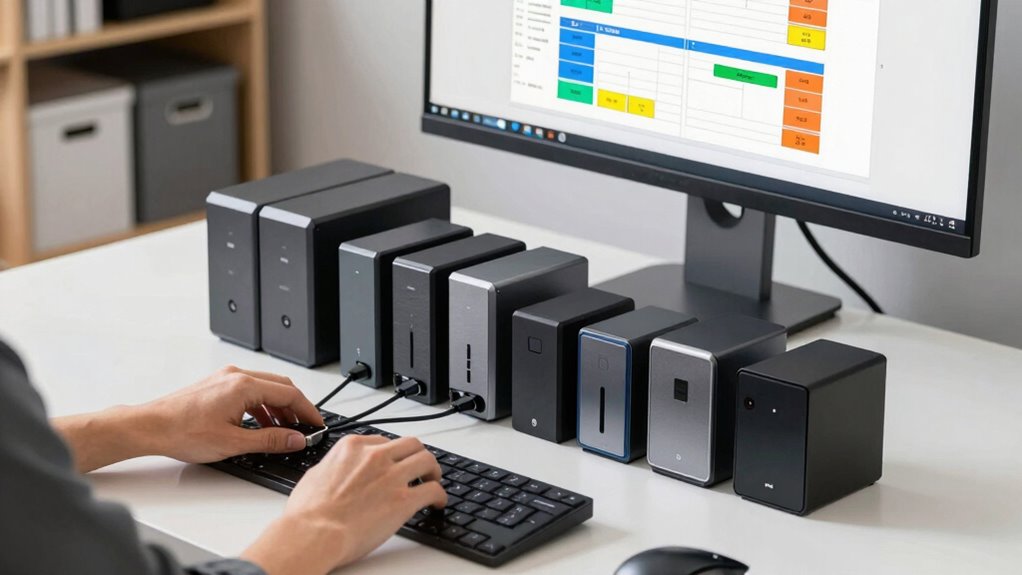
How often do you verify that your backup system actually works when you need it most? Regular testing is essential. Start by restoring a small sample of files to confirm data integrity and that your backup process functions correctly. Check encryption protocols to guarantee your data remains secure during transfer and storage. Review user access permissions to prevent unauthorized recovery attempts or accidental data exposure. Schedule routine tests—monthly or quarterly—to catch issues early. Keep documentation updated, noting any changes to backup procedures or access controls. Regular maintenance also involves updating software and firmware to patch vulnerabilities. Additionally, understanding affiliate disclosure and privacy policies helps ensure your backup practices align with security standards. Being aware of digital security measures can further strengthen your backup strategy. Incorporate website performance metrics to monitor your backup process’s effectiveness over time. By consistently validating your backups, you guarantee quick recovery, data security, and peace of mind when disaster strikes.
Frequently Asked Questions
How Often Should I Update My Backup Plan?
You should update your backup plan regularly, ideally monthly or whenever you make significant data changes. For backup frequency, aim for daily backups if you frequently add or modify files. Incorporate data redundancy by keeping copies in different locations or devices. Regular updates guarantee your backups stay current, protecting against data loss from hardware failure, theft, or other unforeseen issues. Staying proactive keeps your data safe and minimizes recovery time.
What Are the Best Tools for Automated Backups?
Imagine it’s the year 2000, and backup automation feels like sci-fi. You should try tools like Acronis True Image, Macrium Reflect, or EaseUS Todo Backup for automated backups. Cloud storage options like Backblaze, Carbonite, or Google Drive make syncing seamless. These tools help you set schedules, so your data backs up automatically, keeping your files safe without manual effort. It’s the smart way to protect your digital life.
How Do I Secure My Backup Data From Cyber Threats?
To safeguard your backup data from cyber threats, you should use strong encryption protocols both during transfer and storage. Regularly update your security measures, including firewalls and anti-malware tools. Implement a disaster recovery plan to guarantee quick restoration if your data is compromised. Also, consider multi-factor authentication and offline backups to add extra layers of protection, keeping your data safe from hackers and ransomware.
Can a NAS Replace Cloud Backup Entirely?
Think of a NAS as a sturdy lighthouse guiding your data safely to shore, but it can’t always substitute the vast ocean of cloud backup. While a NAS with cloud integration offers data redundancy and quick access, it’s not a complete shield against all threats. Relying solely on a NAS leaves gaps; combining it with cloud backup ensures your data’s resilience against cyber threats and hardware failures.
What Are Signs My Current Backup Strategy Is Failing?
You’ll notice your backup strategy is failing if data encryption isn’t consistent, or if recovery times are longer than expected. Frequent backup errors, missing files, or incomplete disaster recovery tests also signal issues. If your backups don’t include encryption or can’t restore data quickly after a disaster, it’s time to reevaluate. A reliable backup plan should guarantee data security, enable swift disaster recovery, and verify backups regularly to prevent failures.
Conclusion
Remember, over 60% of data loss incidents happen due to poor backup plans, not hardware failure. Instead of rushing to buy the largest NAS, focus on creating a smarter, more reliable backup strategy tailored to your needs. By understanding your storage requirements and implementing effective redundancy, you’ll save money and ensure quick recovery when it matters most. A well-designed backup plan is your best defense against unexpected data loss—don’t overlook its importance.
Halloween Picks
halloween
As an affiliate, we earn on qualifying purchases.