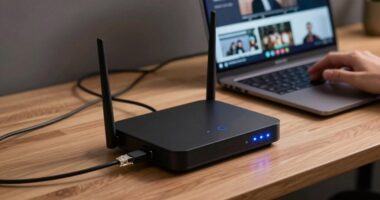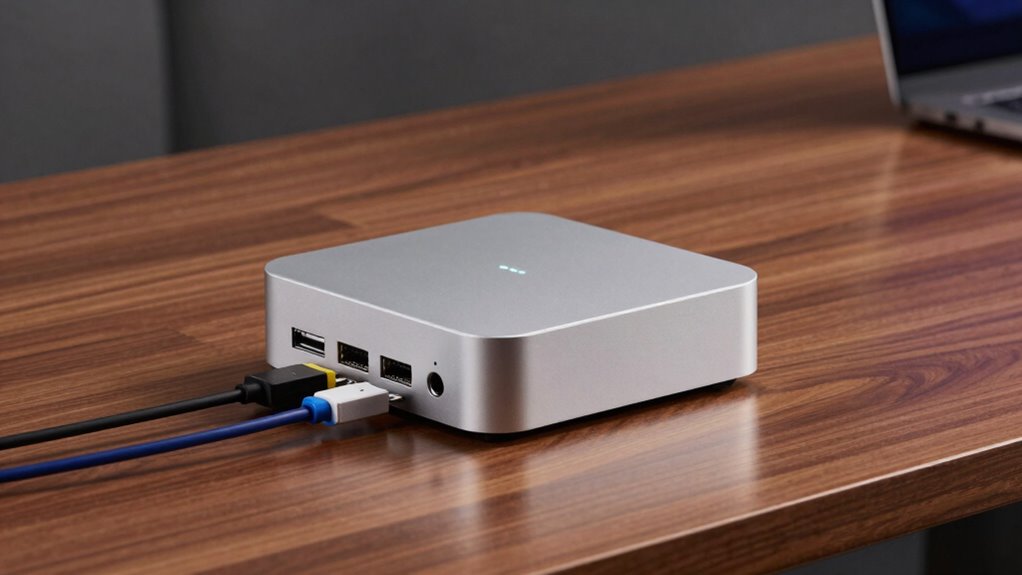

While mini PCs have become quite powerful, their limited ports can still hold you back. You’ll find some options for connecting multiple displays and peripherals, but expandability is often restricted compared to traditional desktops. Wireless improvements help, but network stability and speed depend on your setup. External storage can help boost capacity, yet USB and port limits might slow you down for heavy tasks. To discover how these trade-offs may impact your use, keep exploring.

Get hardware and tech essentials delivered free with Prime
- Fast, free delivery on millions of items
- Prime Video, Amazon Music and more included
- Member-only deals all year
Key Takeaways
- Mini PCs offer multiple ports for peripherals but often have limited expandability compared to traditional desktops.
- Internal storage options are constrained, relying on M.2 slots and external drives, which can affect large data management.
- Wireless connectivity has improved but may still face stability issues depending on hardware and network environment.
- USB standards impact data transfer speeds, with older ports potentially slowing down external storage performance.
- Port limitations can restrict peripheral use, making mini PCs less suitable for extensive device setups or high-bandwidth tasks.
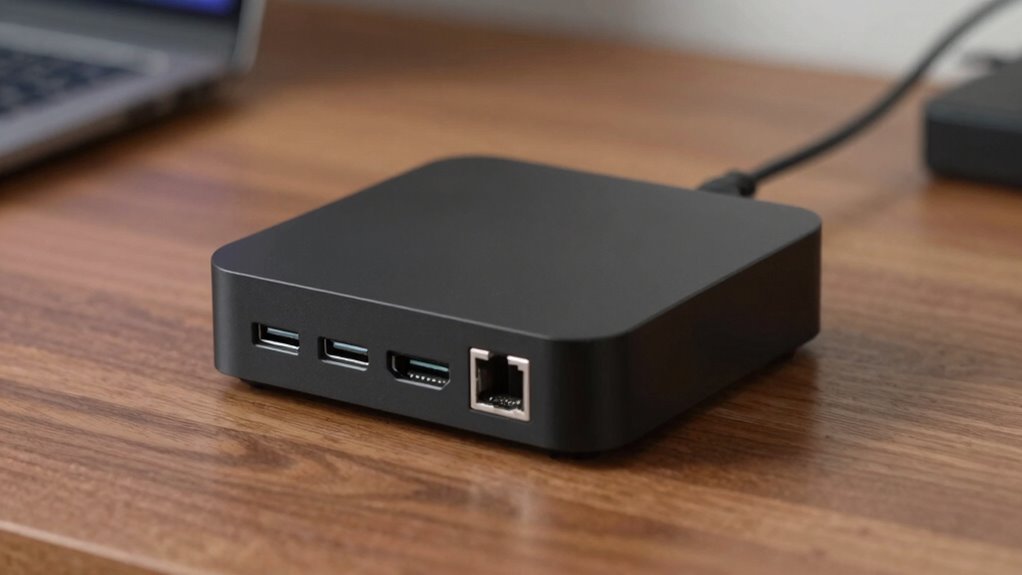
Mini PCs have become popular choices for those seeking compact yet powerful computing solutions, especially because of their versatile ports. These options make it easy to connect peripherals like external displays, keyboards, and mice without hassle. However, the wired connections only go so far. Wireless connectivity, such as Wi-Fi and Bluetooth, has improved notably in recent models, allowing you to connect to the internet or pair devices without cluttering your workspace. Still, the quality and speed of wireless connections can vary depending on the hardware and network setup. You might find that some mini PCs struggle with stable Wi-Fi connections, especially if they’re older or lack the latest wireless standards. This is a clear reminder that, even with advanced ports, wireless connectivity can sometimes be a bottleneck, especially for high-bandwidth tasks like streaming 4K videos or online gaming.
Storage expansion is another area where ports on mini PCs show their limits. Many models include an M.2 slot or a dedicated SSD bay, which lets you add additional storage. But these options are often limited in size or number. If you need a lot of space for large files, media libraries, or backups, you might find yourself out of luck. External drives connected through USB ports can help, but they’re not as seamless or fast as internal storage options. You’ll also want to contemplate the speed of your external drives; older USB standards can bottleneck data transfer, negating some of the benefits of modern mini PCs’ hardware. Additionally, the port limitations on mini PCs serve as a reminder that they may not fully replace traditional desktops in terms of expandability. Moreover, the wireless standards incorporated into these devices play a crucial role in overall connectivity performance. To optimize their use, understanding both the hardware capabilities and the network environment is essential for ensuring reliable connectivity. Being aware of peripheral compatibility is also important, as not all external devices may work smoothly with compact systems.
As an affiliate, we earn on qualifying purchases.
Frequently Asked Questions
Can Mini PCS Support Multiple External Monitors Simultaneously?
Yes, mini PCs can support multiple external monitors simultaneously, thanks to their compact design and modern graphics capabilities. However, the number of supported displays depends on the specific ports and hardware. You might need adapters or docking stations to expand connectivity. Keep in mind, their energy efficiency makes them ideal for multitasking, but check your mini PC’s specifications to guarantee it can handle multiple screens without performance issues.
Are Mini PCS Suitable for High-End Gaming?
Think of a mini PC as a sleek sports car—powerful but limited by its size. While mini PC gaming can handle high-end graphics, it often struggles with sustained high performance during intensive gaming sessions. The compact design hampers cooling and expansion, making it less ideal for high-end gaming compared to full-sized desktops. If you crave top-tier graphics and smooth gameplay, a larger, dedicated gaming rig might serve you better.
How Upgradeable Are Mini Pcs’ Internal Components?
You can upgrade the internal hardware of many mini PCs, but your upgrade potential depends on the model. Some have accessible RAM slots and M.2 slots for storage upgrades, while others are more restricted due to compact design. Typically, CPU upgrades are limited or impossible. Check your specific mini PC’s specifications to determine how much you can enhance its internal hardware, ensuring it meets your evolving needs.
Do Mini PCS Have Enough Ports for Professional Workflows?
You might find that mini PCs don’t have enough ports for all your professional needs, especially if you rely on multiple peripherals. While they excel in portability advantages and often include wireless connectivity, their limited ports can restrict expandability. To overcome this, you can use external hubs or docks, but keep in mind that this can slightly compromise their compact design and portability, which are key advantages of mini PCs.
What Are the Best Accessories for Expanding Mini PC Connectivity?
To expand your mini PC’s connectivity, consider using external docks and wireless peripherals. External docks provide multiple ports, including USB, HDMI, and Ethernet, giving you more flexibility. Wireless peripherals like Bluetooth keyboards, mice, and speakers help reduce cable clutter and free up ports. Together, these accessories enable seamless professional workflows, making your mini PC more versatile and efficient without sacrificing space or portability.
As an affiliate, we earn on qualifying purchases.
Conclusion
You might think mini PCs are unstoppable, packed with power and sleek design. But don’t forget—the limited ports reveal their true limits, reminding you that size isn’t everything. The theory that smaller devices can do it all is tempting, yet reality shows they still struggle with connectivity. So, while they impress, be prepared to sacrifice some versatility. Sometimes, embracing the full-sized option means gaining the freedom and flexibility mini PCs still can’t provide.
As an affiliate, we earn on qualifying purchases.
wireless network adapter for mini PC
As an affiliate, we earn on qualifying purchases.
As an affiliate, we earn on qualifying purchases.
Halloween Picks
halloween
As an affiliate, we earn on qualifying purchases.