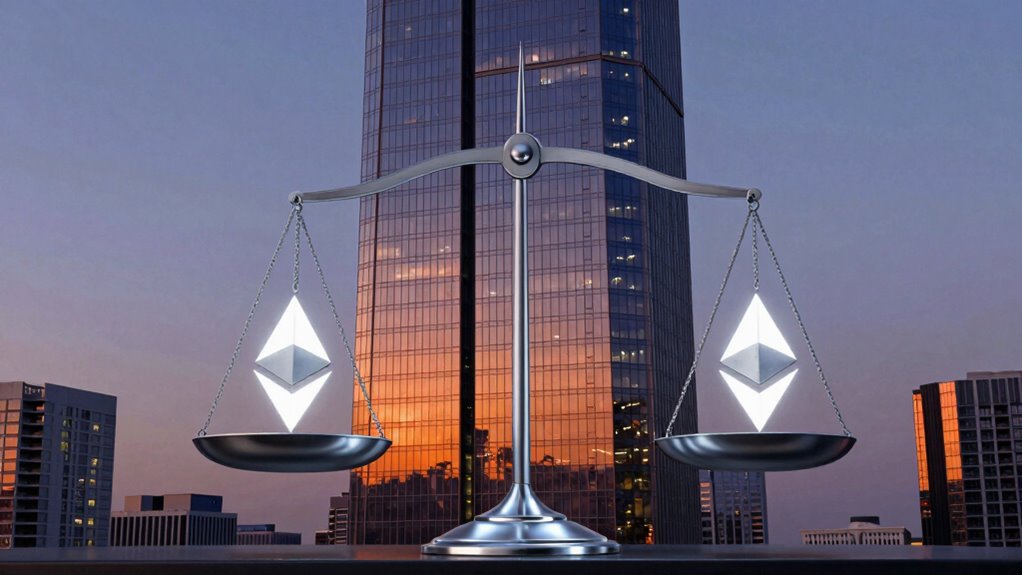

Ethereum balances innovation and stability by adopting new standards like ERC-20 and ERC-721, ensuring compatibility and reducing bugs. It upgrades its network with Ethereum 2.0, shifting to proof-of-stake and implementing shard chains to improve scalability and security. Ongoing development focuses on both expanding features and maintaining a secure environment for users and developers. If you want to understand how these efforts work together, there’s more to explore below.

Get hardware and tech essentials delivered free with Prime
- Fast, free delivery on millions of items
- Prime Video, Amazon Music and more included
- Member-only deals all year
Key Takeaways
- Ethereum adopts standardized token protocols like ERC-20 and ERC-721 to ensure compatibility and reduce bugs.
- Scalability solutions like Layer 2 protocols and Ethereum 2.0 upgrades increase capacity while maintaining security.
- Ongoing development of new token standards fosters innovation without compromising network stability.
- Transitioning to proof-of-stake and shard chains enhances efficiency and transaction speed securely.
- Emphasis on interoperability and security best practices balances innovation with the network’s integrity.

Ethereum has become a cornerstone of the blockchain world, fueling innovation with its flexible smart contract platform while facing the challenge of maintaining stability. You see, the platform’s ability to support a wide range of decentralized applications depends heavily on how well it manages to balance progress with reliability. A key part of this balance involves developing and adhering to token standards, which define how tokens behave within the ecosystem. For example, standards like ERC-20 and ERC-721 create common rules that developers follow, ensuring that tokens are compatible across various applications and wallets. This uniformity makes it easier to innovate without sacrificing stability, because everyone’s working within a clear framework. When new tokens follow these standards, it reduces bugs and incompatibilities, keeping the network more secure and predictable, even as new features are added.
At the same time, network scalability remains one of Ethereum’s biggest hurdles. As more users and applications join, the network can become congested, leading to delays and higher transaction fees. To keep up with demand without compromising security or decentralization, Ethereum continuously explores solutions like layer 2 protocols. These solutions process transactions off the main chain, alleviating congestion and making the network more scalable. This approach allows you to enjoy faster, cheaper transactions while the core network maintains its stability. Ethereum’s shift to Ethereum 2.0, with the move to proof-of-stake and shard chains, is another major step toward boosting scalability. These upgrades aim to increase the network’s capacity, enabling it to handle more transactions per second without sacrificing the security or decentralization that underpin its trustworthiness. Additionally, implementing token standards ensures that new features and tokens can be integrated smoothly, further supporting the platform’s growth. Moreover, understanding how consensus mechanisms work is essential for appreciating Ethereum’s efforts to enhance security and efficiency during these upgrades. This ongoing development highlights Ethereum’s dedication to blockchain interoperability, which is crucial for fostering a connected and scalable ecosystem. By aligning these improvements with security best practices, Ethereum strives to maintain a balance between innovation and network integrity.
The ongoing development of token standards and scalability solutions highlights Ethereum’s commitment to innovation within a stable framework. You can see this in how the platform adapts, introducing new standards for non-fungible tokens or evolving its consensus mechanism to be more energy-efficient. Each step seeks to expand what’s possible on Ethereum while safeguarding the network’s core principles. By carefully managing these elements, Ethereum strikes a delicate balancing act—pushing boundaries through innovation, yet grounding its growth in stability. This ensures the platform remains reliable for users and developers alike, fostering an environment where groundbreaking ideas can thrive without risking the network’s integrity.
As an affiliate, we earn on qualifying purchases.
Frequently Asked Questions
How Does Ethereum Plan to Prevent Network Congestion During High Demand?
To prevent network congestion during high demand, Ethereum plans to improve scalability through solutions like sharding and Layer 2 protocols, easing scalability challenges. These upgrades distribute transactions more efficiently, reducing load. You can trust that enhanced scalability also bolsters network security, as these solutions are designed to maintain decentralization and reduce vulnerabilities. By continuously evolving these technologies, Ethereum aims to keep the network fast and secure, even during peak times.
What Measures Are in Place to Protect User Funds From Smart Contract Bugs?
Irony aside, you’re protected from smart contract bugs through rigorous measures. You benefit from extensive smart contract audits, where experts scrutinize code for vulnerabilities before deployment. Plus, Ethereum’s bug bounty programs incentivize developers worldwide to report flaws, ensuring continuous security improvements. These layers of scrutiny and reward systems create a safety net, giving you confidence that your funds are safeguarded, even amid the unpredictable world of decentralized applications.
How Does Ethereum Ensure Decentralization Amid Ongoing Upgrades?
You can see Ethereum guarantees decentralization through its token and network governance. Token holders actively participate in decision-making, voting on upgrades and protocol changes. This decentralized governance model distributes power, preventing any single entity from controlling the network. Ongoing upgrades are proposed and approved by the community, maintaining a balanced, resilient system. This approach preserves Ethereum’s core principles of decentralization while fostering continuous innovation and stability.
What Are the Long-Term Goals for Ethereum’s Scalability Solutions?
Imagine building a highway system that keeps expanding without traffic jams—that’s Ethereum’s long-term scalability goal. You’ll see innovations like sharding and rollups, which work alongside token standards and governance models, to handle more transactions efficiently. These solutions aim to create a seamless, secure network that grows with user demand, ensuring Ethereum remains both innovative and stable for the future.
How Does Ethereum Balance Innovation With Compliance in Different Jurisdictions?
You can see that Ethereum balances innovation with compliance by actively addressing regulatory challenges and ensuring cross-border compliance. It collaborates with regulators, adapts its protocols, and implements features like transparency tools to meet legal standards across jurisdictions. This proactive approach helps foster innovation while respecting diverse legal frameworks, encouraging adoption worldwide. By staying flexible and engaging with regulators, Ethereum maintains a balance between pioneering technology and maintaining legal compliance.
As an affiliate, we earn on qualifying purchases.
Conclusion
So, as you see, Ethereum’s delicate dance of daring development and dependable stability keeps it dynamic. By balancing bold breakthroughs with careful caution, it boldly bridges the gap between innovation and integrity. This ongoing oscillation offers opportunities and obstacles, but it’s your engagement that energizes Ethereum’s evolution. Stay sharp, stay supportive, and see how this smart, stable, and spirited platform continues shaping the future of decentralized technology. Together, you and Ethereum can explore endless exciting possibilities.
Layer 2 scaling solutions for Ethereum
As an affiliate, we earn on qualifying purchases.
As an affiliate, we earn on qualifying purchases.
As an affiliate, we earn on qualifying purchases.
Fall Picks
fall essentials
As an affiliate, we earn on qualifying purchases.