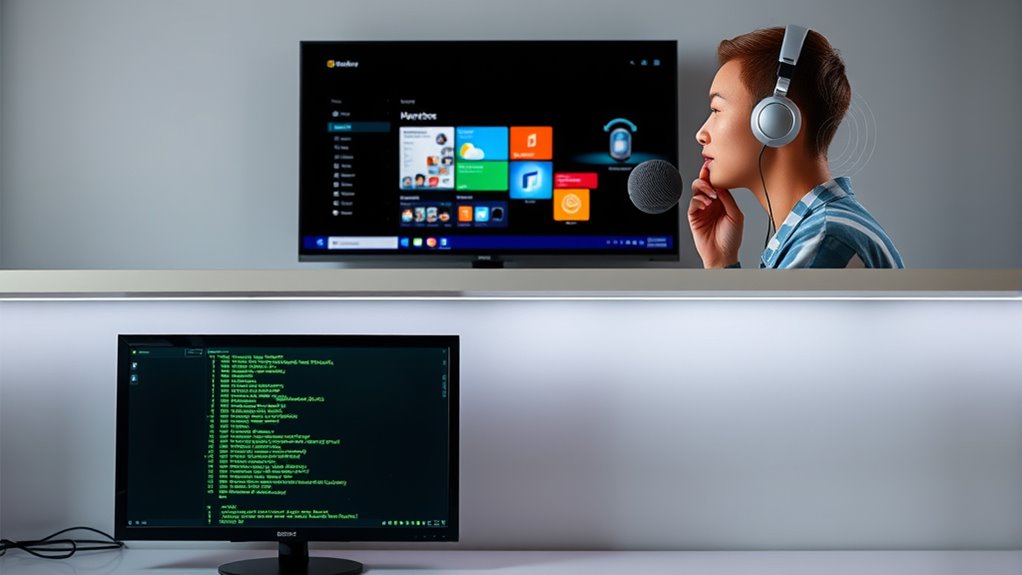

You’ve seen how user interfaces have evolved from simple command lines to intuitive touchscreens, gestures, and voice assistants. Today, you can control devices with a tap, swipe, or your voice, making technology more accessible and natural. As interfaces become more human-centered, they blur the lines between physical and digital worlds. If you want to discover how each stage shaped today’s interactions, keep exploring this fascinating journey.
Key Takeaways
- User interfaces have evolved from text-based command lines to graphical and touch-based systems for easier interaction.
- Touchscreens revolutionized device navigation, enabling direct manipulation like tapping, swiping, and pinching.
- Gesture control uses sensors and cameras to interpret hand movements, providing contactless interaction methods.
- Advances in display technology and responsiveness have created immersive, smooth experiences, especially in gaming and virtual reality.
- Voice assistants represent a shift toward natural, human-centric interfaces, making digital interactions more intuitive and accessible.

Have you ever wondered how the way we interact with technology has changed over time? It’s fascinating to see how user interfaces have evolved from simple text commands to sophisticated voice assistants. One of the most significant shifts occurred during the touchscreen revolution, which transformed how you engage with devices daily. Instead of relying solely on keyboards and mice, you can now tap, swipe, and pinch your way through apps, making interactions more intuitive and immediate. This shift didn’t happen overnight; it was driven by advances in technology, design thinking, and an understanding of human behavior. Touchscreens allowed for direct manipulation of content, reducing the learning curve and making technology more accessible. Suddenly, everything from smartphones to tablets became more user-friendly, encouraging even those unfamiliar with tech to explore and use digital tools effortlessly.
Alongside the touchscreen revolution, gesture control emerged as a groundbreaking way to interact without touching a screen. You might have experienced this with motion-sensing gaming consoles or smart home devices that respond to hand gestures. Gesture control takes advantage of sensors and cameras to interpret your movements, enabling you to operate devices with simple gestures. This technology enhances the user experience by making interactions more natural and seamless, often eliminating the need for physical contact. As these systems became more sophisticated, they allowed you to switch between tasks or control media with just a wave or a flick of your hand. The integration of gesture control with other interface innovations created a more immersive and intuitive digital environment, where your actions feel almost instinctive. Additionally, the development of high refresh rates in display technology has contributed to smoother and more responsive interactions, especially in fast-paced applications like gaming and virtual reality.
These developments have reshaped the way you use technology, making interactions faster and more engaging. The touchscreen revolution, combined with gesture control, has paved the way for a more immersive experience, blurring the lines between physical and digital worlds. You no longer need to memorize complex commands or navigate cluttered menus; instead, you simply interact naturally. These advancements also laid the groundwork for voice interfaces, which further emphasize ease and accessibility. Today, you can ask your device to send messages, search the web, or control smart home gadgets—all through voice commands. This progression from command line interfaces to voice assistants highlights a key trend: technology is becoming more human-centric, designed to adapt to your natural behaviors and preferences. The evolution continues, but one thing’s clear—your interaction with technology is now more intuitive, direct, and effortless than ever before.
Frequently Asked Questions
How Do User Interfaces Impact Overall User Experience?
User interfaces greatly impact your overall experience by making interactions intuitive and seamless. Features like gesture navigation allow you to effortlessly control devices, while haptic feedback provides tactile responses, enhancing your engagement. When interfaces are responsive and easy to use, you feel more confident and satisfied. So, by improving these elements, designers guarantee you enjoy smoother, more enjoyable interactions, making technology more accessible and pleasurable for you.
What Are the Future Trends in User Interface Design?
You’ll likely see a delightful shift toward more intuitive gesture-based navigation and augmented reality interfaces, making interactions seamless and immersive. These future trends aim to blend digital and physical worlds, offering effortless control and richer experiences. As technology advances, you’ll enjoy more natural, engaging ways to interact with devices, reducing friction and opening new possibilities for both work and play. Embrace these innovations—they’re designed to make your digital life more intuitive and enjoyable.
How Do Cultural Differences Influence Interface Preferences?
You should consider how cultural differences shape interface preferences, as cultural adaptation plays a key role in creating user-friendly designs. Interface localization guarantees that language, symbols, and interactions align with users’ cultural norms, making technology more accessible and intuitive. By understanding these differences, you can develop interfaces that resonate globally, fostering better engagement and satisfaction across diverse audiences. This approach ultimately enhances user experience and broadens your product’s reach.
What Role Does Accessibility Play in UI Evolution?
Accessibility plays a vital role in UI evolution by driving the adoption of assistive technologies and promoting inclusive design. You benefit when interfaces are designed with accessibility in mind, making them usable for people with diverse abilities. This focus encourages innovation, ensuring that everyone can interact effectively with technology. Ultimately, accessibility shapes interfaces to be more inclusive, user-friendly, and adaptable for all users.
How Do Security Concerns Shape Interface Development?
Security concerns act like a watchdog, shaping interface development by prioritizing your safety. You’ll see encryption protocols safeguard your data, while biometric authentication makes access smoother and more secure. Developers focus on these features to prevent breaches and protect your privacy, often making interfaces more intuitive. As a result, security innovations drive the evolution of user interfaces, ensuring you can interact confidently without risking your personal information.
Conclusion
As you’ve seen, user interfaces have transformed dramatically, but the journey isn’t over. With voice assistants and emerging technologies on the horizon, what’s next could change everything again. Are you ready to embrace the future of interaction? The next evolution might be closer than you think, and only those who stay tuned will truly understand what’s coming. Keep watching—your next digital experience could be just around the corner.