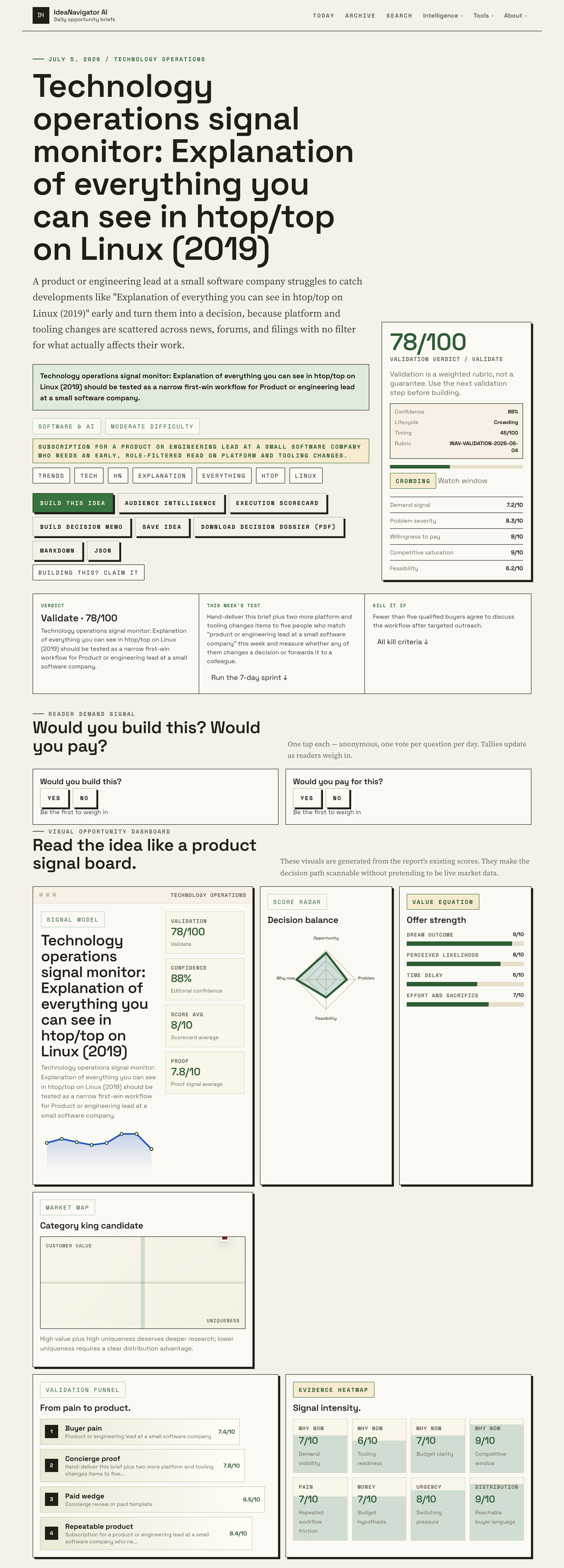
📊 Full opportunity report: Technology Operations Signal Monitor: Explanation Of Everything You Can See In Htop/top On Linux (2019) on IdeaNavigator AI — validation score, market gap, and execution plan.

Get hardware and tech essentials delivered free — and shop member deals
- Fast, free delivery on millions of items
- Access to Prime Big Deal Days deals on October 6–7
- Prime Video, Amazon Music and more included
TL;DR
This article explains what the ‘h’ option in Linux’s top and htop commands displays, helping system administrators and developers interpret system data more effectively. It clarifies confirmed facts and ongoing uncertainties.
The ‘h’ option in Linux’s top and htop commands is used to display help information or specific system metrics, depending on context. This feature is essential for system administrators and developers who rely on real-time system data to make informed decisions. Clarifying what ‘h’ reveals can improve troubleshooting and system management efficiency.
Linux’s top and htop commands are widely used tools for real-time system monitoring. The ‘h’ option, when invoked, typically displays help information or specific system metrics, depending on the command’s version and configuration. According to official documentation and user experiences, pressing ‘h’ in these tools generally opens a help menu listing available commands and options, aiding users in navigating the interface. However, some users have reported that in certain versions or configurations, ‘h’ may trigger specific metrics or options related to system health, such as hardware or process information.
Recent discussions on forums like Hacker News highlight that understanding what ‘h’ does in different contexts can prevent misinterpretation of system data. For example, in some cases, ‘h’ might show detailed hardware info, while in others, it simply displays help text. This variability depends on the tool version and system environment. Experts recommend consulting the man pages or official documentation for precise behavior, as it can differ across Linux distributions.
Why Clarifying the ‘h’ Option Improves System Monitoring
Understanding the exact function of the ‘h’ option in top and htop enhances system administrators’ ability to interpret real-time data accurately. Misinterpreting this command can lead to incorrect assessments of system health or delays in troubleshooting. Clear knowledge of this feature supports more efficient system management, especially in environments where quick decision-making is critical. As platform and tooling updates become more frequent, role-specific guidance like this helps small software teams stay informed and responsive.
As an affiliate, we earn on qualifying purchases.
Historical and Practical Use of ‘h’ in Linux Monitoring Tools
Linux’s top and htop commands have been core tools for system monitoring for decades. The ‘h’ key has traditionally been associated with help menus, providing users quick access to command options and keybindings. Recent updates and variations across distributions have introduced some ambiguity about additional functionalities tied to ‘h’. Discussions on developer forums and recent platform signals indicate that while the primary function remains help display, some versions may repurpose or extend this key’s functionality to show specific system metrics or hardware details, which can confuse users unfamiliar with version differences.
“In my experience, pressing ‘h’ in htop always opens the help menu, but in some systems, it shows hardware info instead. It’s confusing without checking the documentation.”
— an anonymous Linux user
hardware health monitoring hardware
As an affiliate, we earn on qualifying purchases.
As an affiliate, we earn on qualifying purchases.
What Variations in ‘h’ Functionality Remain Unclear
It is not yet fully confirmed whether recent platform updates have officially extended the functionality of the ‘h’ key beyond help display in all versions of top and htop. Variations across Linux distributions and software versions create ambiguity about whether ‘h’ can reliably be used to access hardware or system metrics. Additionally, the extent to which third-party modifications influence this behavior remains uncertain. Further testing and official documentation review are needed to clarify these points definitively.
real-time system monitoring software
As an affiliate, we earn on qualifying purchases.
As an affiliate, we earn on qualifying purchases.
Next Steps for Clarifying and Standardizing ‘h’ Usage
Developers and users should consult the latest official documentation for their specific Linux distributions and versions to understand ‘h’ behavior accurately. Future updates to top and htop are expected to clarify or standardize this functionality. Additionally, community feedback and testing can help establish best practices. Monitoring official release notes and participating in user forums will be essential for staying informed about any changes or extensions to this feature.
As an affiliate, we earn on qualifying purchases.
Key Questions
What does pressing ‘h’ do in Linux’s top and htop commands?
Typically, pressing ‘h’ in these tools opens a help menu listing available commands and options. However, in some versions or configurations, it may display hardware or system metrics instead.
Is the behavior of ‘h’ consistent across all Linux distributions?
No, the behavior can vary depending on the version of top or htop and the specific Linux distribution. Users should consult official documentation for their environment.
Can the ‘h’ key be used to access system hardware information?
In some cases, yes, but this is not standard across all versions. Most often, ‘h’ is used for help menus, and hardware info is accessed via different commands or options.
Are recent updates to top or htop changing the function of ‘h’?
There are indications that recent updates may have extended or altered the function of ‘h’ in some versions, but official confirmation and consistent behavior are still under review.
Source: IdeaNavigator AI
Fall Picks
fall essentials
As an affiliate, we earn on qualifying purchases.