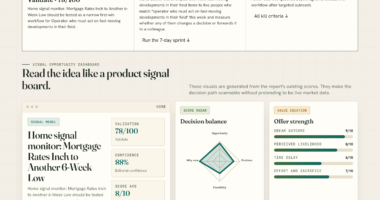

📊 Full opportunity report: Navigating Parenting Trends: Juggling Full Involvement And Single Parent Life on IdeaNavigator AI — validation score, market gap, and execution plan.

Get hardware and tech essentials delivered free with Prime
- Fast, free delivery on millions of items
- Prime Video, Amazon Music and more included
- Member-only deals all year
TL;DR
Parents face increasing pressure to be deeply involved in their children’s lives while also managing solo parenting. This trend raises questions about well-being, societal norms, and practical challenges, with ongoing debates about optimal approaches.
Recent discussions within parenting communities highlight a growing tension: how parents balance the desire for full involvement in their children’s lives against the realities faced by single parents. While societal expectations increasingly promote active parenting, the practical challenges for single parents are intensifying, prompting a reevaluation of what effective parenting looks like in diverse family structures.
Multiple sources indicate that many parents are feeling the pressure to be highly involved in their children’s education, activities, and emotional well-being. At the same time, single parents often face unique hurdles, including limited time, resources, and support networks, which can hinder their ability to meet these expectations. Experts note that this dichotomy is shaping new parenting norms, with some advocating for more flexible, realistic approaches tailored to individual circumstances.
Recent surveys suggest that a significant portion of parents struggle with balancing these roles. For example, a 2023 study found that 65% of parents feel overwhelmed trying to meet societal standards of involvement, while 40% of single parents report feeling isolated and under-supported. These figures reflect a broader societal shift where parenting ideals are increasingly scrutinized and personalized.
Experts warn that the pressure to be ‘perfect’ can lead to burnout and mental health issues among parents, especially those managing solo responsibilities. Meanwhile, community organizations and policymakers are exploring ways to better support diverse family structures, emphasizing the importance of flexible work arrangements, community support, and mental health resources.
Implications of Parenting Expectations on Family Well-Being
This trend matters because it directly impacts parental mental health, child development, and societal support systems. The pressure to fulfill idealized parenting roles can lead to stress, burnout, and strained relationships. For single parents, these challenges are compounded by limited support, making it essential for communities and policymakers to adapt strategies that foster sustainable, realistic parenting models. Recognizing and accommodating diverse family circumstances can promote healthier families and more resilient communities.
flexible family scheduling planner
As an affiliate, we earn on qualifying purchases.
As an affiliate, we earn on qualifying purchases.
Evolving Parenting Norms and Societal Expectations
Over the past decade, societal expectations around parenting have shifted toward greater involvement, driven by social media, educational advocacy, and mental health awareness. This has led to a cultural ideal of the ‘perfect parent’ who is always present, engaged, and emotionally available. Concurrently, the rise in single-parent households—now representing approximately 20% of families in many countries—has highlighted the practical limitations faced by solo caregivers.
Historically, single parenting was often stigmatized, but recent social acceptance has increased, alongside recognition of the unique challenges involved. Policymakers and social organizations are increasingly focusing on providing targeted support for single parents, including financial aid, flexible work policies, and community programs. This evolving landscape creates a complex environment where societal ideals sometimes clash with individual realities.
Recent debates have centered on whether current parenting standards are attainable for all families, especially under economic and social pressures. The conversation continues to evolve as more families share their experiences and advocate for more inclusive, realistic expectations.
As an affiliate, we earn on qualifying purchases.
Unresolved Questions About Effective Parenting Strategies
It remains unclear how societal norms will evolve to better support both full-involvement parents and single caregivers. There is ongoing debate about what constitutes effective parenting in diverse family contexts, and whether current standards are realistic or need adjustment. Additionally, the long-term impacts of these evolving expectations on child development and parental mental health are still being studied, with no definitive conclusions yet available.
educational activity kits for kids
As an affiliate, we earn on qualifying purchases.
As an affiliate, we earn on qualifying purchases.
Future Directions for Parenting Support and Norms
Experts anticipate continued discussions around flexible parenting models that accommodate individual circumstances. Policymakers are likely to explore new support mechanisms, such as expanded childcare services, mental health resources, and workplace flexibility, to ease parental burdens. Social campaigns may also promote more inclusive definitions of involved parenting, recognizing that quality and presence matter more than constant availability. Monitoring these developments will be crucial to understanding how societal expectations adapt and how families are supported moving forward.
mental health self-care for parents
As an affiliate, we earn on qualifying purchases.
As an affiliate, we earn on qualifying purchases.
Key Questions
How are single parents coping with societal expectations of involvement?
Many single parents report feeling overwhelmed but are increasingly accessing community support, flexible work policies, and online resources to manage their responsibilities. Support networks and policy initiatives are evolving to better meet their needs.
Are societal standards of parenting realistic for all families?
Current standards often do not account for diverse family circumstances, leading to stress and burnout, particularly among single parents. Experts suggest that more flexible, individualized approaches are needed.
What role can communities and policymakers play in supporting parents?
Communities can offer support programs, peer networks, and accessible childcare, while policymakers can implement flexible work laws and mental health initiatives to reduce parental stress and promote well-being.
Will parenting norms change in the future?
It is likely that societal expectations will continue to evolve toward more inclusive and realistic standards, emphasizing the importance of quality over quantity of involvement and recognizing diverse family structures.
Source: IdeaNavigator AI
Fall Picks
fall essentials
As an affiliate, we earn on qualifying purchases.