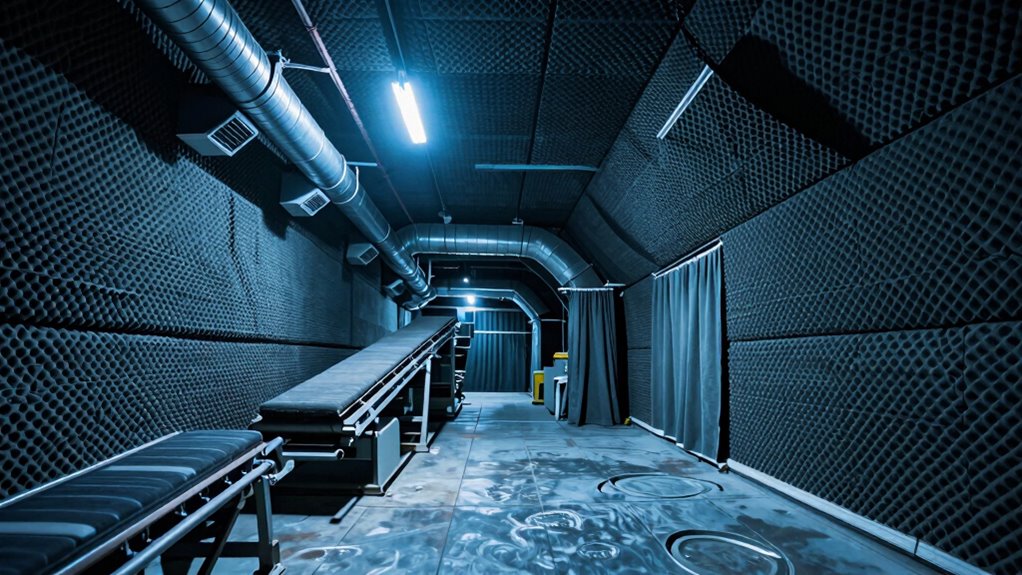

To reduce mining room noise without sacrificing airflow, focus on installing vibration dampening materials under machinery and using vibration isolators to prevent sound transmission. Add sound-absorbing panels to walls and ceilings to minimize echo, and use duct silencers or mufflers on vents to dampen airflow noise. Sealing gaps around doors and ductwork further contains sound. Combining these strategies helps control noise while keeping ventilation efficient—discover more ways to balance soundproofing and airflow effectively.

Get hardware and tech essentials delivered free with Prime
- Fast, free delivery on millions of items
- Prime Video, Amazon Music and more included
- Member-only deals all year
Key Takeaways
- Install vibration dampening materials under machinery to reduce noise without obstructing airflow.
- Use duct silencers or mufflers on ventilation vents to minimize noise while maintaining airflow.
- Place sound-absorbing panels strategically to reduce echo without blocking air pathways.
- Seal leaks and gaps around doors and ducts to contain noise without impairing ventilation efficiency.
- Select noise control solutions that are compatible with ventilation systems to balance sound reduction and airflow.
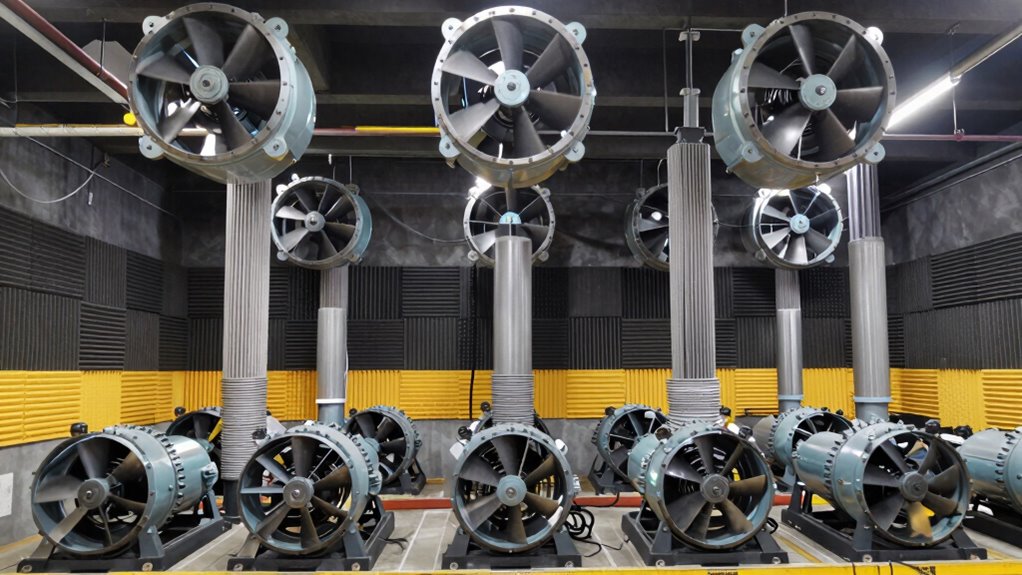
Are you struggling to manage the noise levels in your mining room? High noise can be disruptive, dangerous, and even harmful over time. Fortunately, there are effective ways to reduce the noise without sacrificing airflow or ventilation, which are essential for safe and efficient mining operations. One of the most impactful strategies involves vibration dampening. Heavy machinery and equipment generate vibrations that travel through floors, walls, and ceilings, amplifying noise. To counter this, you can install vibration dampening materials under machinery mounts or on the floors. Rubber pads, resilient mounts, or specialized vibration isolators absorb and minimize these vibrations, preventing them from propagating as sound waves. These measures help contain noise at its source, making a noticeable difference in overall room sound levels. Additionally, selecting appropriate vibration isolators can further enhance the effectiveness of vibration control and reduce noise transmission.
Alongside vibration dampening, acoustic treatments play a key role in controlling noise. Instead of using bulky, airflow-blocking barriers, you can opt for sound-absorbing panels strategically placed throughout the room. These panels are designed to absorb sound waves rather than reflect them, reducing echo and overall noise levels. When installing acoustic treatments, focus on areas where sound tends to bounce—walls, ceilings, and corners. This targeted approach ensures noise reduction without obstructing airflow pathways. You can choose materials like foam, mineral wool, or specialized acoustic tiles that blend seamlessly with your room’s environment and don’t hinder ventilation. Incorporating sound absorption techniques can further improve the room’s acoustics and reduce noise transmission. Additionally, using duct silencers or mufflers on exhaust and intake vents can dampen noise produced by airflow through ventilation systems, ensuring that sound doesn’t escape or enter the room unchecked. These devices help maintain a quieter environment while preserving airflow efficiency. Proper placement of these silencers can greatly cut down the noise transmitted via air currents, and sealing gaps and leaks around doors, windows, and ductwork prevents sound leaks and enhances overall noise control. It’s essential to balance these soundproofing measures with proper ventilation so that airflow remains unobstructed, and equipment stays cool and operational.
vibration dampening pads for machinery
As an affiliate, we earn on qualifying purchases.
As an affiliate, we earn on qualifying purchases.
Frequently Asked Questions
Can Soundproofing Affect Ventilation Efficiency?
Soundproofing can influence airflow, potentially impacting ventilation noise and efficiency. When you add soundproof materials, they might restrict airflow if not installed carefully, leading to decreased ventilation effectiveness. To minimize this, choose soundproofing options designed for airflow, like acoustic vents or panels with ventilation features. Proper installation ensures you reduce noise without markedly affecting ventilation, maintaining a balance between soundproofing airflow and controlling ventilation noise impact.
Are There Specific Materials Best for Noise Reduction?
You should choose materials like acoustic panels, mineral wool, or mass-loaded vinyl for effective noise reduction. These material options excel at absorbing and blocking sound. Combine these with soundproofing techniques such as sealing gaps and installing resilient channels. This approach guarantees you reduce mining room noise without sacrificing airflow. Always select materials that balance soundproofing capabilities with ventilation needs to maintain ideal airflow while minimizing noise.
How Often Should Noise Levels Be Monitored?
You should conduct noise level monitoring regularly, ideally weekly, to keep track of noise and equipment vibration. This helps you identify any fluctuations or increases that might indicate equipment issues or the need for additional noise reduction measures. Consistent monitoring allows you to stay proactive, ensuring that noise levels stay within safe limits without compromising airflow. Use sound level meters and vibration sensors for accurate measurements.
Do Noise-Reducing Modifications Impact Equipment Cooling?
Noise-reducing modifications like adjusting equipment placement and installing acoustic barriers can impact cooling if not done carefully. You need to make certain equipment isn’t obstructed and airflow remains unobstructed. Proper placement prevents heat buildup, while acoustic barriers should be designed to avoid blocking cooling paths. When planned correctly, these modifications can reduce noise without negatively affecting equipment cooling, maintaining both a quieter environment and ideal performance.
What Are Cost-Effective Noise Mitigation Options?
You can cut noise costs considerably by installing vibration isolation mounts and acoustic barriers. These solutions are budget-friendly and highly effective at dampening sound without compromising airflow. Vibration isolators prevent machinery vibrations from amplifying noise, while acoustic barriers absorb sound waves, creating a quieter environment. Together, they’re a cost-effective way to markedly reduce mining room noise, transforming your workspace into a much more bearable, less deafening environment.
duct silencers for ventilation systems
As an affiliate, we earn on qualifying purchases.
As an affiliate, we earn on qualifying purchases.
Conclusion
Imagine walking into your mining room, where the noise now hums softly like a distant wind, no longer a deafening roar. With these simple tips, you’ve tamed the thunder without choking the breeze. Your airflow flows freely, carrying fresh energy through the space, while the noise whispers away into a gentle murmur. Now, your mining room is a sanctuary—powerful, quiet, and perfectly balanced—where productivity and peace coexist in harmony.
sound-absorbing panels for industrial rooms
As an affiliate, we earn on qualifying purchases.
As an affiliate, we earn on qualifying purchases.
vibration isolators for heavy equipment
As an affiliate, we earn on qualifying purchases.
As an affiliate, we earn on qualifying purchases.
Halloween Picks
halloween
As an affiliate, we earn on qualifying purchases.