📊 Full opportunity report: 8 External GPU Solutions Perfect For AI In 2026 on ThorstenMeyerAI.com — validation score, market gap, and execution plan.

Get hardware and tech essentials delivered free — and shop member deals
- Fast, free delivery on millions of items
- Access to Prime Big Deal Days deals on October 6–7
- Prime Video, Amazon Music and more included
TL;DR
In 2026, eight external GPU solutions stand out for AI applications, balancing power, compatibility, and portability. These models cater to professionals seeking high performance without internal upgrades.
Eight external GPU solutions are identified as ideal for AI workloads in 2026, offering high performance, broad compatibility, and future-proof features. These options are crucial for professionals and enthusiasts who need portable, powerful graphics acceleration without upgrading internal hardware. For a detailed review, see the original analysis.
The list includes models like the Razer Core X V2, ASUS ROG XG Mobile, and others that support the latest connection standards such as Thunderbolt 4 and USB4. For more in-depth comparisons, see the top external GPU roundup. These enclosures deliver high power, support PCIe 4.0, and accommodate demanding GPUs like the RTX 4090, making them suitable for AI training and inference tasks.
Performance varies across models, with some offering plug-and-play setup, while others may require technical adjustments. Learn more about top external GPU options in this comprehensive guide. Price points range from budget-friendly to premium, reflecting differences in power delivery, cooling, and expandability. Compatibility with current and upcoming GPUs is a key consideration for future-proofing.
The 8 picks
- 1
 ASUS ROG XG Mobile (2025) External Graphics Card with NVIDIA GeForce RTX 5090View on Amazon →
 - 2
 MINISFORUM MGA1 External GPU Docking Station with AMD Radeon 7600M XTView on Amazon →
 - 3
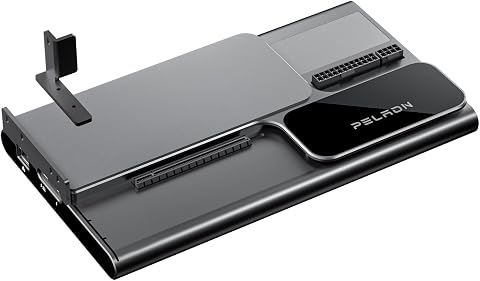 PELADN S-3 eGPU Dock with Thunderbolt 5 Cable – External GPU Dock with PCIe 4…View on Amazon →
 - 4
 Razer Core X V2 External Graphics Enclosure (eGPU)View on Amazon →
 - 5
 MINISFORUM DEG2 USB4 V2 (TBT5 Compatible) & OCuLink eGPU DockView on Amazon →
 - 6
 AOOSTAR AG01 External GPU Docking Station Supports NVIDIA and AMD Graphics Ca…View on Amazon →
 - 7
 MINISFORUM DEG1 eGPU Docking Station for RTX 4090 and AMD RX 7900 XTXView on Amazon →
 - 8
 MINISFORUM DEG1 External GPU Dock Station for RTX 4090 and AMD RX 7900 XTXView on Amazon →
Why External GPUs Matter for AI in 2026
External GPUs enable portable, high-performance computing for AI tasks, allowing users to upgrade graphics capabilities without replacing laptops or compact PCs. This flexibility supports AI research, development, and deployment across diverse environments, making powerful AI hardware more accessible and adaptable. As AI workloads grow more demanding, these solutions provide critical performance boosts for professionals in data science, machine learning, and creative fields, impacting productivity and innovation.Evolution of External GPU Solutions in 2026
External GPUs have evolved significantly since their inception, with recent models supporting PCIe 4.0, Thunderbolt 4, and USB4 standards for faster data transfer and broader compatibility. In 2026, the market features a range of options tailored to different user needs—from budget-friendly models to premium enclosures with advanced cooling and upgrade paths. The demand for portable, high-power graphics solutions has increased with the rise of AI applications, driving manufacturers to develop more sophisticated, user-friendly devices. Past developments include the popular Razer Core X series and ASUS ROG XG Mobile, which set benchmarks for performance and ease of use. The current landscape reflects a focus on future-proofing, with support for upcoming GPU generations and higher bandwidth standards.“Choosing the right external GPU depends on balancing performance, compatibility, and budget, especially for demanding AI and creative tasks.”
— Jane Liu, Creative Tech Specialist
Remaining Questions About External GPU Capabilities
It is not yet clear how well the newest external GPUs will handle the most demanding AI models over time, or how future GPU upgrades will be supported across different enclosures. Long-term durability and compatibility with upcoming GPU architectures remain to be tested, and real-world performance may vary depending on system integration and software optimization.Future Developments in External GPU Technology for AI
Next steps include the release of new enclosures supporting PCIe 5.0, improved cooling solutions, and enhanced compatibility with upcoming GPU architectures. Manufacturers are expected to focus on simplifying setup and expanding upgrade options, making high-end AI workloads more accessible on portable platforms. Additionally, software optimizations and driver updates will likely improve performance consistency across different models, further integrating external GPUs into professional AI workflows.
Key Questions
Can I use any external GPU enclosure for AI tasks in 2026?
While many enclosures support a range of GPUs, compatibility depends on connection standards like Thunderbolt 4 or USB4 and physical size limits. Verify your laptop’s support for these standards and the enclosure’s GPU compatibility before purchasing.
How much performance can I expect from an external GPU for AI workloads?
A high-quality external GPU can significantly accelerate AI training and inference, approaching desktop-level performance. However, some bandwidth limitations may cause slight performance drops compared to direct connections, but improvements over internal GPU options are common.
Are external GPUs worth it for AI development and research?
For professionals working with demanding AI models, external GPUs provide portable, high-performance acceleration that can reduce processing times and enable more complex experiments without replacing laptops or small desktops. They are especially valuable for mobile or space-constrained environments.
Will external GPUs support future GPU upgrades?
Many current models support GPU upgrades or are designed with future compatibility in mind. However, it’s important to check specific enclosure specifications and upgrade paths, as some models may have fixed GPU configurations.
What are the main considerations when choosing an external GPU for AI in 2026?
Key factors include connection compatibility (Thunderbolt 4, USB4), power delivery, GPU support, cooling, size, and budget. Matching these to your AI workload and portability needs will ensure the best value and performance.
Source: ThorstenMeyerAI.com
Halloween Picks
halloween
As an affiliate, we earn on qualifying purchases.