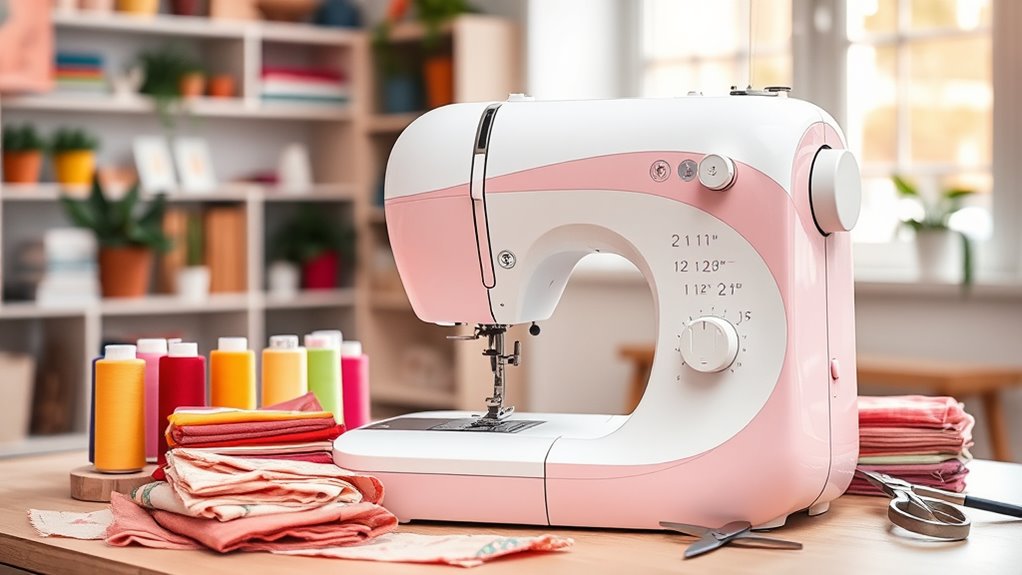

For most new sewists, the Brother GX37 is my best overall pick: its 37 built-in stitches offer room to learn without the extra complexity of a quilting-focused machine. The Brother CS5055 stands out for beginners who want computerized controls, while the Janome Arctic Crystal suits shoppers who prefer a straightforward mechanical machine. The main tradeoff is between simple controls and features that support more varied projects; portability, included accessories, and capacity for heavier fabric matter too. This roundup compares all 14 options by beginner usability, versatility, and likely learning curve. Read on for the full breakdown and recommendations by sewing style.

Get hardware and tech essentials delivered free with Prime
- Fast, free delivery on millions of items
- Prime Video, Amazon Music and more included
- Member-only deals all year
Key Takeaways
- The Brother GX37 is the strongest all-around starting point in this lineup, pairing a broad stitch selection with a less specialized role than the quilting machines.
- Mechanical models keep the learning process direct; the Janome Arctic Crystal and Brother FB1757X make sense for shoppers who would rather set stitches with physical controls than learn a computerized interface.
- Computerized features are most useful when they solve a real need: the Brother CS5055 and CS7000X offer a different path for sewists who value guided settings or expect to quilt.
- Heavy-duty labeling signals a different priority, not a universal upgrade; the Brother ST371HD is aimed at sturdier materials, while a standard beginner machine may be easier to live with for everyday projects.
- Portable mini machines and full-size machines serve different jobs: options such as the KPCB Tech, Rxmeili, Stoigeld, and Buvnatep emphasize compactness or bundled supplies, while Brother and Janome models offer a more conventional machine format.
| Brother FB1757X Mechanical Sewing Machine |  | Best Straightforward Mechanical Pick | Machine type: Mechanical sewing machine | Built-in stitches: 17 | Buttonhole style: 4-step | VIEW ON AMAZON | See Our Full Breakdown |
| KPCB Tech Beginner Sewing Machine with Fabric Bundle and Finger Guard |  | Best Starter Bundle for Small Projects | Brand: KPCB Tech | Model: FHSM-201 | Machine type: Portable beginner sewing machine | VIEW ON AMAZON | See Our Full Breakdown |
| Brother GX37 Sewing Machine with 37 Built-In Stitches |  | Best Overall for Growing Beginners | Built-in stitches: 37 | Buttonhole: Auto-size | Needle threader: Automatic | VIEW ON AMAZON | See Our Full Breakdown |
| Brother ST371HD Heavy-Duty Sewing Machine with 37 Built-In Stitches |  | Best for Repairs and Heavier Fabrics | Model: ST371HD | Built-in stitches: 37 utility and decorative stitches | Maximum sewing speed: 800 stitches per minute | VIEW ON AMAZON | See Our Full Breakdown |
| Rxmeili Portable 12-Stitch Sewing Machine with 42-Piece Sewing Kit |  | Best Compact and Battery-Powered Option | Model: RXM001 | Stitches: 12 | Speeds: 2 | VIEW ON AMAZON | See Our Full Breakdown |
| Brother CS5055 Computerized Sewing Machine |  | Best for Stitch Variety and Room to Grow | Brand: Brother | Model: CS5055 | Machine type: Computerized sewing machine | VIEW ON AMAZON | See Our Full Breakdown |
| Janome Arctic Crystal Beginner Sewing Machine |  | Best Mechanical Pick for Everyday Learning | Brand: Janome | Model: 001crystal | Machine type: Mechanical sewing machine | VIEW ON AMAZON | See Our Full Breakdown |
| Stoigeld SM-725 Pro+ Portable Sewing Machine for Beginners |  | Best for Small Spaces and Controlled Practice | Model: SM-725 Pro+ | Built-in stitches: 12 | Speed: 0–400 stitches per minute | VIEW ON AMAZON | See Our Full Breakdown |
| Janome Pink Sorbet Beginner Sewing Machine |  | Best Compact Mechanical Machine for Easy Storage | Brand: Janome | Model: 001sorbet | Machine type: Mechanical sewing machine | VIEW ON AMAZON | See Our Full Breakdown |
| Buvnatep SM-520A Premium Sewing Machine for Beginners |  | Best for Small Craft Projects and Twin-Needle Seams | Brand: Buvnatep | Model: SM-520A | Material: Plastic | VIEW ON AMAZON | See Our Full Breakdown |
| Brother XM3700 Sewing Machine with 37 Built-in Stitches |  | Best for Stitch Variety in a Beginner Machine | Built-in stitches: 37 | Buttonhole: One-step, auto-size | Needle threader: Automatic | VIEW ON AMAZON | See Our Full Breakdown |
| Brother XM2701 Portable Sewing Machine, 27 Stitches |  | Best Value for Everyday Beginner Sewing | Model: XM2701 | Built-in stitches: 27 | Bobbin: Jam-resistant drop-in top bobbin | VIEW ON AMAZON | See Our Full Breakdown |
| Brother XR9550 Computerized Sewing and Quilting Machine |  | Best for Beginners Ready to Grow into Quilting | Built-in stitches: 165: 110 utility, decorative, and heirloom; 55 alphanumeric | Buttonholes: 8 auto-size styles | Display: LCD screen | VIEW ON AMAZON | See Our Full Breakdown |
| Brother CS7000X Sewing and Quilting Machine with LCD Display |  | Best Balanced Computerized Upgrade | Built-in stitches: 70 | Buttonholes: 7 one-step auto-size styles | Display: LCD | VIEW ON AMAZON | See Our Full Breakdown |
| sewing machines for beginner | Built-in stitches | Model | Included accessories |
|---|---|---|---|
| Brother FB1757X Mechanical Sew | 17 | — | — |
| KPCB Tech Beginner Sewing Mach | — | FHSM-201 | — |
| Brother GX37 Sewing Machine wi | 37 | — | — |
| Brother ST371HD Heavy-Duty Sew | 37 utility and decorative stitches | ST371HD | — |
| Rxmeili Portable 12-Stitch Sew | — | RXM001 | 42-piece sewing kit |
| Brother CS5055 Computerized Se | 60 | CS5055 | 7 sewing feet, 4 bobbins, needle set, trilingual manual |
| Janome Arctic Crystal Beginner | 15 | 001crystal | — |
| Stoigeld SM-725 Pro+ Portable | 12 | SM-725 Pro+ | 32 thread spools, 20 practice fabrics, sewing accessories |
| Janome Pink Sorbet Beginner Se | 15 | 001sorbet | Four presser feet, bobbins, needles, seam ripper, darning plate, quick start guide, instruction manual |
| Buvnatep SM-520A Premium Sewin | 12 | SM-520A | — |
| Brother XM3700 Sewing Machine | 37 | — | — |
| Brother XM2701 Portable Sewing | 27 | XM2701 | 3-piece needle set, twin needle, 4 bobbins, and manual |
| Brother XR9550 Computerized Se | 165: 110 utility, decorative, and heirloom; 55 alphanumeric | — | Wide table, 8 presser feet, and protective hard cover |
| Brother CS7000X Sewing and Qui | 70 | — | Wide table, 10 presser feet, quilt guide, and hard case |
More Details on Our Top Picks
Brother FB1757X Mechanical Sewing Machine
The Brother FB1757X suits beginners who want a conventional mechanical machine without an elaborate control setup. Its 17 built-in stitches cover basic sewing and a few decorative options, while the 4-step buttonhole lets you make buttonholes with a guided sequence rather than a single automatic cycle. Compared with the Brother GX37, it offers fewer stitches and lacks the listed automatic needle threader, so it is the more pared-back choice for learning basic controls. The free arm helps when sewing cuffs and other narrow openings, and LED lighting illuminates the work area. The tradeoff is a more manual buttonhole process and a smaller stitch selection than the GX37; beginners seeking extra stitch variety or more automation may prefer that model.
Pros:- 17 built-in stitches provide options for basic construction and decorative sewing
- Free arm makes cuffs and other narrow sections easier to access
- LED work-area lighting helps illuminate the sewing surface
- Reverse button supports securing seams
Cons:- Four-step buttonhole requires more manual sequencing than the GX37’s auto-size buttonhole
- Fewer built-in stitches than the Brother GX37 and ST371HD
- Product information does not list an automatic needle threader
Best for: New sewists who want a mechanical machine for basic repairs, simple garments, and learning a manageable set of stitches
Not ideal for: Beginners who want an automatic buttonhole, a larger stitch library, or the included accessory range listed for the Brother GX37
- Machine type:Mechanical sewing machine
- Built-in stitches:17
- Buttonhole style:4-step
- Reverse:Reverse button
- Free arm:Yes
- Work-area lighting:LED
Our verdict“Choose the FB1757X if you prefer simple mechanical controls and do not need the GX37’s broader stitch range or automatic buttonhole.”
KPCB Tech Beginner Sewing Machine with Fabric Bundle and Finger Guard
The KPCB Tech FHSM-201 makes practice feel more approachable by pairing a finger guard and two speed settings with fabric squares, tools, and tutorial videos. That ready-to-start bundle is a real distinction from the Brother FB1757X, whose listed package focuses on the machine’s core features rather than practice materials. The included 20 cotton squares give a new sewist material for trying stitches and making small crafts without sourcing fabric first; the extension table adds workspace for those projects. Its stated limit of five fabric layers offers some room for modest layered work, but the machine is explicitly aimed at small-scale sewing. Compared with the more capable Brother GX37, this is a practice-oriented package, not the stronger pick for regular garment sewing, quilting, or larger projects.
Pros:- Finger guard adds a physical safety feature for learners
- Slow and standard speed settings offer a gentler starting pace
- 20 patterned cotton squares provide ready-to-use practice material
- 42-piece tool kit, extension table, and tutorial videos support getting started
Cons:- Designed for small-scale sewing rather than sustained everyday projects
- Portable beginner format is less suited to larger work than the Brother GX37
- The included US power adapter may not suit buyers outside the United States
Best for: First-time sewists, especially younger learners or cautious beginners, who want practice fabric, basic tools, and tutorial support in one package
Not ideal for: Beginners planning regular garment construction, larger quilts, or bulky projects who need a full-size everyday machine
- Brand:KPCB Tech
- Model:FHSM-201
- Machine type:Portable beginner sewing machine
- Stitching speeds:Slow and standard
- Fabric bundle:20 patterned cotton squares, 8 × 8 inches
- Included kit:42-piece sewing tool kit
- Maximum fabric layers:5
- Accessories:Foot pedal and extension table
- Power adapter:US adapter
Our verdict“Pick the KPCB Tech bundle for guided practice and small crafts, but choose the Brother GX37 for a machine better suited to growing into everyday sewing.”
Brother GX37 Sewing Machine with 37 Built-In Stitches
The Brother GX37 is my strongest all-around choice for a beginner who wants room to build skills without moving straight to a specialized machine. Its 37 built-in stitches give more choice than the FB1757X’s 17, while the auto-size buttonhole and automatic needle threader reduce two fiddly setup tasks that can slow down early projects. A jam-resistant drop-in bobbin and six included sewing feet also make it better equipped for varied everyday sewing than the KPCB Tech’s small-project-focused setup. The GX37 is listed for everyday sewing and quilting, so it can stay useful as projects become more ambitious. Its main limitation is regional: it is intended for US use at 120 volts. Beginners outside that market should check compatibility, and those needing a machine specified for heavier fabrics may favor the ST371HD.
Pros:- 37 stitches offer more room for different projects than the FB1757X
- Automatic needle threader eases a common setup task
- Auto-size buttonhole is less manual than a 4-step buttonhole
- Six sewing feet and a drop-in bobbin support everyday project variety
Cons:- Intended for sale and use only in the US at 120 volts
- The product description does not state a maximum sewing speed
- Beginners who only need small practice projects may not use its broader capabilities
Best for: US-based beginners who want an everyday machine with useful automation, multiple stitch choices, and room to take on quilting projects
Not ideal for: Beginners outside the US 120-volt market or those prioritizing the ST371HD’s stated heavy-fabric range
- Built-in stitches:37
- Buttonhole:Auto-size
- Needle threader:Automatic
- Bobbin:Jam-resistant drop-in top bobbin
- Included sewing feet:6
- Intended use:Everyday sewing and quilting
- Voltage:120 volts
Our verdict“Choose the GX37 for a beginner-friendly everyday machine with automation and room to grow, provided its 120-volt US specification fits your location.”
Brother ST371HD Heavy-Duty Sewing Machine with 37 Built-In Stitches
For a beginner whose first projects involve denim repairs, alterations, or other substantial fabrics, the Brother ST371HD offers a different priority from the GX37: fabric range over beginner-focused extras. It is described as handling materials from lightweight silk to denim, leather, and suede, and its metal needle plate, drop feed, and free arm support a broader mix of sewing tasks. The automatic needle threader and jam-resistant top bobbin still help with routine setup, while 37 stitches put its selection level alongside the GX37. The stated maximum speed of 800 stitches per minute may feel limiting to someone who later wants faster sewing, and beginners working mostly with cotton crafts may not need its heavier-fabric focus. Compared with the GX37, choose this for repairs and material versatility rather than quilting-oriented everyday use.
Pros:- Specified for fabrics ranging from lightweight silk to denim, leather, and suede
- 37 utility and decorative stitches offer choices for practical and decorative work
- Automatic needle threader and jam-resistant drop-in bobbin ease routine setup
- Free arm and drop feed support different sewing tasks
Cons:- Maximum speed of 800 stitches per minute may limit sewists who want faster operation
- Heavy-fabric capability may be unnecessary for beginners focused on light craft projects
- The GX37 is the more directly positioned option for everyday sewing and quilting
Best for: Beginners who expect to sew or repair denim, leather, suede, and other varied fabrics, along with lighter everyday materials
Not ideal for: New sewists focused on small cotton crafts or those who want a faster machine than its stated 800 stitches per minute
- Model:ST371HD
- Built-in stitches:37 utility and decorative stitches
- Maximum sewing speed:800 stitches per minute
- Included sewing feet:6
- Bobbin:Jam-resistant Quick-Set drop-in top bobbin
- Needle threader:Automatic
- Features:Free arm, drop feed, metal needle plate, automatic bobbin winding
- Warranty:25-year limited warranty
Our verdict“Choose the ST371HD if sturdy repairs and a wide fabric range matter more than speed or a quilting-centered setup.”
Rxmeili Portable 12-Stitch Sewing Machine with 42-Piece Sewing Kit
The Rxmeili RXM001 stands apart from the larger Brother machines by offering compact portability and battery operation rather than a broad set of features for regular sewing. Its 12 stitches, two speeds, and choice of button or foot-pedal control cover basic household mending and crafts, while threading guides can help first-timers follow the setup steps. Unlike the KPCB Tech bundle, it is not described as including practice fabric or tutorial videos; its appeal is the option to run on an AC adapter or four AA batteries. That flexibility can help when a power outlet is inconvenient, but the machine’s compact format is a weaker fit for larger projects than the GX37 or ST371HD. Incorrect operation can cause jams or broken needles, and the AC adapter and batteries cannot be used together.
Pros:- Runs on an AC adapter or four AA batteries for flexible placement
- Button switch and foot pedal offer two control methods
- 12 stitches include reverse stitching for basic sewing tasks
- Compact 2.4 kg design is easier to store than the Brother ST371HD
Cons:- Compact format is less suited to larger projects than the Brother GX37
- Incorrect operation may cause jams or broken needles
- AC adapter and batteries cannot be used at the same time
Best for: Beginners who need a compact machine for occasional household mending and small crafts, including use where an outlet may not be convenient
Not ideal for: New sewists planning frequent garment construction, larger projects, or work that calls for the broader stitch selection of the Brother GX37
- Model:RXM001
- Stitches:12
- Speeds:2
- Controls:Button switch and foot pedal
- Power:AC adapter or 4 AA batteries; use one source at a time
- Weight:2.4 kg
- Dimensions:12.2 × 5.9 × 11.8 inches
- Included accessories:42-piece sewing kit
Our verdict“Pick the Rxmeili for portable, occasional sewing and battery flexibility; choose a Brother full-size option for a wider range of ongoing projects.”
Brother CS5055 Computerized Sewing Machine
The Brother CS5055 suits beginners who want guided setup without quickly outgrowing a basic stitch selection. Its 60 built-in stitches, LCD display, and automatic needle threader make it easier to choose settings and get started than with the mechanical Janome Arctic Crystal, which offers 15 stitches and hands-on controls. The one-step auto-size buttonhole also cuts down on repeated positioning when making several buttonholes. A metal frame and larger needle-to-arm workspace are useful as projects grow beyond simple mending, while the jam-resistant drop-in bobbin helps simplify threading. The tradeoff is a broader set of choices to learn than a straightforward mechanical machine provides, and the fixed needle bar may limit some advanced techniques. Its 120V-only specification also makes it a poor fit outside the US.
Pros:- Automatic needle threader and jam-resistant drop-in bobbin simplify setup.
- 60 built-in stitches and an LCD display give beginners room to explore different techniques.
- One-step auto-size buttonhole is more straightforward than the Janome Arctic Crystal’s four-step process.
- Metal frame, bright LED lighting, and larger needle-to-arm workspace support varied projects.
Cons:- 120V US-only power limits suitability for use in other regions.
- The many stitch options may feel like more controls than a beginner needs.
- Fixed needle bar can restrict some advanced sewing techniques.
Best for: US-based beginners who want an easy-to-thread computerized machine, a wide range of stitches, and workspace for larger home-sewing projects.
Not ideal for: Sewists outside the US, or beginners who want a minimal mechanical control layout and do not need many stitch choices.
- Brand:Brother
- Model:CS5055
- Machine type:Computerized sewing machine
- Built-in stitches:60
- Buttonholes:7 styles; 1-step auto-size
- Display:LCD
- Frame:Metal
- Included accessories:7 sewing feet, 4 bobbins, needle set, trilingual manual
- Power and warranty:120V (US only); 25-year limited warranty
Our verdict“Choose the CS5055 if you want beginner-friendly threading and controls alongside a stitch selection that can support more ambitious projects.”
Janome Arctic Crystal Beginner Sewing Machine
The Janome Arctic Crystal is a strong fit for beginners who want to learn basic machine control without a computerized menu. Its 15 stitches and mechanical setup keep the choices manageable for repairs, patchwork, and light quilting, while the three-piece feed dog helps move fabric through the machine. Compared with the Brother CS5055, it gives up stitch variety and an automatic one-step buttonhole, but its simpler operation may suit someone who would rather set stitch controls directly. The free arm helps when sewing around sleeves or trouser hems, and the interior metal frame adds stability in a compact 13-pound body. The main limits are practical: its four-step buttonhole takes more handling, and its light-duty design is not the right choice for thick or demanding projects.
Pros:- Mechanical controls offer a straightforward way to learn basic stitch selection.
- Free arm is useful for sewing sleeves, cuffs, and other narrow pieces.
- Interior metal frame and 13-pound weight balance stability with manageable storage.
- Includes four presser feet and standard sewing accessories.
Cons:- Four-step buttonhole requires more manual handling than the Brother CS5055’s one-step style.
- Designed for light quilting and everyday projects, not heavy-duty sewing.
- Its 15 stitches offer less variety than the computerized Brother CS5055.
Best for: First-time sewists who want a compact mechanical machine for clothing repairs, patchwork, and occasional light quilting.
Not ideal for: Beginners planning frequent heavy-fabric sewing or those who want computerized stitch selection and a one-step buttonhole.
- Brand:Janome
- Model:001crystal
- Machine type:Mechanical sewing machine
- Built-in stitches:15
- Buttonhole:4-step
- Feed dog:3-piece
- Frame and weight:Interior metal frame; 13 lb
- Included presser feet:General purpose, blind hem, 4-step buttonhole, zipper
- Warranty:25-year limited
Our verdict“Pick the Arctic Crystal if you value uncomplicated mechanical controls for everyday sewing more than a large stitch library or automated buttonholes.”
Stoigeld SM-725 Pro+ Portable Sewing Machine for Beginners
For a beginner short on table space, the Stoigeld SM-725 Pro+ prioritizes portability and a slower practice pace over the capacity of a full-size machine. It weighs 4.2 pounds and has adjustable speeds up to 400 stitches per minute, which can help a new sewer keep control while learning straight seams. That makes it easier to store or move than the 13-pound Janome Arctic Crystal, though the Janome is the more substantial option for regular everyday sewing. The Stoigeld includes 12 stitch patterns, reverse sewing, and a starter bundle with thread and practice fabrics, so a beginner has materials to try right away. Its limits are just as clear: it is intended for light household projects, handles only up to two denim layers, and its 18-month warranty is shorter than the Janome’s 25-year limited warranty.
Pros:- 4.2-pound weight and compact dimensions make it easy to store or move.
- Adjustable speed up to 400 stitches per minute supports controlled practice.
- Reverse sewing and 12 stitch patterns cover basic beginner tasks.
- Starter bundle includes 32 thread spools, 20 practice fabrics, and accessories.
Cons:- Limited to light household use rather than heavy-duty or commercial sewing.
- Denim capacity is limited to two layers.
- 18-month warranty is shorter than the Janome Arctic Crystal’s 25-year limited warranty.
Best for: Beginners in dorms, small apartments, or shared spaces who want a lightweight machine and practice materials for simple projects.
Not ideal for: People expecting to sew thick denim, tackle demanding projects, or use a machine regularly as their primary full-size setup.
- Model:SM-725 Pro+
- Built-in stitches:12
- Speed:0–400 stitches per minute
- Dimensions:10.3 × 9.5 × 4.4 in
- Weight:4.2 lb
- Fabric capacity:Up to 4 layers of regular woven fabric; up to 2 layers of denim
- Included accessories:32 thread spools, 20 practice fabrics, sewing accessories
- Warranty:18 months
Our verdict“Choose the SM-725 Pro+ for portable practice and light projects, but choose a sturdier machine if you expect to sew heavier fabrics often.”
Janome Pink Sorbet Beginner Sewing Machine
The Janome Pink Sorbet pairs a compact footprint with the familiar, direct controls of a mechanical machine, making it a sensible choice for beginners who need to put their sewing machine away between projects. Its 15 stitches, free arm, and three-piece feed dog cover common repairs, home décor, patchwork, and light quilting. Compared with the Stoigeld SM-725 Pro+, this Janome is substantially heavier at 13 pounds, but its interior metal frame gives it a more stable feel for regular sewing; the Stoigeld is easier to carry and includes practice fabric. The Pink Sorbet also includes four presser feet and basic tools. The tradeoff is a four-step buttonhole, which takes more manual work than the Brother CS5055’s one-step style, and it is not built for heavy-duty fabrics.
Pros:- Mechanical setup keeps stitch selection accessible for new sewists.
- Interior metal frame adds stability compared with the lightweight Stoigeld SM-725 Pro+.
- Free arm and 15 stitches support a useful range of everyday projects.
- Includes four presser feet, bobbins, needles, and basic sewing tools.
Cons:- Four-step buttonhole requires more manual work than the Brother CS5055’s one-step buttonhole.
- At 13 pounds, it is less portable than the 4.2-pound Stoigeld SM-725 Pro+.
- Intended for everyday sewing and light quilting, not heavy-duty work.
Best for: Beginners who want a stable but storable mechanical machine for clothing fixes, crafts, patchwork, and light quilting.
Not ideal for: Sewists who need a very lightweight travel machine, automated buttonholes, or capacity for heavy-duty projects.
- Brand:Janome
- Model:001sorbet
- Machine type:Mechanical sewing machine
- Built-in stitches:15
- Buttonhole:4-step
- Feed dog:3-piece
- Frame and weight:Interior metal frame; 13 lb
- Included accessories:Four presser feet, bobbins, needles, seam ripper, darning plate, quick start guide, instruction manual
- Warranty:25-year limited
Our verdict“The Pink Sorbet makes sense for beginners who want a compact, stable mechanical machine and can accept a manual buttonhole process.”
Buvnatep SM-520A Premium Sewing Machine for Beginners
The Buvnatep SM-520A is aimed at beginners who want a very small machine for mending and craft work, with a twin-needle function that sets it apart from the Stoigeld SM-725 Pro+. Twin-needle stitching can create parallel lines of stitching, while reverse stitch helps reinforce seams; together, those functions offer a couple of practical options beyond its 12 built-in patterns. At just 3.7 pounds and 10.6 inches deep, it can fit a dorm desk or be put away quickly. An LED light and foot pedal support basic sewing, and the included 32-color thread kit helps supply small projects. But the plastic construction and compact format are a tradeoff against sturdier machines such as the Janome Arctic Crystal. The supplied details do not specify fabric capacity, so I would not choose it for thick layers or demanding work.
Pros:- Twin-needle and reverse stitch add useful seam and reinforcement options.
- At 3.7 pounds, it is lighter than the Stoigeld SM-725 Pro+ and easy to store.
- LED light and foot pedal support visibility and hands-free speed control.
- Included 32-color thread kit provides a range of thread colors for small projects.
Cons:- Plastic housing may feel less durable than the metal frames of the Janome Arctic Crystal and Pink Sorbet.
- 12 built-in stitches provide less variety than the Brother CS5055’s 60.
- Product details do not state fabric capacity, making it difficult to judge suitability for thicker layers.
Best for: Beginners in dorm rooms or small homes who want a lightweight machine for simple mending and small crafts, plus a broad thread-color kit.
Not ideal for: Sewists who need a metal-frame machine, documented heavy-fabric capacity, or a broad range of stitches for varied projects.
- Brand:Buvnatep
- Model:SM-520A
- Material:Plastic
- Built-in stitches:12
- Stitch functions:Twin needle; reverse stitch
- Dimensions:10.6 × 4.5 × 9 in
- Weight:3.7 lb
- Power source:AC
- Included components:Sewing machine; 32-color thread kit
Our verdict“Pick the SM-520A for lightweight, small-space sewing and twin-needle options, not as a substitute for a sturdier machine for demanding projects.”
Brother XM3700 Sewing Machine with 37 Built-in Stitches
The Brother XM3700 gives new sewists a useful spread of 37 built-in stitches without stepping up to a computerized machine. Its automatic needle threader and jam-resistant drop-in bobbin address two setup frustrations beginners often face, while the one-step, auto-size buttonhole helps make garment finishing more repeatable. The included feet cover common tasks such as zippers and blind hems, and the free arm is handy for sleeves and cuffs. Compared with the Brother XM2701, it offers more stitch choices and a button-sewing foot, making it a better fit for someone ready to try varied projects. The tradeoff is that extra options may go unused by someone who only needs basic seams, and its 120-volt US-only designation limits where it can be used.
Pros:- 37 stitch options provide more variety than the XM2701
- Automatic needle threader and jam-resistant drop-in bobbin simplify setup
- One-step auto-size buttonhole and multiple task-specific feet support garment projects
- Free arm makes cuffs and sleeves easier to sew
Cons:- The larger stitch selection may add complexity for users who only need basic straight and zigzag stitches
- Designed for use in the United States at 120 volts; other use or sale may void the warranty
Best for: New sewists in the US who want room to try decorative stitches, buttonholes, and garment details on one machine.
Not ideal for: Beginners who want the simplest possible stitch menu, or buyers outside the US who need a machine compatible with local voltage.
- Built-in stitches:37
- Buttonhole:One-step, auto-size
- Needle threader:Automatic
- Bobbin:Jam-resistant drop-in top bobbin
- Included sewing feet:Zigzag, zipper, blind stitch, buttonhole, and button sewing
- Free arm:Yes
- Voltage and market:120 volts; United States
Our verdict“Choose the XM3700 if you want a beginner-friendly mechanical machine with more stitch and garment-detail options than the XM2701.”
Brother XM2701 Portable Sewing Machine, 27 Stitches
The Brother XM2701 keeps the beginner experience focused on everyday sewing: 27 built-in stitches, an automatic needle threader, a jam-resistant top bobbin, and a free arm for smaller tubular pieces. Its included six sewing feet and basic accessories give a new owner useful starting equipment without pushing the machine toward quilting or advanced decorative work. Compared with the Brother XM3700, it has fewer stitch choices and does not list the same button-sewing foot, but that simpler selection may suit someone learning seams, repairs, and straightforward garments. The portable design is convenient for storing or moving between workspaces, though it does not make the machine suitable for every fabric or large project. Like the XM3700, it is intended for 120-volt use in the US, which rules it out for many international buyers.
Pros:- 27 stitches cover common beginner sewing tasks without an expansive menu
- Automatic needle threading reduces a fiddly setup step
- Jam-resistant drop-in bobbin is designed for easier loading
- Six included sewing feet and a free arm support varied everyday projects
Cons:- Offers fewer stitch choices than the XM3700
- The listed accessories do not include a wide table for supporting large quilting work
- Designed for US 120-volt use; other use or sale may void the warranty
Best for: First-time sewists in the US who plan to handle mending, simple garments, and everyday home sewing with a straightforward stitch range.
Not ideal for: Beginners who want a broad decorative-stitch range, specialized garment feet, or a machine for large quilting projects.
- Model:XM2701
- Built-in stitches:27
- Bobbin:Jam-resistant drop-in top bobbin
- Needle threader:Automatic
- Included sewing feet:6
- Included accessories:3-piece needle set, twin needle, 4 bobbins, and manual
- Voltage and market:120 volts; United States
Our verdict“Pick the XM2701 for a portable, approachable start with everyday sewing rather than a wider range of decorative or quilting features.”
Brother XR9550 Computerized Sewing and Quilting Machine
The Brother XR9550 suits a beginner who already expects to tackle varied projects and wants room to grow. Its LCD stitch selection makes 165 options easier to browse than a machine with a long, unlabelled dial, while the included wide table gives larger quilt pieces more support. Eight auto-size buttonhole styles and alphanumeric stitches add creative scope beyond the Brother CS7000X, which has fewer built-in stitches and buttonhole styles. That range is also the main tradeoff: someone learning only basic seams may find the added choices unnecessary, and computerized controls create more to learn than on simpler machines such as the XM2701. The hard cover and eight presser feet are useful inclusions, but the machine is restricted to 120-volt US use. The hard cover’s Styrofoam must remain in place, a detail that may confuse some owners.
Pros:- LCD screen helps users select from 165 utility, decorative, heirloom, and alphanumeric stitches
- Wide table provides support for larger quilting pieces
- Eight auto-size buttonhole styles offer more finishing options than the CS7000X
- Includes eight presser feet and a protective hard cover
Cons:- The extensive stitch selection and computerized controls may feel like more than a basic beginner needs
- Restricted to 120-volt use in the US
- The hard-cover Styrofoam must not be removed, which may be confusing
Best for: Beginner sewists in the US who plan to quilt or explore decorative and lettered stitches as their skills develop.
Not ideal for: Someone seeking a very simple first machine for basic repairs, or an international buyer needing non-US voltage compatibility.
- Built-in stitches:165: 110 utility, decorative, and heirloom; 55 alphanumeric
- Buttonholes:8 auto-size styles
- Display:LCD screen
- Needle threader:Automatic
- Bobbin:Drop-in top bobbin
- Included accessories:Wide table, 8 presser feet, and protective hard cover
- Voltage:120 volts; US only
- Warranty:25-year limited warranty
Our verdict“Choose the XR9550 if quilting and a broad creative stitch range are part of your plans, rather than just basic beginner sewing.”
Brother CS7000X Sewing and Quilting Machine with LCD Display
The Brother CS7000X occupies a middle ground for beginners who want computerized convenience and quilting capacity without the XR9550’s extensive 165-stitch catalog. Its 70 built-in stitches, LCD display, and automatic needle threader keep common choices accessible, while the wide needle-to-arm workspace and included table help manage larger pieces of fabric. A metal frame and fixed needle bar are part of its construction; the fixed bar may support consistent needle positioning, but it offers less needle-bar flexibility. Compared with the Brother XR9550, the CS7000X has fewer stitch and buttonhole options, yet its 10 presser feet and quilt guide make it a capable choice for practical sewing and quilting. The tradeoff is that it remains more feature-rich than a basic first machine and is limited to 120-volt US use.
Pros:- LCD display and automatic needle threader make stitch selection and setup more approachable
- Large needle-to-arm workspace and wide table support larger sewing and quilting projects
- Includes 10 presser feet, a quilt guide, and a protective case
- Metal frame and fixed needle bar are specified as construction features
Cons:- Fewer stitches and buttonhole styles than the XR9550
- Fixed needle bar limits flexibility compared with free-moving needle-bar designs
- 120-volt US-only specification limits use outside the US
Best for: US-based beginners who want an LCD-controlled machine for everyday sewing and occasional quilting, with a wide work area and a substantial accessory set.
Not ideal for: New sewists who prefer simple mechanical controls, need more than 70 stitch options, or require a machine for use outside the US.
- Built-in stitches:70
- Buttonholes:7 one-step auto-size styles
- Display:LCD
- Needle threader:Automatic
- Frame:Metal
- Workspace:Large needle-to-arm space
- Included accessories:Wide table, 10 presser feet, quilt guide, and hard case
- Voltage:120 volts; US only
Our verdict“Choose the CS7000X if you want a balanced computerized beginner machine with quilting space and useful accessories, but do not need the XR9550’s larger stitch library.”
How We Picked
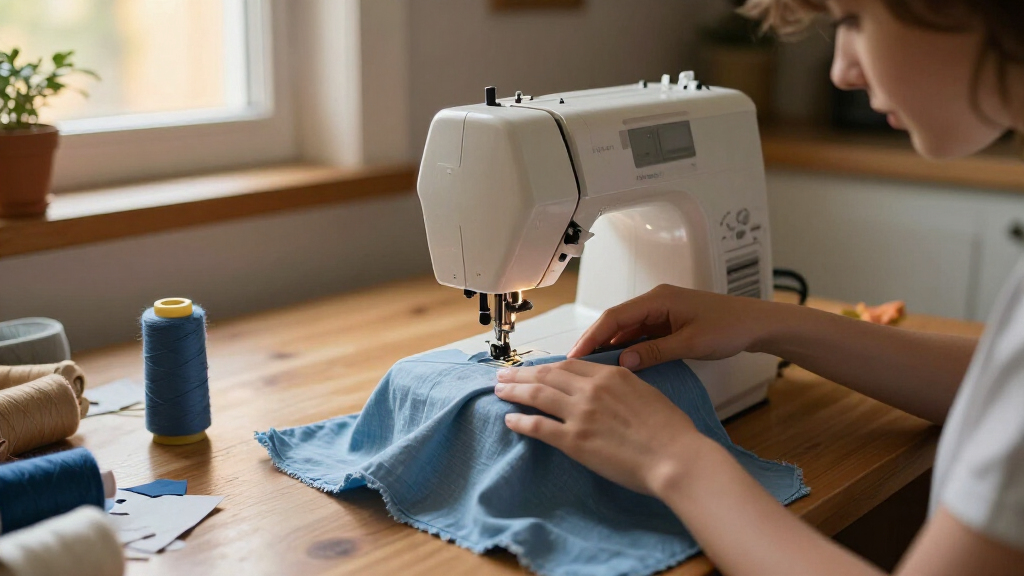
I compared these machines through the needs of a first-time buyer: how clear the controls appear, how much stitch choice a beginner can use, whether the machine can support projects beyond basic repairs, and what tradeoffs come with portability or specialized features. I also considered the practical value of included accessories, the difference between mechanical and computerized controls, and whether a model’s stated focus—such as heavy-duty sewing or quilting—matches a beginner’s likely projects. Product claims alone do not establish how a machine handles every fabric, so I avoid treating stitch counts or bundled kits as proof of performance.
The ranking favors machines that offer a usable starting point without asking a beginner to pay for features they may not need or learn an unnecessarily specialized setup. The Brother GX37 leads as a balanced option; the CS5055 and CS7000X rank higher for shoppers who want computerized or quilting-oriented features, while mechanical and compact picks are better matches for narrower needs. Mini machines and bundles remain useful for limited tasks, but their portability or included supplies do not make them equivalent to a full-size machine for ongoing garment and home projects.
Factors to Consider When Choosing Sewing Machines For Beginners
Before choosing among these beginner machines, I would start with the projects you are likely to sew and the setup you can comfortably maintain. A beginner-friendly feature is only helpful when it reduces friction for your work; extra stitches or accessories can add little if you mainly plan to hem and make simple repairs.
Match the machine to your first projects
List the projects you expect to make in the first few months: repairs, simple garments, crafts, or quilts. Basic straight and zigzag stitches cover many early tasks, while decorative stitches are less useful if you have not settled on a project style. Quilting can call for more workspace and a different accessory setup, so a machine marketed for quilting may be a better fit if that is a real goal rather than a distant possibility. A common mistake is buying for an imagined future hobby and then dealing with controls that feel unnecessary today. I would choose a machine that handles current projects comfortably and leaves a reasonable path to expand.
Choose controls that match how you learn
Mechanical machines generally present stitch selection and adjustments through physical dials, while computerized models use electronic controls and may provide more guided settings. Neither type is automatically easier: some learners like seeing a dial position, while others prefer a displayed selection. Think about whether you want to adjust settings manually or have the machine help keep settings coordinated. Before buying, check that the threading and bobbin instructions are clear and accessible, since those tasks shape the early learning experience more than a long stitch list. Avoid paying for an interface you do not expect to use.
Treat stitch count as a starting clue, not a score
A larger stitch selection can add options, but it does not tell you how easy the machine is to operate or how well it suits your fabric and projects. For beginner work, a dependable straight stitch, zigzag, and useful buttonhole approach may matter more than many decorative patterns. Consider whether you can adjust stitch length and width in a way you understand, and whether the manual explains those controls. A high stitch count can distract from basics such as threading, tension adjustment, and changing the presser foot. I would prioritize a short list of stitches you will use over a number that looks impressive on a box.
Check fabric plans before choosing a heavy-duty model
Fabric thickness varies widely, from lightweight cotton to denim layers and heavier home décor material. A heavy-duty designation may be relevant if sturdy fabrics are a regular part of your plans, but it does not make a machine the best choice for every beginner. Needle type, thread, presser-foot pressure, and careful fabric handling also affect results, and a machine’s label alone cannot promise smooth sewing through every stack. If most of your work is simple clothing or repairs, compare everyday ease and controls before prioritizing a heavy-duty feature. Choose for the materials you actually expect to sew, not an occasional worst-case project.
Weigh portability against workspace and stability
Compact machines can suit a small home, occasional mending, or a learner who needs to store the machine after each session. The tradeoff is that portability may come with a smaller working area or a more limited role than a conventional full-size machine. If you plan to sew regularly, handling larger fabric pieces and keeping a comfortable work position may matter more than easy storage. Also check the machine’s dimensions and weight against your storage spot rather than assuming that “portable” means effortless to move. For a primary machine, prioritize a workable sewing area; for occasional tasks, compactness may be the better compromise.
Separate useful accessories from bundle appeal
Included thread, fabric, and starter kits can help a new sewist begin without sourcing every small item separately. Still, a bundle is only valuable if its contents match your projects and are usable with the machine. Confirm what is included, whether essential feet or needles are available, and whether replacement supplies are easy to source. A finger guard or starter fabric may help with early practice, but neither replaces learning safe handling and machine setup. Compare the machine itself first, then treat bundled accessories as a convenience rather than the main reason to choose it.
Frequently Asked Questions
Should I choose a mechanical or computerized machine as my first sewing machine?
I would choose based on the controls you find easier to understand, not on the idea that one type is inherently more advanced or beginner-friendly. A mechanical machine offers direct physical adjustments, while a computerized model may make stitch selection more guided. If you mainly want to learn basic sewing, either format can work; the quality of the instructions and clarity of the controls matter more than the category. Consider whether you want to learn settings manually or prefer a display to help organize them. The Brother FB1757X and Janome Arctic Crystal represent the mechanical direction here, while the Brother CS5055 and CS7000X illustrate computerized options.
Is a mini portable sewing machine enough for learning to sew?
A compact machine can be enough for occasional mending, small crafts, or basic practice, particularly when storage space is tight. It may be less suitable as a long-term primary machine if you plan to sew garments, handle larger fabric pieces, or work regularly. The portable options in this roundup vary, so check their included functions and setup rather than assuming all compact machines have the same capabilities. A bundle can make practice convenient, but it does not answer whether the machine suits your projects. If you expect to sew often, compare a compact model with a conventional machine before choosing.
Do beginners need a heavy-duty sewing machine for denim?
Not every beginner who wants to sew denim needs a heavy-duty model. The number of layers, denim weight, seam bulk, needle, and thread all affect whether a project is manageable. A machine designed with sturdier-material use in mind, such as the Brother ST371HD, is worth comparing if heavier fabrics will be a regular part of your work. For occasional denim hems, a standard machine may still fit your broader needs, though you should check its instructions and work within its stated limits. Avoid forcing fabric through the machine; that can cause poor stitches or damage.
Are more built-in stitches worth prioritizing for a beginner?
Usually, stitch count should come after ease of threading, clear controls, and the stitches your projects actually require. Many new sewists rely heavily on straight and zigzag stitches at first, so a larger menu may not change day-to-day use. Extra choices become more useful when you have a specific craft, decorative sewing, or garment technique in mind. The Brother GX37 and XM3700 offer broad stitch selections, while simpler machines may suit learners who want fewer choices to manage. I would compare stitch functions and adjustment options rather than selecting by the largest number alone.
When does a beginner need a sewing and quilting machine instead of a basic model?
A quilting-focused machine makes sense when quilting is a planned regular activity, especially if its workspace, included accessories, or controls support the projects you intend to make. It may be unnecessary for someone learning through repairs and simple garments, since added specialization can mean features that remain unused. The Brother XR9550 and CS7000X are the quilting-oriented choices in this lineup, while the GX37 is a more general-purpose pick. Compare the machine’s included quilting accessories and available working space rather than relying on the label alone. If quilting is only a future possibility, a versatile basic machine may be a more comfortable first step.
Conclusion
For the best overall, I recommend the Brother GX37 for its balance of beginner accessibility and room to explore different stitches. The best value direction is a straightforward mechanical option such as the Brother FB1757X if your priority is learning core sewing without paying for computerized or quilting-focused features. For the best premium feature set, look to the Brother CS7000X if quilting is part of your plan; choose the Brother CS5055 if you want computerized controls for general sewing. The Janome Arctic Crystal is my pick for beginners who prefer a simple mechanical format, while the Brother ST371HD is the more relevant choice for frequent work with sturdier fabric. For tight storage or occasional practice, compare the compact KPCB Tech, Rxmeili, Stoigeld, and Buvnatep models with a full-size machine before deciding.
Fall Picks
fall essentials
As an affiliate, we earn on qualifying purchases.