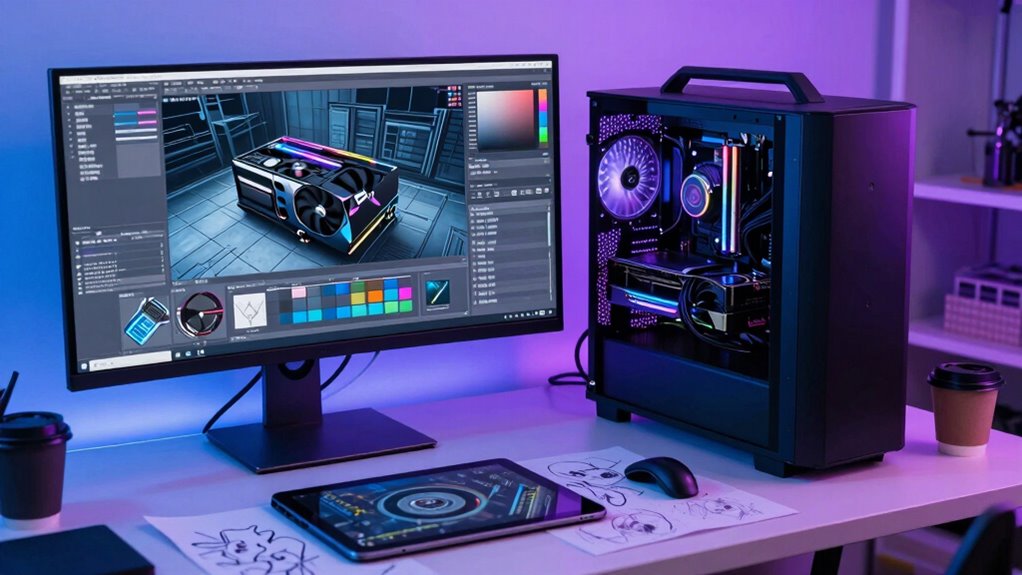

Radeon GPUs are more capable for creative tasks than many assume, offering great value, high performance, and excellent support for video editing, 3D rendering, and digital art. They excel in real-time editing, rendering, and AI workflows, making them a solid choice for many creatives. However, some workflows may face compatibility or performance quirks. To fully understand if Radeon suits your needs, explore how driver support, application compatibility, and workload demands impact performance.

Get hardware and tech essentials delivered free with Prime
- Fast, free delivery on millions of items
- Prime Video, Amazon Music and more included
- Member-only deals all year
Key Takeaways
- Radeon GPUs excel in demanding workflows like video editing, 3D rendering, and AI tasks due to strong hardware acceleration and stability.
- They offer excellent value and energy efficiency, benefiting budget-conscious creators with high-performance needs.
- Compatibility issues and limited customization options may impact performance in some specialized or software-dependent workflows.
- Regular driver updates and features like FidelityFX Super Resolution enhance responsiveness and workflow efficiency.
- Not ideal for workflows relying heavily on specific software optimizations or proprietary hardware, requiring careful compatibility checks.
Products Worth Considering

Amazon Kindle Paperwhite (12th Generation, 2024), 16 GB, 7-inch Display, Jade

Sony WH-1000XM4C Wireless Noise-Cancelling Headphones, Black

Apple AirPods Pro 3 Wireless Earbuds with Active Noise Cancellation
As an affiliate, we earn on qualifying purchases.
What Creators Need to Know About Radeon GPUs
If you’re a creator looking to optimize your workflow, understanding Radeon GPUs is essential. Radeon graphics cards are increasingly aligned with current gaming trends, offering powerful performance for demanding tasks. They’re known for their hardware affordability, making them a strong choice for those on a budget. Radeon GPUs excel in delivering smooth, high-quality visuals, which benefits creators working with video editing, 3D rendering, and multimedia projects. While they may not always match the top-tier options from competitors for specific tasks, they provide excellent value for the price. Staying informed about Radeon’s latest hardware developments helps you make smarter decisions, especially as gaming trends push demand for more capable GPUs. Additionally, understanding digital content formats can help creators leverage Radeon features more effectively. Exploring mental wellbeing practices can also improve overall productivity and focus during complex projects. Overall, Radeon GPUs offer a compelling balance of performance and affordability for many creators.
Benefits of Radeon GPUs for Creative Work
Radeon GPUs stand out for their ability to enhance creative workflows through a combination of performance and affordability. When working on color grading, you’ll appreciate how Radeon cards deliver smooth, real-time adjustments without lag, thanks to their strong hardware acceleration. This hardware support helps maintain color consistency throughout editing sessions, ensuring your project looks professional from start to finish. This consistency is further supported by their compatibility with color accuracy tools, enabling precise color management during editing sessions. This means you can preview effects quickly and make precise edits with confidence. Radeon GPUs handle demanding tasks like rendering and video editing efficiently, saving you time and reducing frustration. Their optimized hardware acceleration accelerates tasks that would otherwise slow down your workflow, allowing for faster turnaround times. Whether you’re fine-tuning visuals or working on complex projects, Radeon’s balance of power and cost-effectiveness helps you stay productive without breaking the bank. Furthermore, their support for hardware acceleration in various creative software ensures smoother operation across different applications. Additionally, their robust driver support contributes to a more reliable editing experience, minimizing crashes and ensuring stability during intensive tasks.
Best Creative Tasks for Radeon Graphics Cards
Creative tasks that benefit the most from Radeon graphics cards include video editing, 3D rendering, and digital painting. If you work with color grading, Radeon GPUs can accelerate real-time adjustments, making your workflow smoother and more responsive. For 3D modeling, these cards handle complex scenes and textures efficiently, reducing render times and improving viewport performance. Radeon’s hardware is well-suited for digital painting and illustration, offering fast brush responsiveness and reliable performance when working on detailed projects. Overall, Radeon graphics cards excel in tasks that demand high graphical throughput and color accuracy, enabling you to work more efficiently and with fewer interruptions. However, their performance varies depending on specific software and workflow requirements.
Radeon’s Strengths in Video Editing and Rendering
What makes Radeon graphics cards stand out in video editing and rendering is their ability to accelerate demanding tasks with remarkable efficiency. You’ll notice faster rendering times, especially when working with high-resolution footage or complex effects. Radeon’s hardware excels at handling color grading, allowing you to preview adjustments in real-time without lag. This smooth performance makes fine-tuning colors more intuitive and precise. Additionally, Radeon is strong in audio editing workflows, providing quicker rendering of soundtracks and effects. Its optimized drivers and hardware acceleration features help keep your editing pipeline flowing smoothly. Overall, Radeon cards enhance productivity by reducing wait times and enabling more responsive editing, making them a solid choice for creators focusing on video quality, color work, and audio integration.
Limitations of Radeon for Creative Workflows
You might encounter software compatibility issues, as some creative applications don’t fully support Radeon cards. Performance can also be inconsistent, especially with complex projects or demanding workflows. These limitations could impact your efficiency and the quality of your work.
Software Compatibility Challenges
Despite Radeon’s impressive hardware capabilities, you often encounter significant software compatibility challenges that can slow down your creative workflow. Many creative applications, especially those relying on specific GPU features, may not optimize well with Radeon cards, leading to instability or reduced performance. Hardware customization options are limited compared to competitors, which can restrict fine-tuning for demanding tasks. Additionally, some software developers prioritize branding strategies that favor NVIDIA or AMD’s proprietary technologies, making Radeon cards less compatible or requiring workarounds. These compatibility issues can force you to spend extra time troubleshooting or limit your ability to fully leverage Radeon’s hardware advantages. As a result, creative professionals must weigh these software limitations against hardware benefits when choosing a GPU for their workflows.
Performance Variability Issues
While Radeon hardware offers impressive performance on paper, real-world results can be inconsistent for creative tasks. Hardware limitations, like driver optimization gaps, lead to performance variability that affects workflow stability. These issues often stem from marketing misconceptions, where advertised benchmarks don’t always reflect everyday use. You might notice inconsistent rendering times or occasional freezes, especially with complex projects or certain software. This variability can hinder productivity and cause frustration. Unlike some competitors, Radeon’s performance isn’t always predictable across different creative applications. To mitigate this, you may need to tweak settings or wait for driver updates. Ultimately, while Radeon can handle many creative workflows well, these performance fluctuations highlight its limitations, making it less reliable for professionals seeking seamless, consistent results. Additionally, performance variability issues can be exacerbated by hardware limitations or driver gaps, which may be addressed by ongoing driver optimizations from AMD.
Deciding When to Use Radeon or Nvidia for Creators
Choosing between Radeon and Nvidia depends on your specific creative needs and workflow priorities. If your work benefits from optimized GPU architecture or demands high power efficiency, your choice matters. Radeon often excels in power efficiency and cost-effectiveness, making it suitable for longer sessions or energy-conscious setups. Nvidia, with its mature ecosystem and optimized drivers, can deliver consistent performance for demanding tasks. Use the table below to evaluate your priorities:
| Priority | Radeon | Nvidia |
|---|---|---|
| GPU Architecture | Innovative, suited for certain workflows | Mature, widely supported |
| Power Efficiency | Strong, reduces energy costs | Good, but varies with models |
| Creative Apps | Improving, better support growing | Excellent, optimized drivers |
| Workflow Suitability | Ideal for energy-conscious creators | Best for high-demand, professional workflows |
How Radeon Drivers Support Creative Applications
Radeon drivers are designed to guarantee your creative applications run smoothly by offering optimized compatibility. Regular driver updates keep your system supported with the latest features and fixes, boosting stability. This results in enhanced performance, so you can focus on your work without interruptions. Incorporating structured creativity exercises can further help in maximizing your creative potential.
Optimized Application Compatibility
Have you ever struggled with software crashes or lag when working on creative applications? Radeon drivers prioritize optimized application compatibility, ensuring smooth workflows. They achieve this through close hardware integration, which minimizes conflicts and boosts performance. By supporting a wide range of creative benchmarks, Radeon drivers help you push your hardware to its limits without stability issues. This comprehensive approach reduces cable failures, leading to a more reliable setup. Additionally, their support for Indonesian decor masks and other cultural artifacts demonstrates a commitment to diverse creative environments, making them suitable for a variety of unique setups. This means fewer crashes, quicker rendering, and more reliable editing sessions. You’ll notice that professional tools like Premiere Pro, DaVinci Resolve, and Photoshop run more seamlessly, thanks to tailored driver support. The focus on optimized application compatibility means your creative process becomes more efficient, letting you focus on your work instead of troubleshooting. Radeon’s approach empowers creators to *access* their full potential with confidence.
Regular Driver Updates
Regular driver updates are essential for keeping your creative applications running smoothly and efficiently. These updates optimize performance, improve stability, and guarantee compatibility with the latest software features. Radeon drivers often include enhancements that boost gaming benchmarks, which can also benefit creative workflows that rely on GPU acceleration. Additionally, updated drivers help manage power consumption better, reducing heat and energy use during intensive tasks. Regular updates fix bugs and security vulnerabilities, keeping your system secure. Staying current with driver releases ensures you get the most out of your hardware, whether you’re rendering videos, working with 3D models, or editing high-resolution images. Moreover, market evidence shows that consistent driver updates are crucial for maximizing GPU performance in creative tasks. Ensuring your drivers are up-to-date can also help mitigate issues caused by software incompatibilities, leading to a more stable creative environment. Regular driver updates also support compatibility with new software features, which can enhance your workflow and unlock new creative possibilities. Understanding the importance of astrological influences and their impact on personal traits can sometimes inspire creative projects and new perspectives. Incorporating natural pool design elements can further enhance your workspace’s aesthetic appeal and inspire creativity. Overall, keeping your Radeon drivers up-to-date is a simple yet vital step to maximize performance and efficiency in your creative projects.
Enhanced Creative Performance
Updated Radeon drivers incorporate advanced features that directly enhance creative workflows. They optimize your creative hardware, allowing smoother rendering, faster previews, and more precise color management. This support fuels your artistic inspiration, making complex projects feel achievable. With these enhancements, you can focus on your vision without technical interruptions. Radeon drivers also improve stability, reducing crashes during intensive tasks, so your momentum never stalls. The seamless performance enables you to experiment freely, pushing boundaries in your creative pursuits. Additionally, reliable driver support helps ensure your system remains stable during long creative sessions.
Radeon vs Nvidia: Which GPU Is Better for Creators?
When choosing a GPU for creative work, you might wonder whether Radeon or Nvidia offers better performance and features tailored to your needs. Gaming benchmarks often favor Nvidia’s high-end cards, showcasing superior frame rates and raw power, which benefits tasks like 3D rendering and real-time previews. However, power consumption is a key consideration; Radeon GPUs typically consume less energy, making them more efficient for longer work sessions. Nvidia also provides features like CUDA cores, which can accelerate specific creative workflows. While Nvidia’s performance in gaming benchmarks is impressive, Radeon’s efficiency and cost-effectiveness often make it a compelling choice for creators focused on balance. Ultimately, your decision should align with your workflow, budget, and whether gaming performance or energy efficiency matters most.
Optimizing Your Radeon GPU for Creative Tasks
To get the most out of your Radeon GPU for creative work, you should focus on driver optimization techniques and guarantee your software is fully compatible. Fine-tuning settings and updates can markedly boost performance and stability during intensive tasks. Additionally, adopting workflow performance enhancements helps streamline your process and maximize productivity. Incorporating mind-body healing techniques can also support mental clarity and reduce stress during demanding creative sessions.
Driver Optimization Techniques
Optimizing your Radeon GPU for creative tasks begins with fine-tuning driver settings to maximize performance and stability. Adjusting options within the user interface can release your GPU’s full potential, ensuring smoother workflows. Focus on customizing settings related to hardware accessories to reduce latency and improve responsiveness. Keep your drivers up-to-date to benefit from the latest enhancements and bug fixes, giving you confidence in your setup. Experiment with performance modes tailored for creative work, balancing power and efficiency. Fine-tuning these parameters can lead to a more immersive experience, helping you avoid frustrating glitches. Remember, a well-optimized driver setup makes a significant difference in your productivity and creative output. Understanding how driver optimization impacts performance can further enhance your workflow.
Software Compatibility Tips
Ensuring your Radeon GPU works seamlessly with your creative software starts with verifying compatibility and proper configuration. Check that your software supports AMD hardware and that you’re running the latest drivers. Sometimes, hardware upgrades like adding more RAM or upgrading to a higher-tier GPU improve overall performance, reducing bottlenecks. Adjust settings within your creative programs to optimize GPU utilization, such as enabling hardware acceleration where available. Additionally, understanding marketing strategies from AMD can help you leverage features like Radeon Pro software or specific driver profiles tailored for creative workflows. Keep your system updated and regularly review software compatibility lists. This proactive approach guarantees your Radeon GPU delivers consistent, reliable performance, making your creative tasks smoother and more efficient.
Workflow Performance Enhancements
Maximizing your Radeon GPU’s performance for creative tasks involves fine-tuning settings and leveraging hardware features effectively. Focus on optimizing hardware integration to guarantee seamless workflow and reduce bottlenecks. Enable features like Radeon Boost and FidelityFX Super Resolution to boost performance without sacrificing quality. Adjust driver settings specifically for creative applications to enhance stability and speed. Use Radeon Software’s performance monitoring tools to identify and address issues quickly. This approach not only improves your workflow but also fosters creative collaboration by enabling real-time edits and faster rendering. With the right adjustments, your GPU becomes a powerful partner, accelerating productivity while maintaining high visual standards. Additionally, understanding the hardware capabilities of your GPU allows for more precise optimizations tailored to your creative needs.
Common Creative Workflows Well-Suited for Radeon
Many creative workflows benefit from Radeon’s powerful graphics and processing capabilities, making them more efficient and seamless. If you work with AI integration, Radeon’s hardware accelerates machine learning tasks, speeding up rendering and automation processes. For VR optimization, Radeon cards provide smooth, low-latency performance, essential for immersive experiences. This makes it ideal for VR content creators, developers, and designers who need reliable, high-quality visuals. Additionally, Radeon’s hardware supports real-time editing and rendering workflows in 3D modeling, animation, and video production, reducing lag and improving productivity. Incorporating Vetted – Mother Baby Kids practices can also ensure that your workflow remains safe and efficient when handling sensitive projects. These features combine to benefit creators seeking a versatile GPU that enhances AI-driven projects and VR applications, ensuring your creative work stays fluid and responsive. Radeon excels in workflows demanding high processing power and visual fidelity.
Frequently Asked Questions
How Do Radeon GPUS Compare to Nvidia in Price for Creators?
You’ll find Radeon GPUs often cost less than comparable NVIDIA cards, especially when considering graphics card pricing, making them attractive for budget-conscious creators. However, consider creative software compatibility, as some programs work better or are optimized for NVIDIA’s CUDA technology. While Radeon offers good performance for many tasks, if your workflow relies heavily on software with NVIDIA-specific features, the price difference might not justify the switch.
Are Radeon GPUS Compatible With All Major Creative Software?
You’ll find Radeon GPUs generally compatible with major creative software, but it’s like tuning a musical instrument—software optimization varies. Keep your drivers updated, like tending a garden, for the best performance. Some applications may lean more towards NVIDIA’s ecosystem, so always check compatibility and recent driver updates. While Radeon cards work well for many tasks, ensuring your specific software benefits from their drivers keeps your creative flow smooth and harmonious.
What Specific Radeon Models Are Best for 3D Rendering?
For 3D rendering, you should consider Radeon models like the RX 7900 XTX or RX 6950 XT. These GPUs feature advanced GPU architecture, offering high core counts and memory bandwidth that accelerate rendering tasks. Plus, AMD’s driver optimization is tailored for creative workflows, ensuring stability and performance. This combination makes these models ideal choices for demanding 3D projects, helping you render faster and more efficiently.
How Do Radeon Drivers Impact Workflow Stability and Performance?
When it comes to workflow stability and performance, Radeon drivers are your frontline. Proper driver optimization guarantees smooth operation, reducing crashes and glitches, while solid hardware compatibility keeps everything running seamlessly. Think of drivers as the bridge connecting your hardware to software; if they’re not optimized or compatible, your work can grind to a halt. Staying updated and choosing the right drivers ensures your creative process stays fluid and reliable.
Can Radeon GPUS Handle Real-Time VR Content Creation Effectively?
Yes, Radeon GPUs can handle real-time VR content creation effectively, especially if you focus on VR optimization. They offer strong performance for demanding tasks, making your content creation smoother and more responsive. However, guarantee your system is well-optimized for VR workflows, including compatible drivers and adequate hardware. With proper setup, Radeon cards can deliver a seamless experience for real-time VR content creation, boosting productivity and immersion.
Conclusion
Think of your GPU as the engine of your creative journey. I once watched a filmmaker switch from Nvidia to Radeon and open new possibilities in her workflow—like discovering a hidden trail that leads to fresh inspiration. Radeon GPUs might not be perfect for every task, but with the right setup, they can fuel your projects with power and reliability. Embrace the potential, and let your creativity drive you forward.