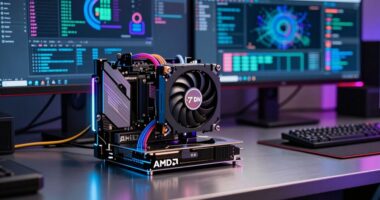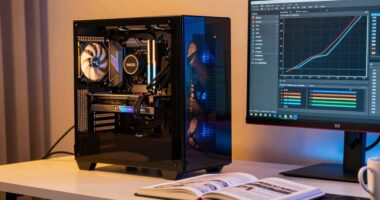

The noise levels of Radeon cards vary widely because of cooling design differences. Efficient systems with larger heatsinks, heat pipes, and optimized airflow reduce fan speeds and vibrations, making cards quieter. Innovations like better fan blade geometry and advanced manufacturing help lower noise further, whether air or liquid cooled. If you want to understand how these design tweaks impact sound, explore the factors that influence GPU noise and performance in more detail.

Get hardware and tech essentials delivered free with Prime
- Fast, free delivery on millions of items
- Prime Video, Amazon Music and more included
- Member-only deals all year
Key Takeaways
- Different cooling designs, such as air versus liquid cooling, significantly impact Radeon card noise levels.
- Advanced heatsink and heat pipe technologies improve heat dissipation, reducing fan speeds and noise.
- Larger, high-quality fans operate more quietly at lower RPMs, enhancing overall silence.
- Innovations like optimized fan blade geometry and seamless airflow channels minimize turbulence and vibrations.
- Proper thermal management and installation practices are crucial for maintaining quiet operation across Radeon models.
As an affiliate, we earn on qualifying purchases.
How Cooling Design Affects Radeon GPU Noise
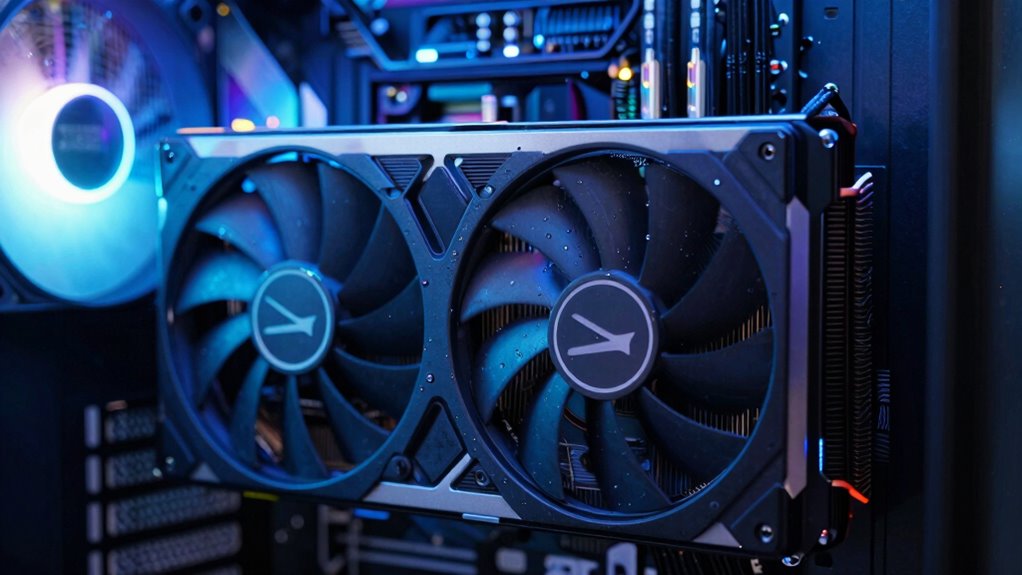
Cooling design plays a crucial role in how much noise your Radeon GPU produces during operation. When you push your GPU through overclocking, it generates more heat, leading to increased fan speeds and louder noise. A well-designed cooling system manages heat efficiently, reducing the need for fans to spin at high RPMs. A balanced airflow system ensures that heat is dissipated effectively without overworking the fans, contributing to quieter operation. Modern cooling solutions also incorporate features like multiple fans or larger heatsinks, which help keep temperatures down quietly. Additionally, some cooling designs integrate RGB lighting effects, which can add to the overall noise if fans aren’t optimized. Choosing a Radeon card with an advanced cooling system guarantees quieter operation, even during intense GPU overclocking, while still allowing you to enjoy customizable RGB effects without sacrificing silence. Effective cooling design helps improve overall performance and extends the lifespan of your GPU, especially when considering cooling efficiency as a key factor in noise reduction.
liquid cooling system for Radeon GPU
As an affiliate, we earn on qualifying purchases.
As an affiliate, we earn on qualifying purchases.
The Evolution of Radeon Cooling for Quieter Performance
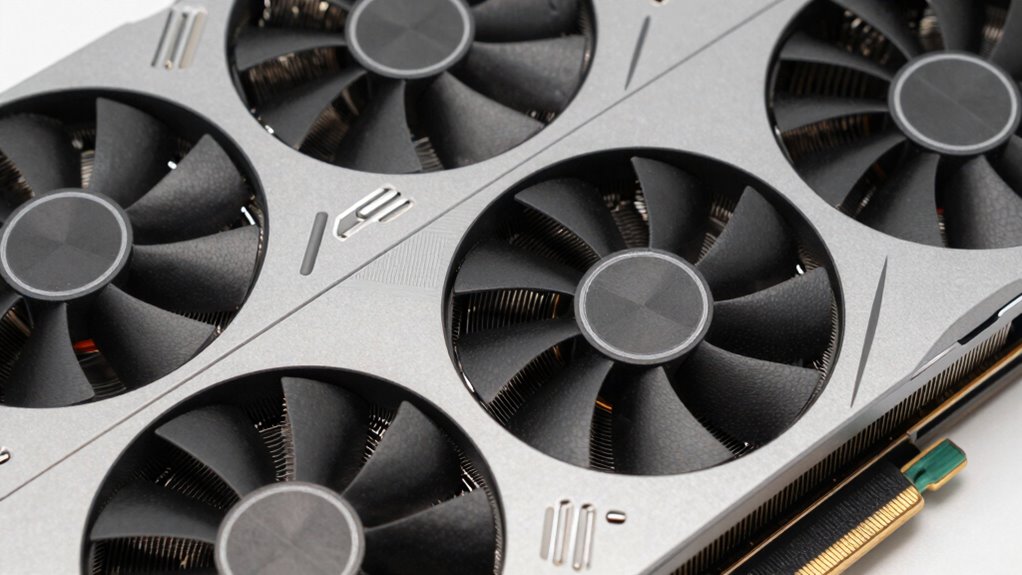
As Radeon GPUs have advanced, so too has their cooling technology, evolving from basic heatsinks to sophisticated systems designed for quieter operation. Modern cooling solutions now incorporate features like color customization, allowing you to personalize your setup for a sleek look. Software monitoring plays a vital role, giving you real-time control over fan speeds and temperatures, ensuring ideal noise levels. These innovations help keep your GPU cool without sacrificing silence, even under heavy loads. Manufacturers have focused on integrating quieter fans and enhanced airflow paths, making cooling more efficient and less disruptive. Additionally, cooling design changes have been crucial in reducing overall noise levels and improving thermal management. The integration of advanced airflow dynamics has further optimized cooling efficiency while keeping noise to a minimum, demonstrating the ongoing commitment to thermal performance improvements in Radeon cards. Improved thermal management techniques continue to enhance the balance between cooling efficiency and noise reduction, ensuring a better user experience.
Furthermore, innovations in fan blade geometry have contributed to quieter operation by reducing turbulence and airflow noise.
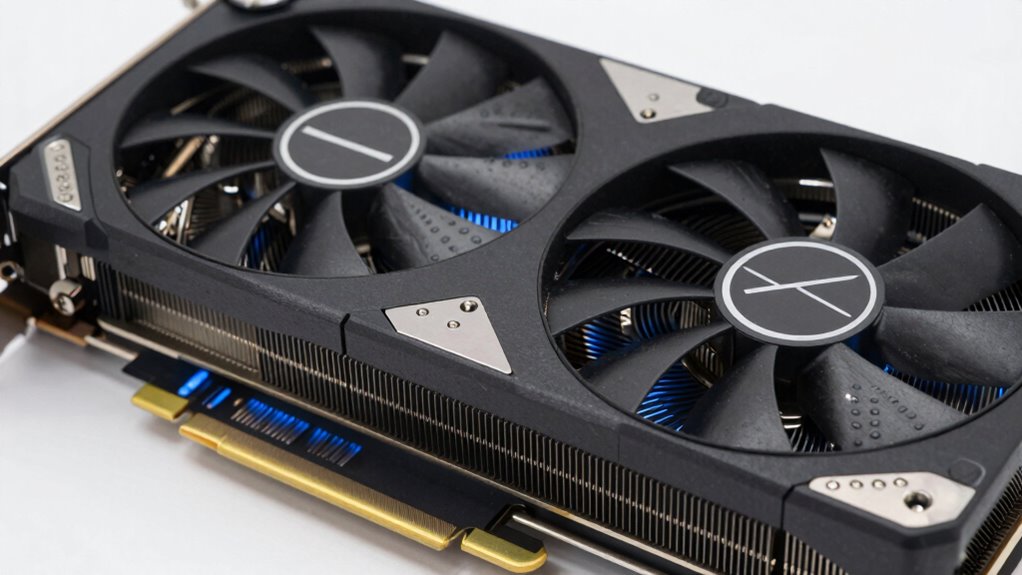
high airflow heatsink for Radeon graphics card
As an affiliate, we earn on qualifying purchases.
As an affiliate, we earn on qualifying purchases.
Air vs. Liquid Cooling: Which Is Quieter for Radeon GPUs?
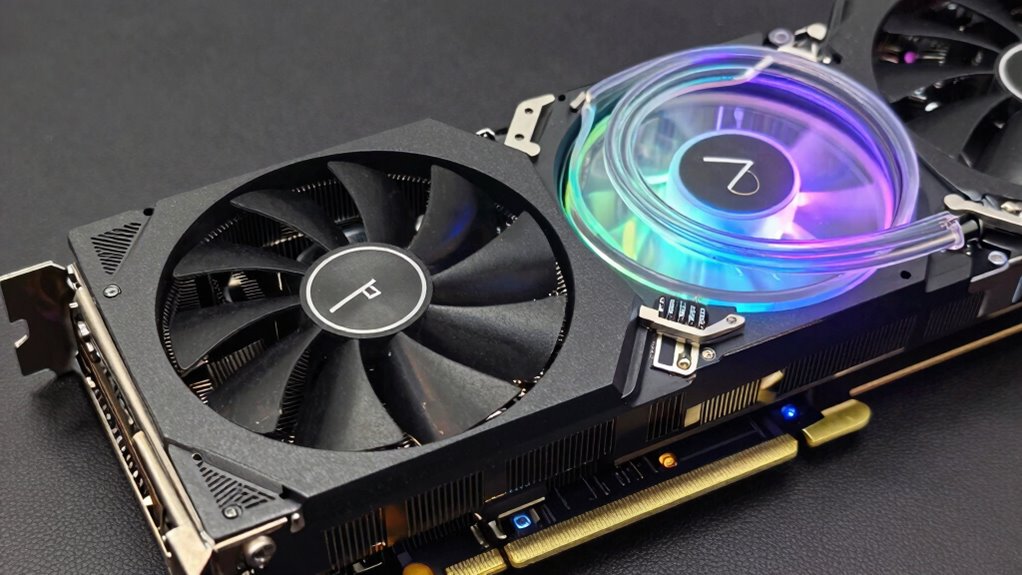
When comparing air and liquid cooling for Radeon GPUs, the choice often boils down to noise levels and overall quietness during operation. Liquid cooling tends to be quieter because it often runs at lower fan speeds, reducing noise from vibrations. However, it can generate more noise from the pump, especially if not well-designed. Air cooling can be noisier at high loads, but premium models with larger fans and optimized blades can maintain quieter operation. Color calibration impacts the work environment, making quieter cooling options more appealing for color-sensitive tasks. Power consumption also influences noise; higher power use often means increased fan or pump activity, which affects sound levels. Additionally, home soundproofing techniques can help minimize the overall noise impact in your environment. Understanding thermal management principles can further help optimize your cooling choice for both performance and noise reduction. Furthermore, selecting the right cooling solution can significantly improve your overall user experience by balancing noise, heat, and efficiency, especially when considering system airflow and case design.
As an affiliate, we earn on qualifying purchases.
How Fan Size and Speed Impact GPU Noise
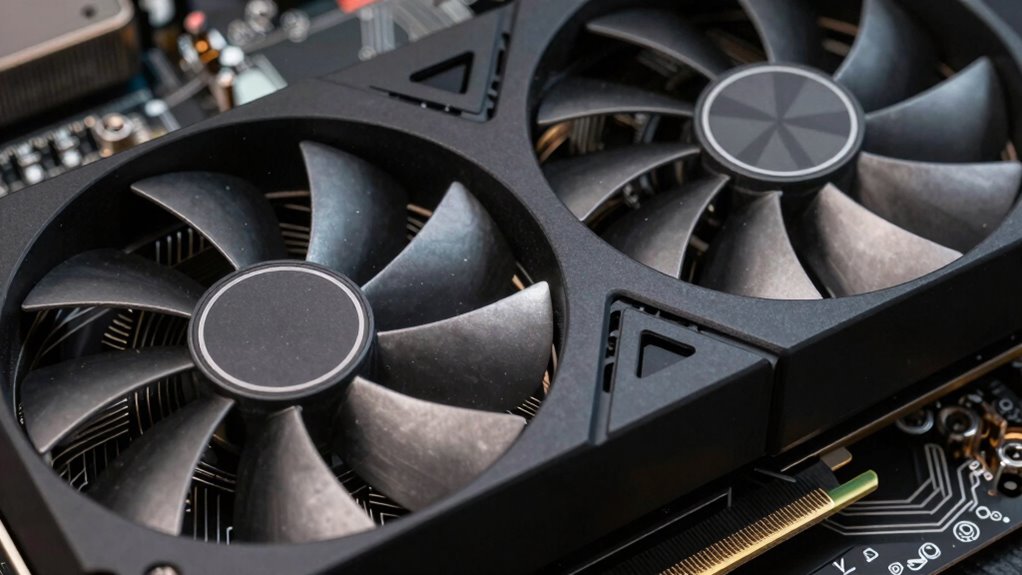
Larger fans move more air at lower RPMs, which generally results in quieter operation because they don’t need to spin as fast to cool your GPU effectively. Slower spinning fans generate less noise, helping you maintain a peaceful gaming or work environment. As fan size and speed vary, so does your GPU’s noise profile, impacting overclocking performance and aesthetic customization options. Additionally, airflow management principles highlight the importance of proper airflow and cooling strategies in maintaining device longevity. Incorporating thermal design considerations can further optimize the balance between cooling efficiency and noise levels. Proper fan curve settings can help automate fan speed adjustments, reducing noise during lighter loads while ramping up cooling when necessary. Emphasizing natural pool elements, such as native plants and natural filtration, can also contribute to a quieter, more eco-friendly setup.
How Heatsinks and Heat Pipes Reduce Noise
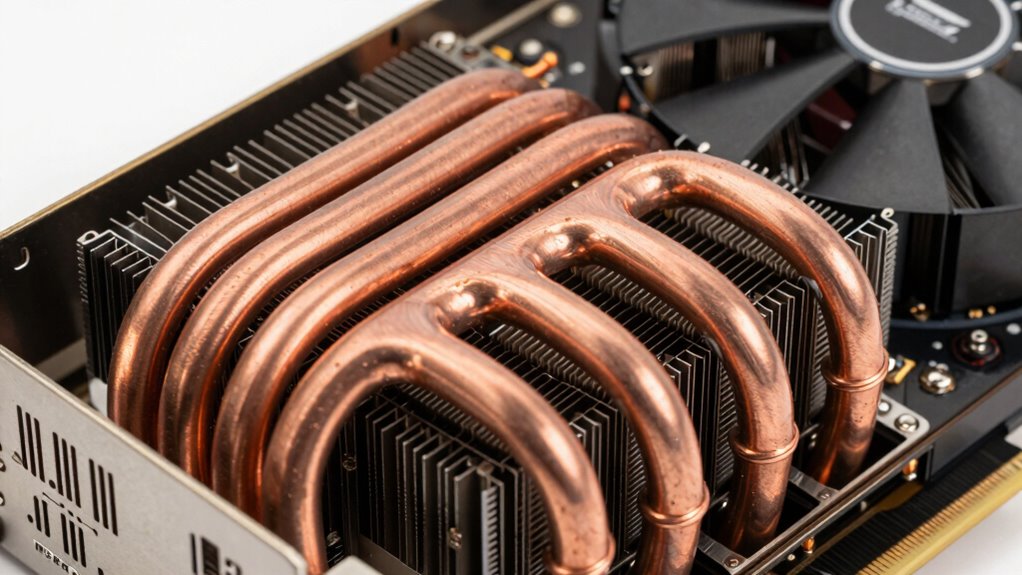
Heatsinks and heat pipes improve heat dissipation, which helps keep your system cooler without relying heavily on fans. As a result, your fans don’t need to spin as fast or loud, reducing overall noise. This not only enhances your gaming experience but also extends the lifespan of your hardware by maintaining optimal operating temperatures. Using proper safety tips when installing these components ensures you avoid damage and maintain thermal management for peak performance. Additionally, understanding safe installation techniques can prevent overheating and prolong the lifespan of your hardware. Proper knowledge of retail store return policies can also be helpful if you need to exchange or troubleshoot components during setup. Incorporating high-quality cooling solutions, such as those used in advanced gaming setups, can further optimize temperature control and minimize noise levels.
Enhanced Heat Dissipation
Efficient heat dissipation plays a crucial role in reducing noise levels in cooling systems. When heat is managed effectively, your GPU stays cooler, and fans don’t need to spin as fast, minimizing noise. Heatsinks and heat pipes are key to enhancing thermal management by spreading heat evenly and directing it away from critical components. Proper airflow optimization ensures hot air exits quickly, preventing overheating. Visualize a sleek heatsink with fins that increase surface area, or heat pipes that snakingly transfer heat across the cooler body. Imagine:
- A large, finned heatsink drawing heat away from the GPU
- Heat pipes efficiently moving heat to the heatsink’s edges
- Optimized airflow channels guiding cool air inward
- Hot air being expelled swiftly through vents
- Reduced fan speed due to better heat distribution
- Early detection of rising temperatures helps prevent thermal issues before they escalate. Additionally, understanding the yarn weight and stitch type can help in designing cooling solutions that optimize airflow and heat dispersion.
Reduced Fan Load
By improving heat transfer through heatsinks and heat pipes, you can substantially reduce the load on your fans. When cooling efficiency increases, your fans don’t need to spin as fast or work as hard, leading to less fan noise. Heatsinks with larger surface areas and heat pipes that quickly transfer heat away from the GPU help distribute heat more evenly. This means your fans can operate at lower speeds, making your system quieter. Reduced fan load doesn’t just cut noise; it also improves overall longevity by lessening wear on the fan motors. By optimizing the heatsink and heat pipe design, you create a more efficient cooling system that keeps temperatures in check while maintaining a quieter, more enjoyable gaming or working experience.
Quieter Gaming Experience
When heat transfer is improved through the use of larger heatsinks and heat pipes, fans don’t need to run as fast to keep temperatures in check. This means your gaming sessions stay quieter, letting you focus on the action. With reduced fan speeds, noise levels drop markedly, creating a more immersive experience. Cooler GPU temperatures also enable better GPU overclocking and power efficiency, without sacrificing performance. Visualize a sleek heatsink silently dissipating heat, with heat pipes snaking through the design to quickly transfer warmth away. Imagine fans spinning gently, barely audible, even during intense gameplay. Think of a system that balances cooling and silence effortlessly, making long gaming marathons more comfortable and enjoyable. This design truly transforms your gaming experience into a quieter, more efficient adventure.
Manufacturing Innovations That Make Radeon Cooling Quieter
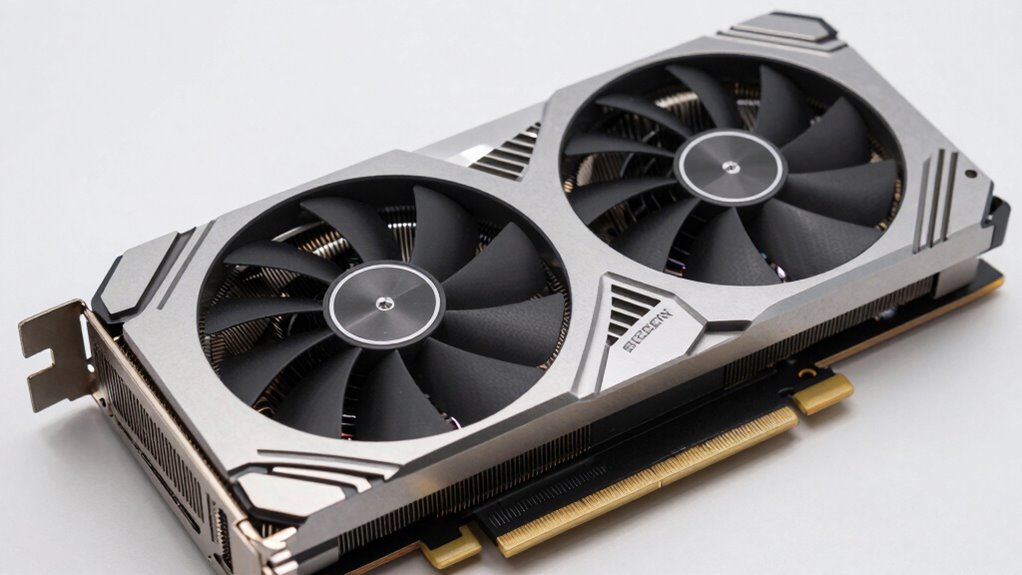
Manufacturing innovations like advanced heat pipe designs and improved fan blade geometry are transforming Radeon cooling systems. These tweaks help reduce noise while maintaining ideal performance. By using innovative thermal interface materials, manufacturers guarantee quieter operation without sacrificing cooling efficiency.
Advanced Heat Pipe Designs
Innovative heat pipe designs have revolutionized Radeon cooling by considerably reducing noise levels while maintaining ideal performance. These advanced pipes utilize precision manufacturing to improve heat transfer, leading to quieter operation. They feature flattened, vapor chamber-inspired shapes that spread heat more evenly across the heatsink. Better thermal paste application guarantees efficient heat transfer from the GPU to the pipes, while airflow optimization directs cool air precisely where it’s needed.
Imagine:
- Thin, flat heat pipes hugging the GPU surface
- Smooth, uniform contact with thermal paste
- Channels that guide airflow seamlessly over critical areas
- Reduced vibrations from quieter heat dissipation
- Compact designs fitting tighter spaces without sacrificing cooling power
These innovations make your Radeon cards run cooler and quieter, enhancing your gaming experience.
Improved Fan Blade Geometry
Advancements in fan blade geometry have considerably boosted the quietness of Radeon cooling systems. By enhancing fan blade aerodynamics, manufacturers reduce turbulence and noise, allowing the fans to spin more smoothly at lower speeds. These refined blades generate less aerodynamic drag, decreasing the need for high RPMs that typically produce loud noise. Additionally, improved thermal interface enhancements complement these aerodynamic changes by ensuring better heat transfer, which helps keep the GPU cooler at lower fan speeds. As a result, you experience quieter operation without sacrificing cooling performance. The combination of precisely engineered fan blades and enhanced thermal interfaces creates a more efficient airflow path, minimizing vibrations and noise. This manufacturing innovation directly translates to a more peaceful gaming or working environment, all while maintaining ideal GPU temperatures.
Innovative Thermal Interface Materials
By incorporating cutting-edge thermal interface materials (TIMs), Radeon cooling systems achieve quieter operation without sacrificing performance. These innovative thermal interfaces improve heat transfer efficiency, enabling quieter fans and more stable temperatures. With advanced cooling innovation, TIMs now conform better to surface irregularities, reducing gaps and thermal resistance. Imagine a thermal interface so precise it eliminates hotspots, making your GPU run cooler and quieter.
- Ultra-thin layers that mold perfectly to GPU surfaces
- Enhanced heat conductivity for faster dissipation
- Reduced vibration and noise from improved contact
- Long-lasting materials resist thermal cycling
- Precision application ensures minimal thermal resistance
This evolution in thermal interface design brings a new level of efficiency, transforming how Radeon cards stay cool. These manufacturing innovations make a significant difference in delivering quieter, more reliable performance.
Tips to Keep Your Radeon GPU Quiet During Gaming
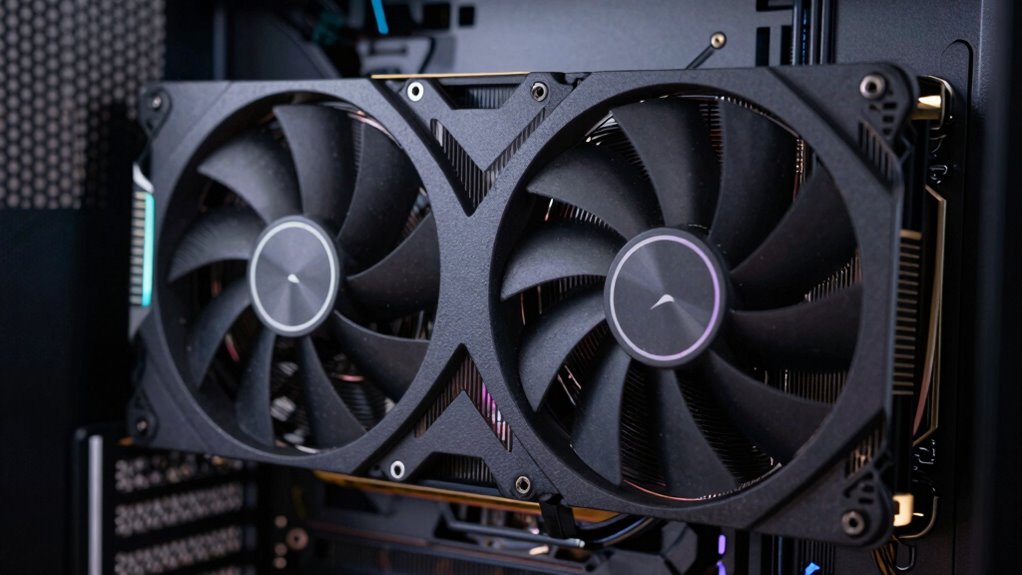
Keeping your Radeon GPU quiet during gaming can considerably improve your experience, especially if you value a peaceful environment. To achieve this, guarantee your overclocking stability isn’t compromised, as unstable settings can cause the GPU to work harder and generate more noise. Adjust fan curves to prioritize quieter operation without sacrificing cooling performance—many Radeon cards allow you to customize these settings through software. Additionally, if your GPU has RGB lighting effects, consider dimming or turning them off during intense gaming sessions to reduce any additional power draw and noise. Regularly cleaning dust from heatsinks and fans also helps maintain ideal airflow, preventing unnecessary fan speed increases. These small adjustments can make a noticeable difference in keeping your Radeon GPU quieter during those long gaming marathons.
Choosing a Quiet Radeon GPU: What to Look For
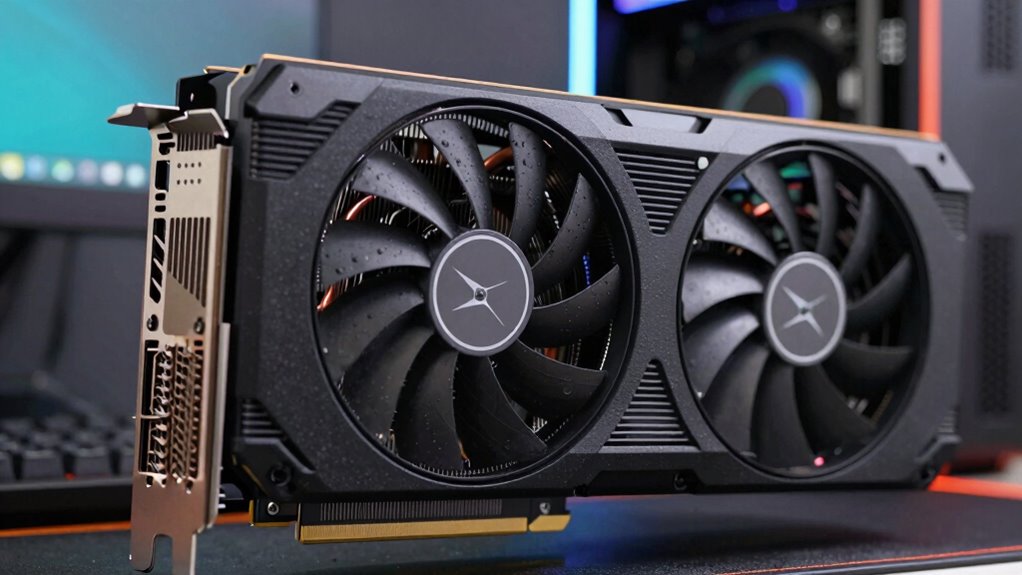
Are you searching for a Radeon GPU that runs quietly even during intense gaming sessions? To find one, focus on key features that promote silence and stability. Look for models with advanced cooling designs, like larger heatsinks or multiple fans, which help reduce noise. Check for overclocking stability—solid cooling guarantees your card stays quiet under increased loads. Consider models with customizable RGB lighting, as they often include quieter fan modes to enhance the aesthetic without sacrificing silence. Pay attention to fan curve settings; smoother, gradual increases keep noise low during light tasks. Also, read reviews to gauge real-world noise levels. A well-designed cooling system, combined with stable overclocking and subtle RGB lighting, guarantees a quieter, more enjoyable gaming experience.
Frequently Asked Questions
Do Aftermarket Cooling Solutions Improve Radeon GPU Noise Levels?
Yes, aftermarket cooling solutions can improve your Radeon GPU noise levels. By customizing fan profiles, you can reduce unnecessary fan speed, making your card quieter during less demanding tasks. Additionally, optimizing case airflow helps prevent heat buildup, allowing the cooling system to operate more efficiently and quietly. These upgrades create a smoother, quieter gaming experience, especially if you prioritize noise reduction and temperature management for your GPU.
How Does Ambient Room Temperature Affect GPU Noise?
Did you know that a 10°C increase in ambient temperature can raise GPU noise perception by up to 20%? When the ambient temperature rises, your GPU fans need to work harder to keep temperatures in check, resulting in increased noise levels. Conversely, cooler rooms help maintain quieter operation, as fans run at lower speeds. So, managing ambient temperature directly influences how loud your GPU sounds during intense tasks.
Are Factory-Overclocked Radeon Cards Louder Than Stock Models?
Factory-overclocked Radeon cards are generally louder than stock models because they push the GPU to higher speeds, which can affect overclocking stability and increase fan noise. The fan blade design also plays a vital role; some designs produce more noise at higher RPMs. If you’re sensitive to noise, consider models with optimized fan blade designs that balance cooling performance and sound levels, even when overclocked.
Can Software Control Fan Speed to Reduce Noise?
Yes, software control allows you to adjust fan speed, reducing fan noise on your Radeon card. You can customize fan profiles through tools like Radeon Software or third-party programs, giving you more precise control over cooling and noise levels. By lowering fan speeds when the GPU isn’t under heavy load, you minimize fan noise without risking overheating, providing a quieter gaming or working experience.
Do Higher-Quality Thermal Compounds Reduce GPU Noise?
Yes, higher-quality thermal compounds can reduce GPU noise. They improve the thermal interface, ensuring better heat transfer between the GPU and heatsink. When heat transfers efficiently, fans don’t have to spin as fast, decreasing noise levels. By upgrading to a better thermal compound, you optimize cooling, quiet your system, and keep temperatures in check. It’s a simple, smart step to silence the sound and stabilize performance.
Conclusion
If you think your Radeon card’s noise is just background hum, think again—it’s actually a secret symphony of cooling design choices fighting for dominance. With smarter fans, innovative heatsinks, and cutting-edge manufacturing, your GPU can run so whisper-quiet, you’ll swear it’s secretly a ninja. Don’t settle for deafening GPUs—demand the silence you deserve. Upgrade your cooling today, and transform your gaming into a zen-like experience so peaceful, it’ll feel like your PC’s powered by a whispering breeze.
Halloween Picks
halloween
As an affiliate, we earn on qualifying purchases.