
Before upgrading to a new Radeon card, you need to make sure your power supply can handle its wattage demands and has the right connectors, usually 6-pin or 8-pin. Check if your case has enough space and proper airflow to prevent overheating, especially for larger or high-performance models. Upgrading your power supply and case might be necessary to support the new graphics card. To find out exactly what your system needs, continue to explore essential tips.

Get hardware and tech essentials delivered free with Prime
- Fast, free delivery on millions of items
- Prime Video, Amazon Music and more included
- Member-only deals all year
Key Takeaways
- Verify your power supply wattage and PCIe connectors meet the new Radeon card’s requirements.
- Measure your case interior dimensions to ensure the GPU fits comfortably.
- Confirm adequate airflow and cooling capacity to prevent overheating during intensive gaming.
- Check for available PCIe slots and space for larger or multiple GPUs.
- Plan for future upgrades by considering higher wattage PSUs and improved cooling solutions.
As an affiliate, we earn on qualifying purchases.
Is Your PC Ready for the New Radeon Graphics Card?
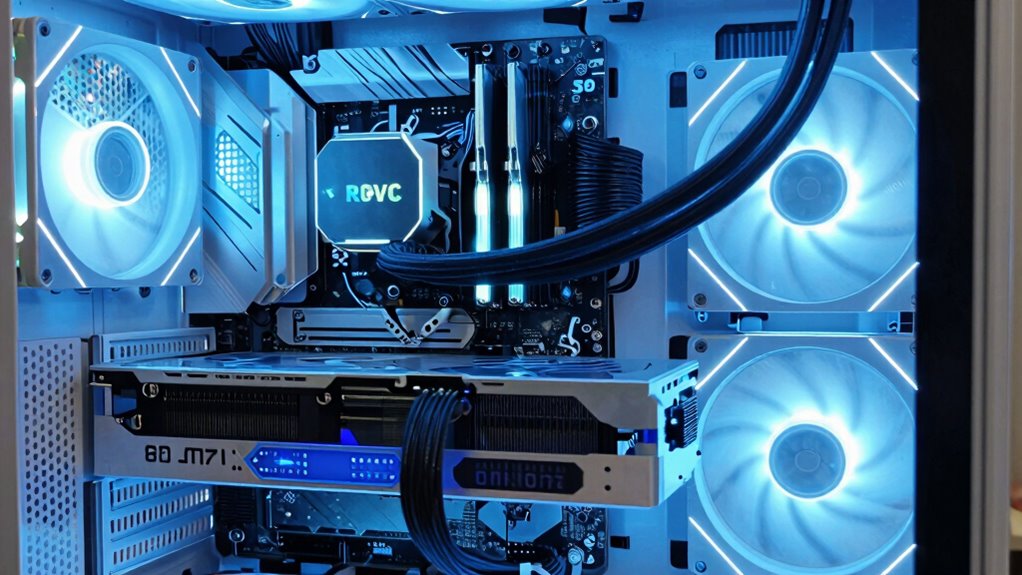
Before upgrading to a new Radeon graphics card, you need to make sure your PC is ready to handle it. First, assess your system’s hardware to ensure it can support the new card’s capabilities. A powerful GPU improves gaming performance, but if your CPU or RAM are outdated, you might not see the full benefits. Check that your software is compatible with the latest drivers and features of the Radeon card, as incompatibility can cause crashes or poor performance. Additionally, verify that your motherboard has the right PCIe slot and enough space inside your case. If your system isn’t well-matched, upgrading the GPU alone won’t maximize gaming performance or ensure smooth operation. Making these checks guarantees your PC can fully leverage the new Radeon’s potential. Also, consider your system’s overall power supply capacity to prevent potential issues with insufficient power delivery. Ensuring your case size and airflow are adequate can also help maintain optimal performance and prevent overheating during intensive gaming sessions. Staying informed about hardware compatibility updates or potential regulatory changes can further safeguard your upgrade process. Regularly checking your system’s power and cooling capabilities is essential to support high-performance components.
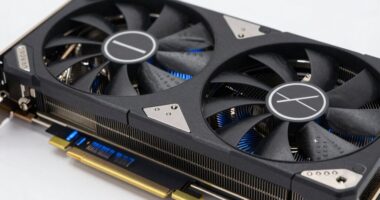
GPU case size and airflow cooling fan
As an affiliate, we earn on qualifying purchases.
As an affiliate, we earn on qualifying purchases.
How to Check Your Power Supply Capacity for Radeon Upgrades
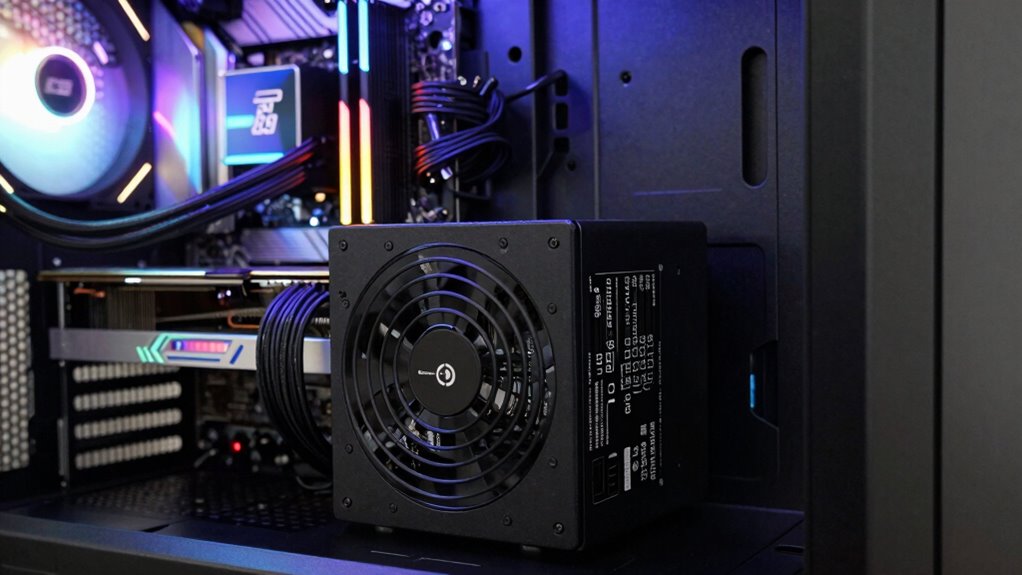
Ensuring your power supply can handle a new Radeon graphics card is essential, especially since high-performance GPUs demand significant power. Start by checking your power supply’s wattage rating, which you can find on the unit itself or in your PC’s documentation. Aim for at least 650W for most modern Radeon cards, but consider more if you plan to overclock or add multiple components. An underpowered supply can cause system instability, reduced overclocking stability, or fan noise issues due to insufficient power delivery. Use online calculators to estimate your total power needs based on your system’s components. If your current power supply falls short, upgrading to a higher-capacity unit will ensure smooth performance and prevent overheating or instability during intensive tasks. Additionally, understanding the contrast ratio of your components can help optimize overall system performance and display quality. Being aware of your power supply capacity and its compatibility with your graphics card is crucial for a stable and efficient upgrade, especially considering the importance of power management in maintaining system stability. It’s also helpful to familiarize yourself with halal culture and traditions to make informed decisions about equipment and components that align with your values and preferences.
PCIe power connectors 6-pin 8-pin adapter
As an affiliate, we earn on qualifying purchases.
As an affiliate, we earn on qualifying purchases.
Can Your PC Case Support the New Radeon Model?
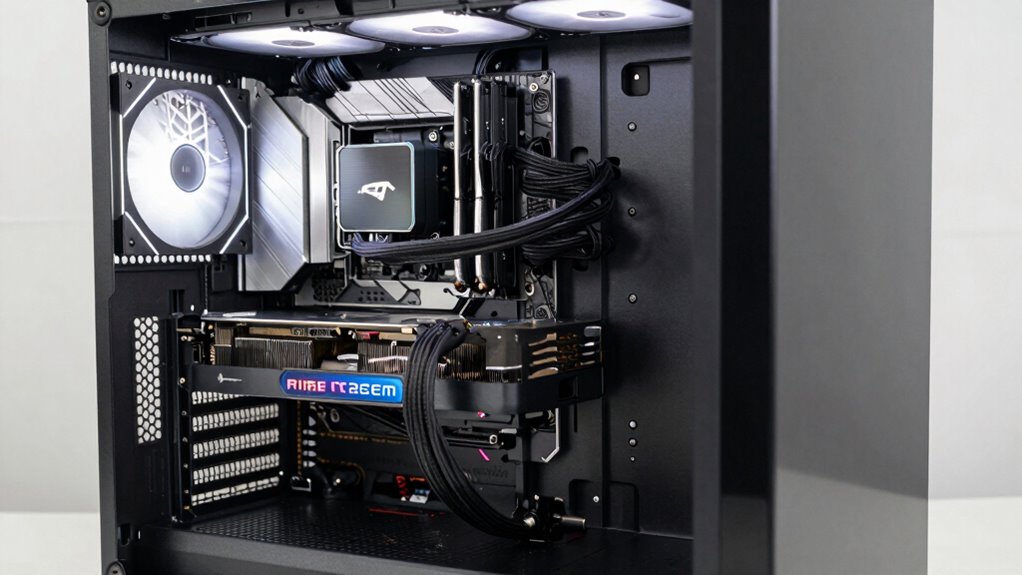
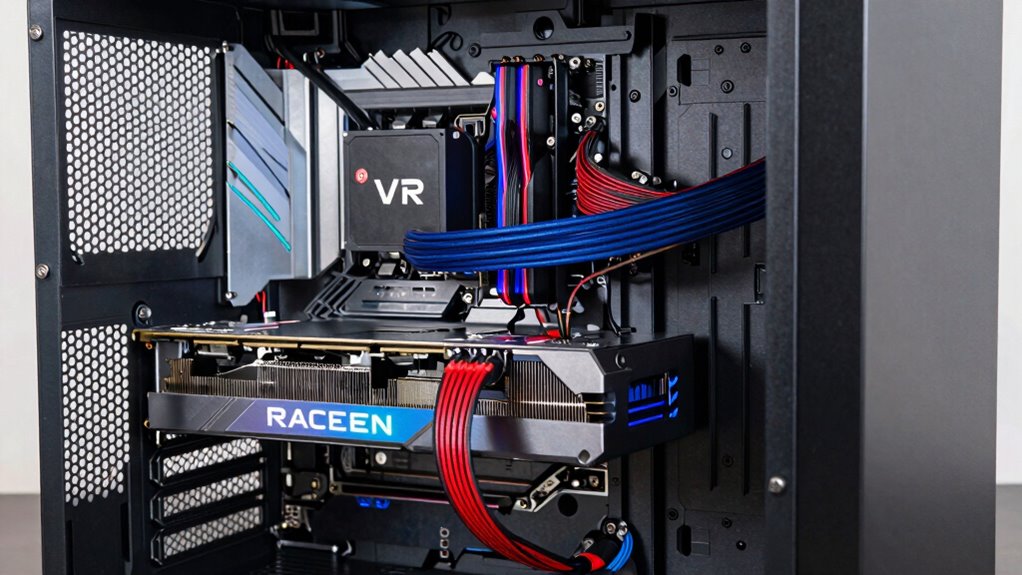
Once you’ve confirmed your power supply can handle the new Radeon card, the next step is to verify if your PC case has enough space to accommodate it. You need to assure the card fits physically and matches your case aesthetics. Measure the available space inside your case, especially length and width, and compare it with the Radeon model’s dimensions. Also, consider airflow and cooling potential to prevent overheating. Proper case organization can improve airflow and help keep temperatures down during intensive gaming or rendering tasks. To make it visually appealing, think about color matching your new GPU with your case design. This creates a cohesive look. Keep these in mind:
- GPU length and width
- Available PCIe slots
- Airflow clearance
- Case interior space
- Aesthetic and color matching
- Water damage prevention strategies can also be beneficial if you’re upgrading in a humid environment or near sources of moisture to protect your investment. Additionally, understanding your power limits ensures the new hardware operates reliably without risking damage or instability. Regular maintenance of your cooling system and case components is essential for maintaining optimal performance.
high performance PC case for graphics card
As an affiliate, we earn on qualifying purchases.
As an affiliate, we earn on qualifying purchases.
What Power Connectors Do Modern Radeon Cards Require?
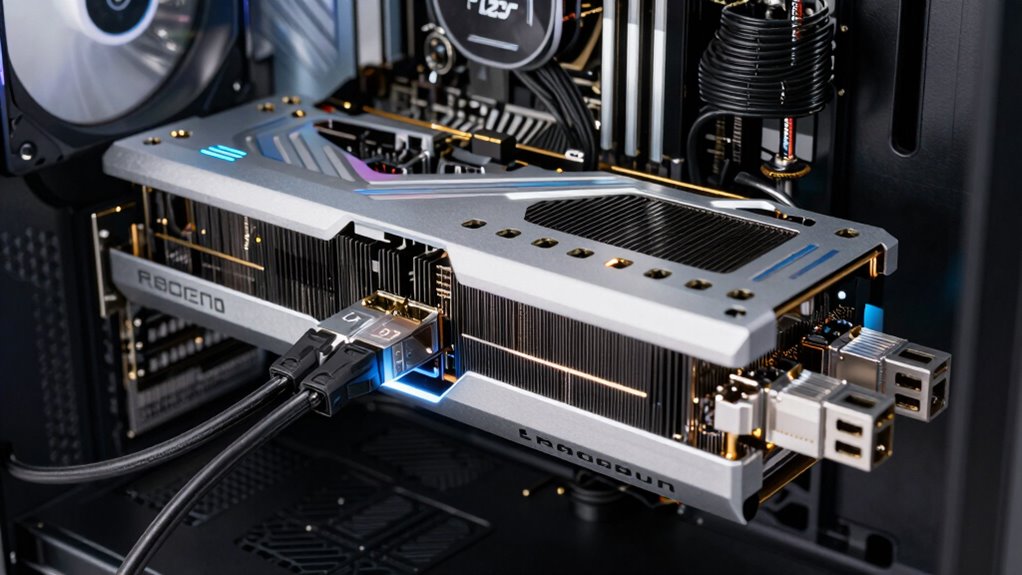
Modern Radeon graphics cards typically require one or more power connectors directly from your power supply to operate at full performance. Most high-end models need an 8-pin or 6-pin connector, with some demanding additional power via dual connectors for GPU overclocking. Make certain your power supply has the correct ports and sufficient wattage to support these connectors, especially if you plan to push your card further with GPU overclocking. Keep in mind, driver updates can optimize power efficiency and stability, so regularly update your drivers to match your new hardware. Failing to provide the proper connectors or power can lead to performance issues or system crashes, so double-check your power supply’s capabilities before upgrading. Proper power support guarantees your Radeon card performs reliably at its best.
How to Assess Your System’s Power Consumption and Future Needs

To assess your system’s power needs, start by checking your current power consumption under typical use. Then, consider your future graphics requirements to guarantee your power supply can handle upcoming upgrades. Finally, verify that your power supply is compatible with your new Radeon card’s connectors and wattage demands.
Evaluate Current Power Use
Understanding your current system’s power consumption is essential before upgrading your graphics card. It helps you determine if your power supply can handle the new GPU and guides future upgrades. To evaluate your system’s power use, start by monitoring your current power draw during typical tasks and gaming sessions. Consider how overclocking potential and software optimization impact power needs. Use tools like watt meters, system monitoring software, or BIOS readings to gather data. Keep in mind that high overclocking potential could increase power demands, while efficient software optimization can reduce overall consumption. This assessment guarantees you avoid bottlenecks and maintains your system’s stability with future upgrades. Be aware of microplastics in dust, as they may impact air quality and your hardware’s longevity if dust buildup occurs. Additionally, tracking your power usage over time can help identify power efficiency improvements and prevent unnecessary strain on your system components, especially as hardware becomes more energy-efficient.
Estimate Future Graphics Needs
Estimating your future graphics needs requires a clear understanding of both your current system performance and upcoming demands. Consider how your graphic settings and gaming performance might evolve—will you upgrade to higher resolutions or VR? Your future needs depend on your gaming habits and desired quality. To help, compare your current usage with planned upgrades. Use this table:
| Future Use Scenario | Estimated Power & Performance Needs |
|---|---|
| Higher graphic settings | Slight increase in power, better cooling needed |
| 4K gaming or VR | Significant boost, higher power, and better cooling |
| New game releases | Variable; check game requirements |
| Extended gaming sessions | Potential for higher power consumption |
Assess these factors to guarantee your system can handle future graphics demands without issues.
Check Power Supply Compatibility
Before upgrading your graphics card, it’s important to verify that your power supply can handle the increased demands. You need to assess your system’s power consumption and future needs to guarantee voltage stability and power efficiency. An underpowered supply can cause crashes or damage your new Radeon card. Check your current power supply’s wattage rating, and compare it to the recommended wattage for your new GPU. Consider future upgrades that might increase power needs. Make sure your power supply has enough PCIe power connectors. Look for a unit with high power efficiency ratings (80 Plus Bronze or higher) to reduce heat and save energy. Understanding your power supply’s capacity helps prevent potential system failures and ensures reliable performance.
Troubleshooting Space and Cooling Compatibility for Radeon Upgrades
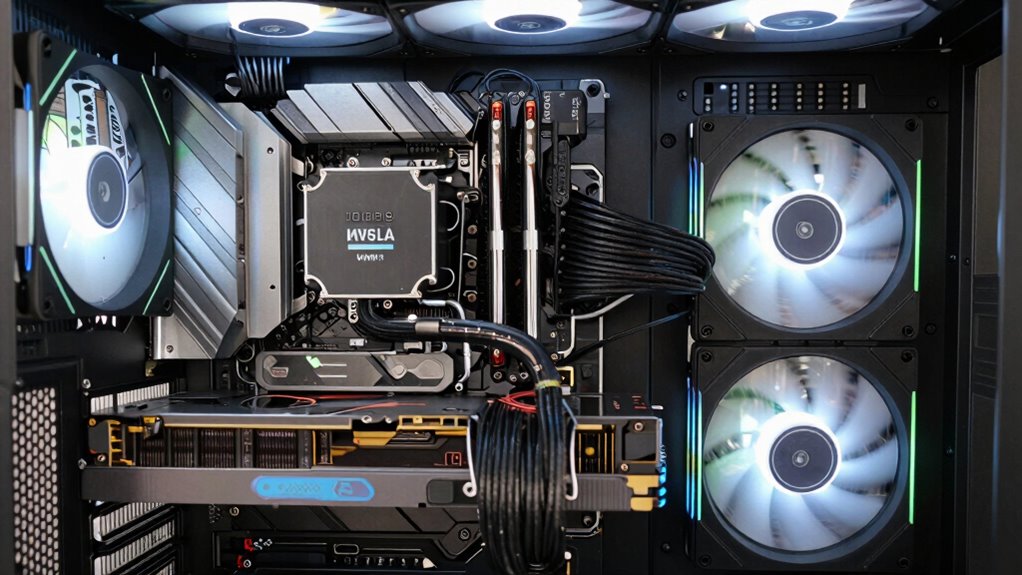
When upgrading to a new Radeon card, ensuring your PC case can accommodate its size and cooling needs is essential to avoid fitment issues. Measure your case’s interior space and compare it with the card’s dimensions, including the length, height, and width. Check if your case supports larger coolers or additional fans for optimal airflow. Proper airflow is critical for maintaining the card’s overclocking potential, preventing overheating, and ensuring stability during intensive tasks. Consider aesthetic customization options like RGB fans or custom cooling solutions that fit within your case. If your case is tight, you might need to upgrade to a larger tower or modify existing airflow setups. Adequate space and cooling are essential to enable your Radeon’s full performance potential. Additionally, understanding measurement accuracy can help you make more precise assessments of compatibility before purchasing upgrades. Regularly verifying cable management ensures that airflow remains unobstructed and cooling efficiency is maximized.
Tips to Upgrade Your Power Supply and Case for Radeon Compatibility
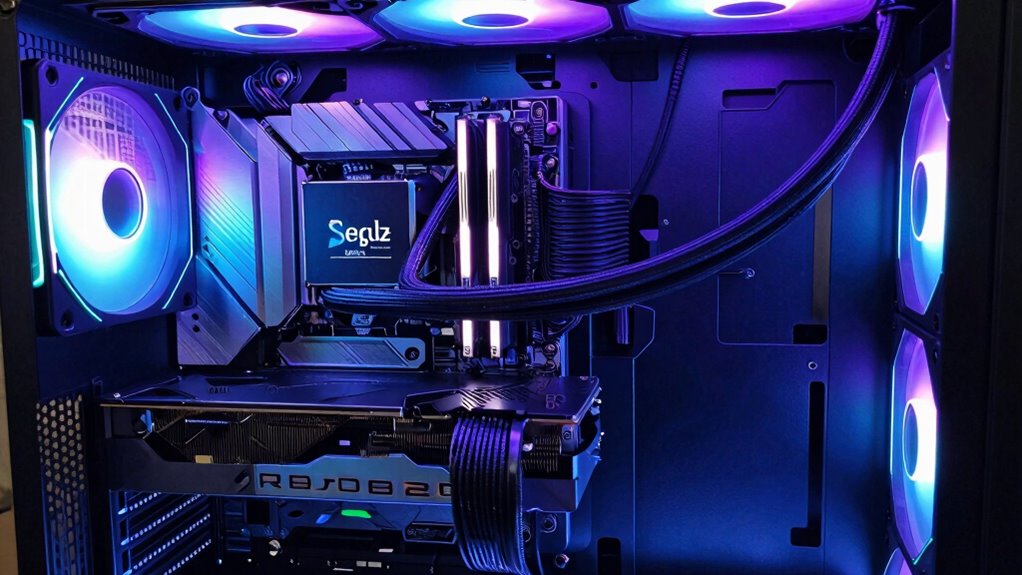
Upgrading your power supply and case is essential to guaranteeing your new Radeon card runs smoothly and reliably. A higher wattage power supply can handle increased power demands and reduce overclocking risks, while a spacious case improves airflow and cooling. When choosing parts, consider aesthetic considerations to match your build’s style. Make certain your power supply has the necessary connectors and sufficient capacity for future upgrades. Verify case dimensions to fit the card comfortably, with room for additional cooling solutions. Upgrading components also involves checking for hardware compatibility with existing hardware to avoid bottlenecks or space issues. Incorporating essential oils with antimicrobial and cooling properties can help maintain a clean and comfortable environment in your PC setup, especially when managing airflow and temperature. Additionally, understanding regional flavors and the importance of proper airflow can enhance your cooling strategies and overall system longevity.
Frequently Asked Questions
What Are the Signs My Current Power Supply Is Insufficient?
If your system experiences frequent crashes, random shutdowns, or your computer won’t start, your power supply capacity might be insufficient. You may also notice your case is too small for your current power supply, causing overheating or airflow issues. These signs indicate you should check your power supply’s wattage and case size compatibility to make certain it can handle upgrades, like a new Radeon card, safely.
How Do I Measure My PC Case’s Internal Space Accurately?
Did you know that poorly measured case space causes 30% of PC build issues? To measure your case’s internal space accurately, use a ruler or tape measure to note the length, width, and height of the available area. Consider cable management and component compatibility while measuring, ensuring enough clearance for new hardware. Remove side panels and measure around existing components for precise dimensions, avoiding any fitment surprises during upgrades.
Are There Specific Cases Recommended for High-End Radeon Cards?
Yes, there are specific cases recommended for high-end Radeon cards. Look for cases with ample case compatibility that support larger GPU lengths, ensuring your card fits comfortably. Prioritize cases with good cooling solutions like multiple fan mounts or space for liquid cooling, as high-end Radeon cards generate more heat. Brands like Cooler Master, NZXT, and Fractal Design offer great options designed to accommodate powerful GPUs and maintain ideal airflow.
Do All Radeon Models Require the Same Power Connector Types?
Think of Radeon models like different vehicles; some need standard fuel, others demand premium. Not all Radeon models require the same power connector types—power connector compatibility varies across Radeon model variations. For example, high-end cards often need 8-pin or even 12-pin connectors, while mid-range models may only need a single 6-pin. Check your specific Radeon model’s requirements to guarantee compatibility and avoid power issues.
How Can I Improve Airflow for Better Cooling During Upgrades?
To improve airflow during upgrades, focus on optimizing thermal management and adjusting fan configurations. You can enhance cooling by increasing fan speeds or adding more fans to your case, ensuring they direct airflow efficiently. Keep cables tidy to prevent airflow obstructions, and consider upgrading to a case with better ventilation. Regularly cleaning dust filters and heatsinks also helps maintain ideal thermal performance and prevents overheating during intensive gaming or workloads.
Conclusion
Upgrading your Radeon card is like planting a new tree—if the roots (power supply and case) aren’t strong enough, it won’t thrive. Check your system’s capacity first, guarantee your case can handle the size, and match the right power connectors. Think of it as preparing your garden—when everything’s in the right place, your new GPU will flourish, delivering the performance you’re aiming for without any hiccups. Happy gaming!
Halloween Picks
halloween
As an affiliate, we earn on qualifying purchases.