

The metaverse excels at making you feel truly present through immersive environments that react to your movements, expressions, and voice. Your virtual identity and avatar become vessels for genuine self-expression and social connection. Advanced technologies like spatial audio, realistic graphics, and haptic feedback help mimic real-world interactions, fostering authentic bonds. These realistic social cues and emotional responses make you feel engaged and connected, even from afar. Keep exploring to discover how these innovations shape your digital social experiences.

Get hardware and tech essentials delivered free with Prime
- Fast, free delivery on millions of items
- Prime Video, Amazon Music and more included
- Member-only deals all year
Key Takeaways
- The Metaverse creates immersive environments that evoke a strong sense of “being there” through realistic visuals and responsive interactions.
- Virtual identities and avatars enable genuine self-expression and social connections beyond physical limitations.
- Advanced technologies like spatial audio and haptic feedback enhance sensory realism and emotional engagement.
- Dynamic responses to user movements and gestures foster natural social cues and authentic communication.
- Shared virtual spaces promote emotional resonance and bonding, making interactions feel more tangible and meaningful.
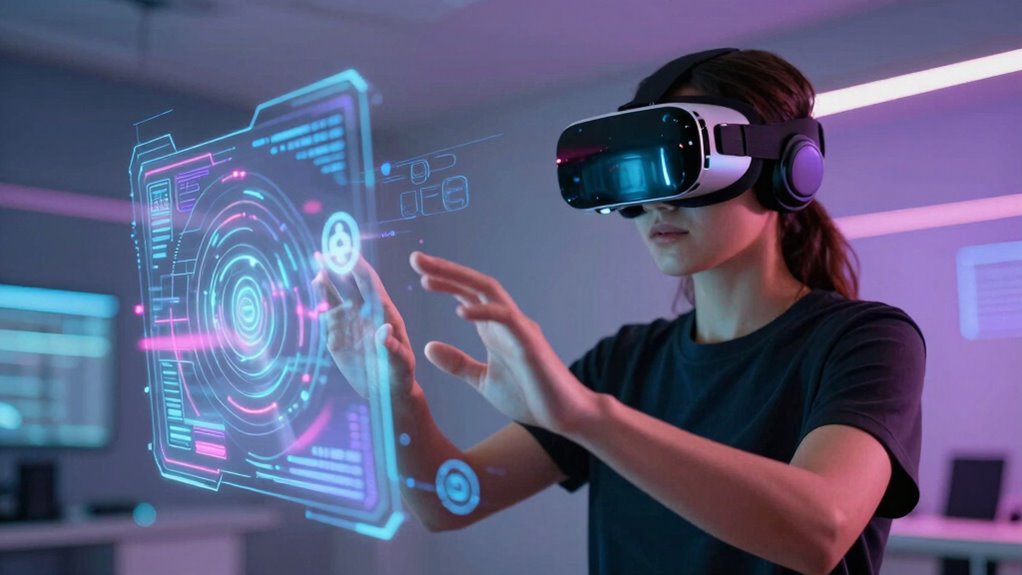
The concept of presence in the metaverse is transforming how we experience digital environments, making virtual interactions feel surprisingly real. When you step into these immersive worlds, you’re not just clicking through screens—you’re engaging in a space that reacts to your movements, expressions, and voice, creating a sense of being truly there. This sense of presence hinges on your virtual identity, which you craft and customize to reflect who you are or who you want to be. Your avatar becomes more than a simple digital figure; it’s a vessel that bridges the physical and virtual, allowing you to project personality and emotion into the environment. As you navigate through these immersive environments, your virtual identity influences how others perceive and interact with you, fostering genuine connections that often feel just as real as face-to-face encounters.
The strength of the metaverse lies in its ability to craft environments that respond dynamically to your actions, heightening your sense of presence. When you’re in a virtual space with other users, you don’t just see their avatars—you observe subtle gestures, hear their voices, and even pick up on social cues that mimic real-world interactions. This immersion makes conversations more natural and engaging, reducing the sensation that you’re simply “playing a game” or “browsing a website.” Instead, you’re part of a shared experience, where your actions and reactions matter. The technology behind these immersive environments uses spatial audio, realistic graphics, and haptic feedback to deepen your feeling of being truly there, blurring the line between physical and virtual. Immersive environments play a crucial role in fostering this sense of presence by creating a convincing virtual space. Additionally, advancements in spatial audio technology contribute significantly to the realism and emotional resonance of these interactions, making the experience more authentic.
What the metaverse gets right about presence and interaction is how it leverages these immersive environments to foster authentic social bonds. You’re encouraged to express yourself freely through your virtual identity, whether that’s through your avatar’s appearance, gestures, or voice. This freedom enhances social interaction by allowing you to communicate beyond words, capturing emotion and intent much more effectively. The result is an environment where you feel connected, even when miles apart, because the technology creates a shared space that feels tangible. This sense of being “present” isn’t just about visual fidelity or sound quality; it’s about how convincingly the environment makes you feel part of something larger than yourself. That’s the core achievement of the metaverse’s approach to presence and interaction. Exploring digital environments can further enhance understanding of how these immersive spaces contribute to emotional and social engagement.
As an affiliate, we earn on qualifying purchases.
Frequently Asked Questions
How Does the Metaverse Improve Long-Distance Social Interactions?
The metaverse improves long-distance social interactions by immersing you in virtual reality environments that make you feel truly present with others. You can see, hear, and even share experiences in real-time, fostering emotional engagement that feels authentic. This technology bridges physical gaps, allowing deeper connections and more natural conversations, so you’re not just communicating across distances—you’re sharing moments as if you’re together physically.
Can Users Genuinely Feel Physically Present in Virtual Environments?
You can genuinely feel physically present in virtual environments through sensory immersion and emotional engagement. Advanced VR headsets and haptic feedback simulate sights, sounds, and touch, creating a convincing sense of presence. When your emotional responses are engaged, it deepens your connection, making interactions feel real. While not identical to physical presence, these technologies considerably enhance your sense of being there, making virtual experiences more immersive and meaningful.
What Are the Privacy Concerns Related to Metaverse Interactions?
In the metaverse, you face privacy concerns like data security and user anonymity. Your personal data, such as location, interactions, and preferences, can be vulnerable if not properly protected. Without strong security measures, malicious actors could access your information or track your activities. Maintaining user anonymity becomes tricky, as platforms often collect data to personalize experiences, raising risks of identity theft, surveillance, or misuse of your private details.
How Accessible Is the Metaverse for Users With Disabilities?
Is the metaverse truly inclusive for everyone? You’ll find that its accessibility depends on implementing accessible design and integrating assistive technology. Developers are making strides, but gaps remain, especially for users with visual, auditory, or mobility challenges. To guarantee full participation, the metaverse must prioritize universal design principles and seamlessly incorporate assistive tech. When done right, it can open up immersive digital worlds to all, regardless of ability.
What Role Does AI Play in Enhancing Presence in the Metaverse?
AI plays a vital role in enhancing your presence in the metaverse by creating AI-driven avatars that adapt in real time to your interactions. Emotional recognition technology helps these avatars respond more naturally to your feelings, making interactions feel genuine and immersive. This integration allows you to connect more authentically, fostering a sense of real presence and emotional engagement, even across virtual spaces.
haptic feedback gloves for virtual reality
As an affiliate, we earn on qualifying purchases.
As an affiliate, we earn on qualifying purchases.
Conclusion
As you immerse yourself in the metaverse, you realize it’s more than just a digital space — it’s a mirror of your own desire for real connection. Coincidentally, the more you explore, the more genuine your interactions feel, as if the virtual world and your sense of presence are subtly aligning. It’s almost like the metaverse was built not just for entertainment, but to reflect your need for authentic interaction, making every moment feel unexpectedly real.
As an affiliate, we earn on qualifying purchases.
immersive virtual reality headset
As an affiliate, we earn on qualifying purchases.
As an affiliate, we earn on qualifying purchases.
Halloween Picks
halloween
As an affiliate, we earn on qualifying purchases.