TL;DR
AI camera drones are expected to dominate the skies in 2026 due to rapid technological advancements in automation, stability, and cost-efficiency. Experts predict widespread adoption across industries and recreational use, though some uncertainties remain about regulation and market saturation.
AI-powered camera drones are projected to dominate the skies by 2026, driven by rapid technological advances in automation, stability, and affordability. Industry experts and manufacturers are increasingly investing in AI integration, signaling a shift that could transform sectors including filmmaking, security, agriculture, and aerial technology. This development matters because it could reshape how industries operate and how consumers engage with aerial technology, expanding access and capabilities.
Recent industry reports and expert analyses indicate that the integration of artificial intelligence (AI) into camera drones is accelerating, with several companies unveiling prototypes that feature advanced autonomous flight, obstacle avoidance, and advanced drone features. Companies like DJI, Skydio, and startups such as Autel Robotics are leading this charge, incorporating AI to enhance stability, navigation, and object recognition. These advancements are making drones more reliable, easier to operate, and capable of performing complex tasks without human intervention.
Market forecasts suggest that by 2026, AI-enabled camera drones will become the standard, with widespread adoption across multiple sectors. In filmmaking, AI drones will facilitate complex shots with minimal human input, reducing costs and increasing creative possibilities. In security and surveillance, autonomous AI drones will offer continuous monitoring with real-time threat detection. Agriculture will benefit from AI drones capable of detailed crop analysis, optimizing yield and resource use. Logistics and delivery services are also exploring AI drone fleets for faster, more efficient operations.
Manufacturers are also emphasizing safety and regulatory compliance, with AI systems designed to adhere to evolving drone laws. The cost of these advanced drones is expected to decrease as AI technology becomes more widespread, making them accessible to hobbyists and small businesses, not just large corporations.
The 10 picks
- 1
 DJI Mini 5 Pro Fly More Combo Plus with DJI RC 2, 4K Camera DroneView on Amazon →
 - 2
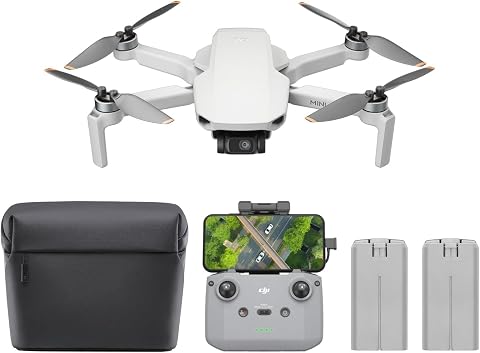 DJI Mini 4K Camera Drone Combo, 4K UHD, 249g, 3-Axis Gimbal, 10km Transmissio…View on Amazon →
 - 3
 DJI Mini 4K Drone with 4K UHD Camera and 3-Axis GimbalView on Amazon →
 - 4
 8K GPS Drone with Camera for Adults, 5G Brushless Foldable RC QuadcopterView on Amazon →
 - 5
 GPS Drone with 1080P Camera and 4.5" LCD Screen RemoteView on Amazon →
 - 6
 TD12Pro Drone with 1080P Camera and LCD Screen RemoteView on Amazon →
 - 7
 MSMV 4K HD Camera Drone, Wireless RC Toy for Boys and GirlsView on Amazon →
 - 8
 F417PRO FPV Drone with 1080P Camera and LCD Remote for Adults, Beginners, KidsView on Amazon →
 - 9
 Drone with Camera and Built-in Screen on ControllerView on Amazon →
 - 10
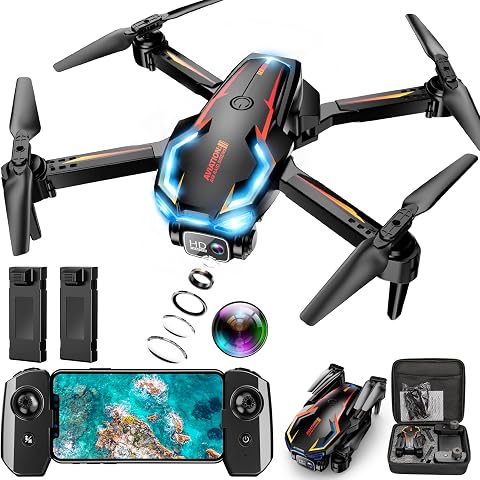 Drone with Camera for Adults, 2K HD FPV, Altitude Hold, One-Key Takeoff/Landi…View on Amazon →
Transformative Industry and Consumer Impact
The rise of AI camera drones by 2026 could significantly impact multiple sectors, making aerial data collection more accessible, precise, and autonomous. Industries such as filmmaking, security, agriculture, and logistics will benefit from increased efficiency, safety, and creative freedom. For consumers, this could mean more affordable, easy-to-use drones capable of capturing professional-quality footage and performing complex tasks with minimal training. However, widespread adoption also raises concerns about privacy, regulation, and airspace management, which authorities are still working to address.
Recent AI Advancements and Market Trends
Over the past few years, AI technology has rapidly advanced, with improvements in machine learning, computer vision, and autonomous navigation. Leading drone manufacturers have begun integrating these features into commercial models, with some already demonstrating fully autonomous flight capabilities. The COVID-19 pandemic accelerated drone adoption in sectors like delivery and surveillance, highlighting the potential for AI-driven automation. Regulatory bodies worldwide are beginning to adapt, creating frameworks that accommodate autonomous drones, though comprehensive policies are still under development.
Historically, drone technology has evolved from basic remote-controlled devices to sophisticated autonomous systems. The current trajectory suggests that AI integration will be the key driver for the next wave of innovation, making drones smarter, safer, and more capable of performing complex tasks without human control.
Industry forecasts predict that by 2026, AI-enabled camera drones will account for a significant share of the drone market, with a growing number of applications and users. This shift is supported by ongoing investments and research aimed at overcoming current limitations like battery life, regulation, and obstacle avoidance.
Regulatory and Market Adoption Challenges
While technological progress is clear, uncertainties remain regarding regulatory frameworks, safety standards, and airspace management. Governments and international bodies are still developing policies to regulate autonomous drone operations, which could impact the pace and extent of adoption. Additionally, concerns about privacy, security, and potential misuse could influence market growth and public acceptance. It is not yet certain how quickly these issues will be resolved or how they might shape the deployment of AI camera drones in 2026.
Regulatory Developments and Industry Rollouts Before 2026
The immediate next steps involve regulatory agencies finalizing policies for autonomous drone operations, including safety standards and airspace integration. Simultaneously, manufacturers will continue refining AI capabilities, focusing on safety, battery life, and user-friendliness. Pilot programs and early commercial deployments are expected to increase over the next year, providing real-world data to inform policy and technology improvements. Consumer and industrial markets will see gradual adoption, with some sectors leading the way in integrating AI camera drones into their workflows before the 2026 milestone.
Key Questions
Will AI camera drones replace human drone pilots?
While AI will significantly enhance autonomous capabilities, complete replacement of human pilots is unlikely in the near term. AI will serve to assist and automate many tasks, but human oversight will remain essential, especially for complex or sensitive operations.
What industries will benefit most from AI camera drones in 2026?
Filmmaking, security, agriculture, and logistics are expected to benefit most, with AI drones providing enhanced data collection, autonomous operation, and cost savings across these sectors.
Are there privacy concerns with widespread AI drone use?
Yes, increased drone deployment raises privacy issues, particularly with surveillance applications. Governments are working on regulations to balance innovation with privacy protections, but challenges remain.
How affordable will AI camera drones be by 2026?
As AI technology matures and production scales, prices are expected to decrease, making advanced autonomous drones accessible to small businesses and consumers, though high-end models will still command premium prices.
What safety features will AI drones have?
AI drones will incorporate obstacle avoidance, geofencing, automatic return, and real-time data processing to enhance safety and reliability during autonomous operation.
Source: ThorstenMeyerAI.com