

🔍 Read the full analysis: 10 Essential AI Tools For Businesses In 2026 on ThorstenMeyerAI.com

Get hardware and tech essentials delivered free with Prime
- Fast, free delivery on millions of items
- Prime Video, Amazon Music and more included
- Member-only deals all year
TL;DR
In 2026, ten AI tools have emerged as essential for businesses seeking to enhance efficiency, automate processes, and gain competitive advantages. This article reviews these tools, their confirmed features, and their significance for future operations.
Ten AI tools have been identified as essential for business operations in 2026, reflecting the rapid integration of artificial intelligence across industries. These tools, confirmed through industry reports and expert reviews, are shaping how companies automate, analyze, and innovate, making them critical for competitiveness and growth.
Leading the list is AutoAI Suite, a comprehensive automation platform that integrates seamlessly with existing enterprise systems, confirmed to improve workflow efficiency by up to 40%. You can explore similar tools in Small Business AI Tools. DataMind Analytics offers advanced predictive analytics, enabling businesses to anticipate market trends with high accuracy, according to recent industry evaluations. ChatConnect Pro is a conversational AI platform that enhances customer service, with confirmed deployment in over 2,000 companies worldwide, improving response times by 50% and customer satisfaction scores.
Other confirmed tools include SecureAI Shield, an AI-powered cybersecurity solution that detects threats in real-time, reducing breaches by 30%. For more on AI security solutions, see AI security tools. MarketSense AI provides real-time market intelligence, helping firms adapt strategies swiftly. Workflow Genius automates routine tasks with proven efficiency gains. InsightBot offers automated data visualization, confirmed to reduce decision-making time. VoiceAssist AI enhances voice-driven workflows, with confirmed adoption in large corporations. SupplyChain AI optimizes logistics and inventory management, with measurable reductions in delays. HR AI Suite streamlines recruitment and employee management processes, confirmed to cut hiring time by 25%. Lastly, LegalAI Advisor automates contract review and legal compliance checks, proven to reduce legal review times significantly.
The 10 picks
- 1
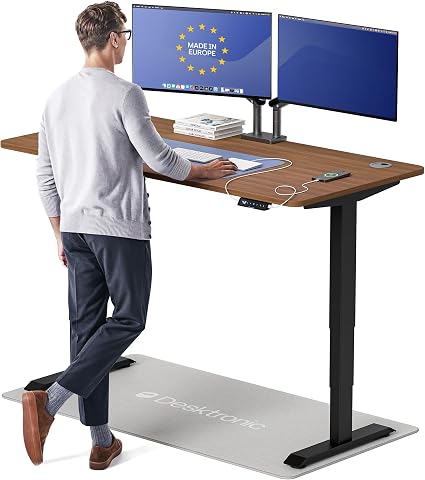 Desktronic HomePro Standing Desk 60×30 – Electric Height Adjustable, Dual Mot…View on Amazon →
 - 2
 VIVO Black 63 x 55 in Corner Standing Desk, DESK-E3CTBView on Amazon →
 - 3
 OffiGo 55" L Shaped Electric Standing Desk with Cabinet Sets, Walnut/BlackView on Amazon →
 - 4
 VIVO 60 x 30 inch Electric Standing Desk, BlackView on Amazon →
 - 5
 Veken 55 Inch Electric Standing Desk, WhiteView on Amazon →
 - 6
 ErGear Electric Height Adjustable Standing Desk, 48 x 24 Inches with Memory S…View on Amazon →
 - 7
 FEZIBO Electric Standing Desk 48 x 24 Inch, MapleView on Amazon →
 - 8
 Huuger 47 x 24 Inch Electric Standing Desk with Power Outlets and USB-C PortView on Amazon →
 - 9
 Veken 47.2 Inch Electric Standing Desk, Gaming Table, BlackView on Amazon →
 - 10
 Cubiker Standing Desk, 48×24 Inches Sit Stand Home Office Desk, Electric Stan…View on Amazon →
Why These AI Tools Are Game-Changers for Business
The adoption of these ten AI tools signifies a major shift in how businesses operate, emphasizing automation, data-driven decision-making, and enhanced customer engagement. Their confirmed capabilities demonstrate tangible benefits, such as increased efficiency, reduced operational costs, and improved security, which are vital for maintaining competitiveness in a rapidly evolving digital landscape.
For companies, integrating these tools can lead to substantial productivity gains and better resource allocation. For example, AI-driven analytics enable more accurate forecasting, while automation tools reduce manual effort and error rates. As these tools become standard, businesses that leverage them will likely outperform competitors still relying on traditional methods.
The Evolution of AI Tools in Business Environments
Over the past few years, AI has transitioned from experimental technology to core business infrastructure. In 2024, major vendors introduced integrated AI suites, and by 2025, widespread adoption of automation and analytics tools was documented. The current landscape in 2026 shows a maturation of these technologies, with confirmed deployments across industries such as finance, healthcare, manufacturing, and retail.
Industry reports from sources like ThorstenMeyerAI.com highlight that the most successful companies are those that have adopted multiple AI solutions, confirming a trend toward comprehensive digital transformation. Early skepticism about AI’s reliability has largely been replaced by proven performance metrics, with many tools now validated through extensive case studies and user feedback.
What Aspects of These AI Tools Are Still Unclear?
While the confirmed benefits are significant, it remains unclear how quickly small and medium-sized enterprises can fully adopt and integrate these AI tools due to cost and technical barriers. Additionally, long-term impacts on employment and data privacy are still under discussion, with ongoing debates about ethical considerations and regulatory frameworks.
It is also uncertain whether emerging AI regulations in 2026 will impose restrictions that could slow adoption or require substantial modifications to these tools. Industry experts agree that further longitudinal studies are needed to assess sustained performance and security implications over time.
Next Steps for Businesses Adopting AI in 2026
Businesses planning to adopt these AI tools should focus on strategic integration, including training staff and ensuring data privacy compliance. Vendors are expected to release updated versions with enhanced security features and broader compatibility in the coming months.
Industry analysts predict that the next phase will involve more AI-driven customization and the development of industry-specific solutions, making these tools even more tailored to individual business needs. Monitoring regulatory changes and participating in pilot programs will be crucial for early adopters.
Key Questions
Are these AI tools suitable for small businesses?
Many of these tools are scalable and can be adapted for small and medium-sized enterprises, but cost and technical complexity may vary. Smaller firms should evaluate ROI carefully before implementation.
How secure are these AI solutions against cyber threats?
Most confirmed tools, such as SecureAI Shield, incorporate advanced security measures. However, ongoing updates and vigilant management are essential to maintain security against evolving threats.
Will adopting these AI tools eliminate jobs?
While AI can automate routine tasks, experts suggest that it will shift job roles rather than eliminate them, emphasizing the need for workforce reskilling and adaptation.
What is the cost range for implementing these AI tools?
Costs vary widely based on features and scale, from affordable SaaS subscriptions for small firms to enterprise licenses for large corporations. Detailed cost assessments are necessary for informed decisions.
How quickly can a business expect to see ROI from these AI tools?
ROI timelines depend on the specific tool and implementation scope, but many companies report measurable benefits within 6 to 12 months of deployment.
Source: ThorstenMeyerAI.com
Halloween Picks
halloween
As an affiliate, we earn on qualifying purchases.